Plantain Walk – Bookkeeper – Watchman and Hut – man with casks of water — History & Facts
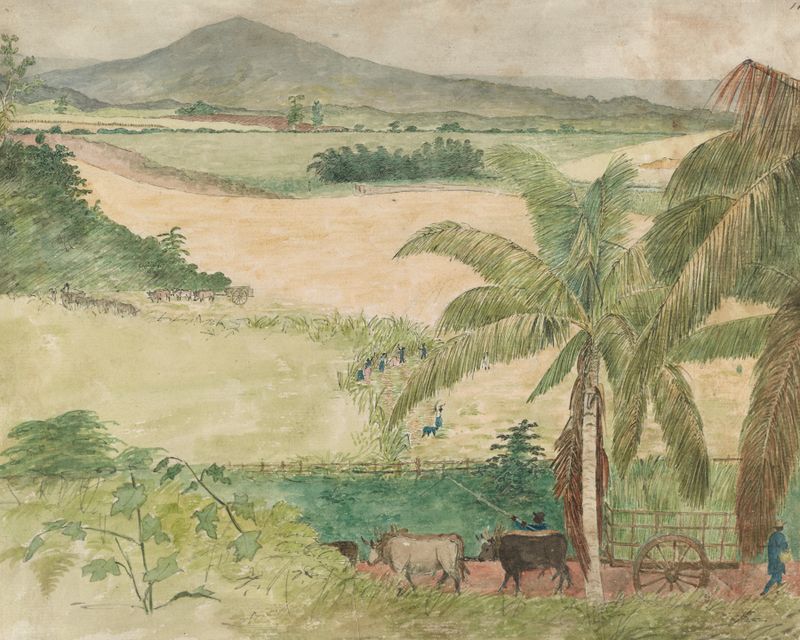
Is this a mirror — or a memory? The blurred lines between reality and reflection invite a haunting exploration of emptiness, a theme that resonates deeply in the visual narrative. Look to the left where the lush green of a plantain tree rises, its broad leaves a vibrant contrast to the subtle ochres and deep browns that ground the rest of the scene. The figures, the bookkeeper and the watchman, are poised in the frame, yet their expressions and postures suggest a moment caught between connection and solitude. Notice how the warm light softly bathes their forms, creating a gentle glow that emphasizes the stillness of the environment, while shadows stretch long, hinting at the passage of time. As you delve deeper, consider the silent waters resting in the casks, symbolizing the weight of labor and the burden of unspoken words.
The juxtaposition of the watchman’s vigilant stance and the bookkeeper’s more relaxed demeanor reveals a tension—one is bound to the present, while the other seems lost in thought, perhaps reminiscing about times gone by. This interplay of roles highlights the emotional landscapes we navigate, even amidst the mundane. Created between 1808 and 1816, this work emerged during a period of significant change in England and the broader art world. Berryman, known for his detailed renderings of everyday life, was keenly aware of the social dynamics around him.
His paintings often reflect a keen observation of life’s complexities, and in the quiet moments captured here, we sense both the intimacy of the scene and the vast emptiness that defines it.