
Pont De Civita-Castellana (Etats Romains) — History & Facts
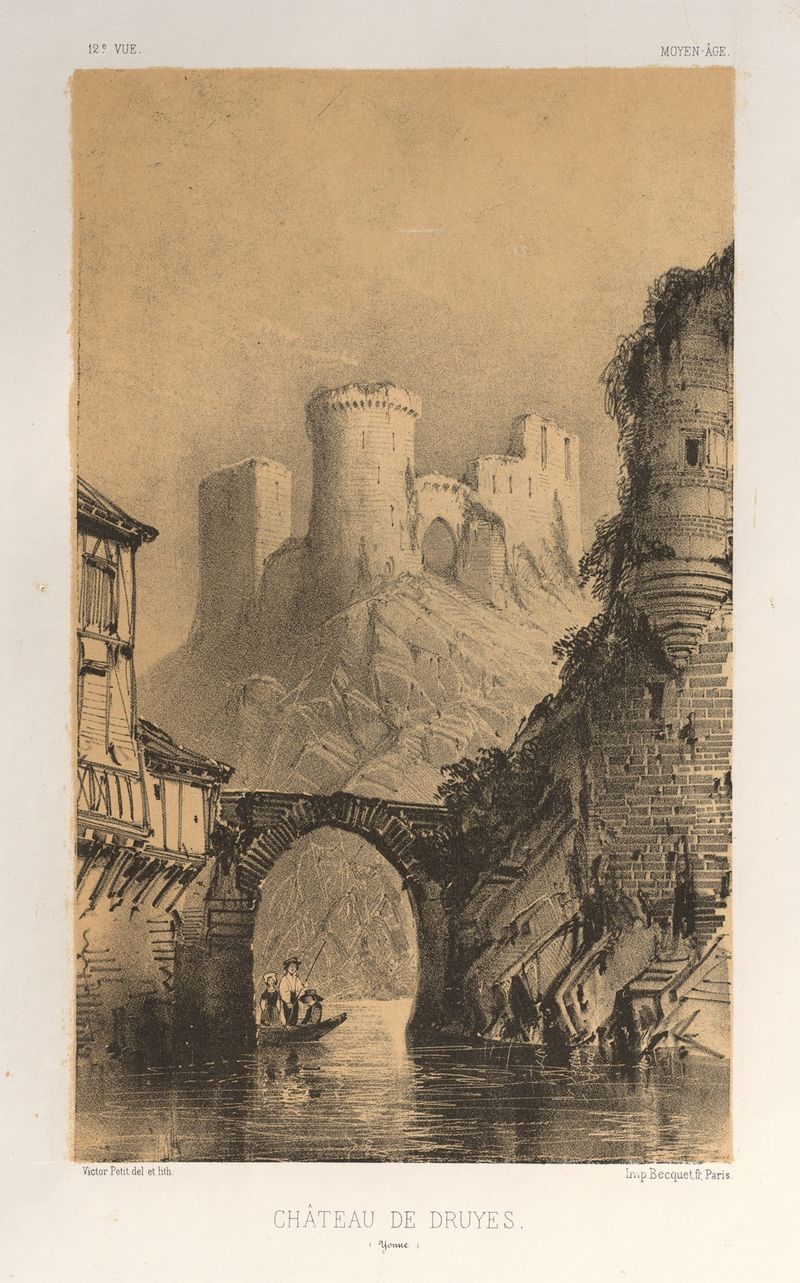
In the stillness of a moment caught between time and eternity, our perceptions of existence blur against the backdrop of fleeting life. In this contemplation of mortality, the artist weaves a narrative that beckons us to reflect on our own impermanence. Look to the left at the striking archway, where stone and shadow converge, evoking a sense of both passage and permanence. The soft hues of dusk envelop the landscape, blending ochres and muted greens that signify the earth’s quiet acceptance of time’s relentless march.
Notice how Petit masterfully employs chiaroscuro, the play of light and dark, to create depth that draws the eye inward, enhancing the sense that something lies beyond the arch, something yet unseen. Within the serene setting, contrasts emerge—the rugged stone of the bridge juxtaposed with the ethereal sweep of the sky above. This tension between the solid and the ephemeral hints at the transient nature of human existence, while the winding path suggests a journey, perhaps one that leads toward an inevitable conclusion. The soft whispers of nature surrounding the structure remind us that life, like this bridge, can be both enduring and fragile. In 1860, Victor Petit was working in an era marked by shifts in artistic expression and societal change.
Living in France, he was influenced by the Romantic movement, which celebrated emotion and the sublime in nature. This painting reflects his engagement with landscapes that transcended mere depictions, allowing viewers to experience a deeper meditation on life itself.
More Artworks by Victor Petit
Browse all →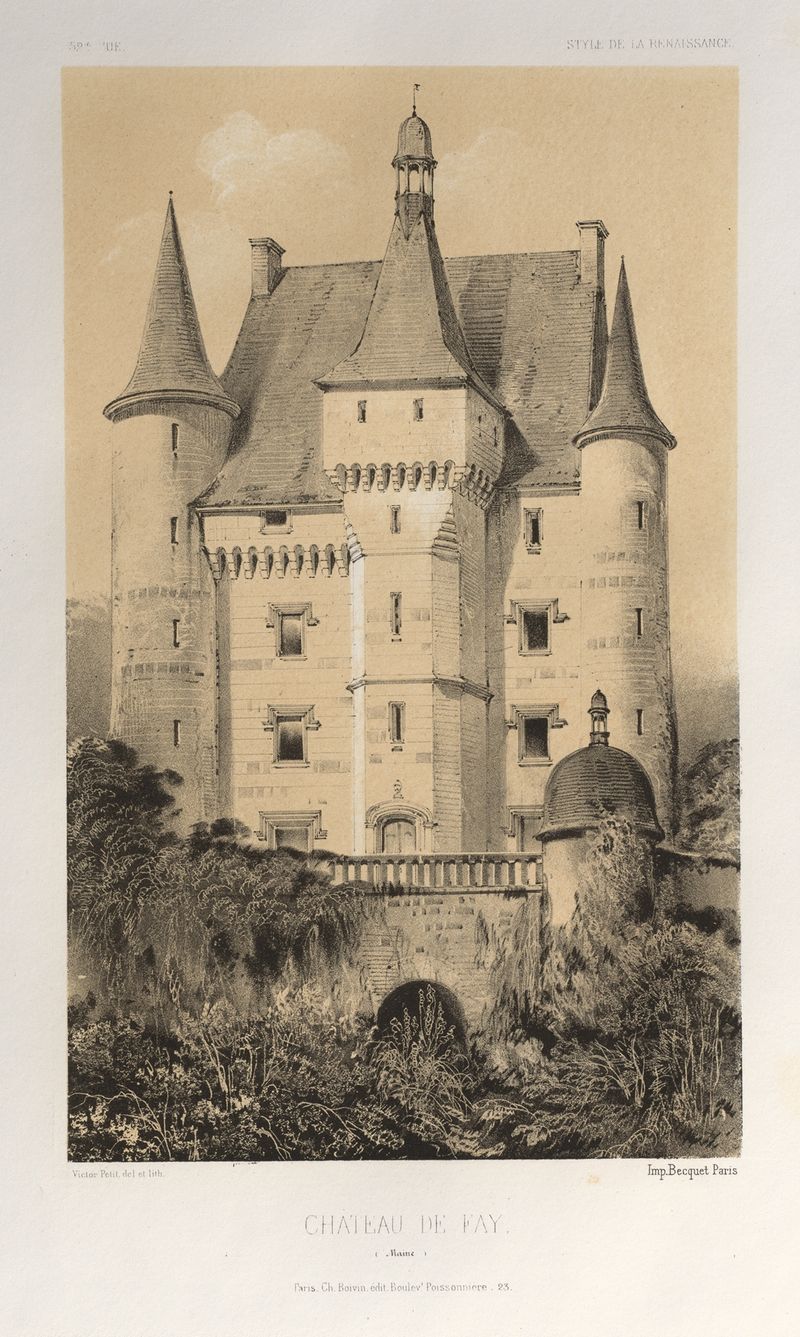
Château De Fay (Maine)
Victor Petit
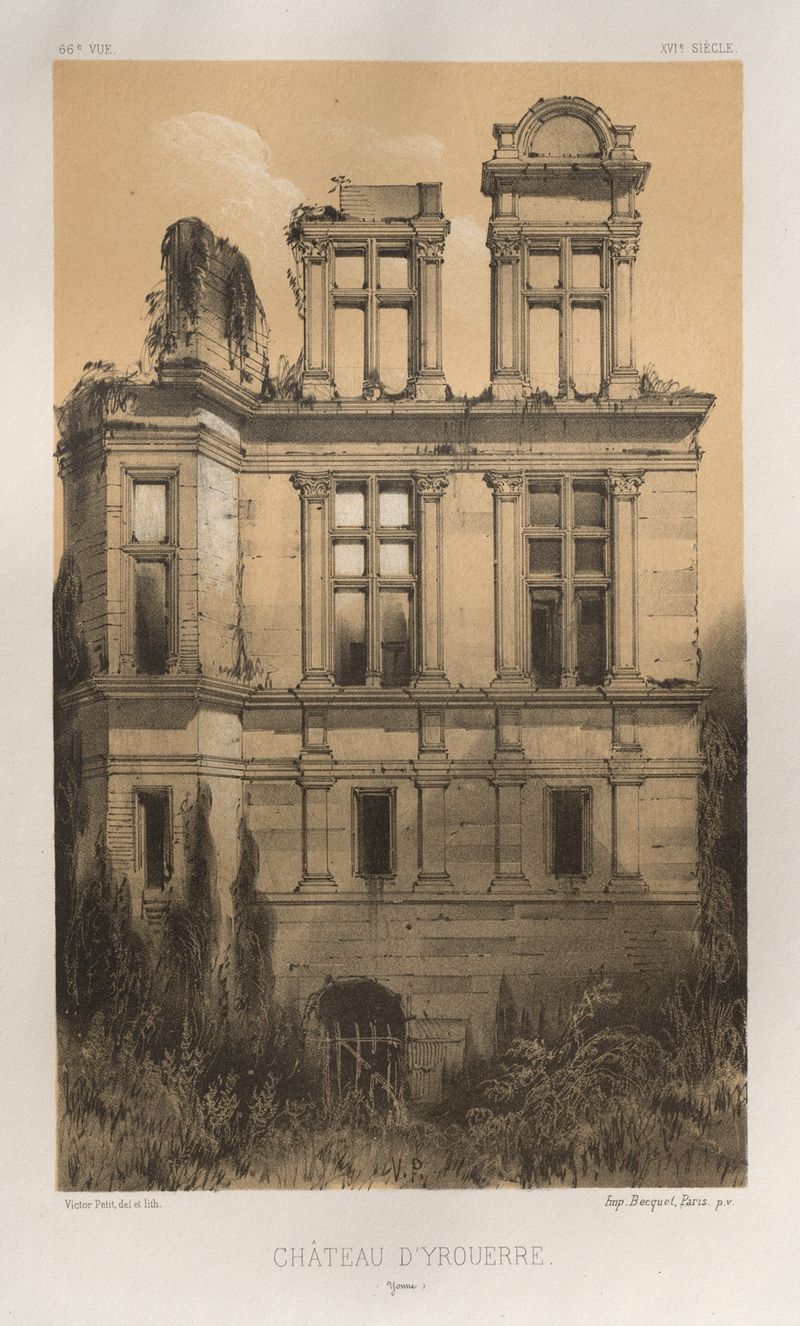
Château D’Yrouerre (Yonne)
Victor Petit
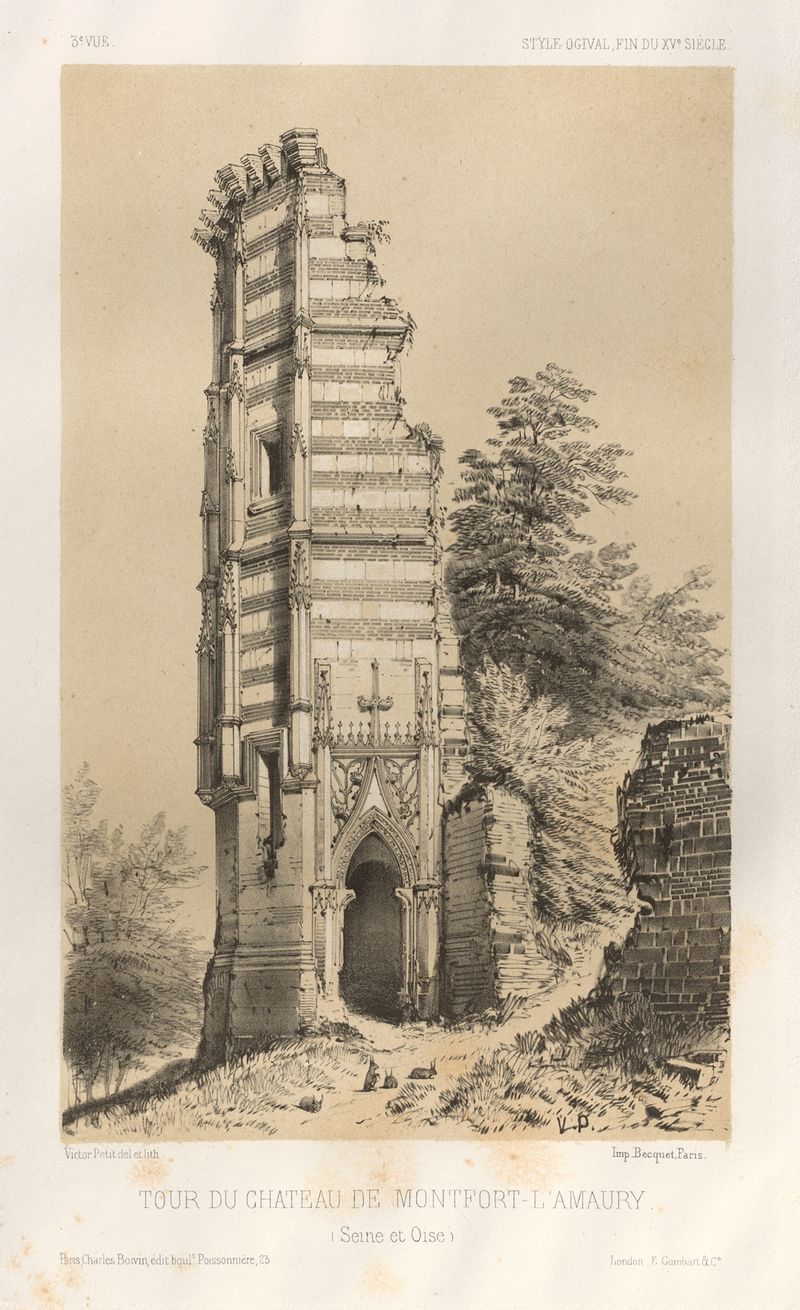
Tour du chateau de Montfort-l’Amaury (Seine-et-Oise)
Victor Petit

Tour Du Port De Marseille (Bouches Du Rhône)
Victor Petit
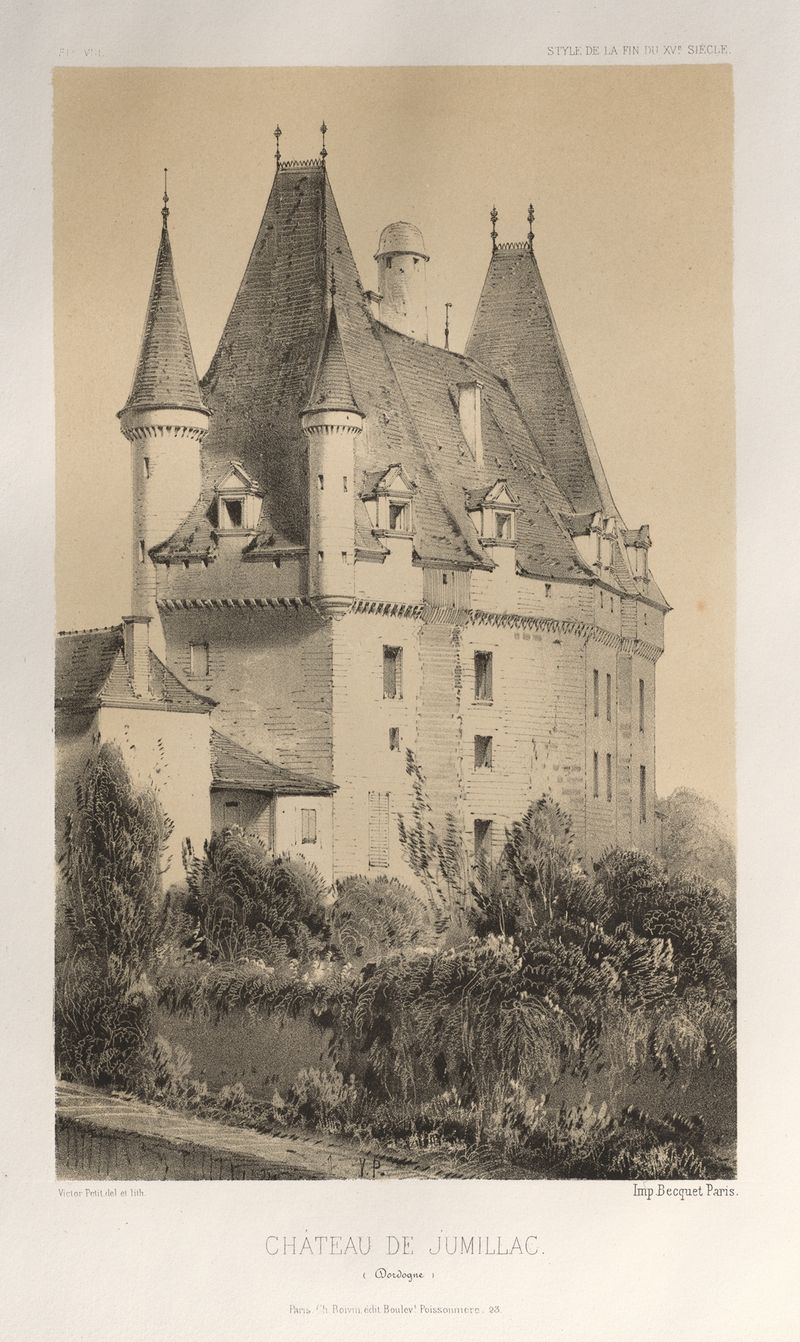
Château De Jumillac (Dordogne)
Victor Petit

Château de Tévray (Eure)
Victor Petit

Galerie Du Château De Jouancy (Saone et Loire)
Victor Petit

Château De Mello (Oise)
Victor Petit
Chateau De Druyes (Yonne)
Victor Petit

Le ChasteLet-Neuf (Corrèze)
Victor Petit





