
Ponte del Pistor — History & Facts
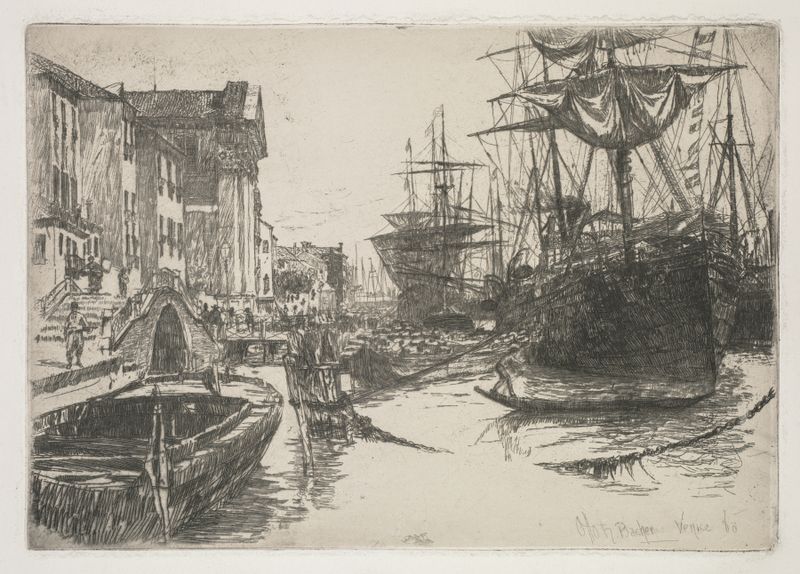
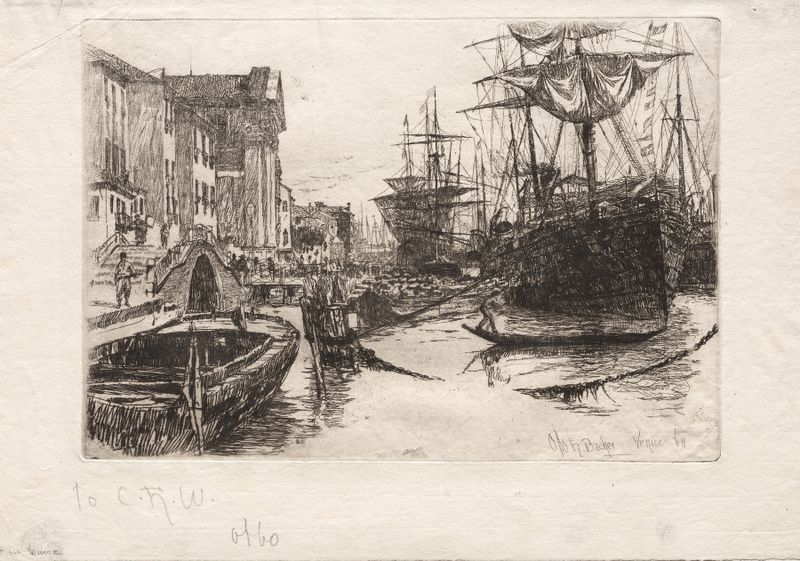
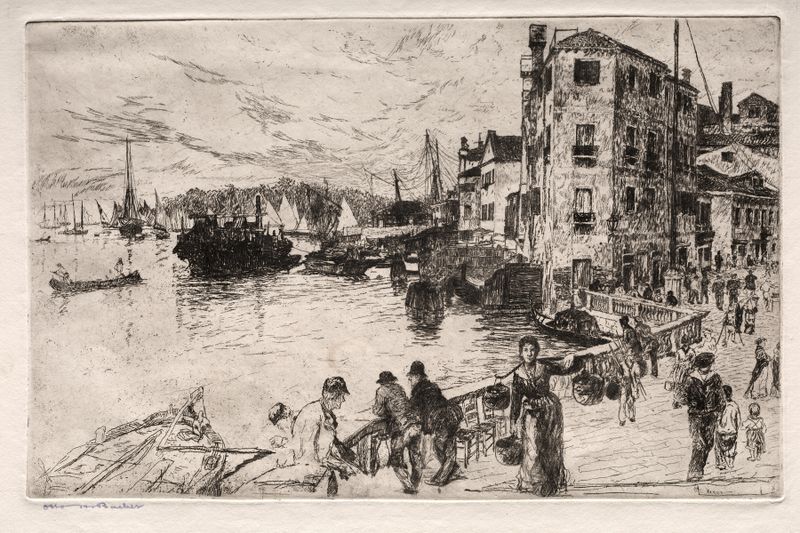
What if beauty was never meant to be finished? The delicate interplay of light and shadow in Otto Henry Bacher's work invites endless contemplation, revealing the transient nature of existence. Look closely at the foreground, where a slender bridge arches gracefully over the water. Notice how the soft shadows mingle with the rippling reflections beneath, creating a dance of texture and depth. The muted palette of earth tones and cool blues evokes a sense of calm, while the seemingly effortless brushstrokes breathe life into the scene.
Each element is meticulously placed, guiding the gaze across the canvas, inviting viewers to traverse this moment captured in time. Yet, beneath the serene surface lies a deeper complexity. The looming shadows suggest both beauty and impermanence, hinting at the duality of nature’s elegance and its inherent fragility. The bridge, a symbol of connection, contrasts sharply with the dark waters below, evoking feelings of solitude despite the peaceful scene.
This tension between light and darkness reflects the artist's exploration of life's fleeting moments, encouraging a contemplation of what it means to be present. During the late 19th century, Bacher created this piece amidst a rising fascination with Impressionism and the natural world. Working primarily in the United States and Europe, he was influenced by the changing styles of his contemporaries. This period of innovation in the art world, along with his personal experiences traveling and observing landscapes, deeply informed his ability to capture the ephemeral beauty of his surroundings.
More Artworks by Otto Henry Bacher
Browse all →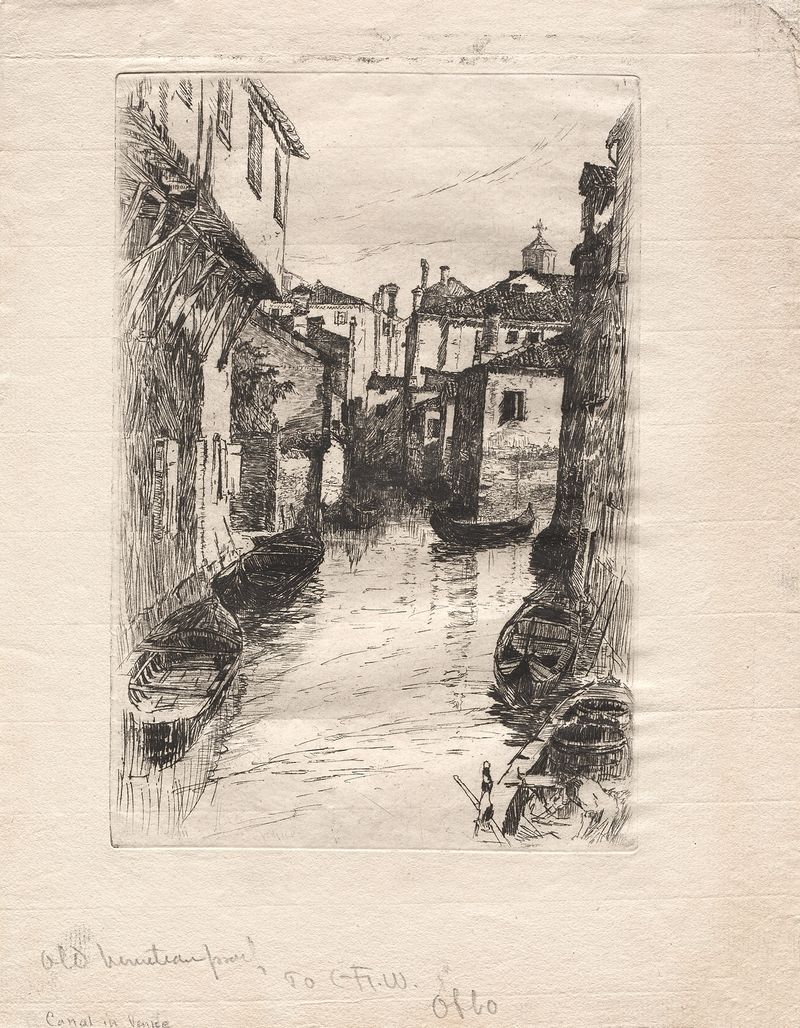
Canal in Venice
Otto Henry Bacher
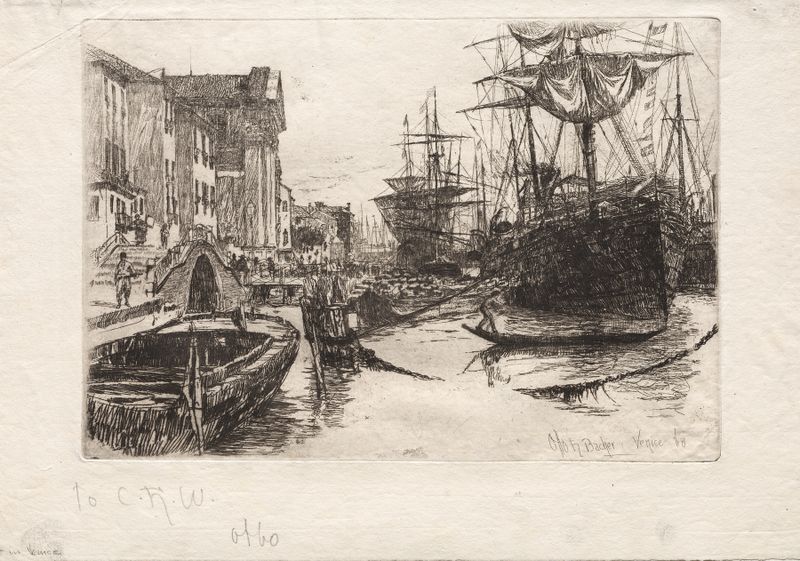
View in Venice
Otto Henry Bacher
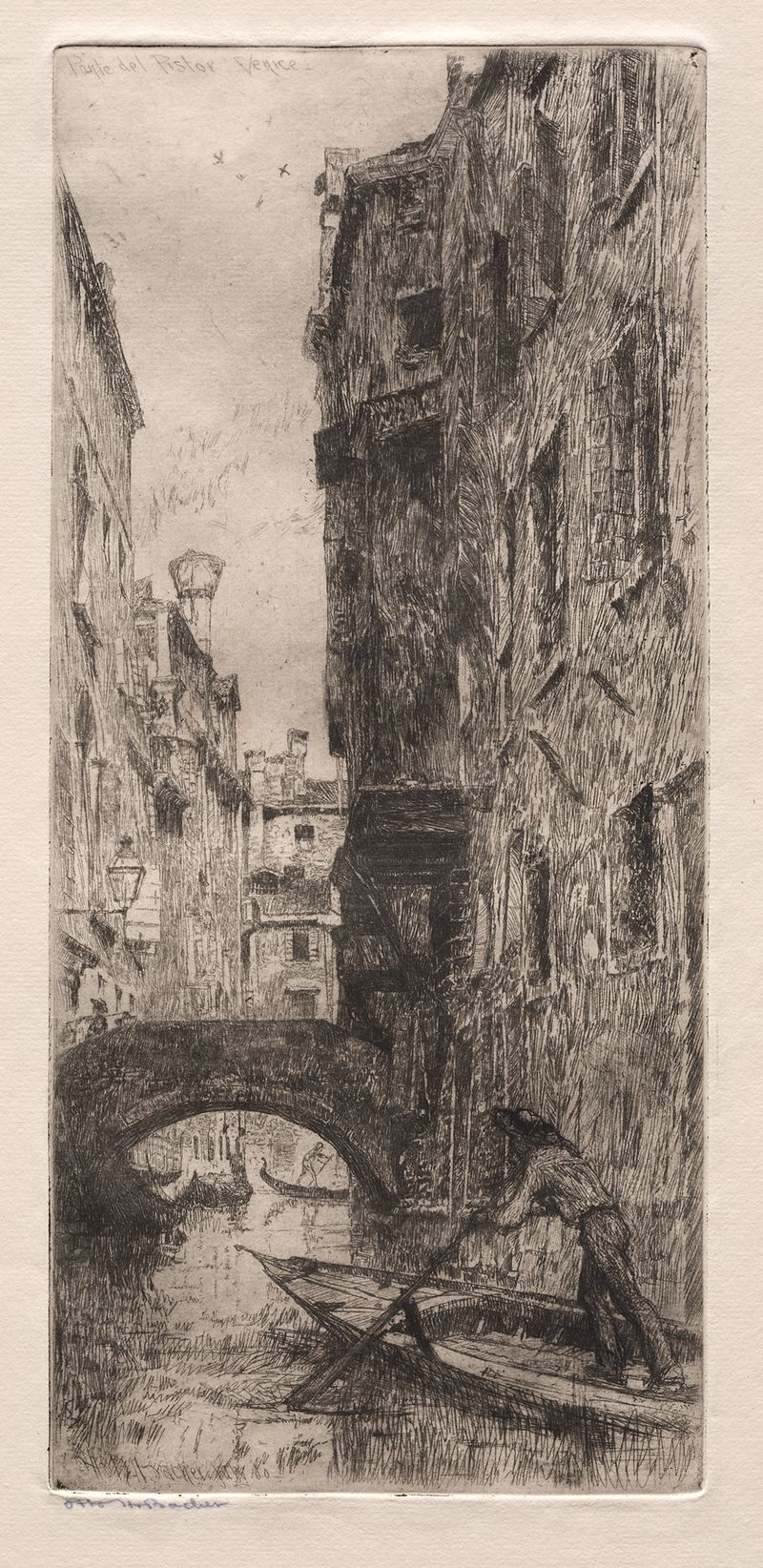
Ponte del Pistor, Venice
Otto Henry Bacher
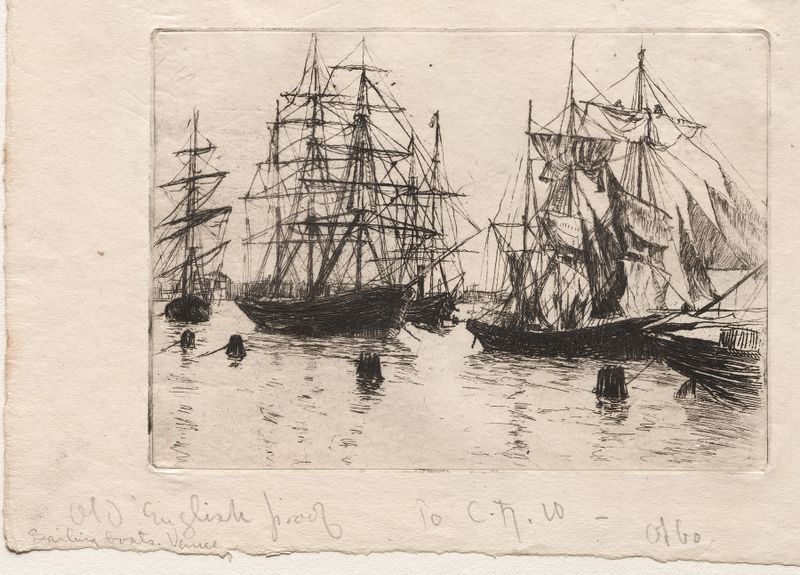
Sailing Boats, Venice
Otto Henry Bacher
Fondamenta della Zattere
Otto Henry Bacher
Old Sycamore
Otto Henry Bacher
Traghetto San Felice
Otto Henry Bacher
View in Venice
Otto Henry Bacher
Castello Quarters, Riva
Otto Henry Bacher
St. Clair Street, Cleveland
Otto Henry Bacher





