
Ponte della Trinita — History & Facts
What if silence could speak through light? In the delicate balance of dusk and dawn, the fleeting moments of transition resonate with a profound yearning that lingers just beyond the horizon. Begin by focusing on the graceful arch of the bridge, where its sturdy stone structure slices through the soft hues of twilight. Notice how the muted palette of blues and greys defines the water below, creating a mirror that both reflects and distorts the reality above. The gentle strokes of the artist highlight the play of light, guiding your gaze across the bridge to the distant hills, cloaked in a veil of mist.
Each brushstroke feels intentional, capturing not just a place, but a moment suspended in time. As you explore the painting further, subtle contrasts emerge: the solidity of the bridge juxtaposed against the ethereal quality of the surrounding landscape. This interplay evokes a sense of longing, as if the bridge connects two worlds—the tangible and the ephemeral. The way light dances on the water’s surface suggests movement and change, while the stillness of the scene invites contemplation.
This tension between stability and transience encapsulates a profound emotional depth, reflecting the artist's own introspections. David Young Cameron created this piece between 1902 and 1907, during a time of significant transition in the art world, as Impressionism was giving way to Modernism. Living in Scotland, he was immersed in the natural beauty of the landscapes around him. His works from this period often explored themes of light and atmosphere, illustrating his desire to convey not just the visual, but the emotional resonance of a scene.
More Artworks by David Young Cameron
Browse all →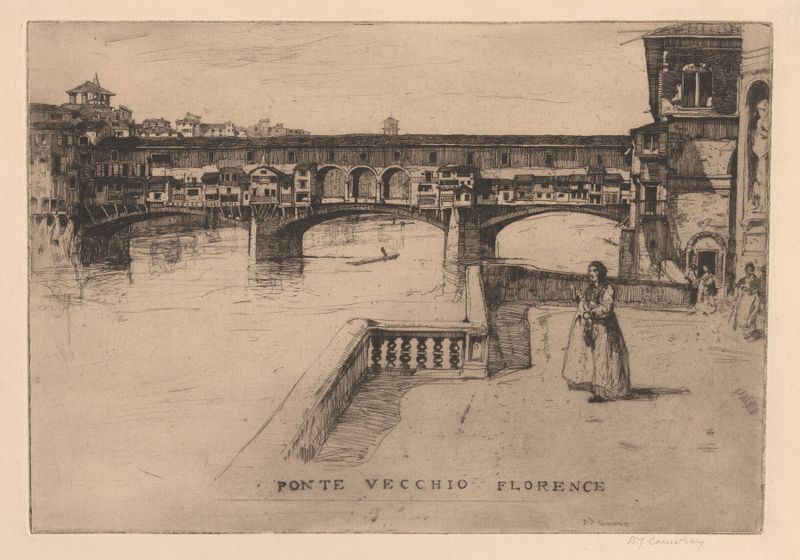
Ponte Vecchio
David Young Cameron

The Deanery, Winchester
David Young Cameron
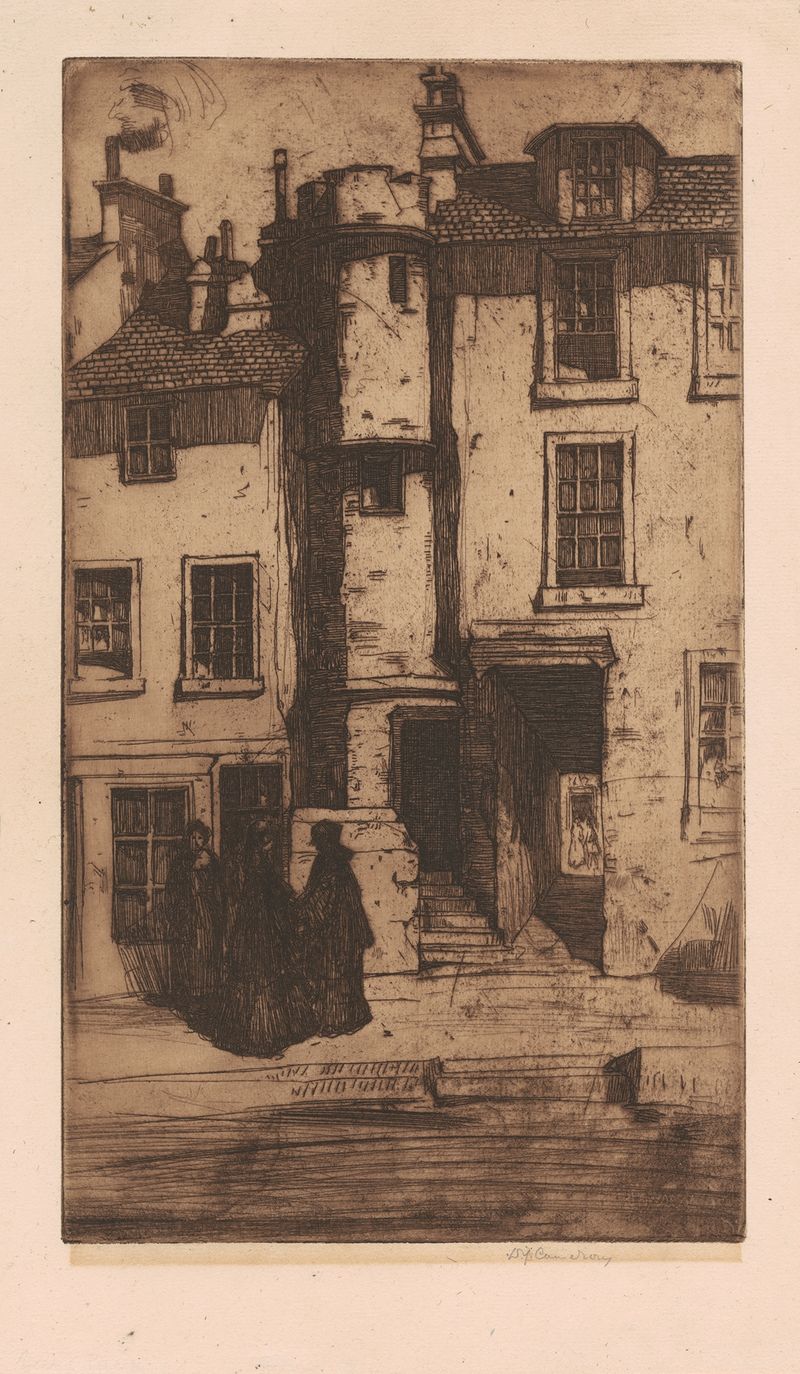
Old Houses, Stirling
David Young Cameron
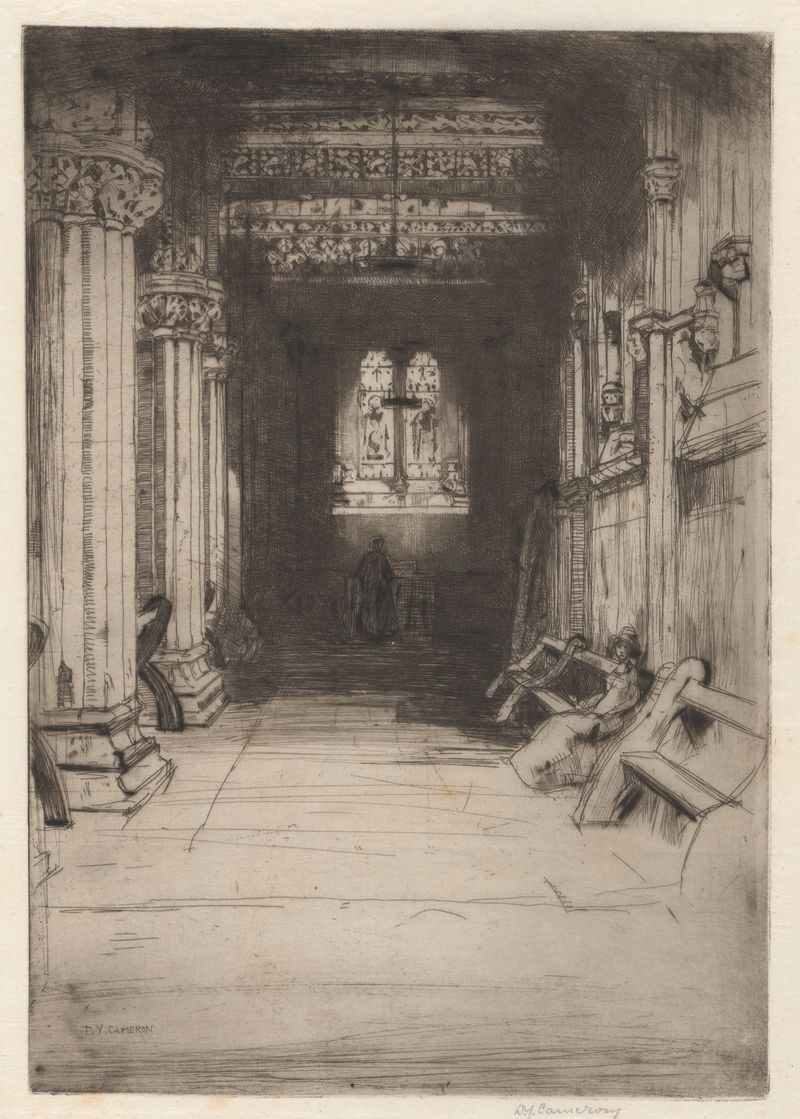
Rosslyn Chapel
David Young Cameron

The Old Museum, Beauvais
David Young Cameron
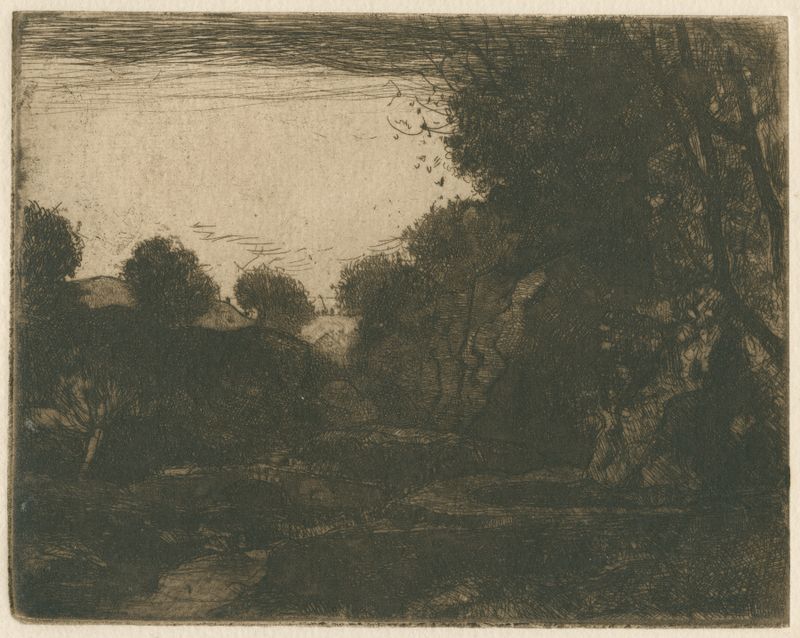
On the Bradford
David Young Cameron

The Smithy
David Young Cameron
Castle Moyle
David Young Cameron
Downing Street
David Young Cameron

Glasgow Cathedral
David Young Cameron





