Pope’s Villa, Twickenham — History & Facts
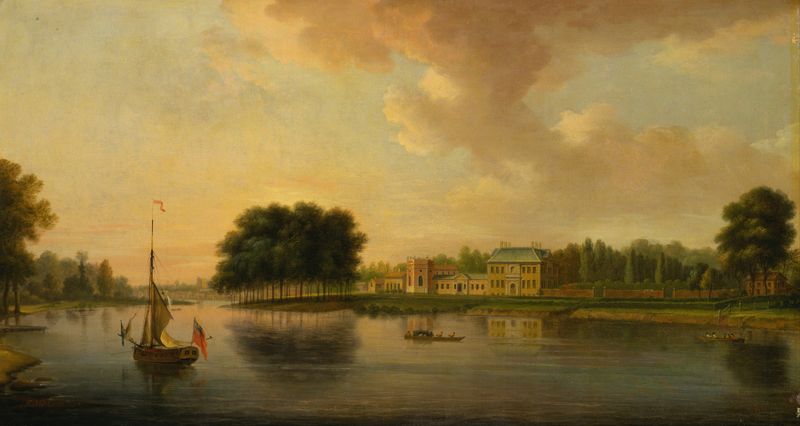
In its stillness, it reflects the heart of the beholder, inviting contemplation and introspection. Focus on the gentle curves of the landscape, where lush greens intertwine with hints of muted blues and browns. Here, light dances across the surface, illuminating the details of the villa nestled among the trees. Notice how the composition leads your gaze up towards the sky, which, with its soft, billowy clouds, creates a tranquil dialogue with the serenity of the architecture below. Delve deeper into this captivating scene; the villa represents a sanctuary, a retreat from the clamor of everyday life.
The juxtaposition of the structured building against the wildness of nature speaks to the tension between civilization and the untamed world. Subtle brushstrokes embody a sense of quietude, urging the viewer to consider their own place within this harmony, or perhaps discord, of existence. Joseph Nickolls painted this piece during a time when the picturesque landscapes of Britain were celebrated for their beauty and tranquility. Working in the late 18th century, he was influenced by the burgeoning Romantic movement, which sought to capture the profound relationship between humanity and nature.
In creating this work, he contributed to a tradition that revered serene vistas as a means of exploring deeper emotional landscapes.