Port, West Indies — History & Facts
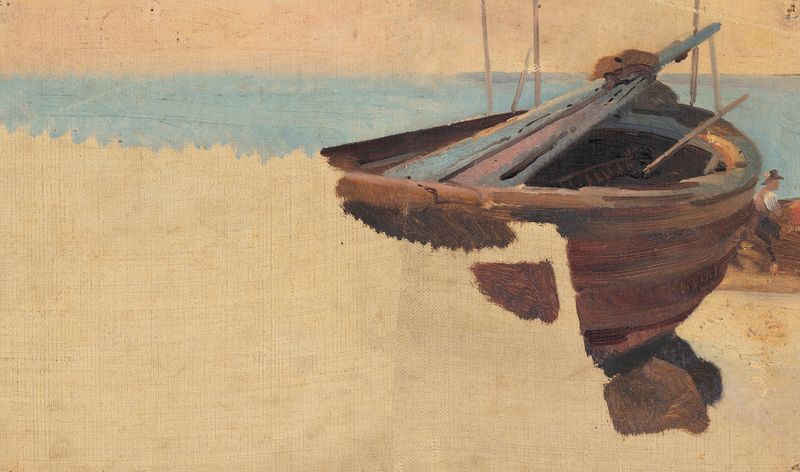
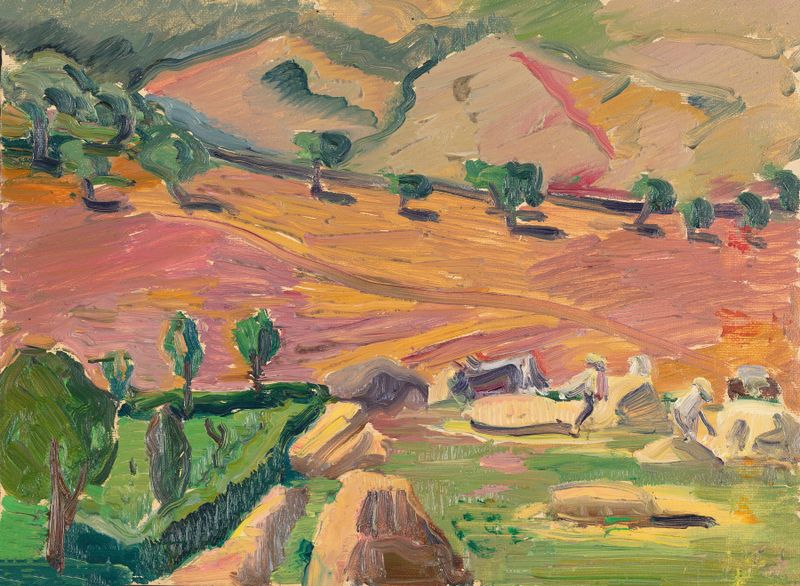
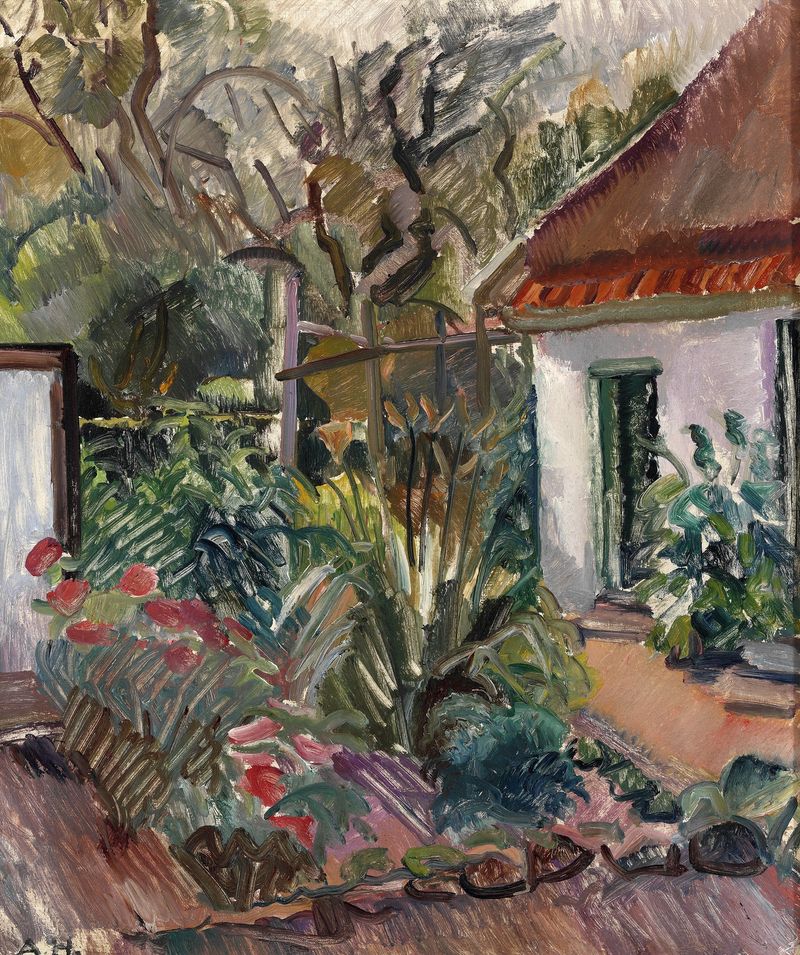
This sentiment dances in the vibrant hues of a tropical landscape, where color serves as both memory and emotion, whispering secrets of a bygone era into the present moment. Look to the center, where cerulean waves cascade against a sun-kissed shoreline, their rhythmic embrace painting a picture of serenity. Notice how the warm golds of the sandy beach contrast with the deep greens of the palm trees that sway gently in the breeze. Holm's brushwork, both fluid and deliberate, captures not just the scenery but also the very essence of the air, imbuing the scene with a palpable warmth that invites you to step into this idyllic world. Yet beneath the surface lies a tension between the vibrancy of life and the encroaching shadows of history.
The idyllic setting serves as a reminder of the socio-political complexities of the West Indies during the early 20th century, where the beauty of the landscape masks deeper struggles. The juxtaposition of light and dark in Holm’s palette reflects the dichotomy of paradise and peril, urging viewers to confront the narratives often overlooked in favor of sheer beauty. In 1914, Astrid Holm was living in a period of artistic exploration, influenced by the rise of modernism and the changes in global perspective that accompanied the onset of World War I. Working from her studio in Copenhagen, she sought to capture the essence of her travels, blending her experiences with the vibrant palette that defined her style.
This painting, a testament to her skill, showcases a moment where art becomes both a celebration and a reflection of a complex world.