Garden — History & Facts
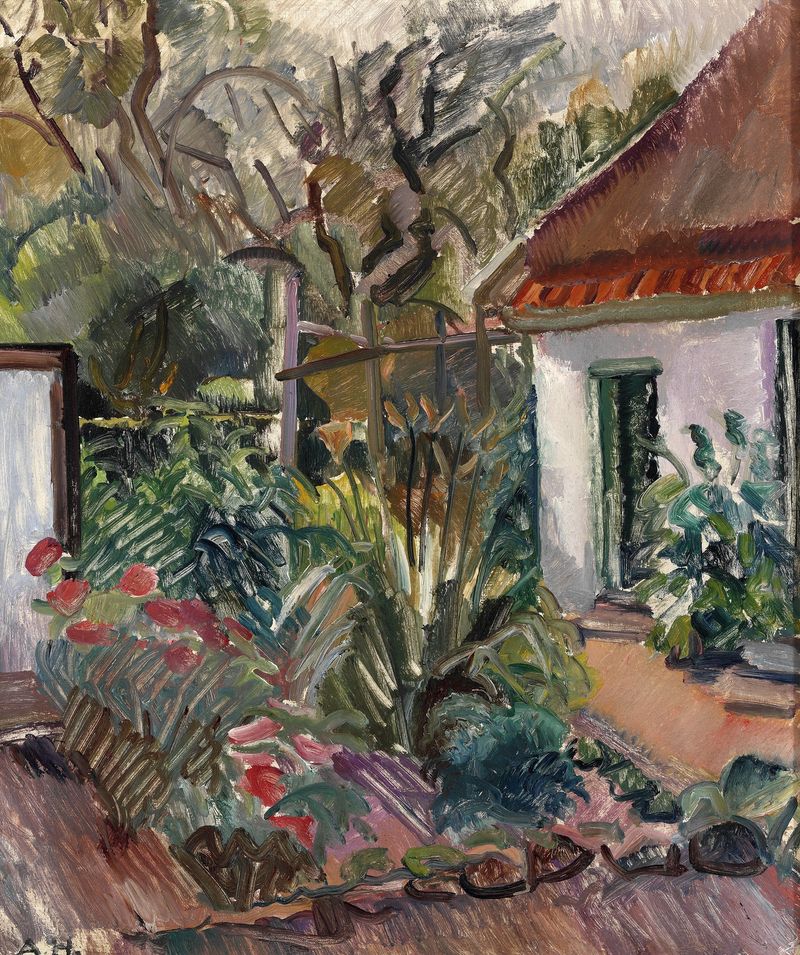
In a sun-dappled garden, the air hangs heavy with silence, punctuated only by the soft rustle of leaves. A figure stands still, cloaked in shadow, surrounded by blooms that burst forth with vivid colors, yet an aura of melancholy envelops the scene. The sunlight spills over petals like liquid gold, casting a bittersweet glow that captures a moment suspended between memory and longing. Look to the left, where delicate flowers sway gently in the breeze, inviting your gaze toward their vibrant hues of crimson and violet.
Notice the interplay of light and shadow across the figure's face, revealing a depth of emotion that speaks to the heart of the viewer. Each stroke of paint is intentional; the composition delicately balances the lively bursts of color with the stillness of the human form, conveying a profound sense of both beauty and sorrow. The garden, lush yet solitary, becomes a metaphor for grief itself—a place of natural beauty where one grapples with loss. The contrast between the vibrancy of the blossoms and the figure's muted presence evokes the complexities of mourning, illustrating how love can flourish even amidst heartbreak.
The fleeting nature of the flowers serves as a reminder of the transience of life, intensifying the depth of feeling encapsulated in the scene. Astrid Holm created Garden during the early 20th century, a time marked by profound social change and personal introspection. Living in Denmark, she drew inspiration from her surroundings and her own life experiences, which were shaped by both joy and sorrow. This painting reflects her exploration of the human condition, particularly the intricacies of grief, while contributing to the evolving narrative of modernist art during that era.