
Porte du Château d’Outrelaise (Calvados) — History & Facts
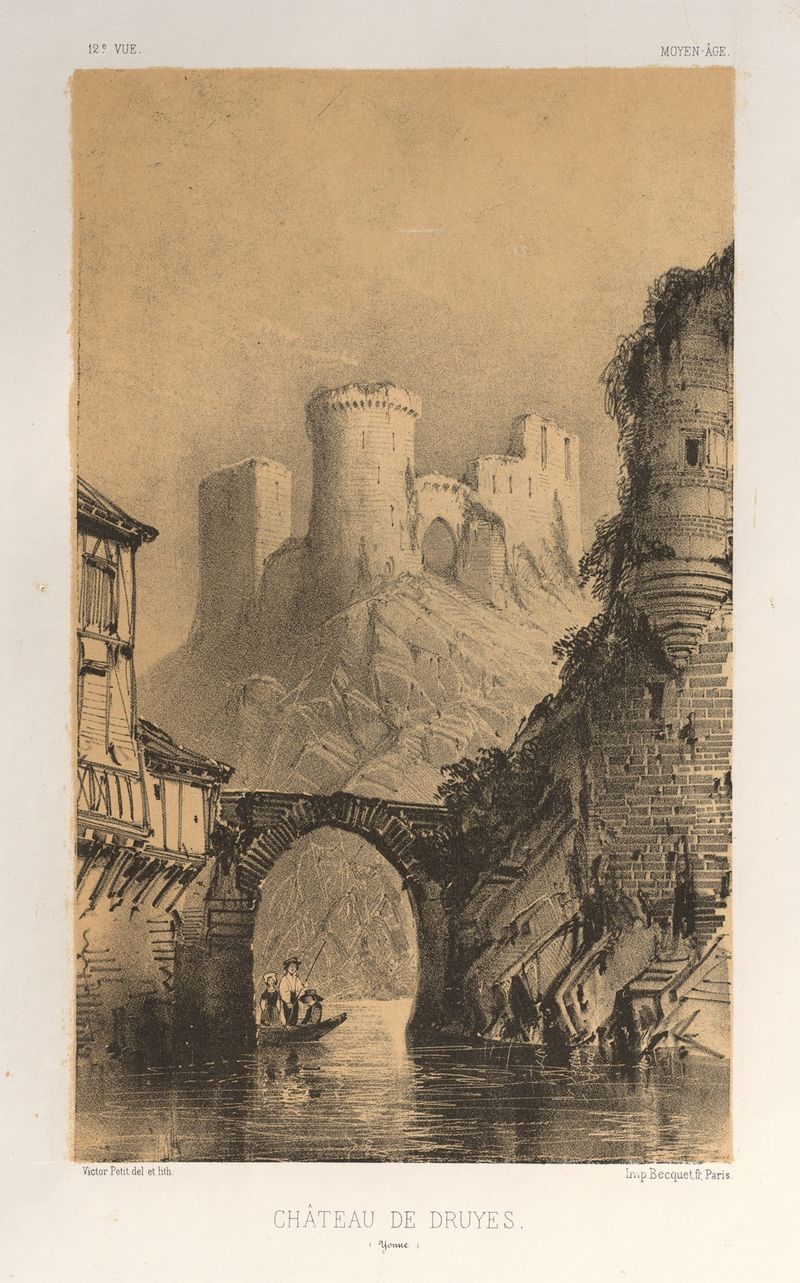
Could a single brushstroke hold eternity? In Porte du Château d’Outrelaise, a moment frozen in time echoes the artist's deep obsession with the passage of history and the essence of architectural splendor. Focus your gaze on the grand archway that dominates the canvas, its weathered stones telling stories of time's relentless march. The muted palette, enriched by shades of earthy browns and soft grays, evokes a somber yet dignified atmosphere. Notice how the light delicately caresses the textured surface of the stones, casting soft shadows that whisper the secrets of the past.
Each brushstroke is deliberate, creating a sense of depth that invites the viewer to step closer, almost as if they might traverse that archway into history itself. Hints of emotional tension lie beneath the surface: the stark contrast between the enduring structure and the ephemeral nature of human existence. The archway stands resolute, embodying stability and permanence, while the surrounding landscape hints at decay and the passage of time. This juxtaposition speaks to the artist's struggle with his own place in the continuum of art and life.
The distant tree line softly encroaching the scene suggests nature’s quiet reclaiming of human achievement, enhancing the allure of what once was and what will inevitably fade. Victor Petit painted this work in 1860, during a time when the art world was shifting towards Impressionism, yet he remained rooted in a fascination with classical forms. Working in Calvados, he drew inspiration from the region's storied landscapes and medieval architecture. At this juncture in his career, Petit was navigating the tension between tradition and modernity, a theme that resonates powerfully in this portrait of time’s relentless passage.
More Artworks by Victor Petit
Browse all →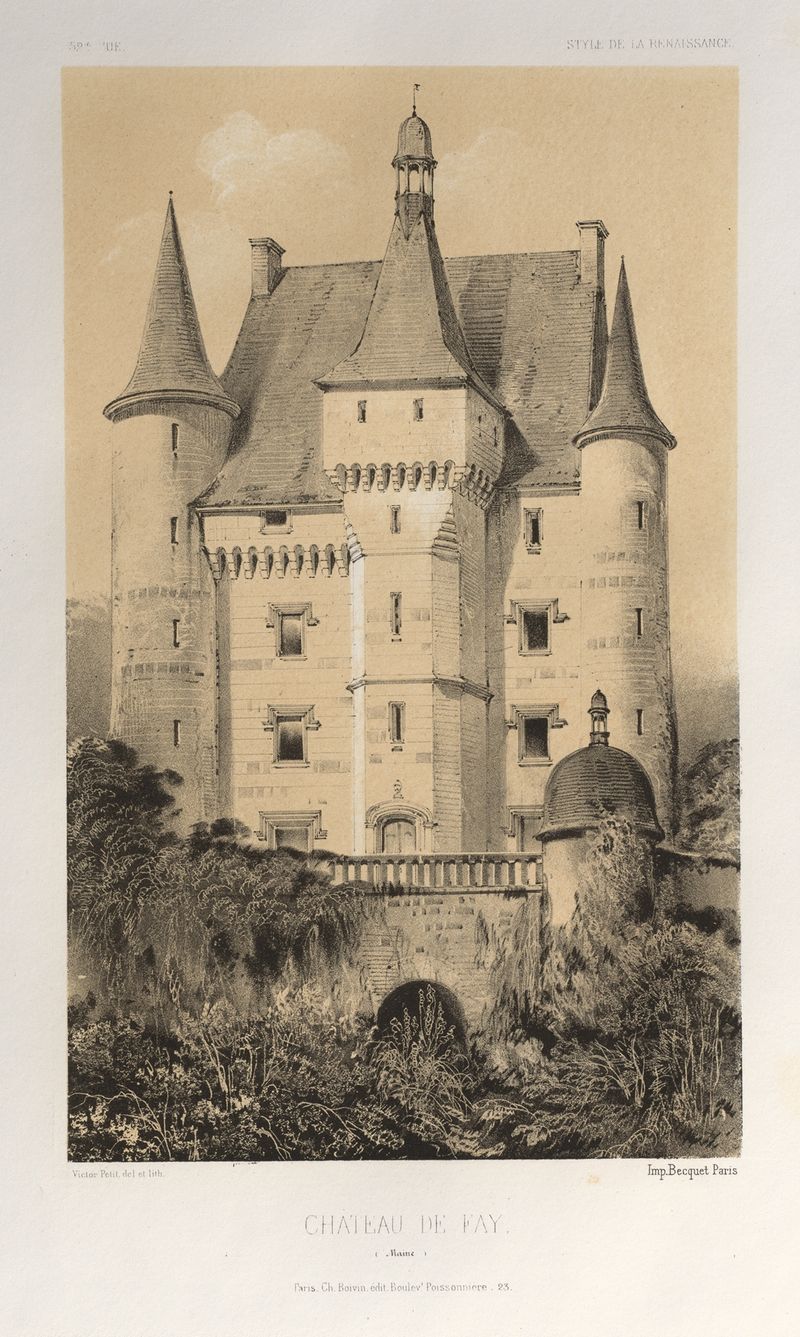
Château De Fay (Maine)
Victor Petit
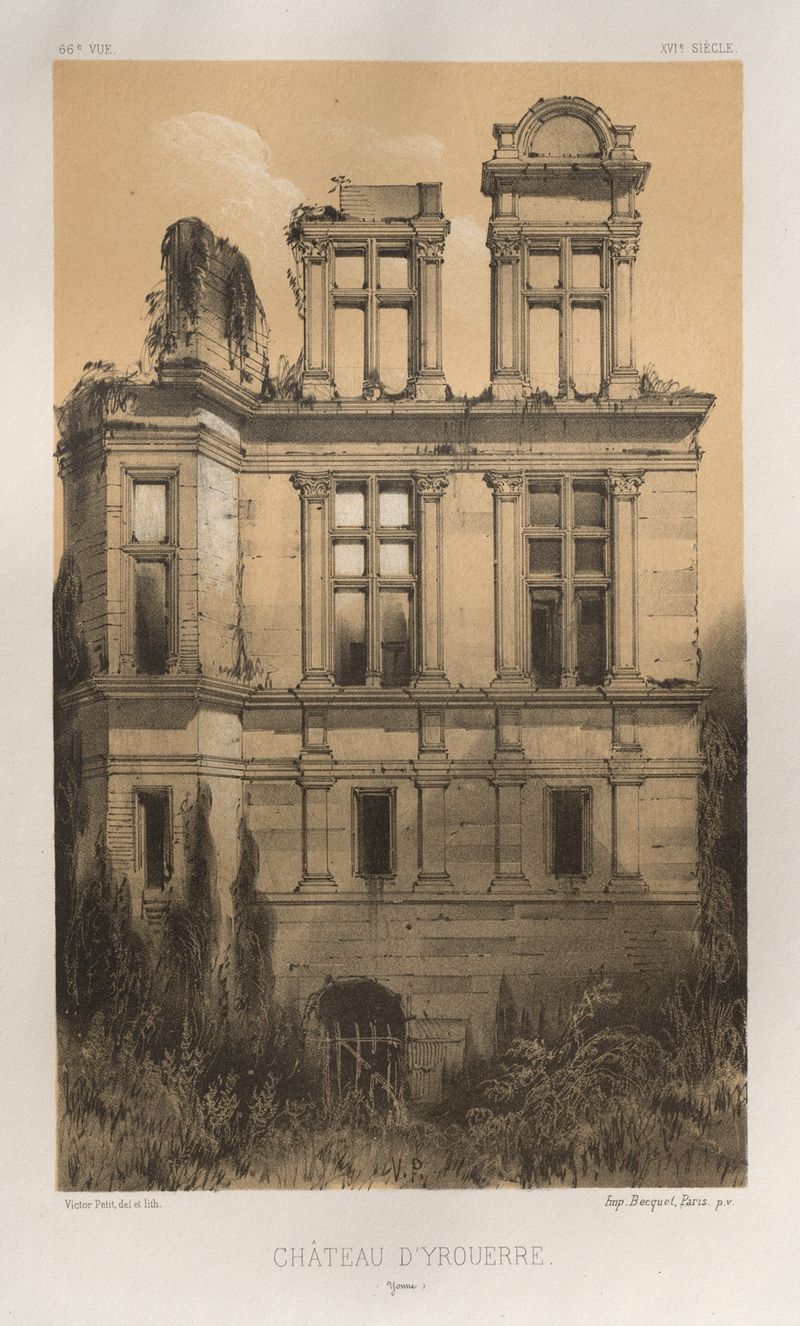
Château D’Yrouerre (Yonne)
Victor Petit
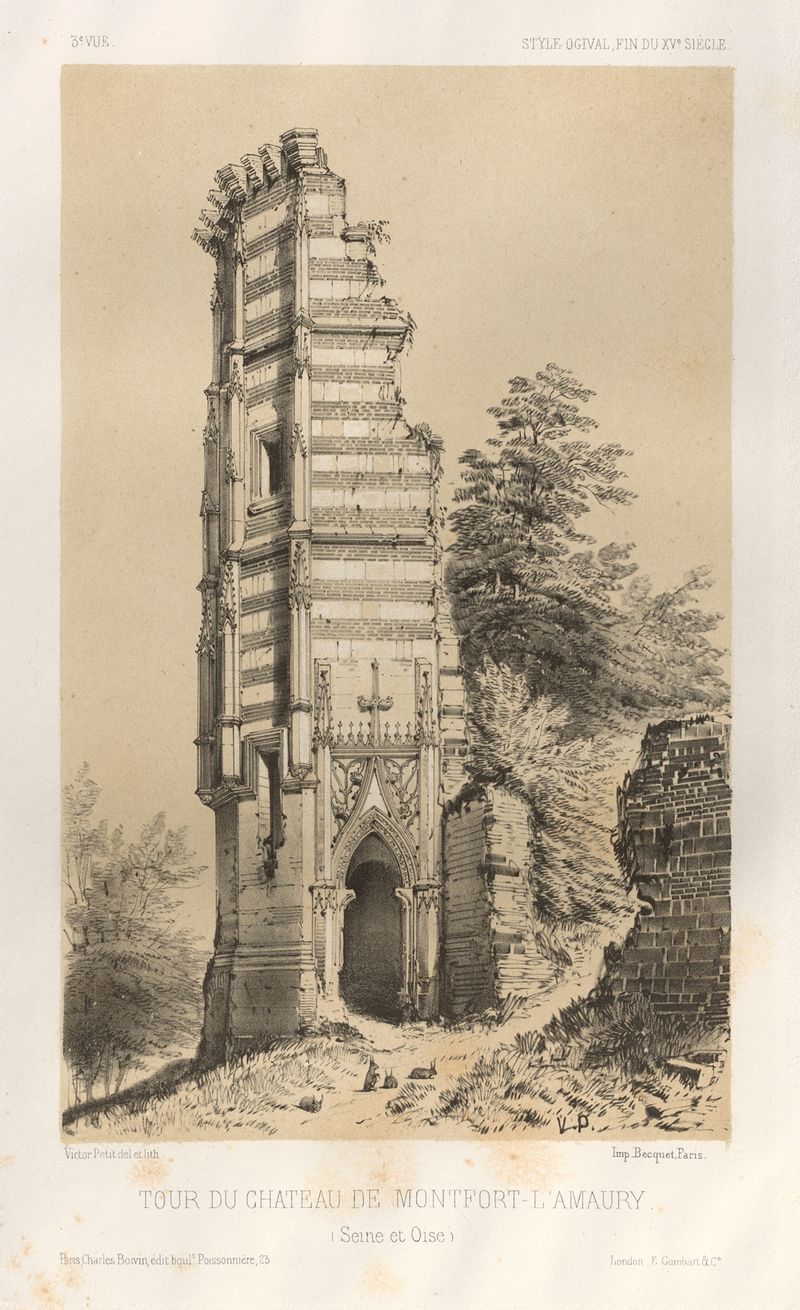
Tour du chateau de Montfort-l’Amaury (Seine-et-Oise)
Victor Petit

Tour Du Port De Marseille (Bouches Du Rhône)
Victor Petit
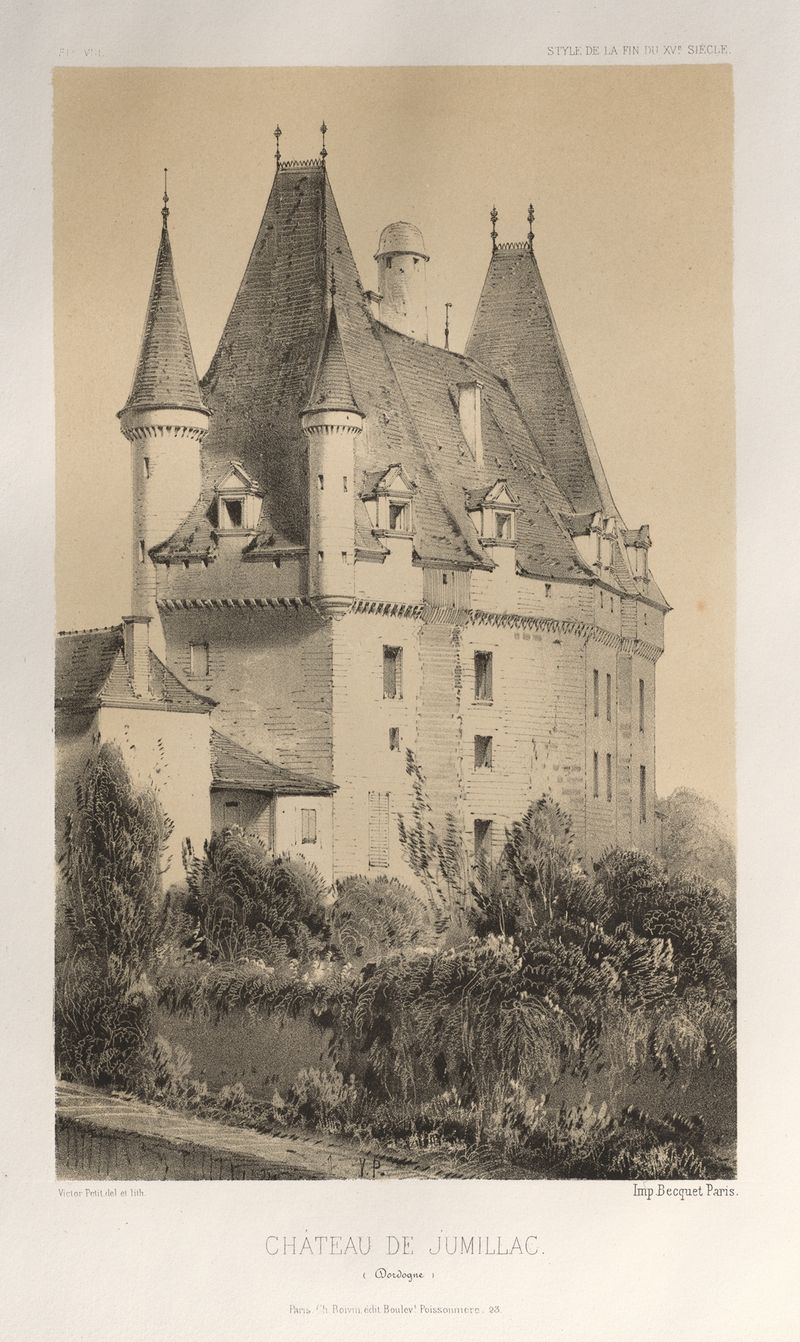
Château De Jumillac (Dordogne)
Victor Petit

Château de Tévray (Eure)
Victor Petit

Galerie Du Château De Jouancy (Saone et Loire)
Victor Petit

Château De Mello (Oise)
Victor Petit
Chateau De Druyes (Yonne)
Victor Petit

Le ChasteLet-Neuf (Corrèze)
Victor Petit
More Architecture Art
Browse all →
The statue of Liberty
Frédéric Auguste Bartholdi

View of Houses in Delft, Known as ‘The Little Street’
Johannes Vermeer

View of Houses in Delft, Known as ‘The Little Street’
Johannes Vermeer

The Cathedral in Rouen. The portal, Grey Weather
Claude Monet

The yellow house
Vincent van Gogh

The Church in Auvers-sur-Oise, View from the Chevet
Vincent van Gogh