
Porte Notre-Dame à Sens d’après d’ancienNEs dessins (Yonne) — History & Facts
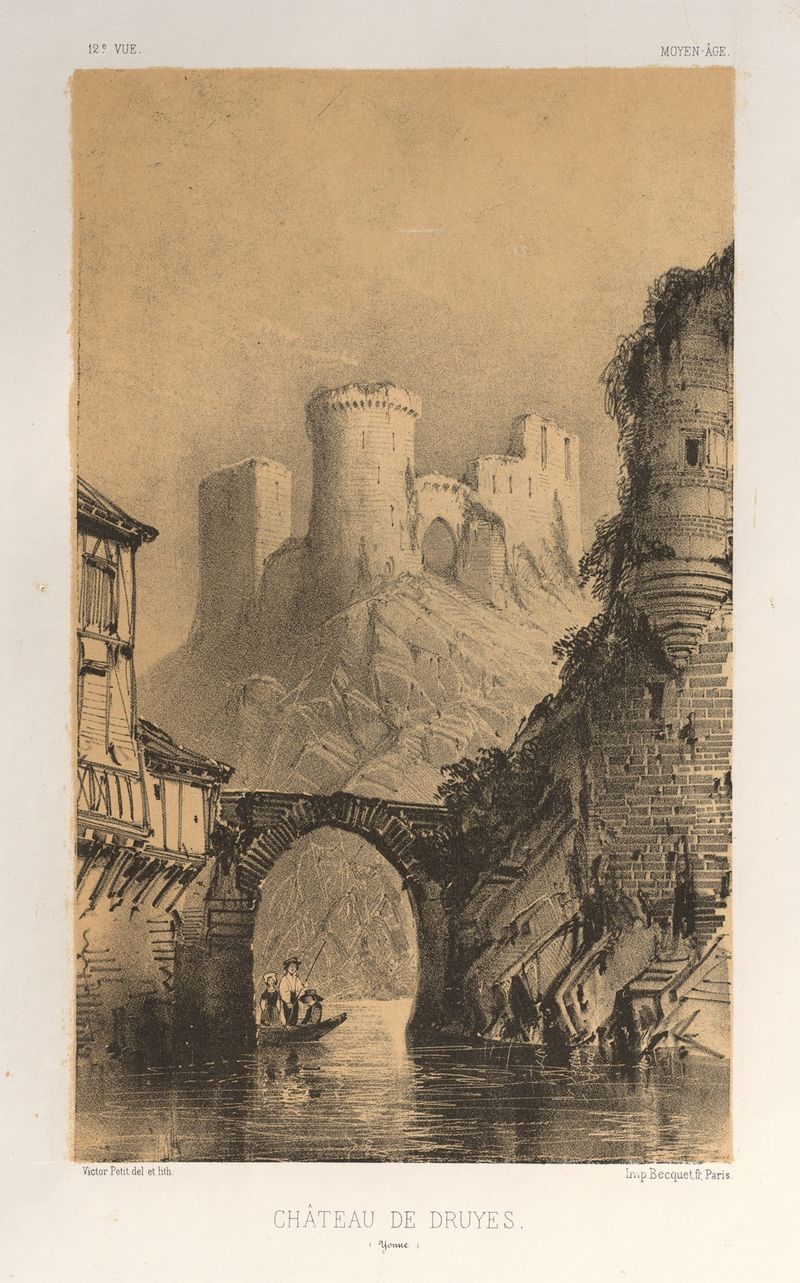
In that pregnant pause between conception and realization, the artist's vision stirs, yearning to materialize into form. Each brushstroke is a testament to creation, an invitation for the viewer to engage with what has yet to be fully revealed. Focus on the intricate details of the archway, where the stonework seems to breathe under a delicate interplay of light and shadow. Notice how the muted palette of grays and browns conjures an aura of timelessness, while the architectural lines guide your gaze upward, accentuating the monumentality of the structure.
The careful rendering of the surrounding landscape offers a sense of place, grounding the ethereal beauty of the scene in reality. Yet, beneath the surface lies a tension between permanence and transience. The weathered stones evoke echoes of history, suggesting the stories held within their cracked facades. Simultaneously, the inclusion of delicate foliage at the edges signifies the relentless passage of time, reminding us that nature quietly encroaches upon human endeavors.
Each detail, from the arch's curvature to the soft hues of the sky, reflects the artist's contemplation of creation — both architectural and artistic. Victor Petit completed this work in 1860 during a time when France was transitioning towards modernity, and a renewed interest in historical architecture was emerging. This period saw Petit engaged with the remnants of the past, incorporating the influence of his predecessors while carving out his own artistic identity. The work resonates with a longing for the historical, as society grappled with the pressing changes of the world around him.
More Artworks by Victor Petit
Browse all →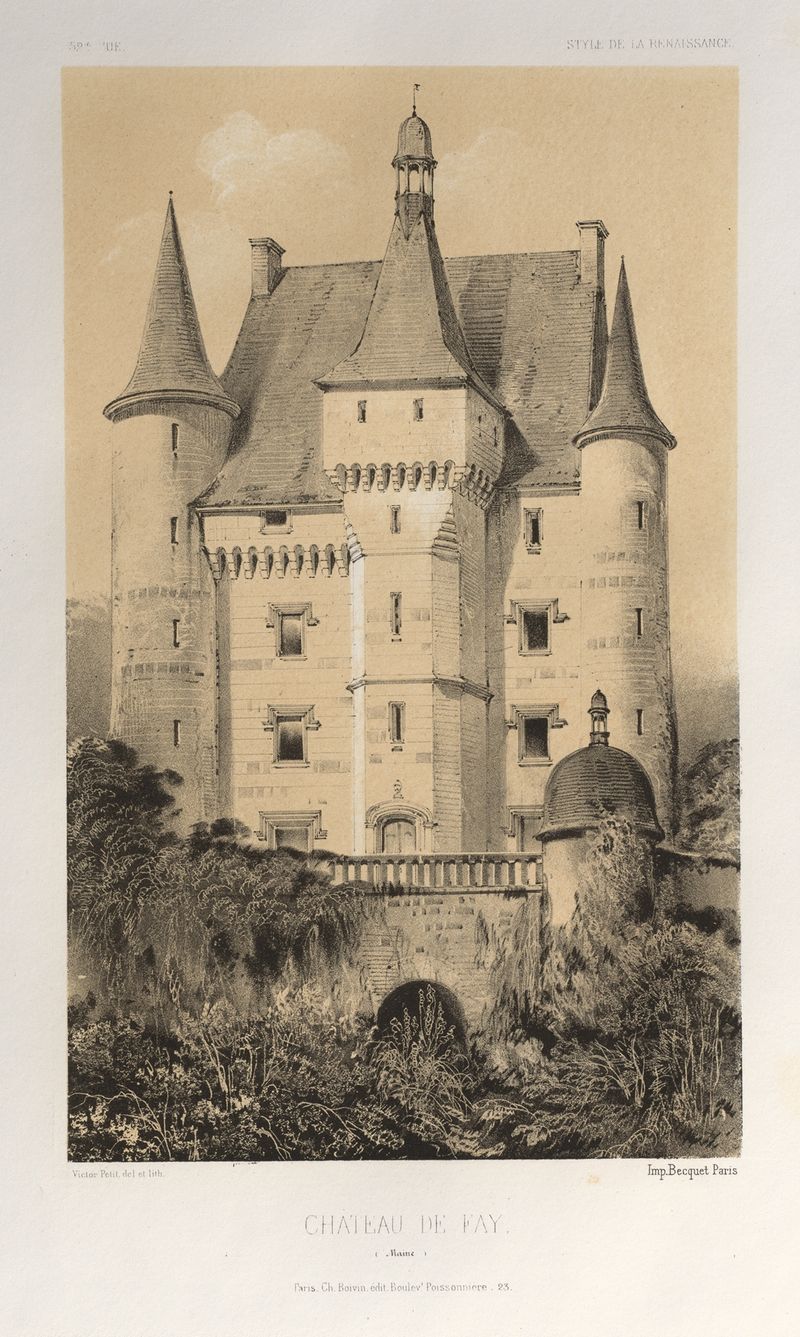
Château De Fay (Maine)
Victor Petit
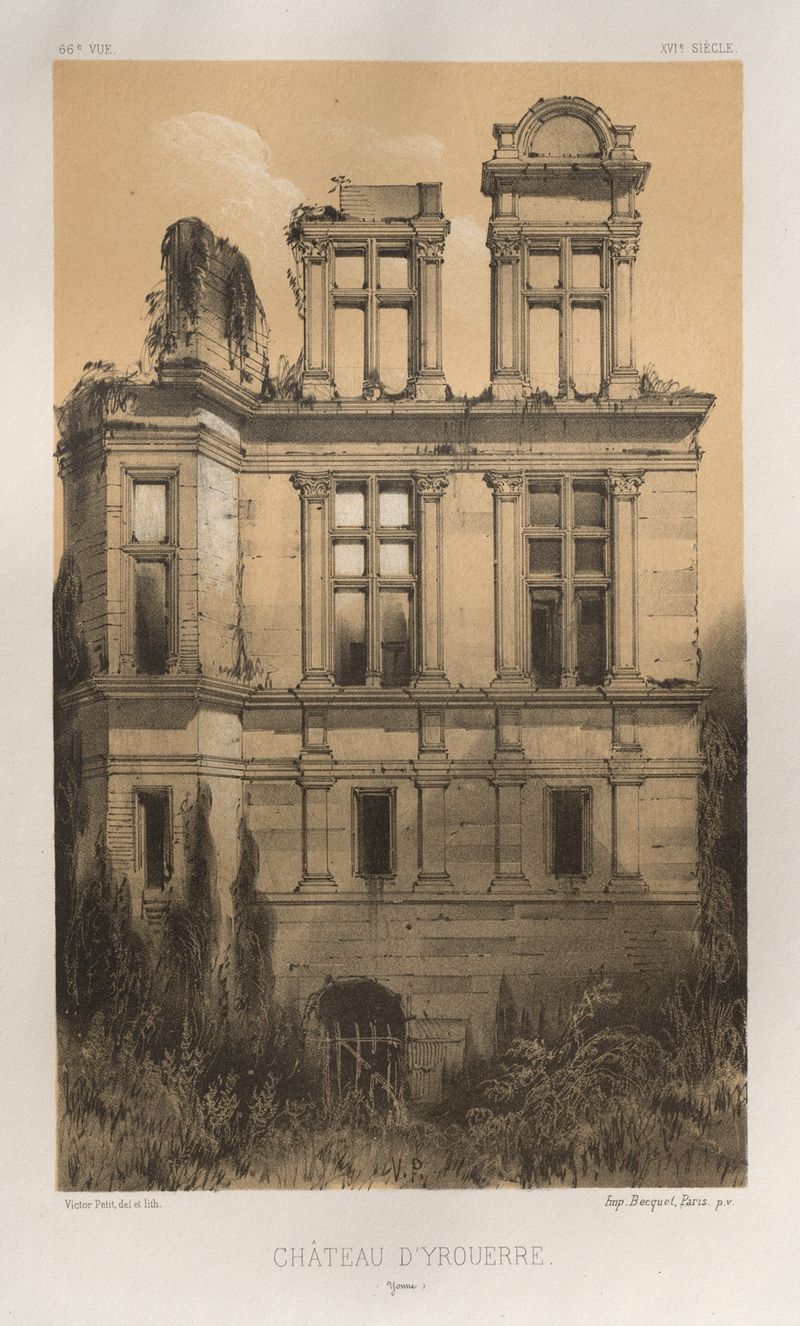
Château D’Yrouerre (Yonne)
Victor Petit
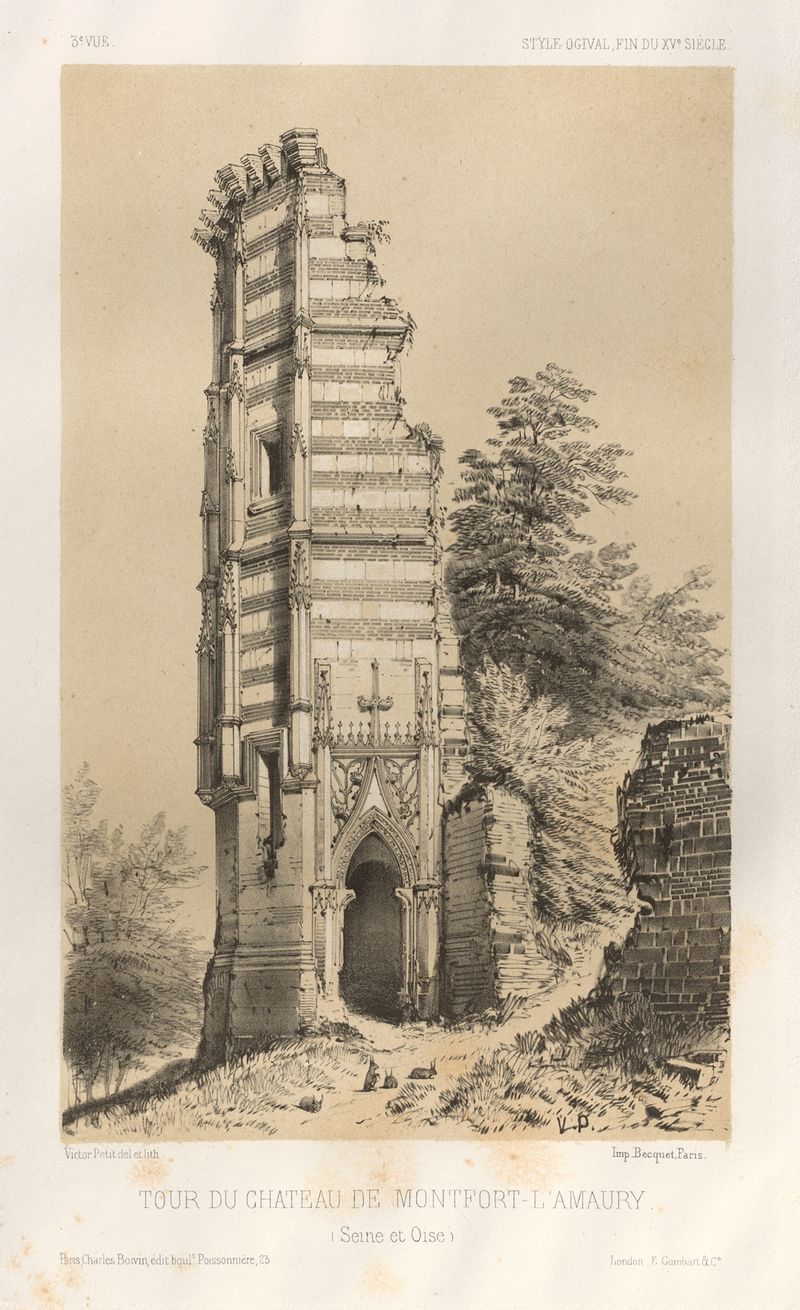
Tour du chateau de Montfort-l’Amaury (Seine-et-Oise)
Victor Petit

Tour Du Port De Marseille (Bouches Du Rhône)
Victor Petit
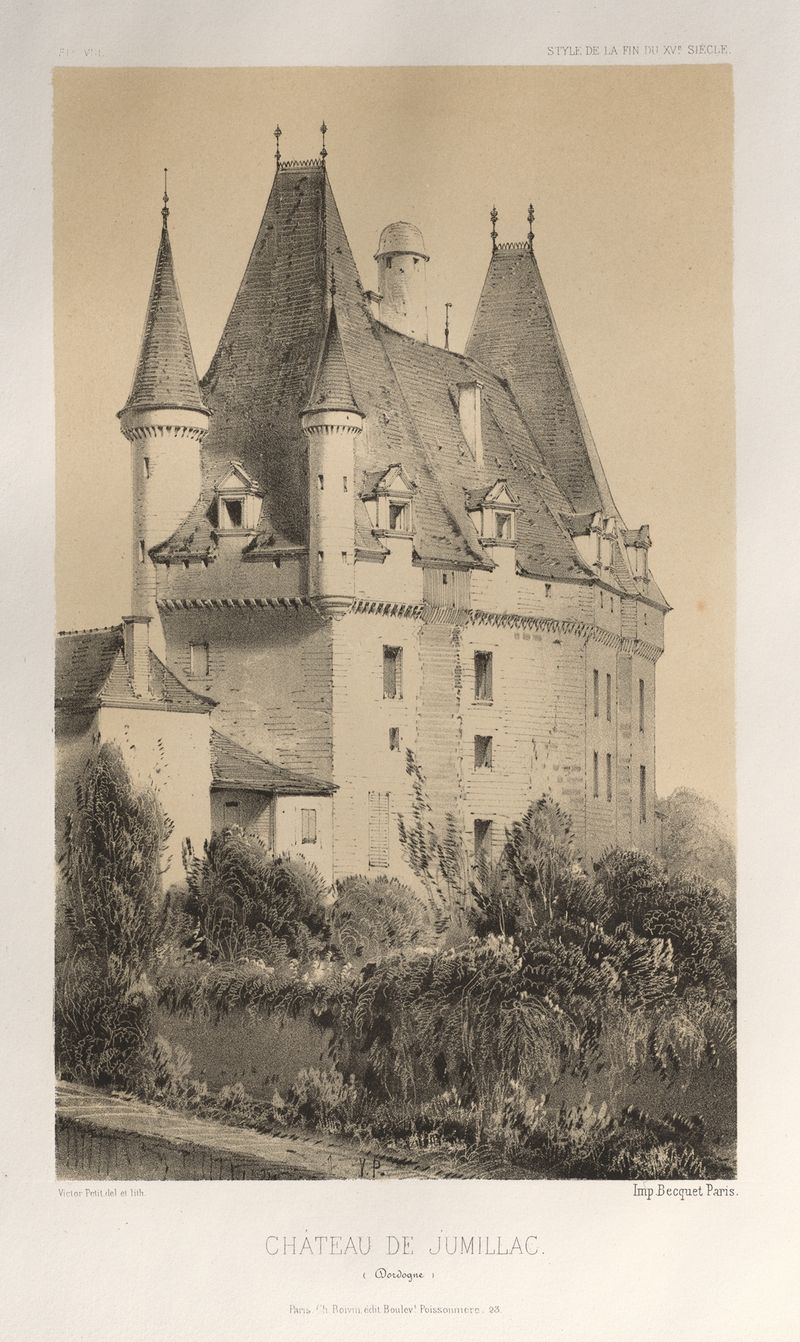
Château De Jumillac (Dordogne)
Victor Petit

Château de Tévray (Eure)
Victor Petit

Galerie Du Château De Jouancy (Saone et Loire)
Victor Petit

Château De Mello (Oise)
Victor Petit
Chateau De Druyes (Yonne)
Victor Petit

Le ChasteLet-Neuf (Corrèze)
Victor Petit
More Architecture Art
Browse all →
The statue of Liberty
Frédéric Auguste Bartholdi

View of Houses in Delft, Known as ‘The Little Street’
Johannes Vermeer

View of Houses in Delft, Known as ‘The Little Street’
Johannes Vermeer

The Cathedral in Rouen. The portal, Grey Weather
Claude Monet

The yellow house
Vincent van Gogh

The Church in Auvers-sur-Oise, View from the Chevet
Vincent van Gogh