
Portrait de femme 02 — History & Facts
It is the quiet confidence of the sitter’s gaze that first draws the viewer in—a profile rendered with such calm poise that it seems to invite speculation about the thoughts behind those steady features. The background, a tapestry of short, rhythmic brushstrokes in greens and pinks, hums with energy, yet never distracts from the woman’s silhouette. Each mark in the patterned field seems to echo the soft modeling of her face and the gentle fall of light across her cheek, as if the world around her is quietly attuned to her presence.
The artist’s choice to place her in profile, with hair neatly gathered and attire modest, gives her an air of dignity and introspection, while the subtle gradations of color in her skin and dress reveal a patient, attentive hand at work. Painted in 1896, Portrait de femme 02 by Achille Laugé belongs to a moment in French art when the boundaries between Impressionism and Pointillism blurred, and artists experimented with the science of color and the poetry of everyday life. Works like this were rarely grand commissions; rather, they emerged from a desire to capture the people and rhythms of provincial life, often painted for friends, family, or local patrons. The Musée des Beaux-Arts de Carcassonne, where this portrait now resides, preserves such pieces as records of a world in transition—when new artistic languages were being forged in quiet studios far from Paris.
History has kept few traces of the sitter’s identity or the painting’s early journey, but the image itself remains a testament to a time when even the simplest faces were worthy of deep, attentive study. Return to her gaze, and consider how much can be said with a few well-chosen strokes.
More Artworks by Achille Laugé

Ruelle au balcon fleuri
Achille Laugé
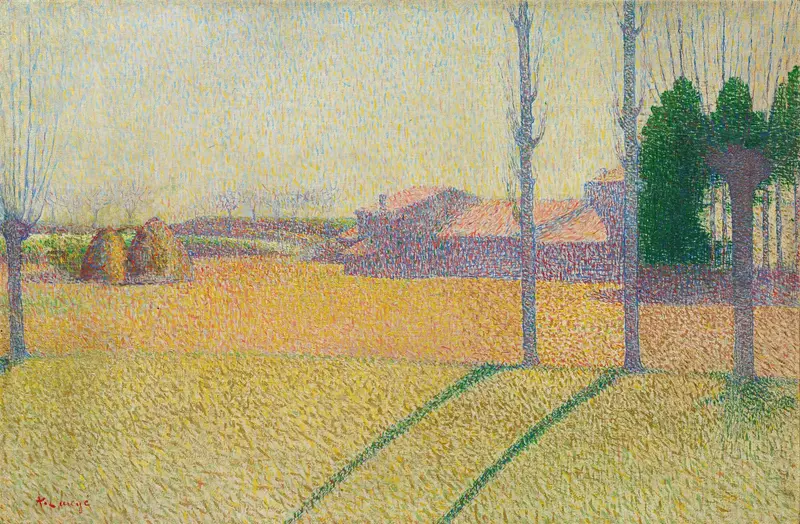
L’hort À Cailhau
Achille Laugé
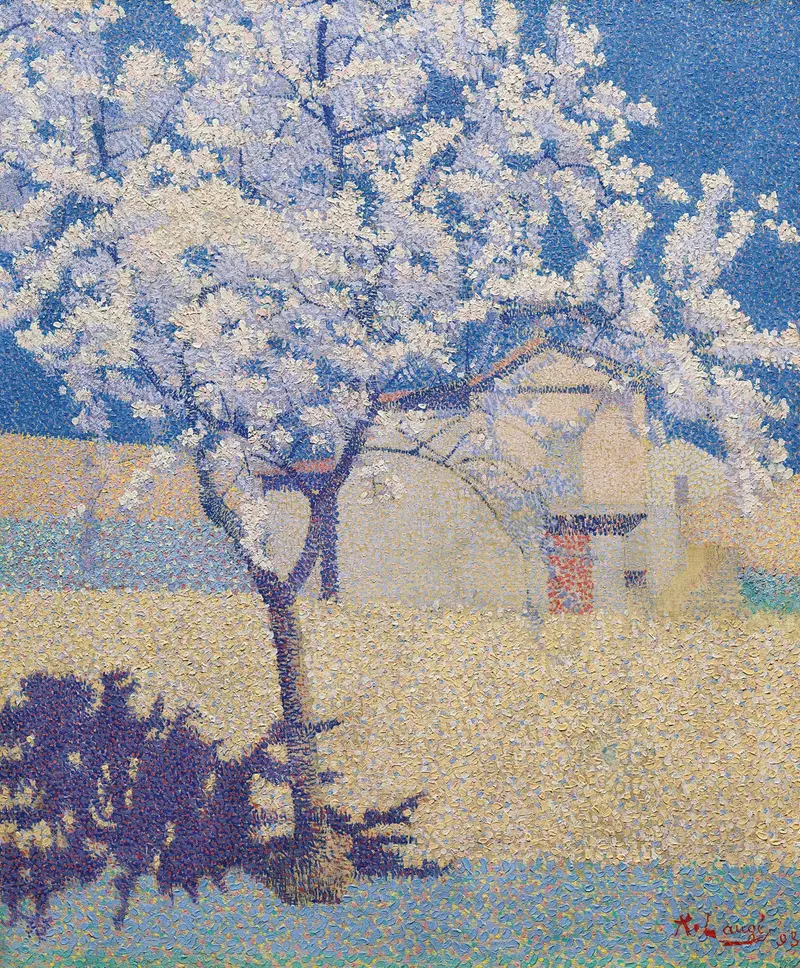
L’Arbre En Fleur
Achille Laugé
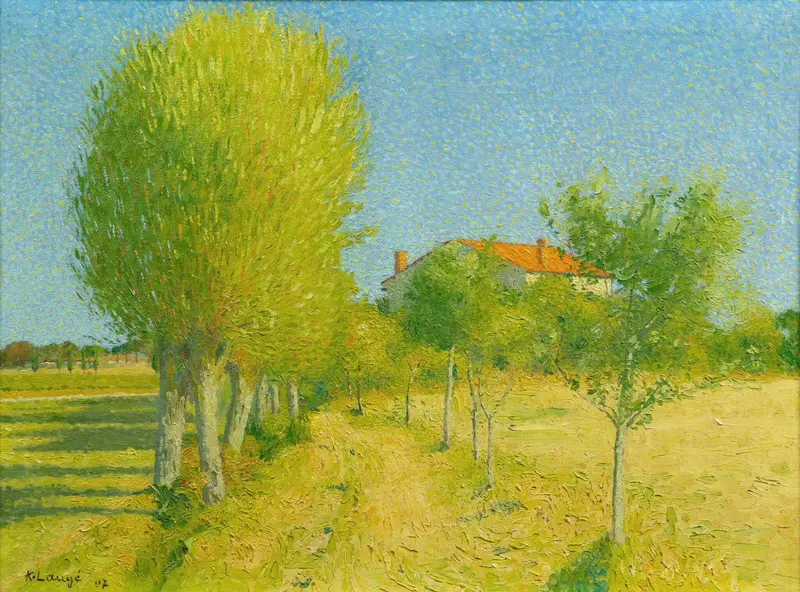
L’allée de saules derrière l’Alouette à Cailhau
Achille Laugé
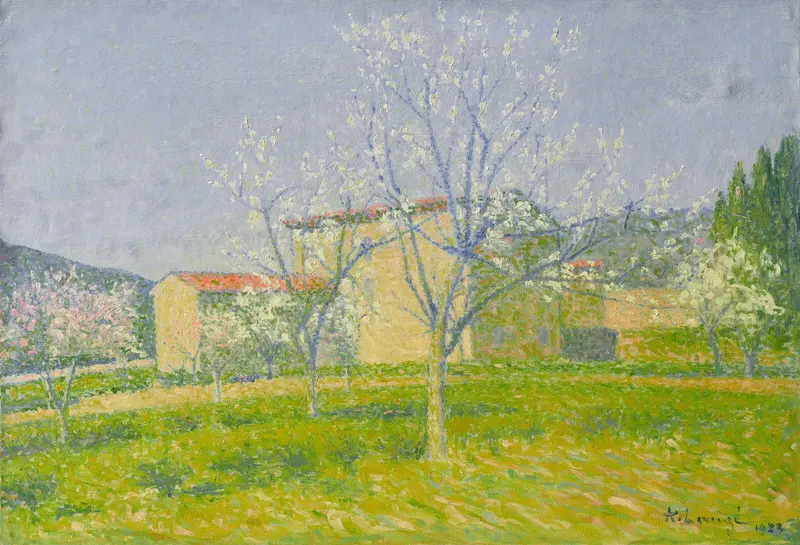
Verger en fleurs à Alet-les-Bains (Aude)
Achille Laugé
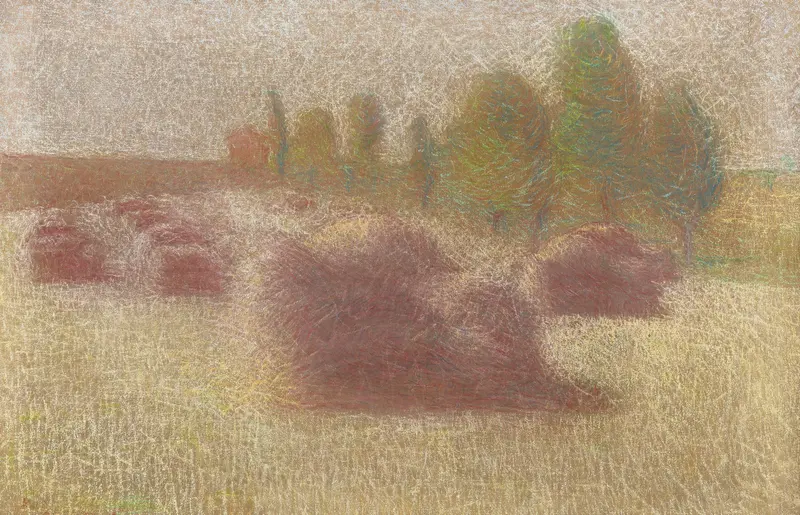
Les Gerbes
Achille Laugé
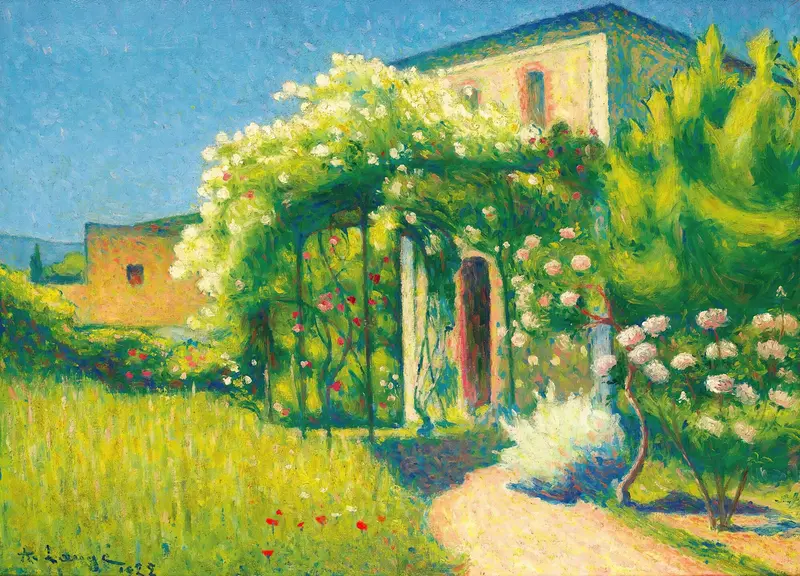
L’Atelier À Alet-Les-Bains
Achille Laugé
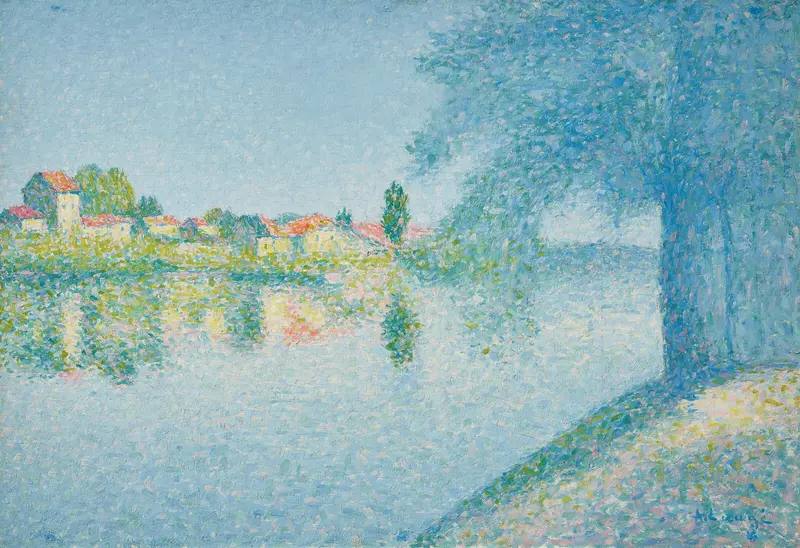
Vue des quais de la Garonne
Achille Laugé
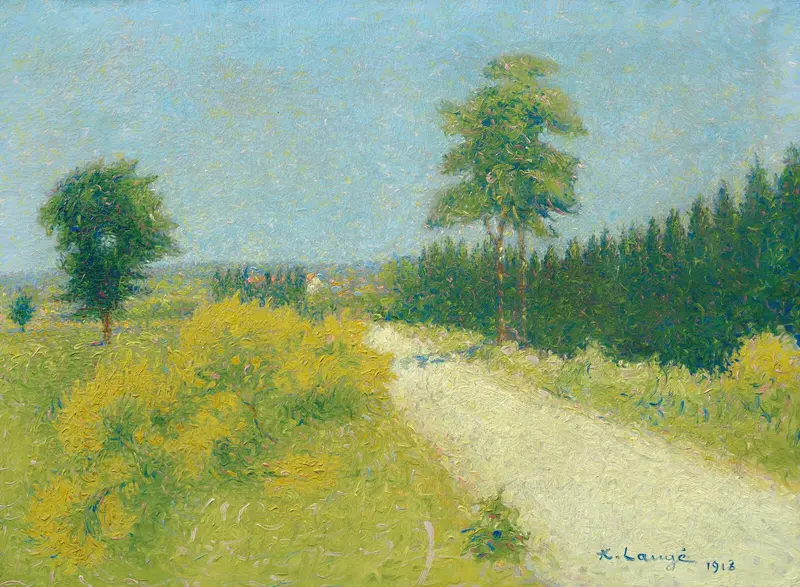
La route de Belvèze vers le relais
Achille Laugé
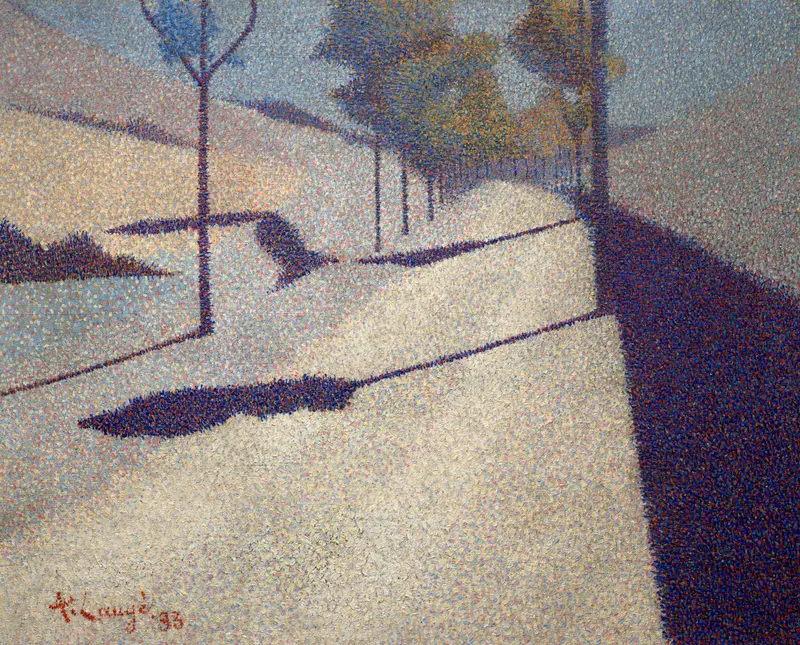
La route (The Road)
Achille Laugé





