
Portrait de Madame Astre — History & Facts
The first thing that catches the eye in Portrait de Madame Astre is the luminous, almost spectral presence of the sitter against a field of gentle, vibrating color. Her white dress, rendered in a tapestry of tiny, deliberate brushstrokes, radiates a quiet authority, while her steady gaze meets the viewer with a calm that is both reserved and inviting. The artist, Achille Laugé, uses the pointillist technique not for spectacle, but to create a soft, enveloping atmosphere—each dot of paint drawing the figure and her world into a delicate harmony.
The table to her side, holding a newspaper and a few books, signals a life of intellect and current events, anchoring her elegance in the world of ideas as much as fashion. The light, cool and even, models her form without drama, but with an insistence on clarity and presence. Painted in 1892, this portrait belongs to a moment when artists across France were experimenting with new ways to see and record modern life. The technique, pioneered by Georges Seurat and Paul Signac, was as much a scientific experiment as an artistic one—seeking to capture the shimmer of daylight or the subtlety of shadow through pure color.
Portraits of this kind were often commissioned by families wishing to assert their place in a changing society, or by artists eager to demonstrate the power of their new vision. Little is documented about the journey of this particular work, now recorded as “own work” and photographed in 2018, but its quiet confidence and technical precision invite viewers to linger, searching the surface for the pulse of a vanished era.
More Artworks by Achille Laugé

Ruelle au balcon fleuri
Achille Laugé
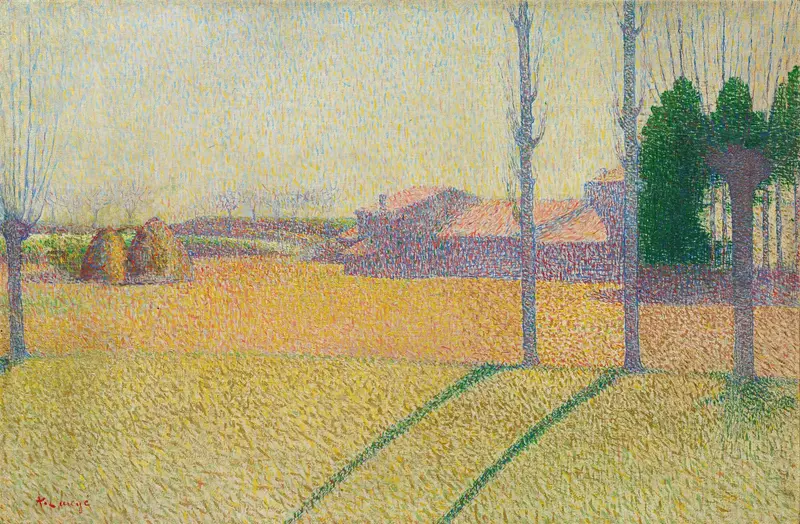
L’hort À Cailhau
Achille Laugé
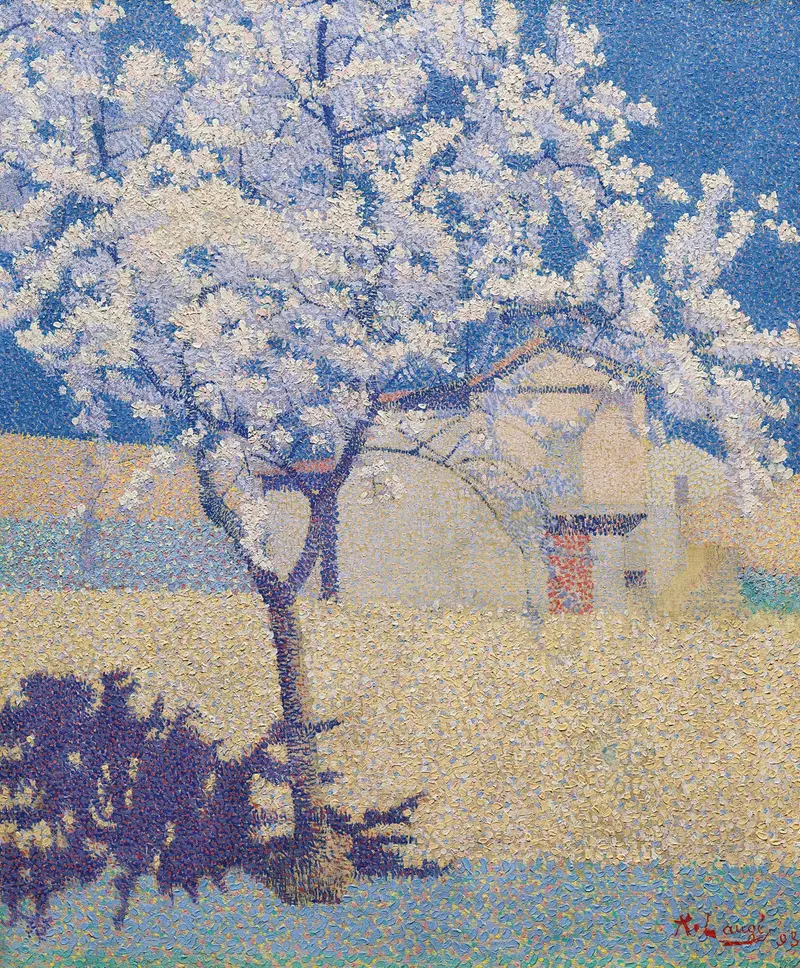
L’Arbre En Fleur
Achille Laugé
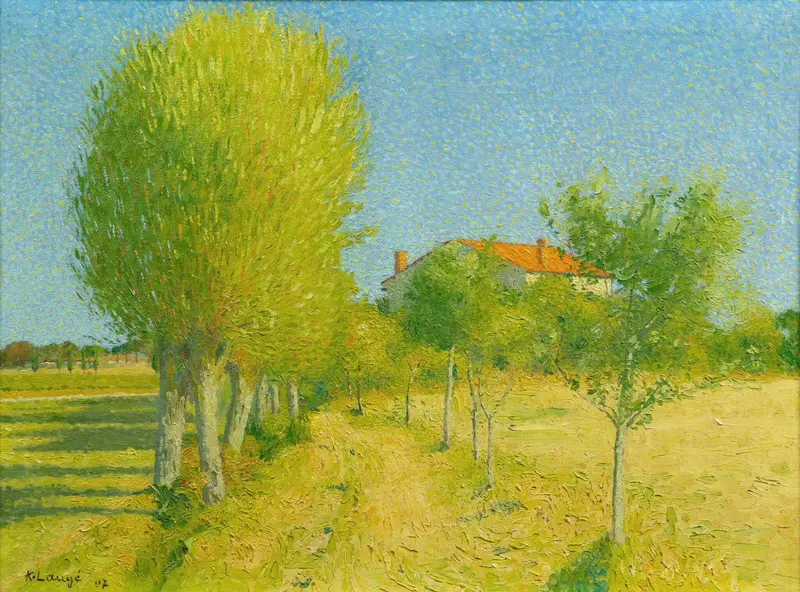
L’allée de saules derrière l’Alouette à Cailhau
Achille Laugé
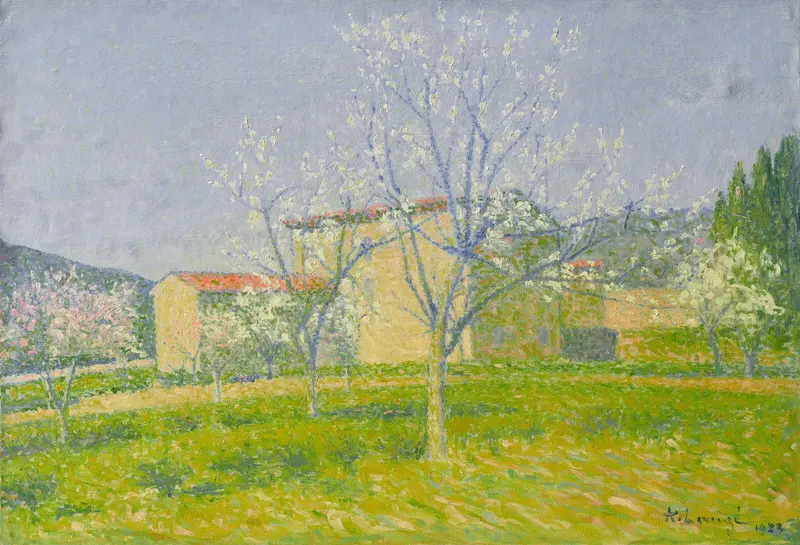
Verger en fleurs à Alet-les-Bains (Aude)
Achille Laugé
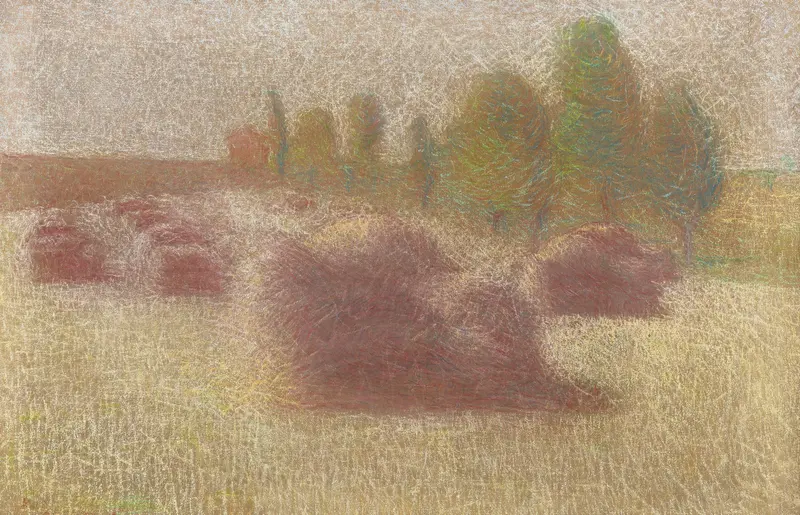
Les Gerbes
Achille Laugé
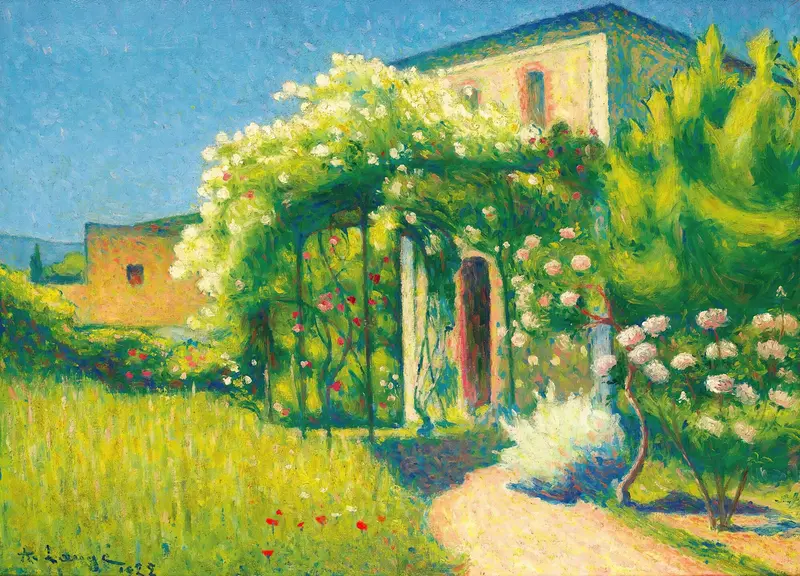
L’Atelier À Alet-Les-Bains
Achille Laugé
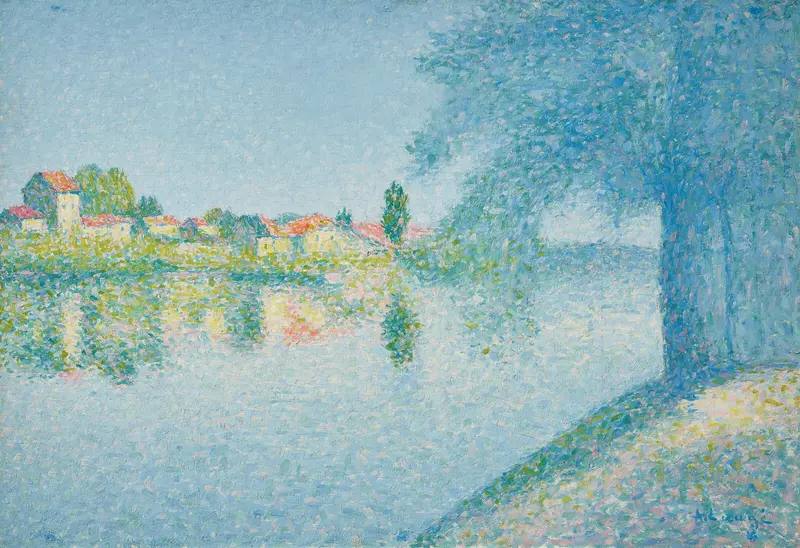
Vue des quais de la Garonne
Achille Laugé
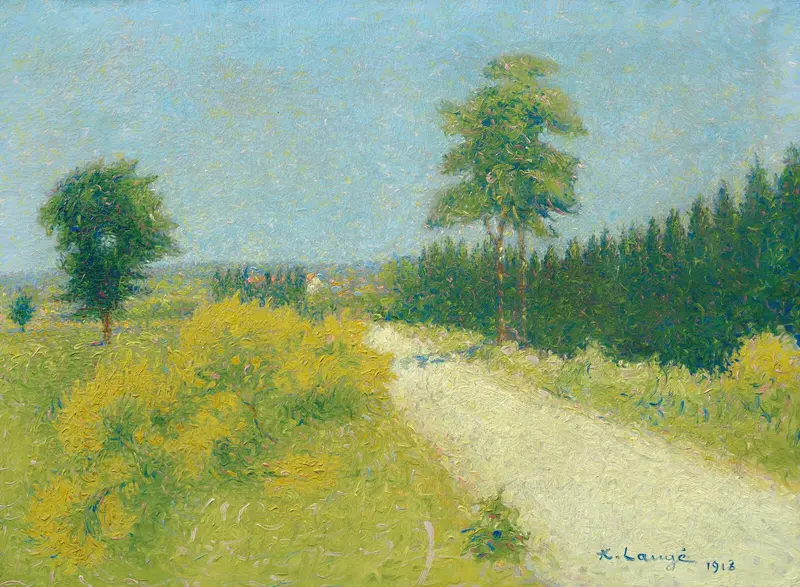
La route de Belvèze vers le relais
Achille Laugé
La route (The Road)
Achille Laugé





