
Portrait of a Woman — History & Facts
Who listens when art speaks of silence? In Portrait of a Woman, innocence radiates through the serene expression and gentle demeanor of the subject, inviting us to contemplate the subtleties of unspoken thoughts and feelings captured on canvas. Look to the left at the soft interplay of light and shadow that bathes the woman's face, accentuating the delicate contours of her features. The artist's brushwork is meticulous, with a warm palette that breathes life into her complexion while the soft fabric of her gown drapes elegantly against her form. Notice the way her gaze—slightly downcast—connects not with the viewer but, rather, with an inner world, creating a sense of intimacy and vulnerability that envelops the entire composition. As you delve deeper, consider the contrasting elements of the painting.
The juxtaposition of her stillness against the vibrant background suggests a tension between inner peace and the chaos of the outside world. The subtle hint of a smile plays upon her lips, evoking a sense of innocence, yet it’s tinged with the weight of unexpressed emotions, suggesting a story that remains just out of reach. This duality captures the essence of the human experience—both the seen and the unseen. Julian Alden Weir created this work around the turn of the 20th century, a time marked by dramatic shifts in the art world.
Having shifted toward Impressionism, he was influenced by the movement’s emphasis on light and color. Amidst personal challenges and evolving artistic trends, Portrait of a Woman reflects both a personal exploration of identity and a broader cultural desire to encapsulate fleeting moments of beauty and emotion.
More Artworks by Julian Alden Weir
Browse all →
My Back Yard no. 1
Julian Alden Weir
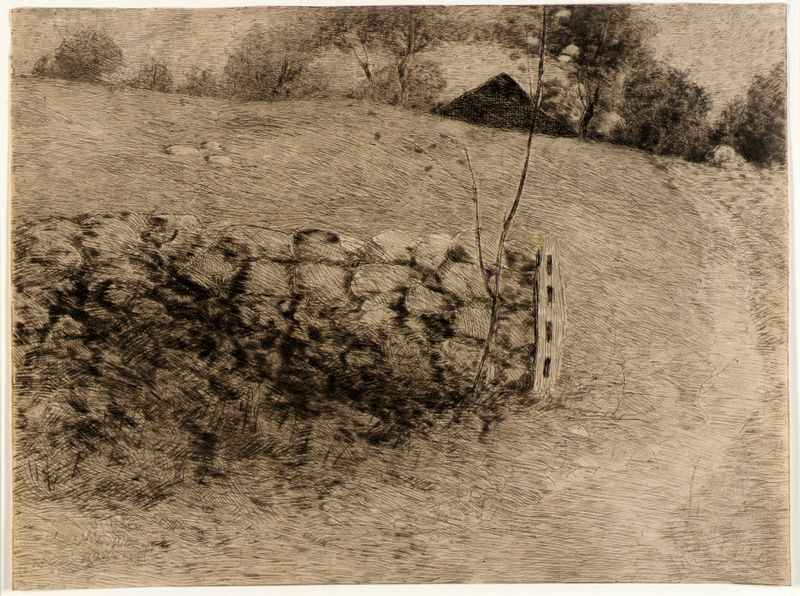
The Barn Lot
Julian Alden Weir

The Webb Farm
Julian Alden Weir
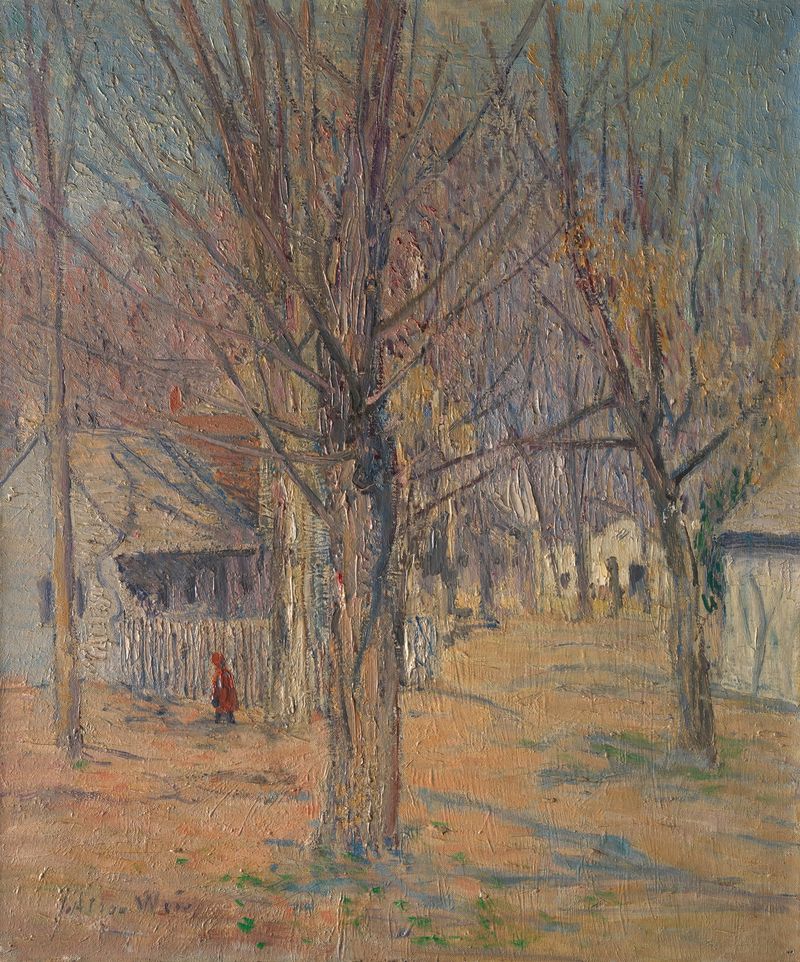
Connecticut Village (Going to School)
Julian Alden Weir

The Stone Bridge
Julian Alden Weir

The Webb Farm 2
Julian Alden Weir
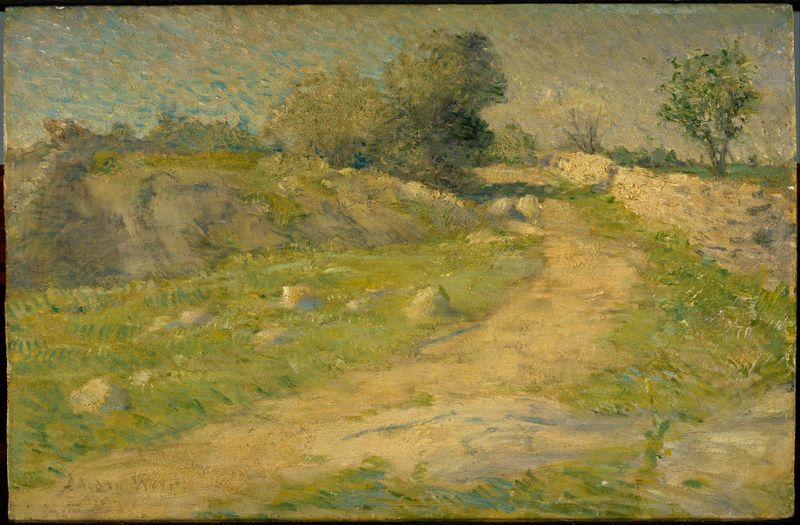
The Lane
Julian Alden Weir
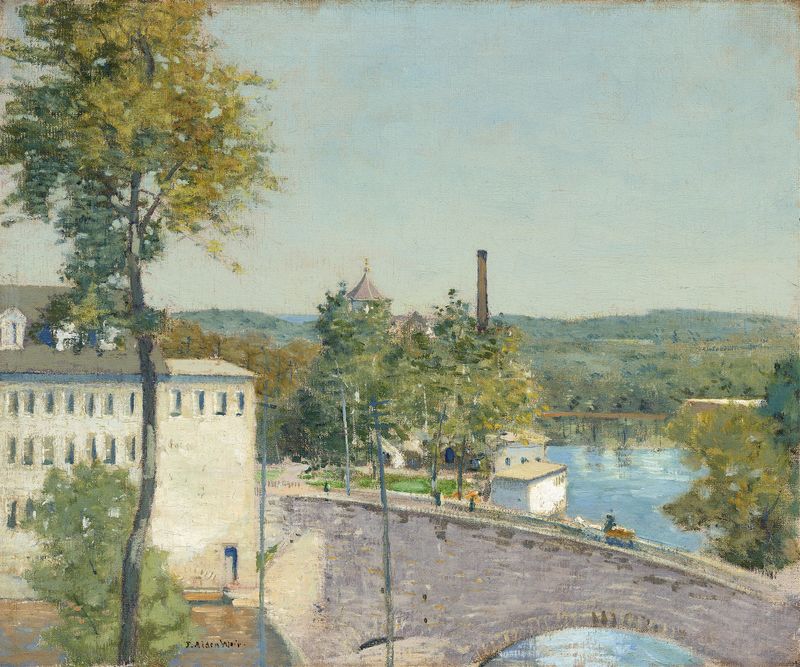
U.S. Thread Company Mills,Willimantic,Connecticut
Julian Alden Weir

Neighboring Farm
Julian Alden Weir

Coon Alley
Julian Alden Weir
More Portrait Art
Browse all →
Las meninas
Diego Velázquez

Self-portrait with a Bandaged Ear and Pipe
Unidentified artist

Girl with a Pearl Earring
Johannes Vermeer

The Sampling Officials of the Amsterdam Drapers’ Guild, Known as ‘The Syndics’
Rembrandt van Rijn

The Hundred Guilder Print: the man seen on the back in the lower left corner
Rembrandt van Rijn

Portrait of Dr Gachet
Vincent van Gogh