
The Barn Lot — History & Facts
It holds a quiet truth, beckoning us to explore the innocence captured in its strokes. Look closely at the lower left corner where the sun-drenched grass, imbued with vibrant greens and soft yellows, spills over the wooden fence. Notice how the barn stands nobly against the horizon, its worn red paint telling stories of seasons passed, while the fluffy clouds drift lazily overhead, casting shadows that dance on the earth. The composition draws the eye effortlessly across the scene, creating a sense of invitation and tranquility, underscored by the gentle palette that speaks of a simpler time. Within this pastoral imagery lies a deeper contrast: the harmony of nature meeting the rustic remnants of human existence.
The juxtaposition between the barn's sturdy structure and the ephemeral play of light hints at the fragility of innocence, suggesting that time is both a nurturing force and a relentless thief. Hidden details, such as the delicate wildflowers peeking through the grass, mirror the tenacity of innocence amidst the weight of reality, emphasizing the beauty in what is fleeting. In 1887, while creating this work, the artist found himself entrenched in the American Impressionist movement, flourishing in the serene landscapes of Connecticut. Weir was at a pivotal point in his career, embracing new techniques that allowed for spontaneous expression and a profound connection to the natural world.
This painting, a reflection of his personal experiences and artistic evolution, captures a moment when innocence felt eternal, even as the world outside rapidly changed.
More Artworks by Julian Alden Weir
Browse all →
My Back Yard no. 1
Julian Alden Weir

The Webb Farm
Julian Alden Weir
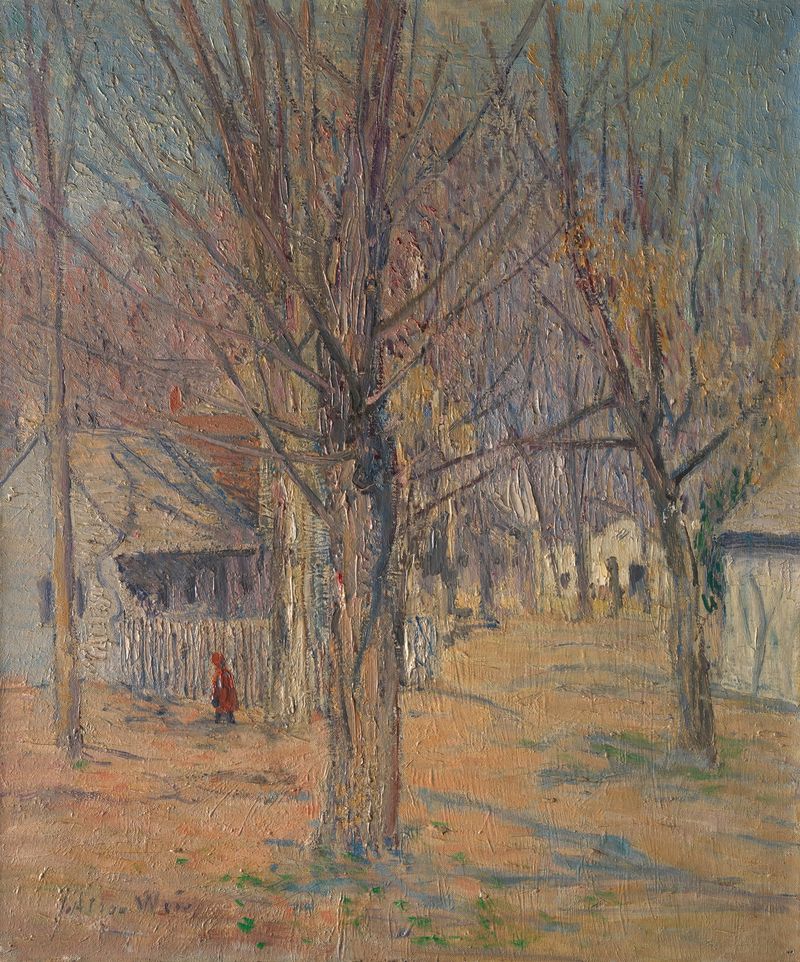
Connecticut Village (Going to School)
Julian Alden Weir

The Stone Bridge
Julian Alden Weir

The Webb Farm 2
Julian Alden Weir
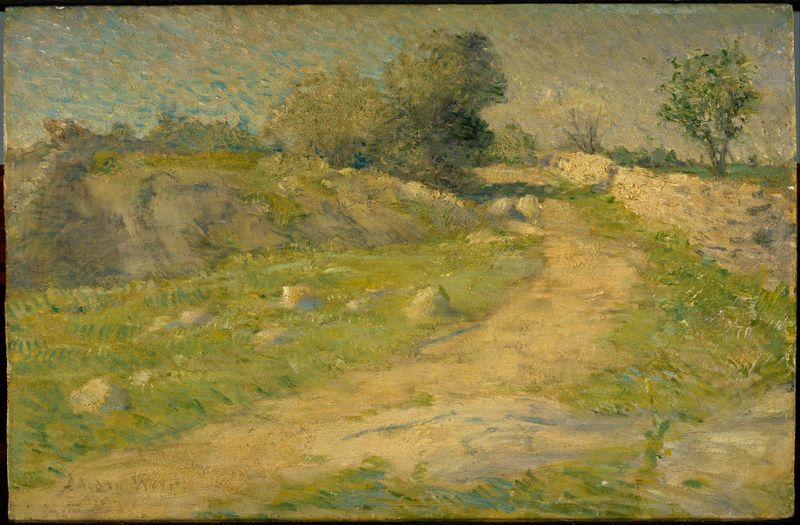
The Lane
Julian Alden Weir
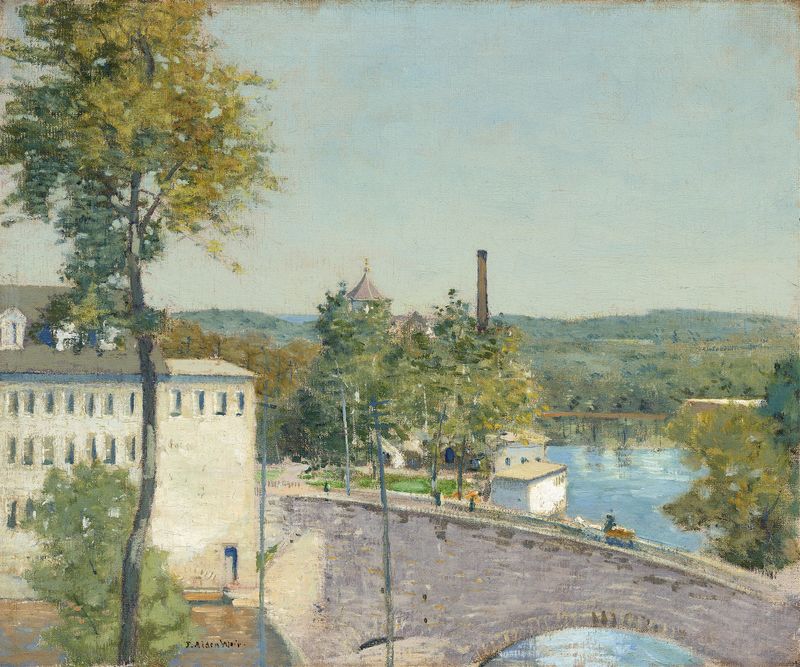
U.S. Thread Company Mills,Willimantic,Connecticut
Julian Alden Weir

Neighboring Farm
Julian Alden Weir

Coon Alley
Julian Alden Weir
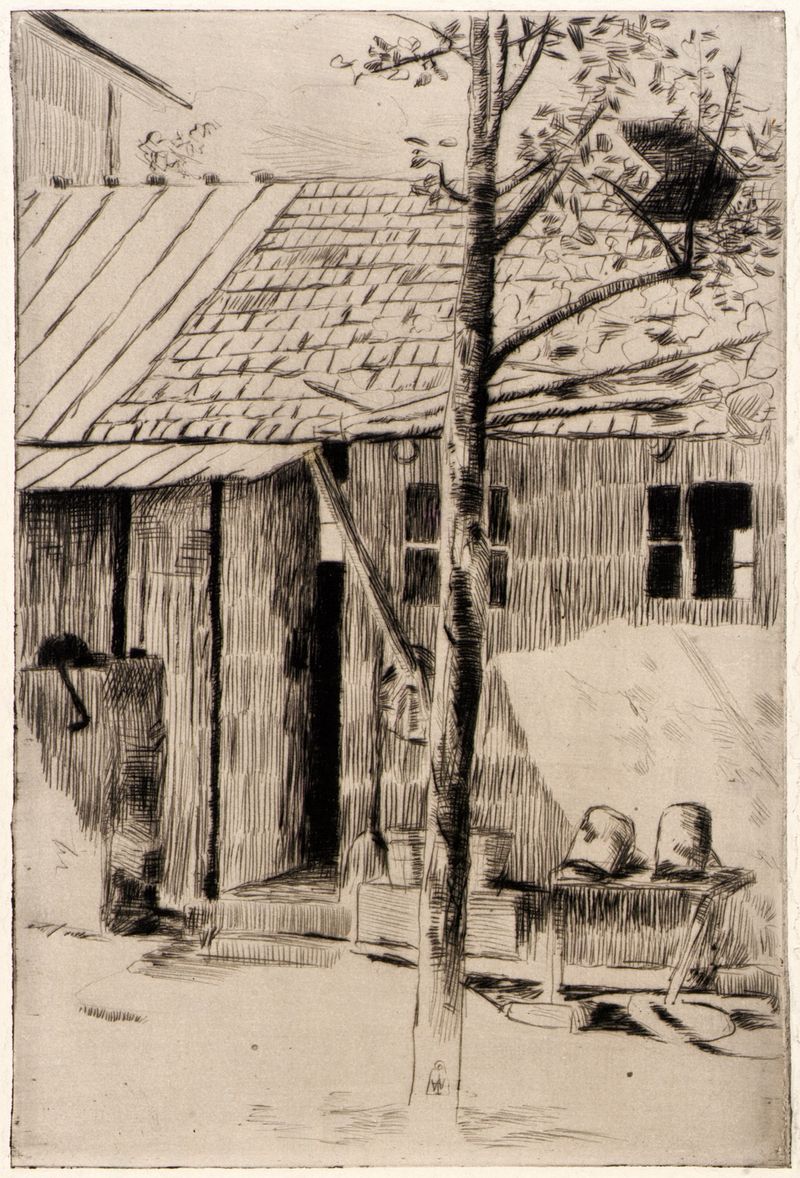
Kitchen Well
Julian Alden Weir





