
Portrait of a Woman — History & Facts
What first draws the eye in Portrait of a Woman is the hand—poised, deliberate, with fingers elegantly splayed across the chest. This gesture, echoing an ancient Greek pose of modesty, signals a carefully constructed image of virtue and decorum. The woman’s gaze is calm, almost reserved, her lips barely hinting at expression.
Every detail, from the intricate embroidery of her collar to the heavy gold chain and jeweled hairnet, is rendered with a precision that speaks of wealth and status. The plain, muted background throws her forward, lending a sense of monumentality to a portrait otherwise intimate in scale. Painted in 1550 by Agnolo Bronzino, court artist to Cosimo I de’Medici, this work belongs to a world where portraiture was a language of power. Women of the Medici court—though often unnamed in history—were immortalized not for their personalities but for their role as embodiments of family prestige and courtly ideals.
The cool, polished surface and studied restraint are hallmarks of Bronzino’s style, reflecting the values of a society where image could be as important as reality. History has kept few traces of this sitter’s life, but the painting’s quiet grandeur invites us to linger, searching her face for the secrets of a vanished court.
More Artworks by Agnolo Bronzino

Eleonora Of Toledo
Agnolo Bronzino
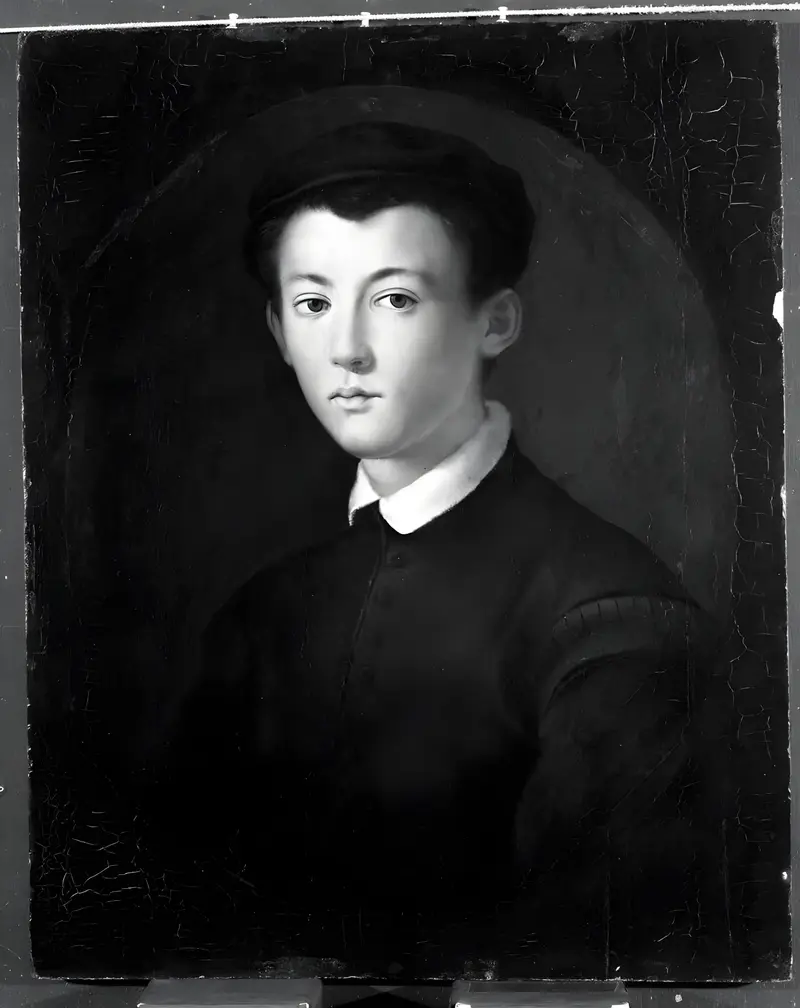
Portrait of a Young Man
Agnolo Bronzino
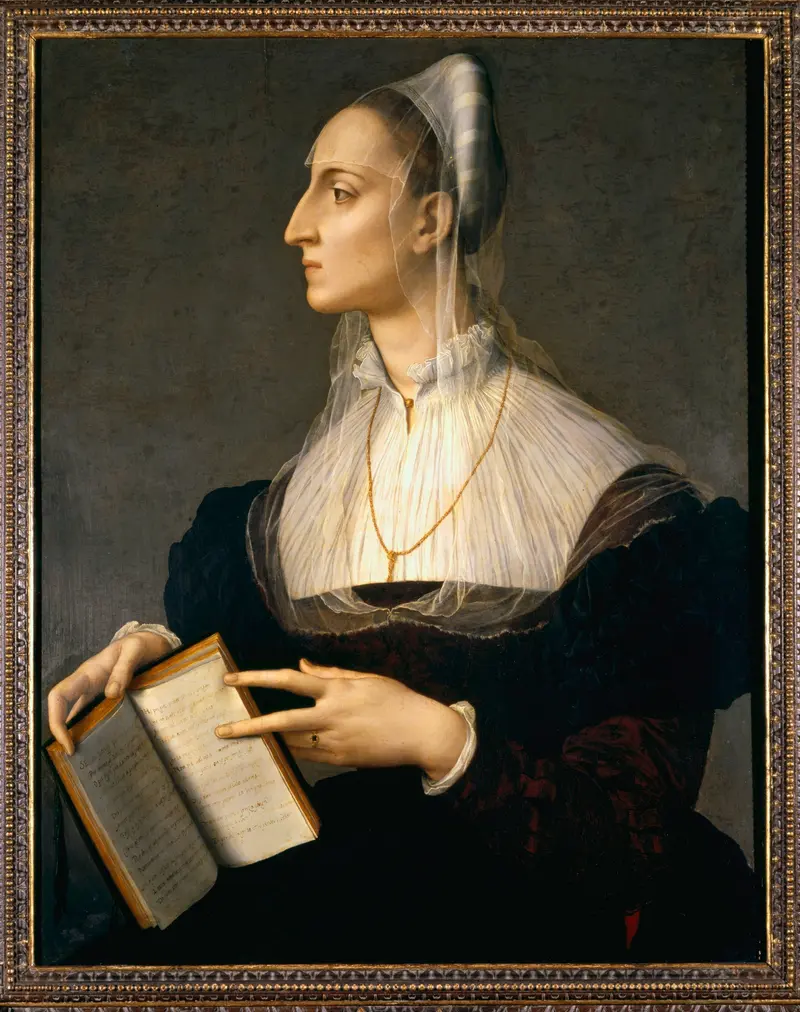
Portrait Of Laura Battiferri
Agnolo Bronzino

Venus, Cupid And Satyr
Agnolo Bronzino
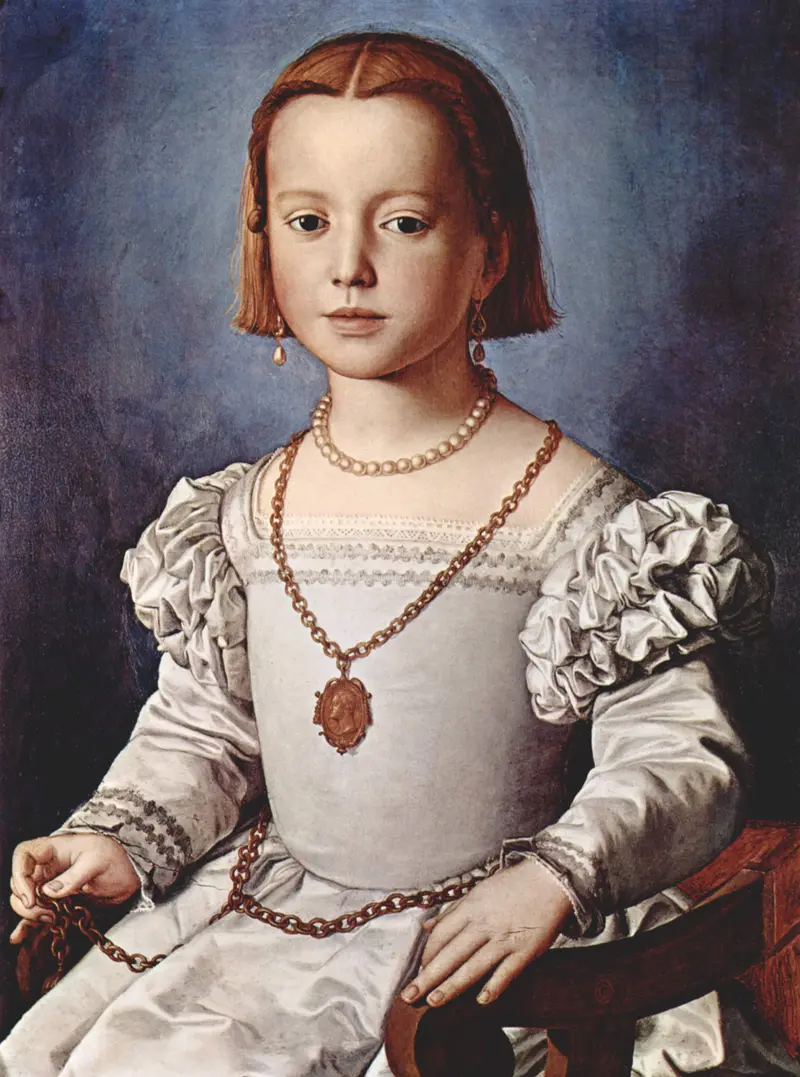
Bia Di Cosimo De‘ Medici
Agnolo Bronzino

Virgin and Child with Saint Elizabeth and Saint John the Baptist
Agnolo Bronzino
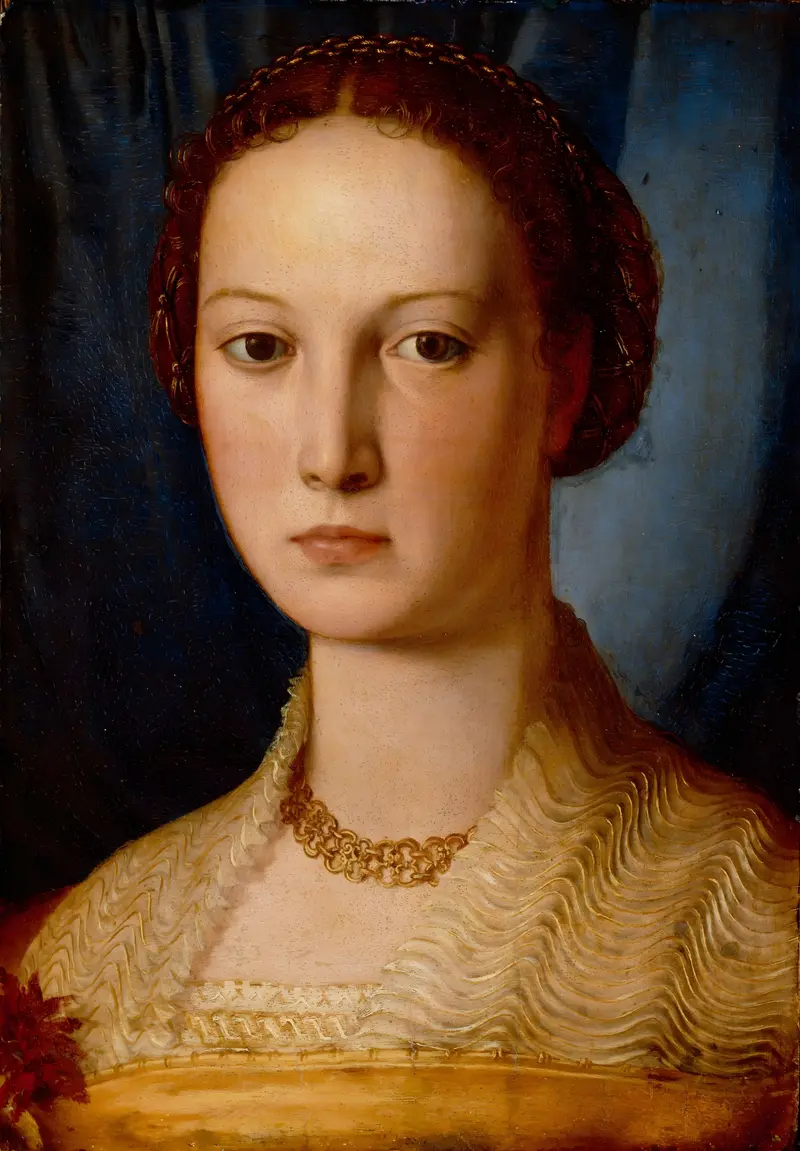
Costanza Da Sommaia
Agnolo Bronzino
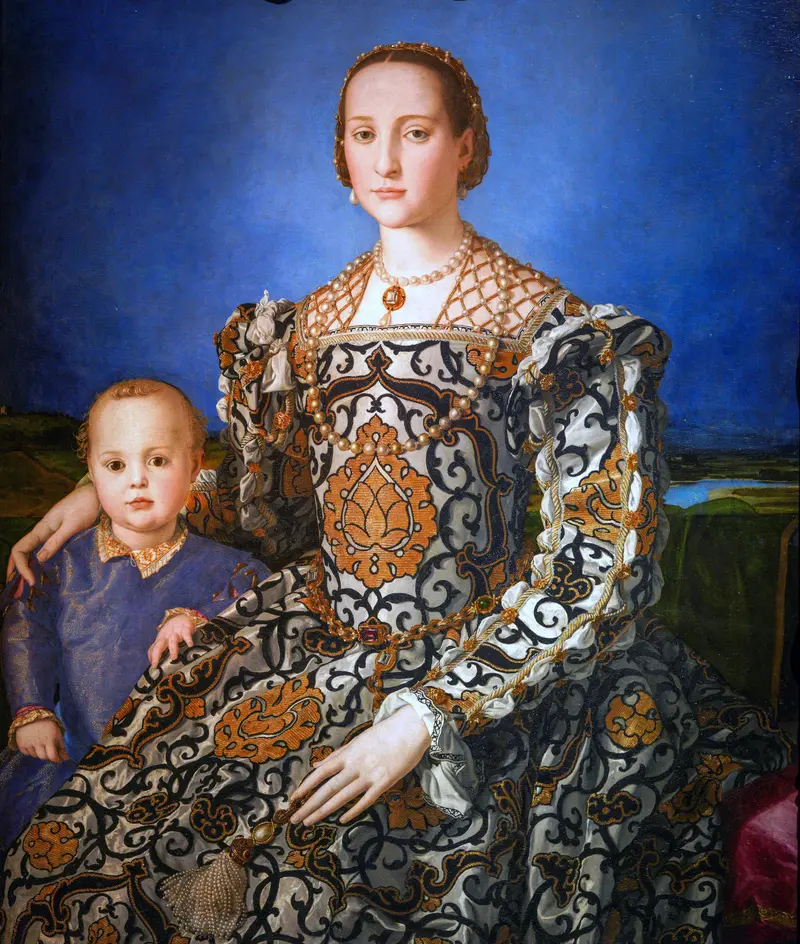
Portrait of Eleanor of Toledo with Her Son Giovanni de’ Medici
Agnolo Bronzino

Resurrection Of Christ
Agnolo Bronzino

Saint Sebastian
Agnolo Bronzino





