
Art movement · c. 1520–1600 · Italy
Mannerism Art and Paintings
Mannerism is an art movement that began in Italy around 1520, when painters who followed Raphael and Michelangelo turned their harmony into deliberate artifice: elongated, elegant figures, complex poses and unnatural, decorative color. It lasted until about 1600 and spread from Florence and Rome across Europe. Its painters include Pontormo, Rosso Fiorentino, Parmigianino, Bronzino, Tintoretto and El Greco.
In Toledo, El Greco painted The Burial of the Count of Orgaz as two worlds: a dark earthly funeral lit only by torches, and a bright heaven above. When he delivered it in 1588 it was valued at 1,200 ducats, a sum the parish priest found excessive until the archbishop's council ruled that it be paid.
Browse 580 Mannerism paintings and artworks below, all public domain and free to download.
Selected and written by Pavel MazuelasUpdated November 5, 2026
Part of Art Movements and Painting StylesRelated: Renaissance, Baroque, Famous Portrait Paintings
All Mannerism paintings and artworks
Mostly El Greco: religious paintings and portraits, with myths, allegories and a few drawings and sculptures. All public domain, free to download.










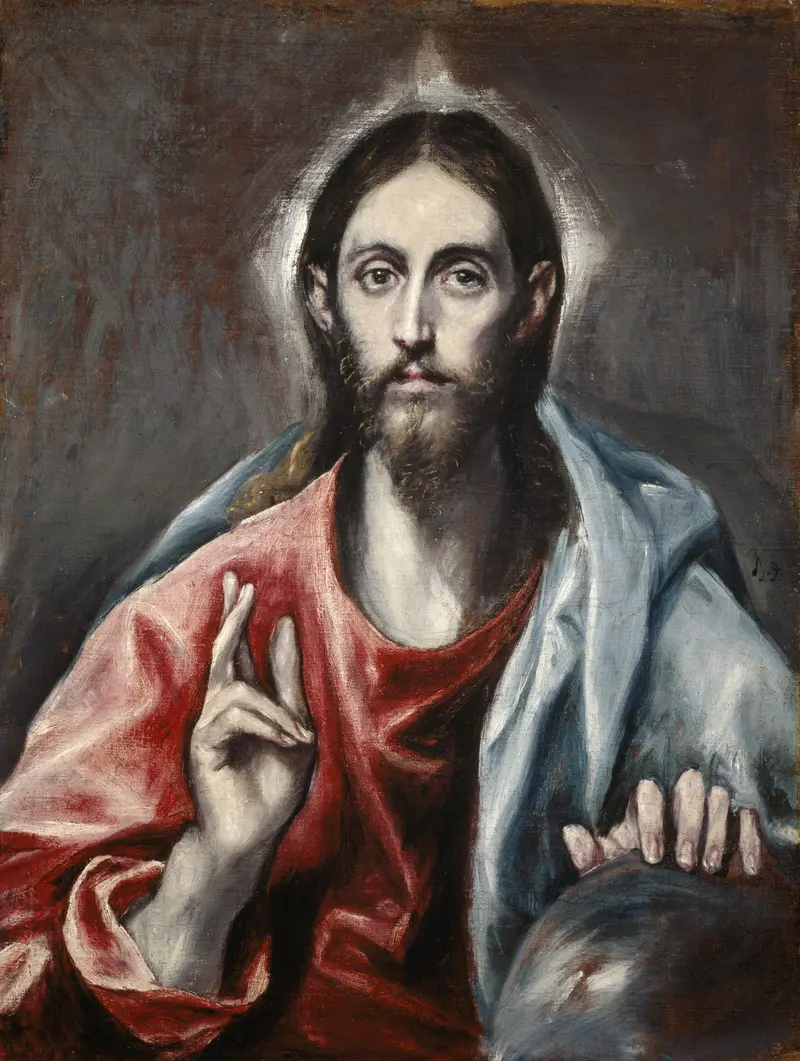
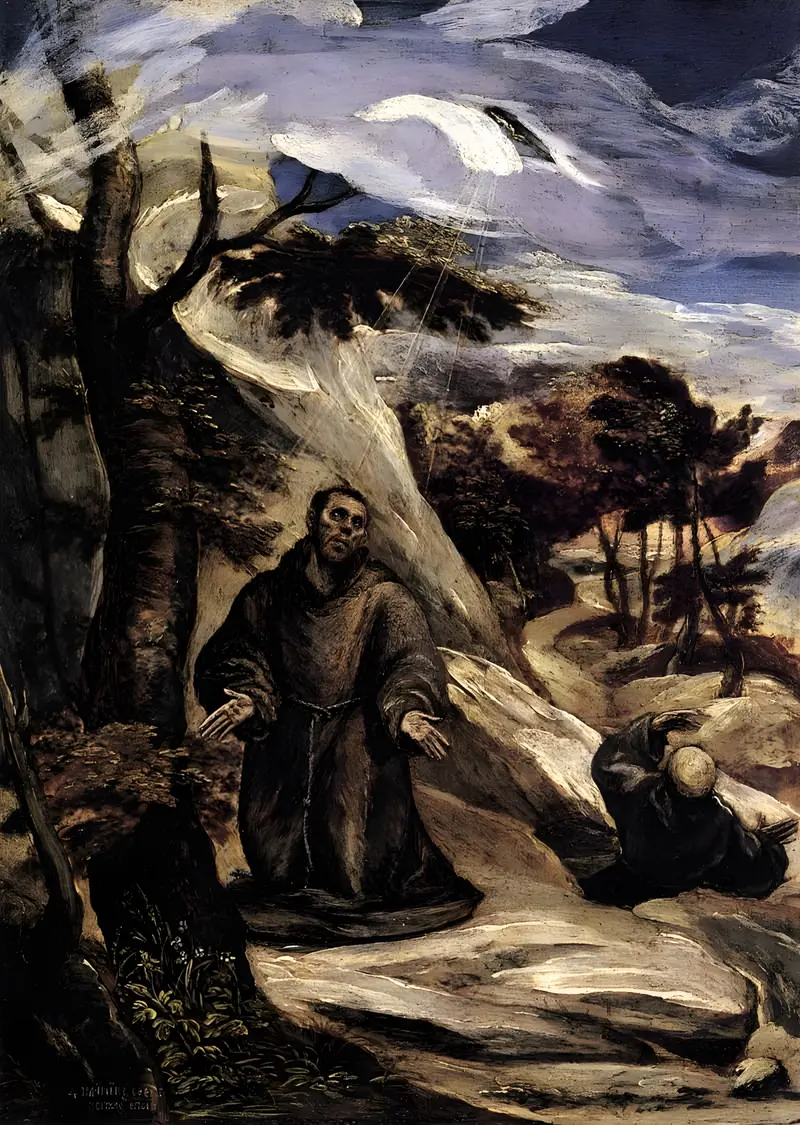
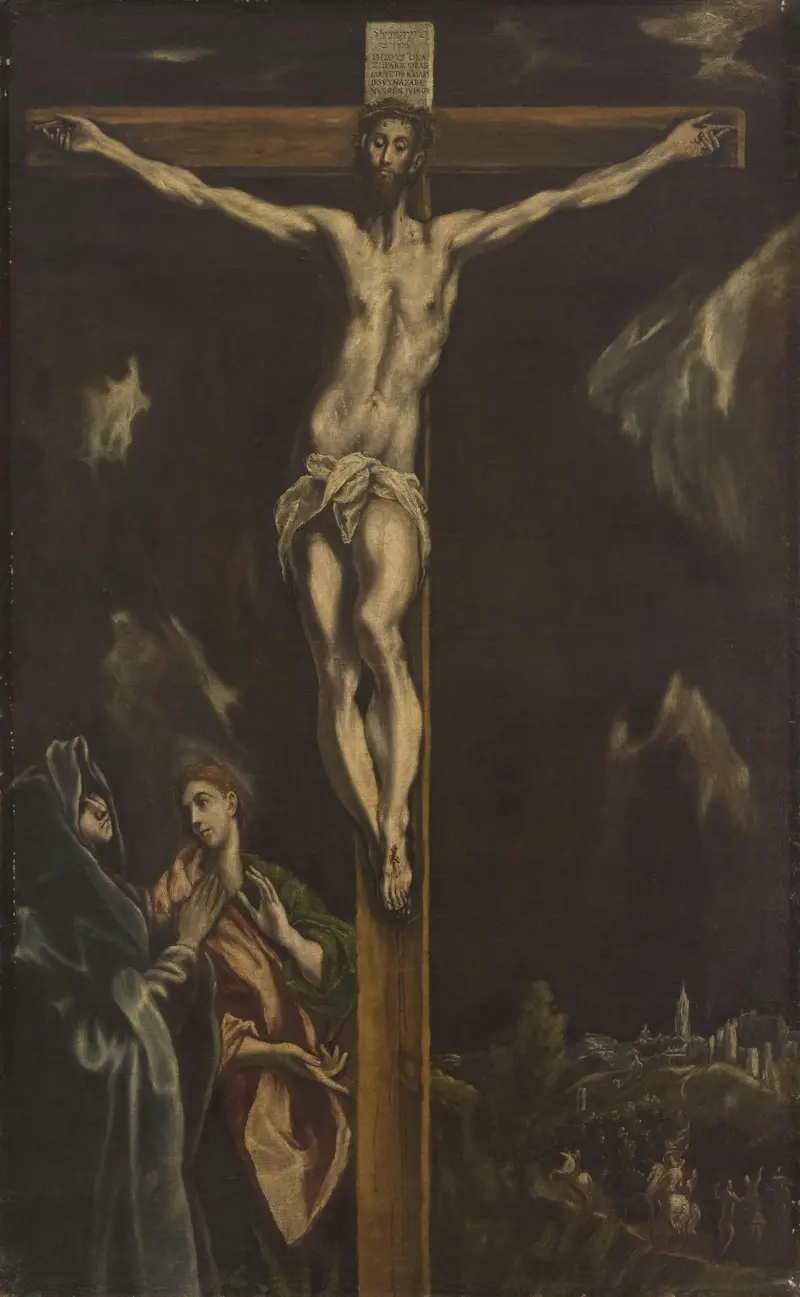
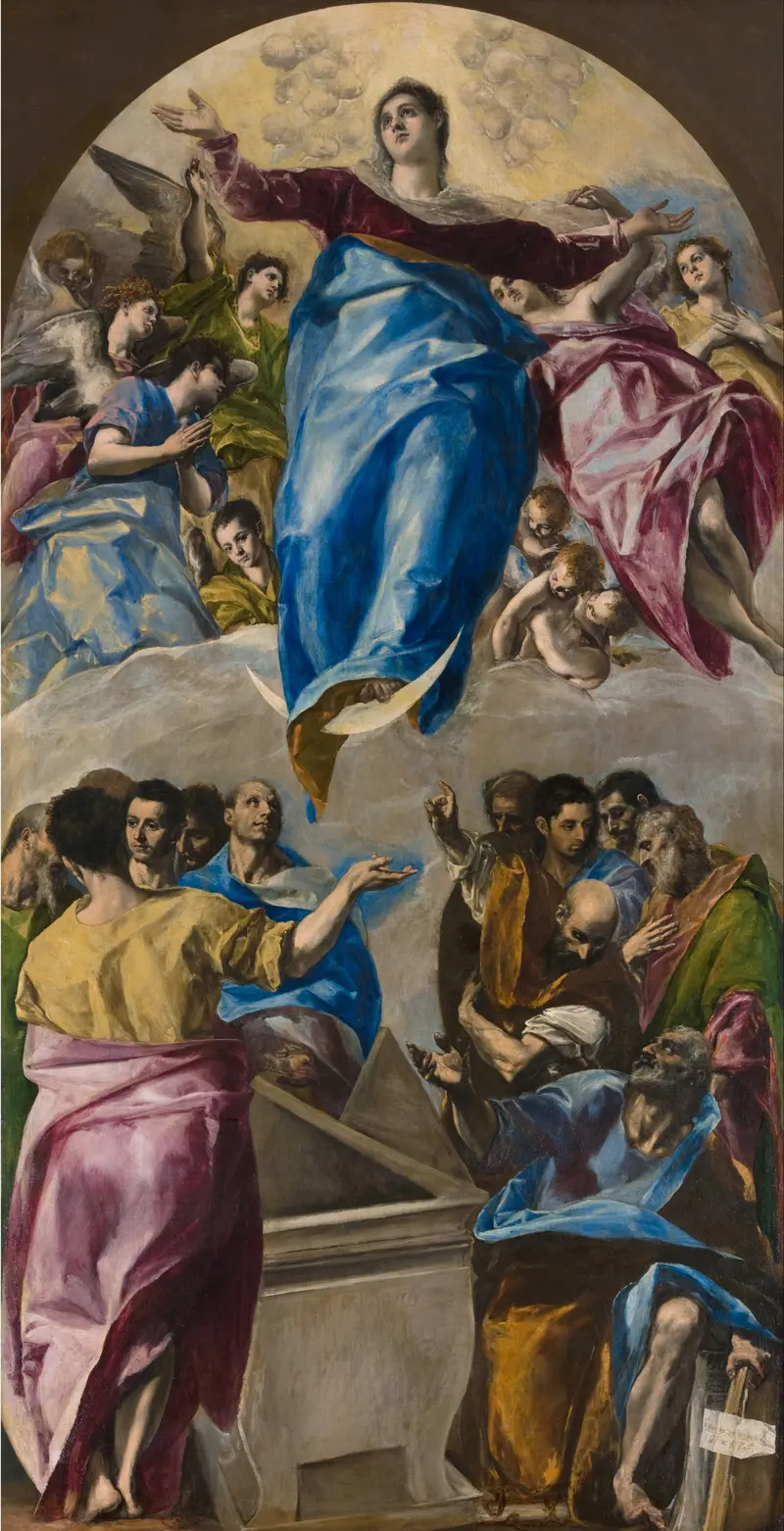
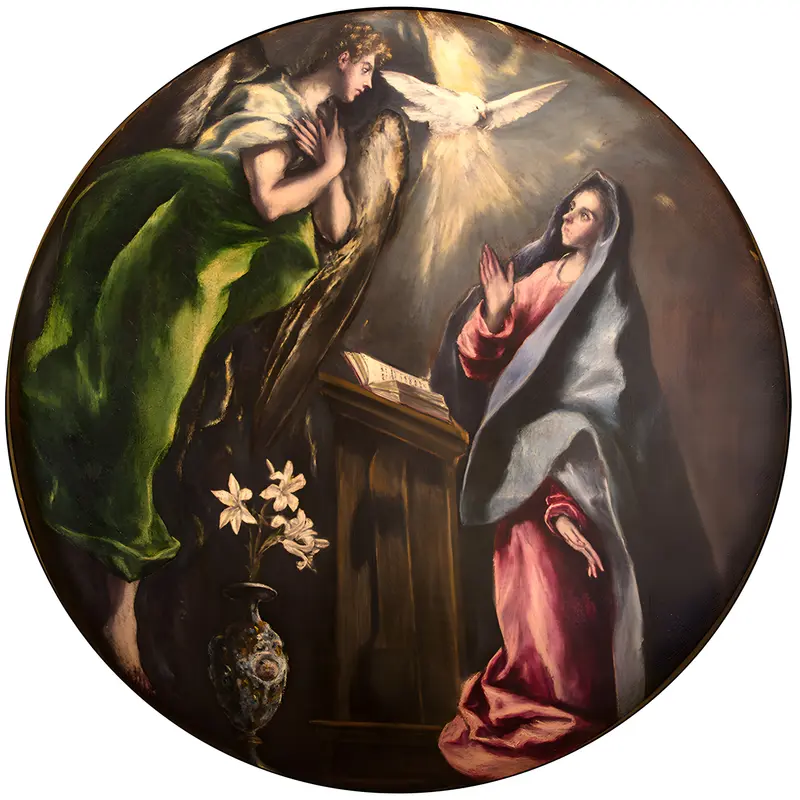


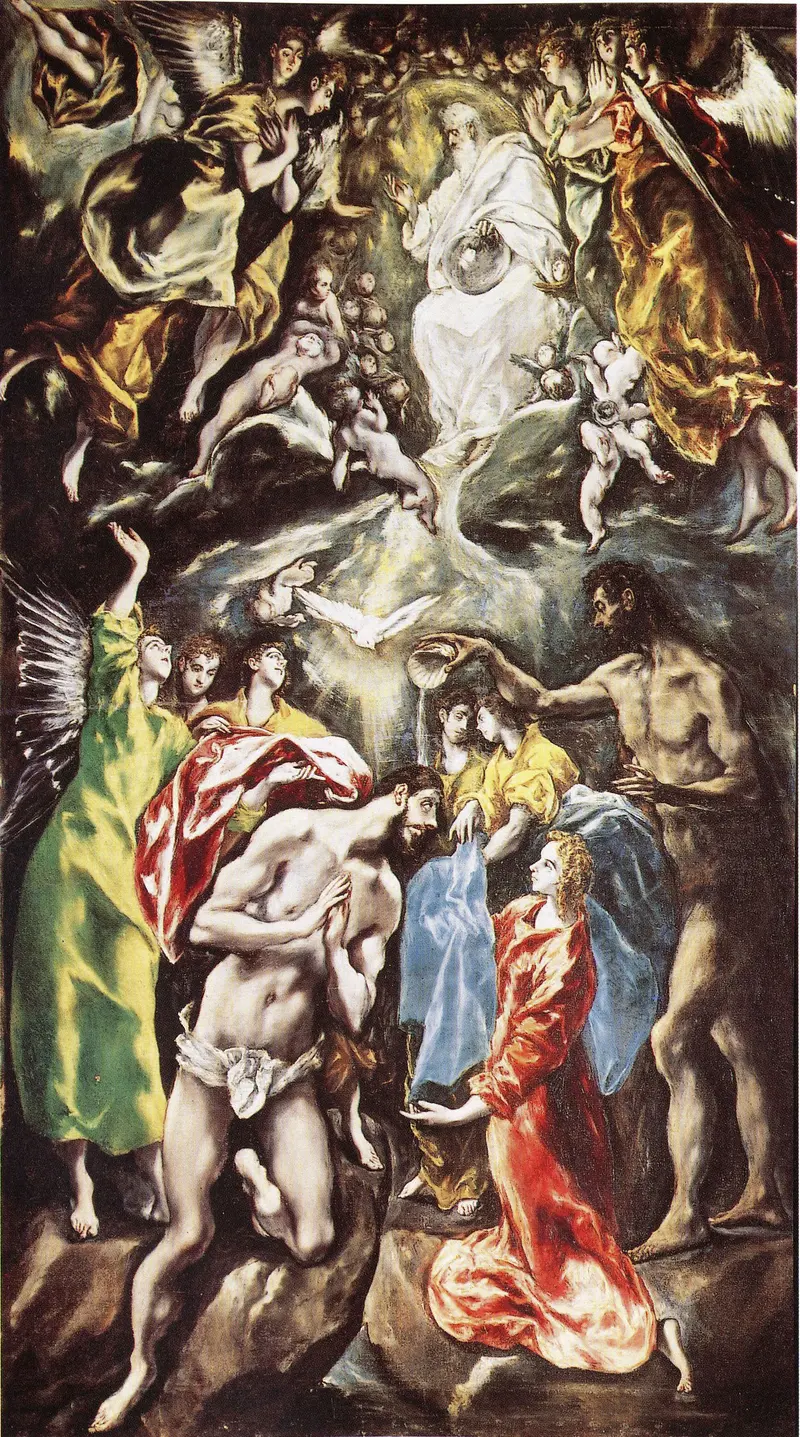
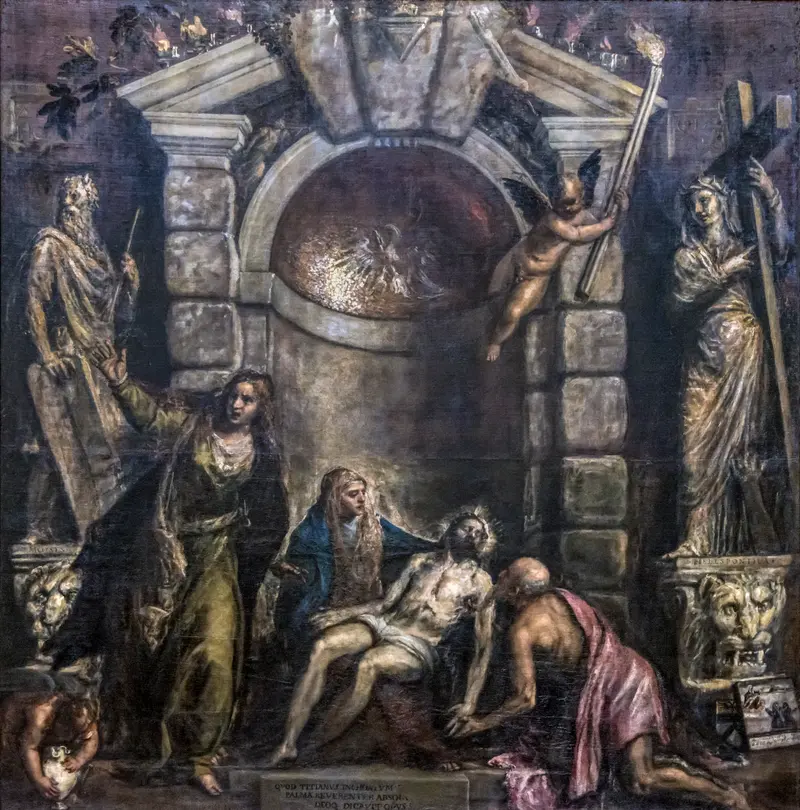
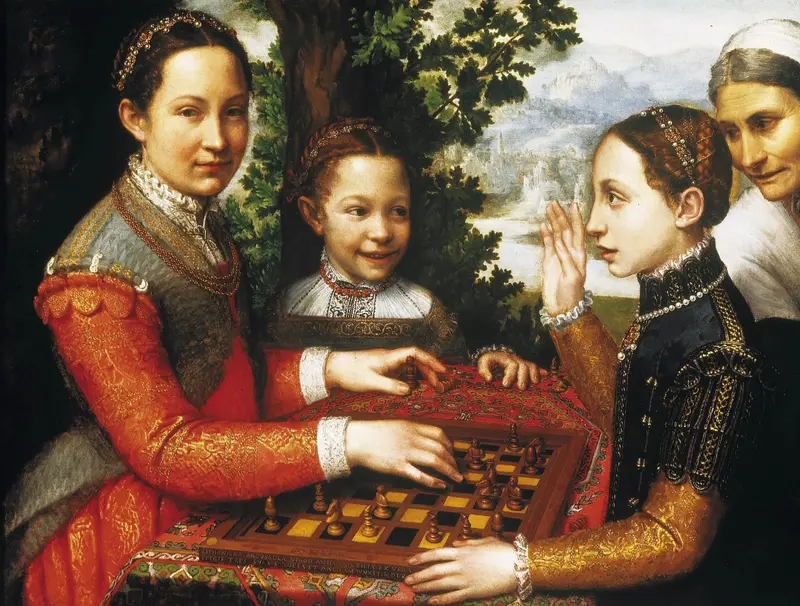


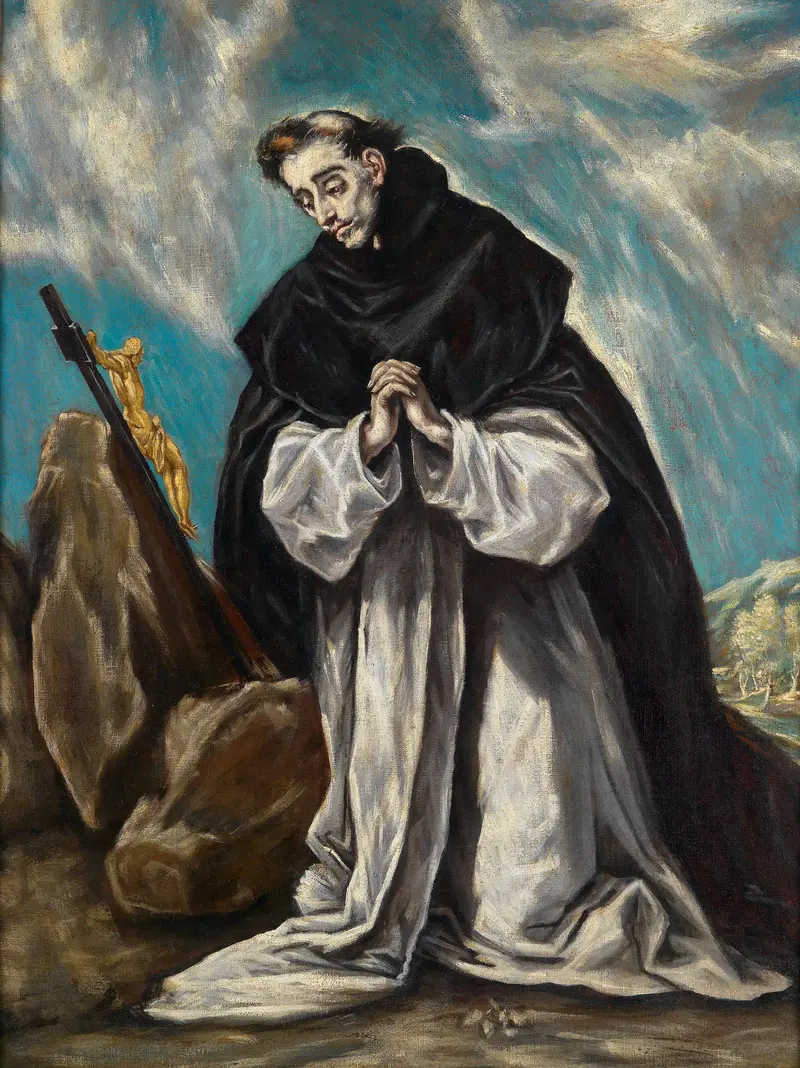
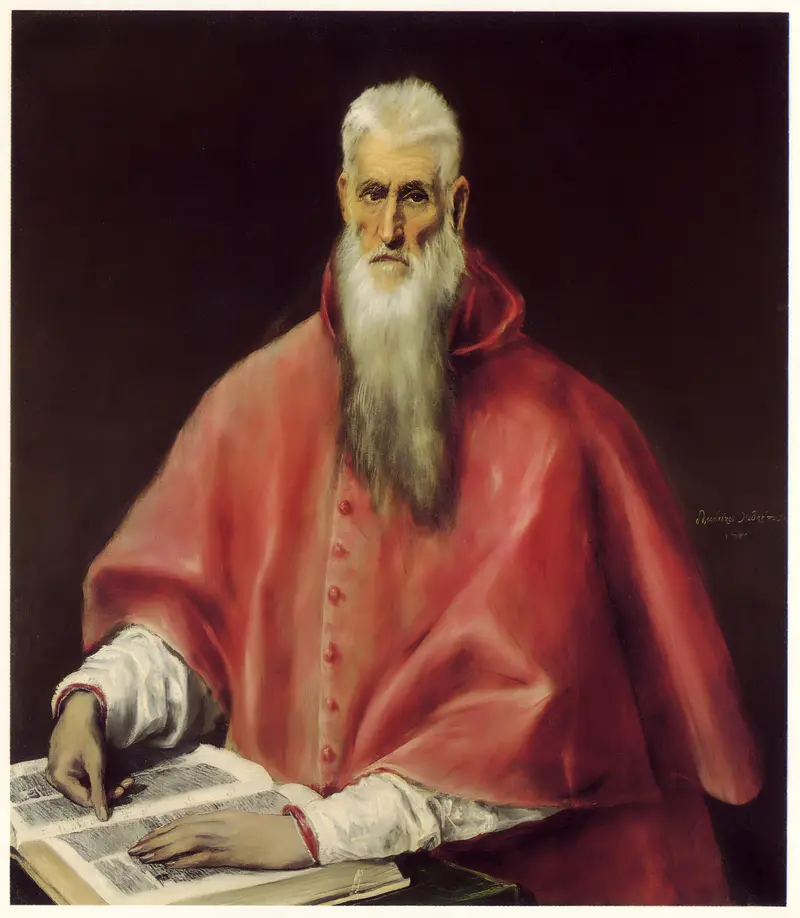
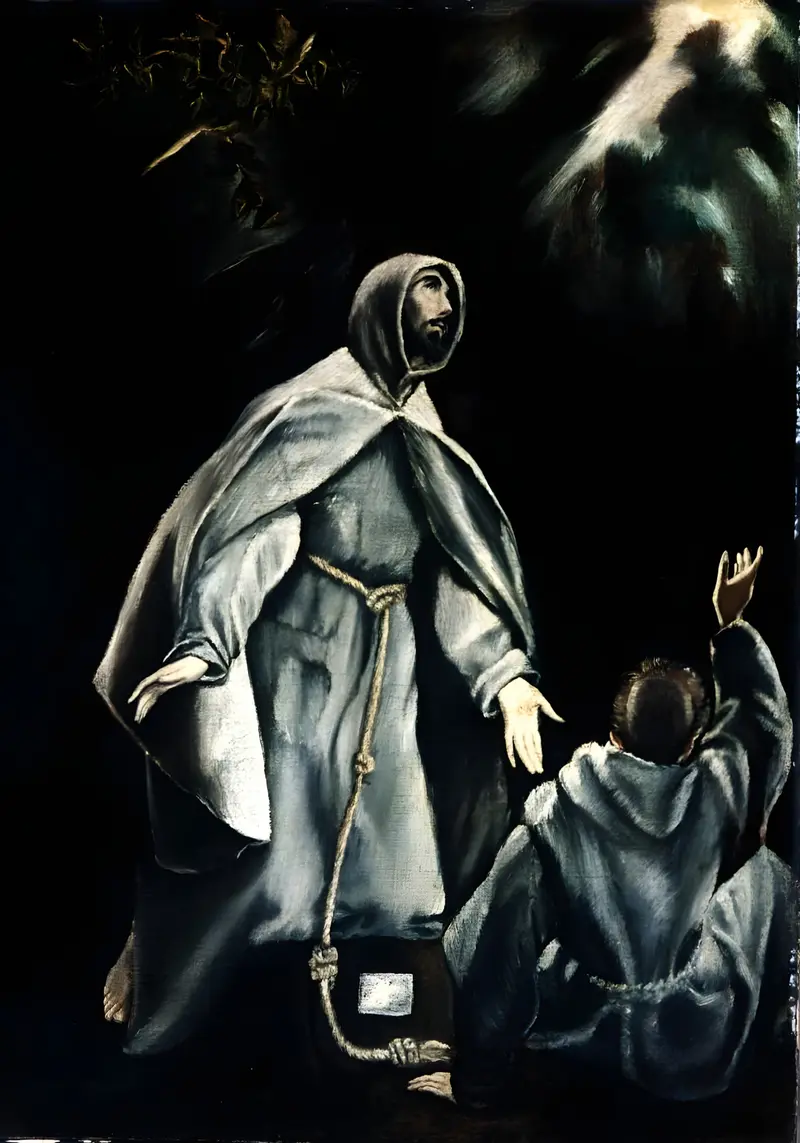
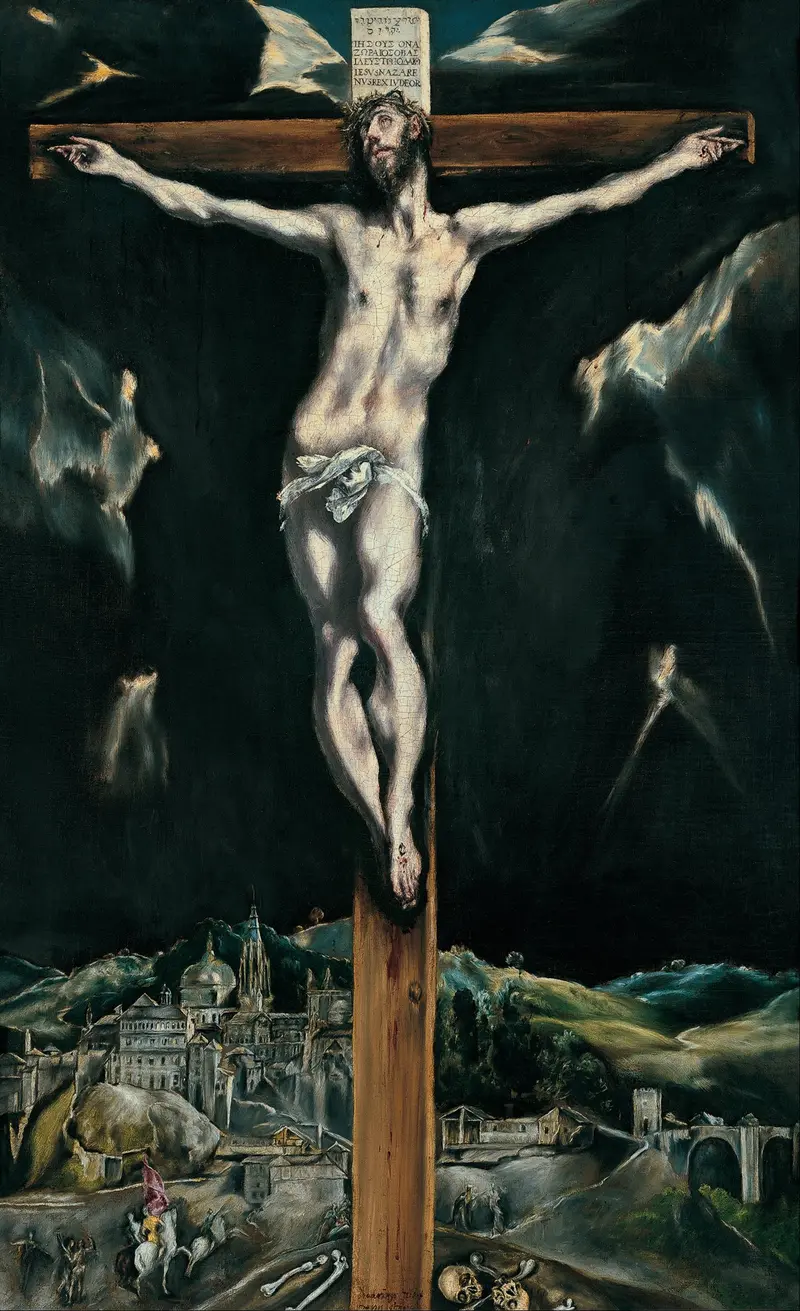
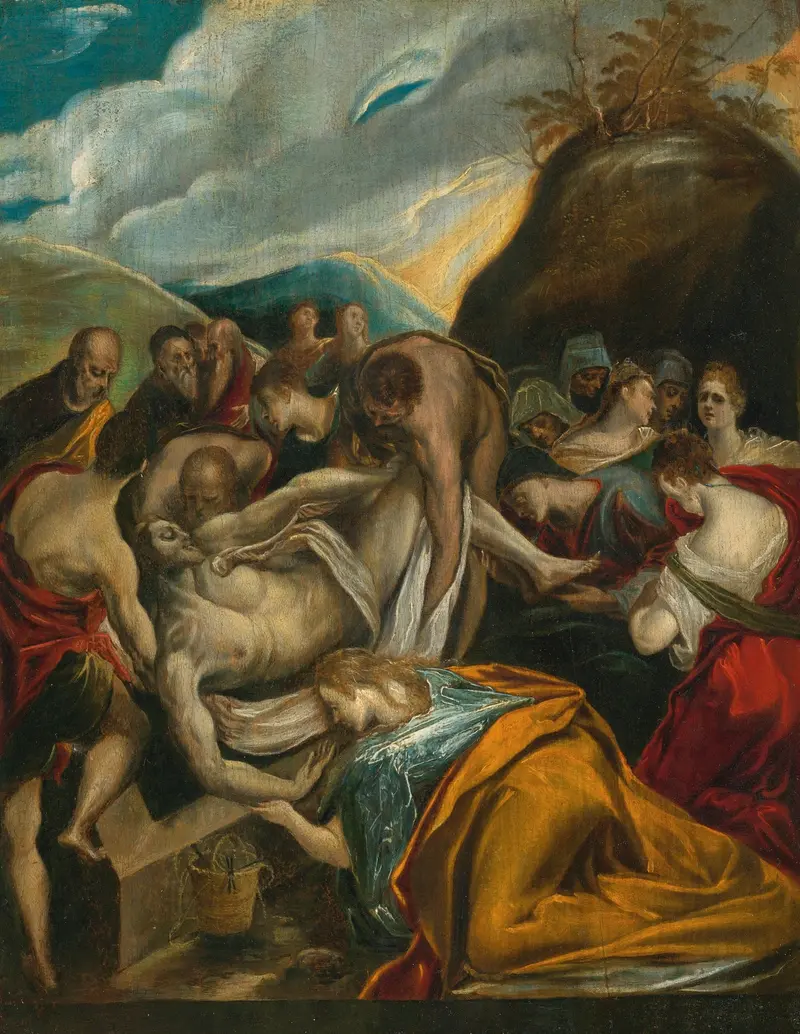
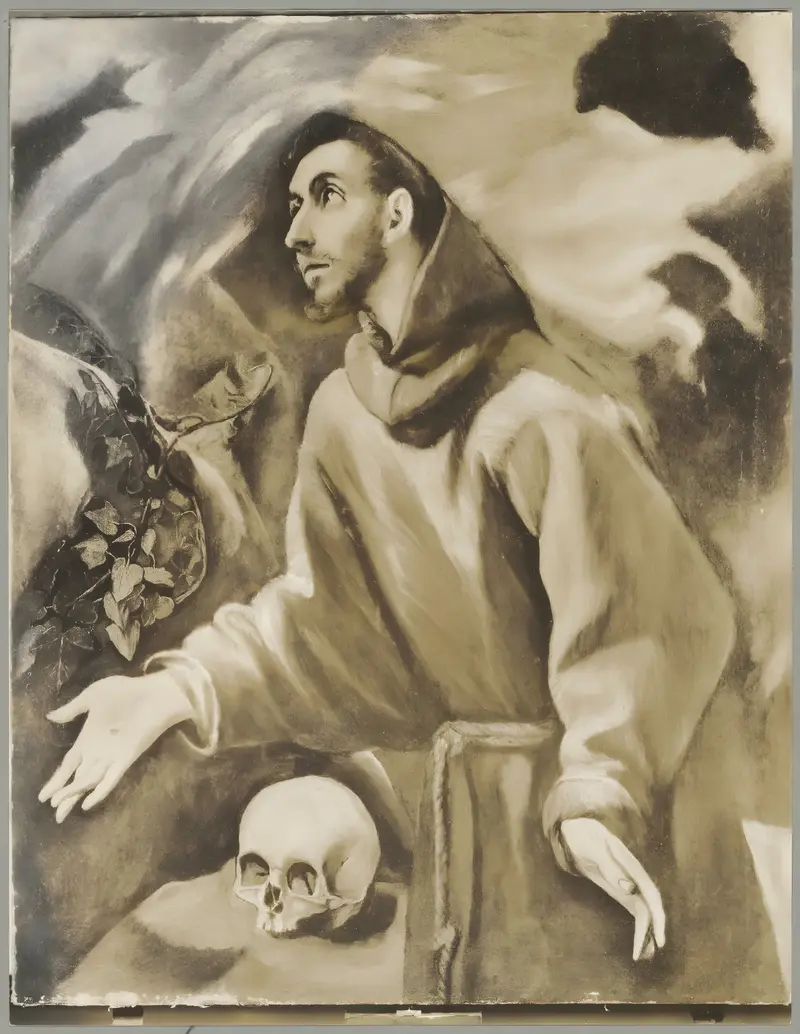
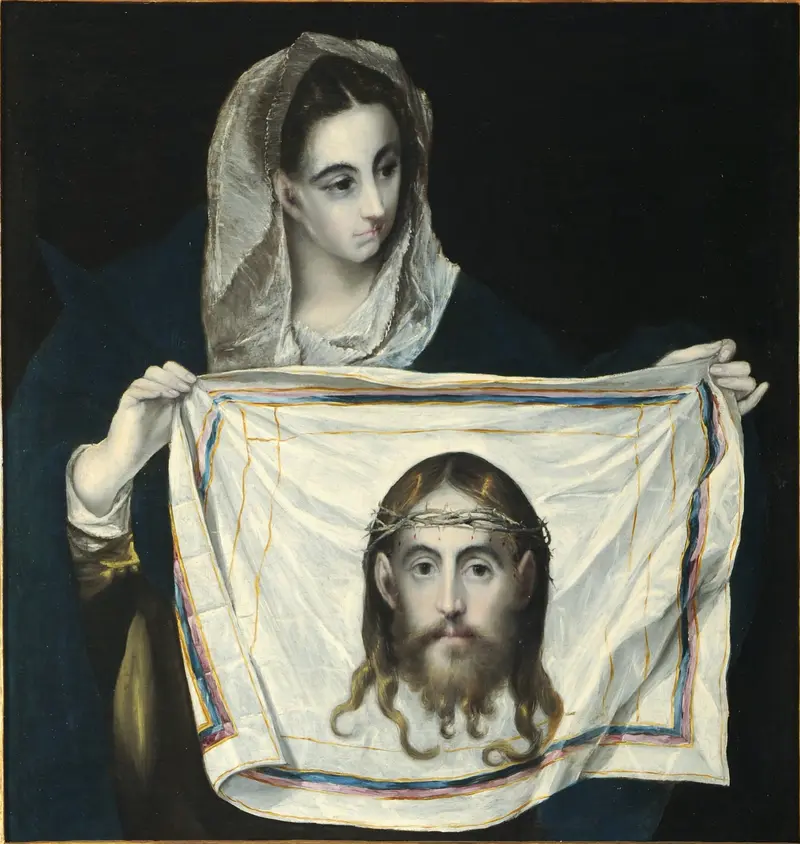
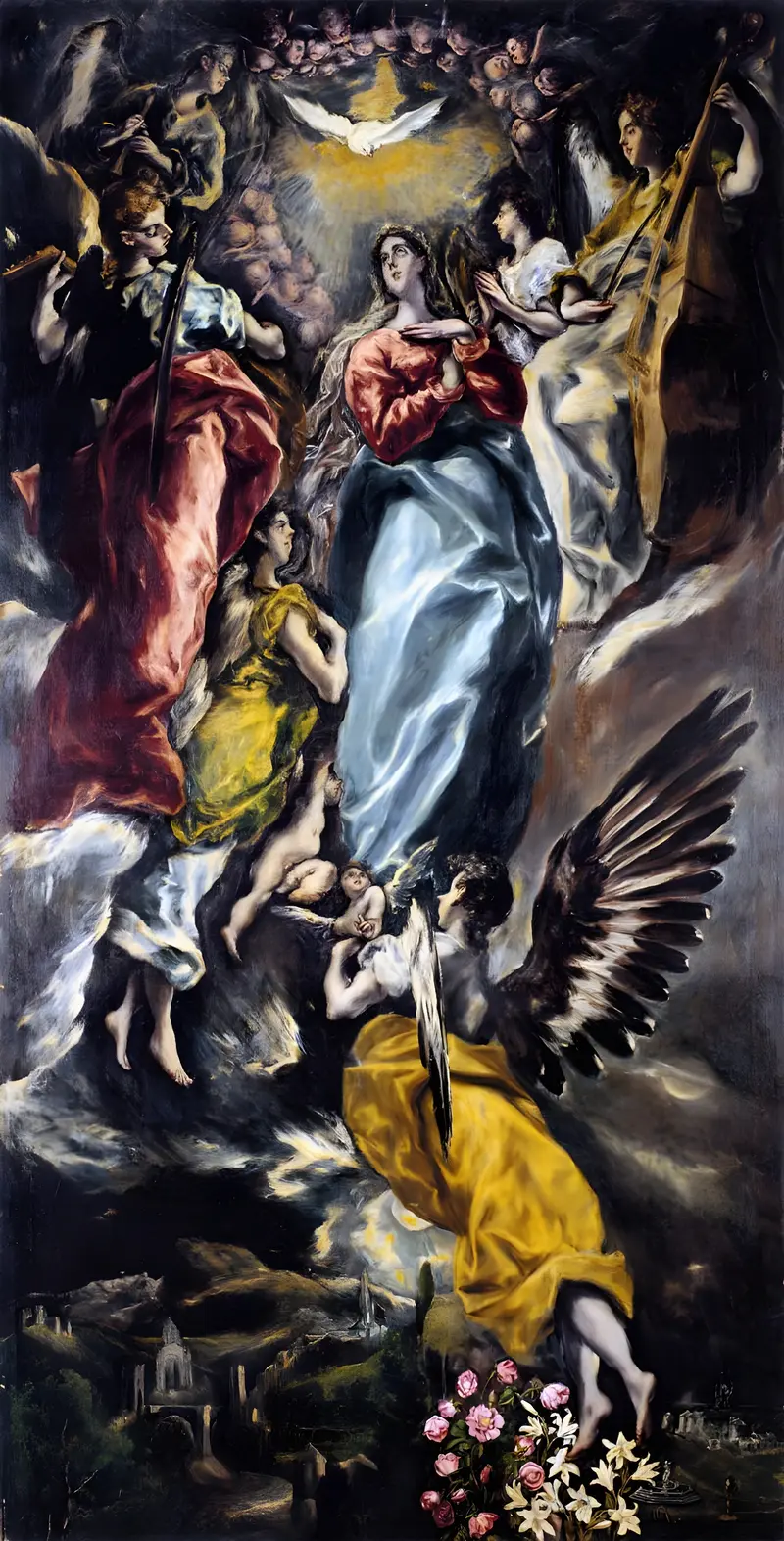
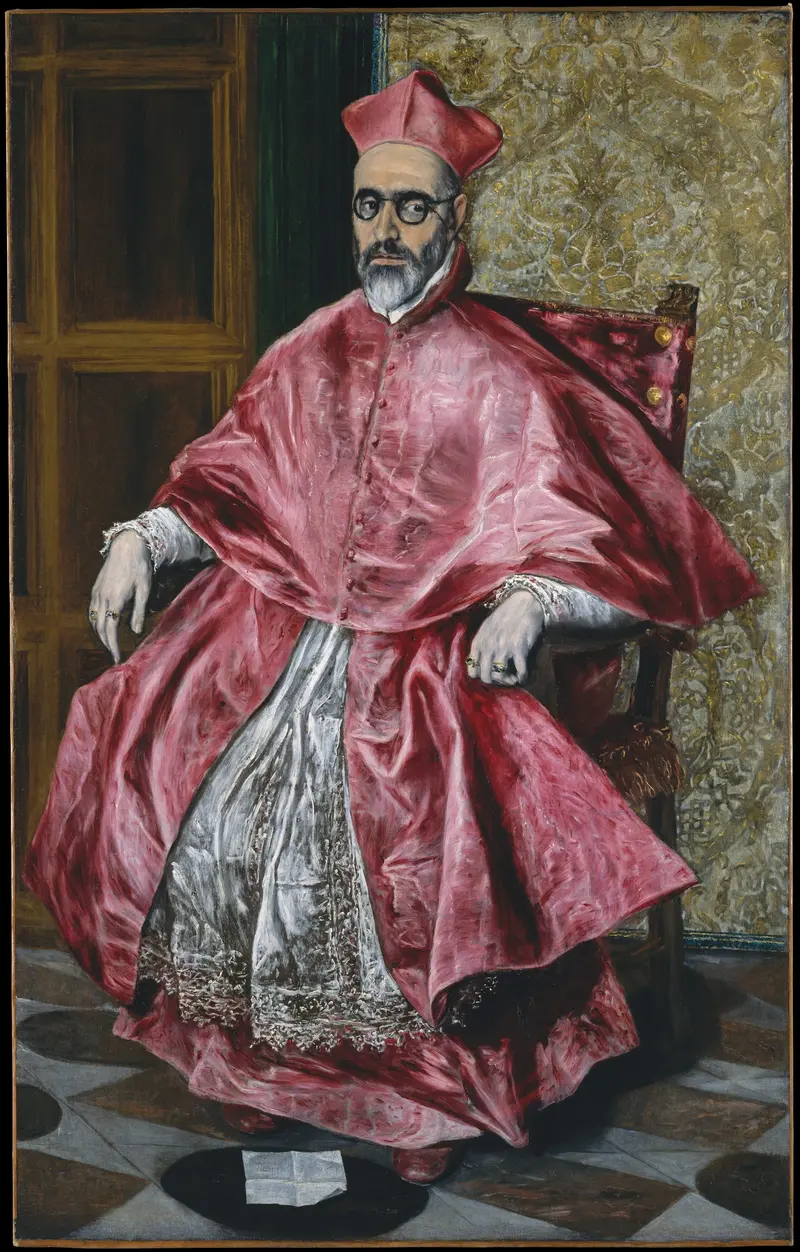
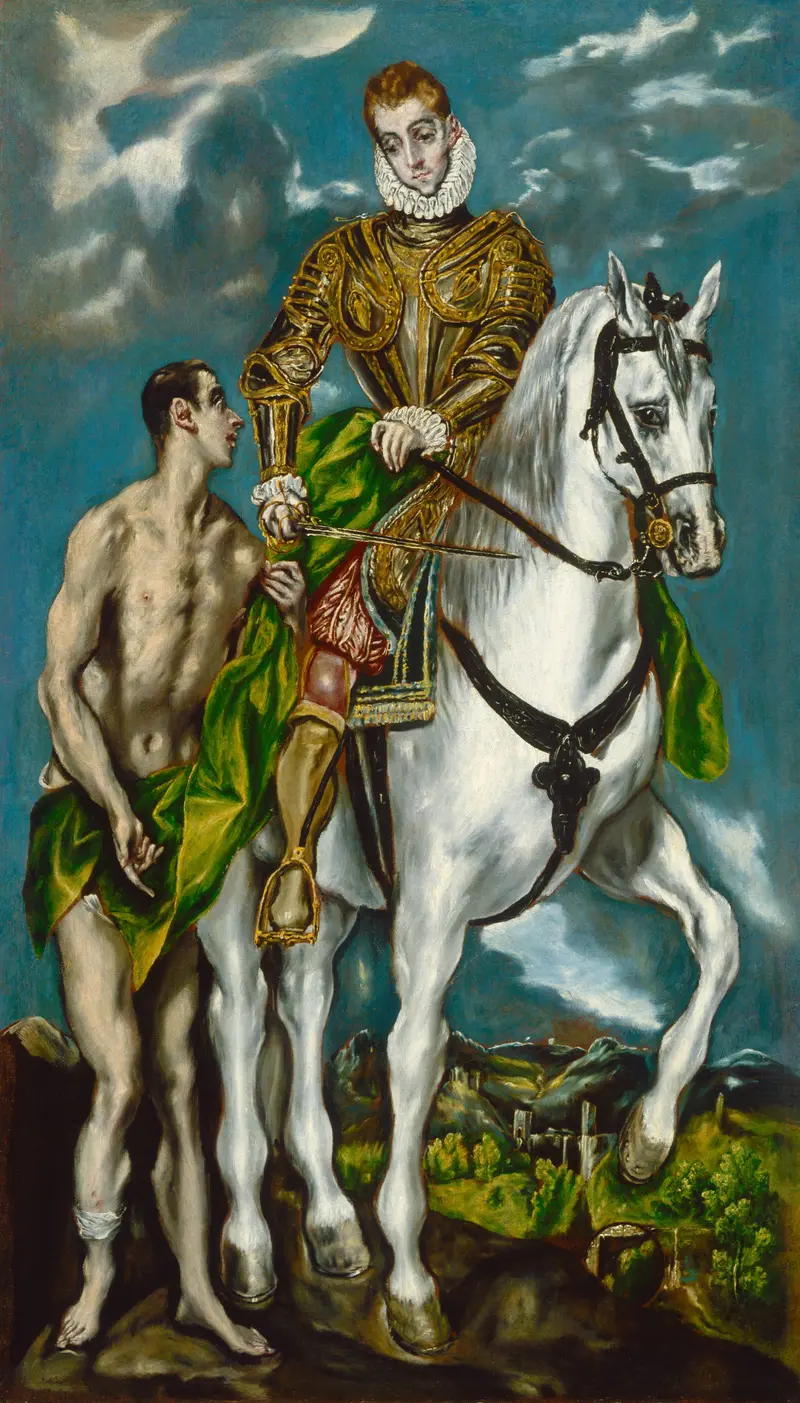
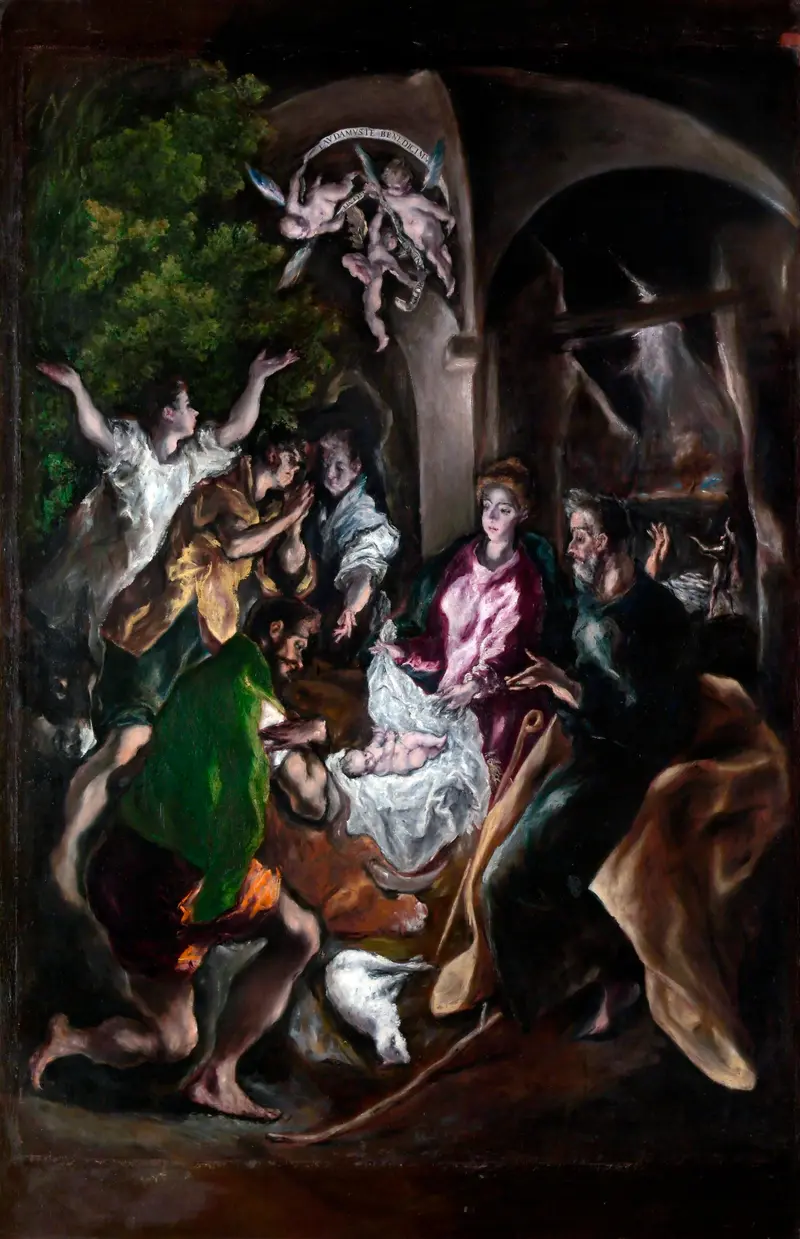
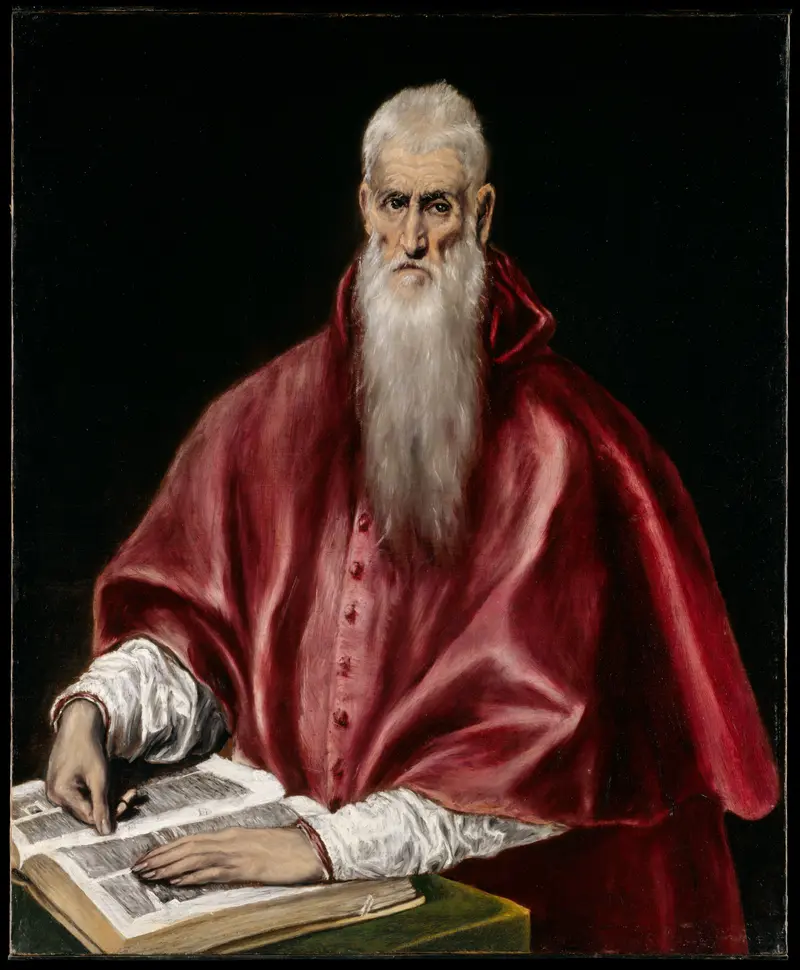
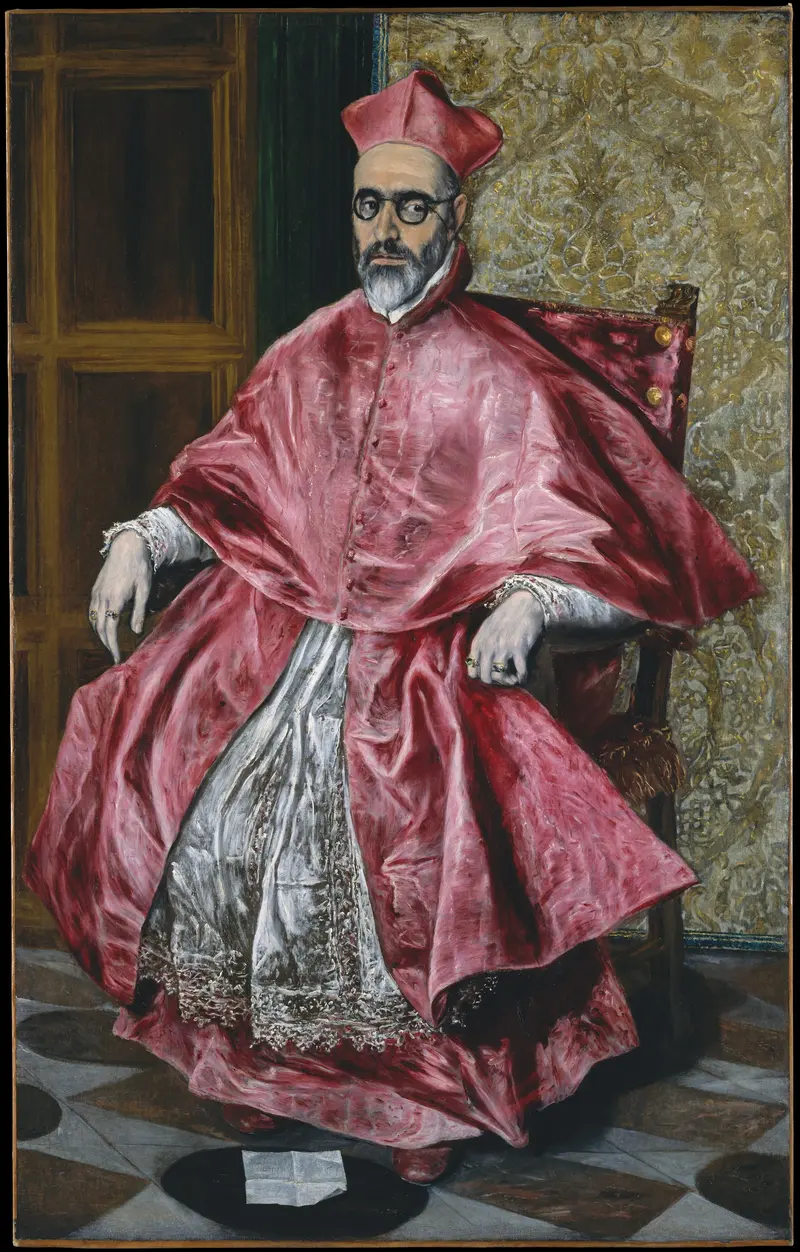
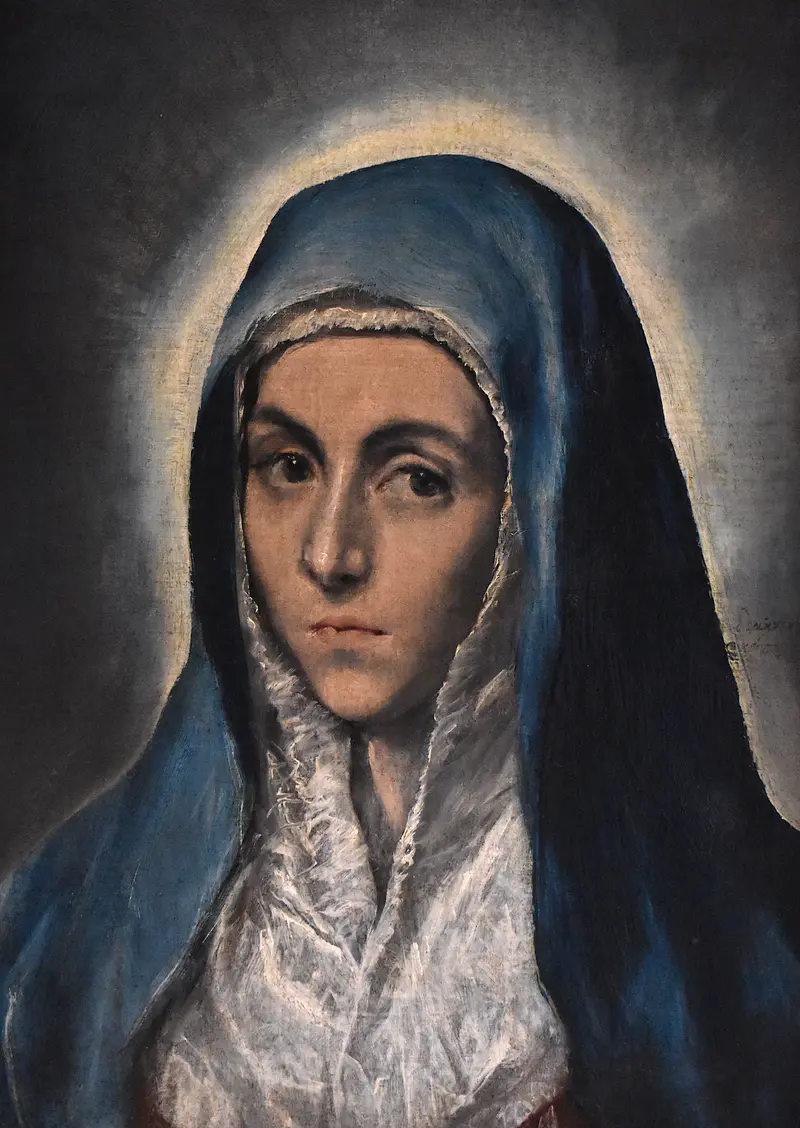
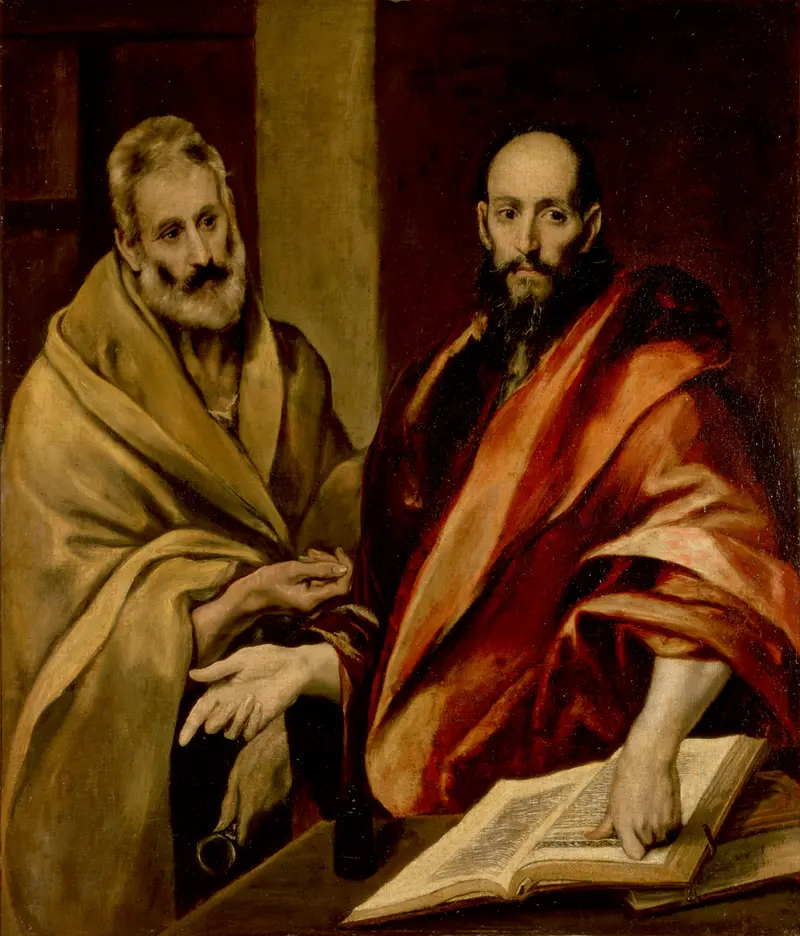
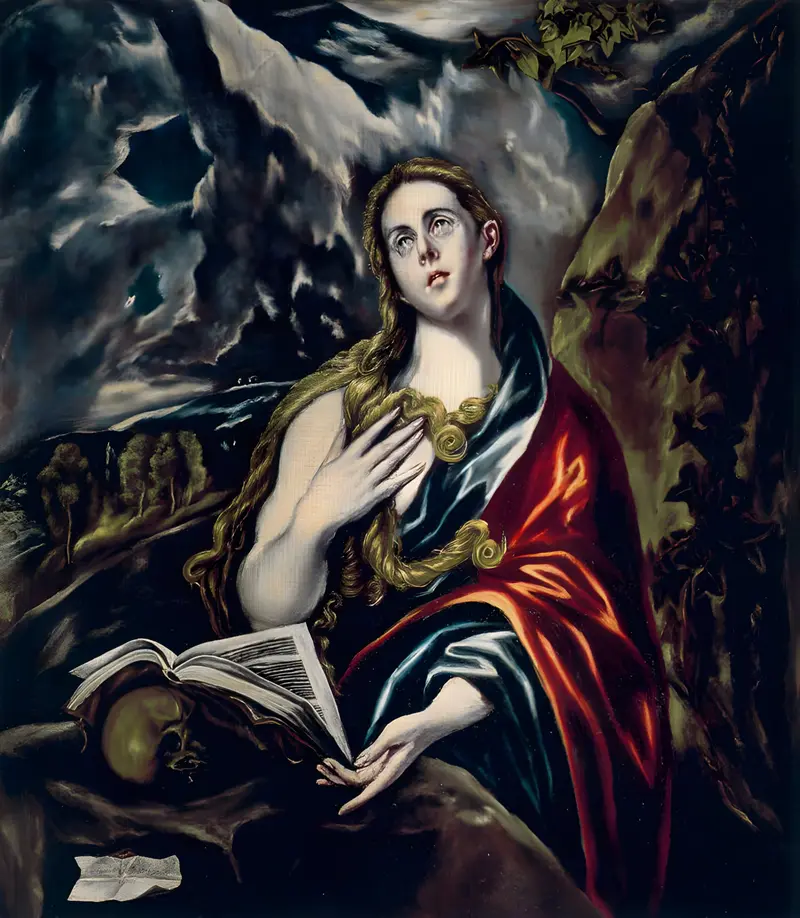
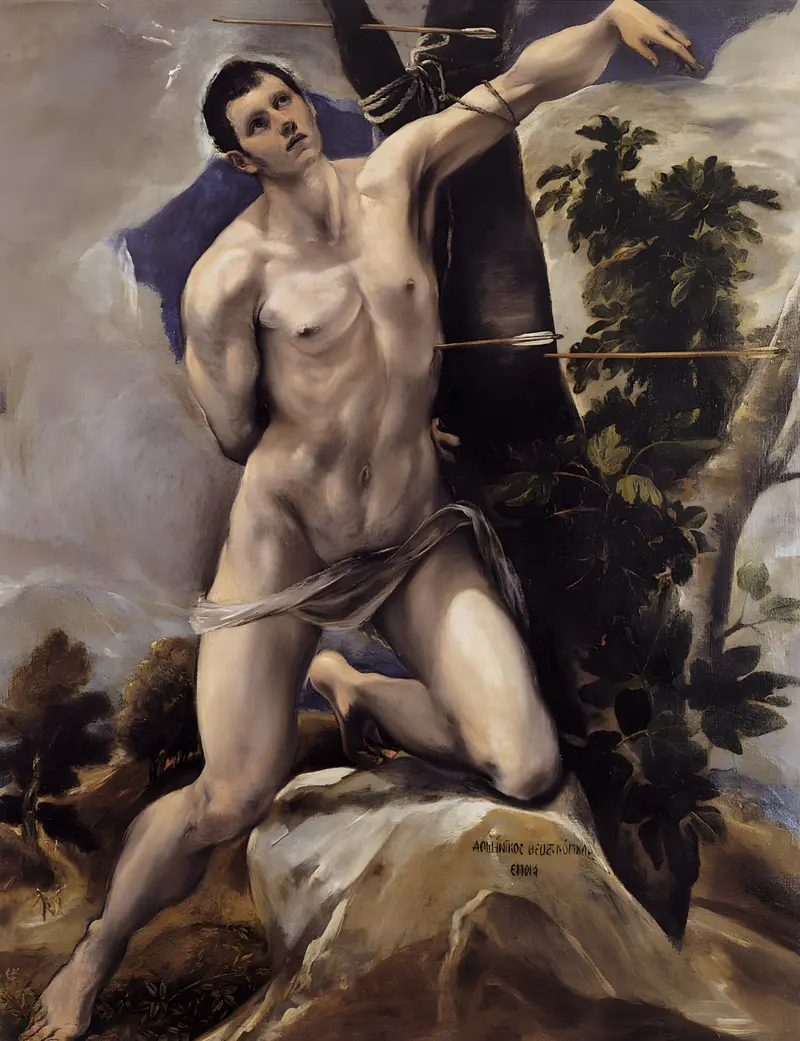
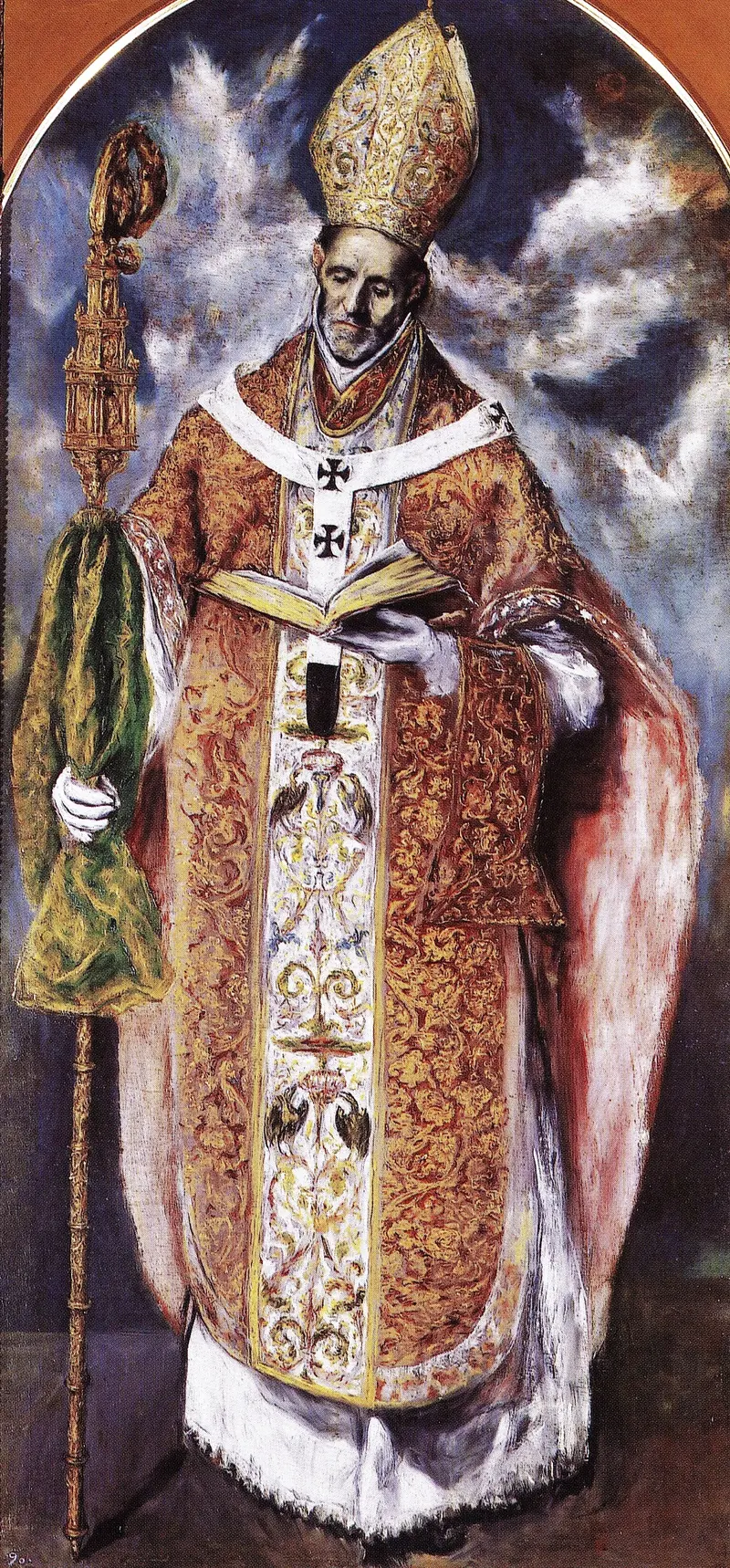
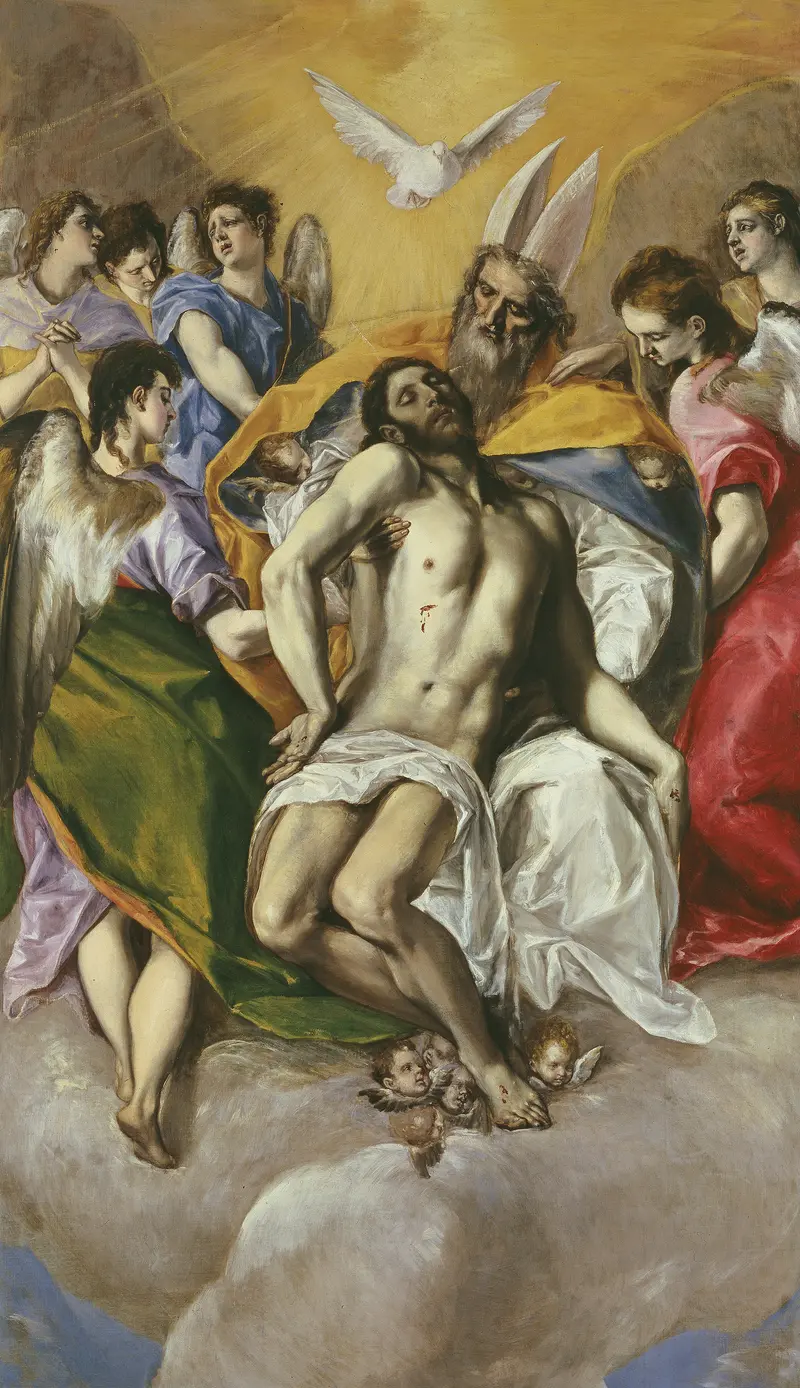
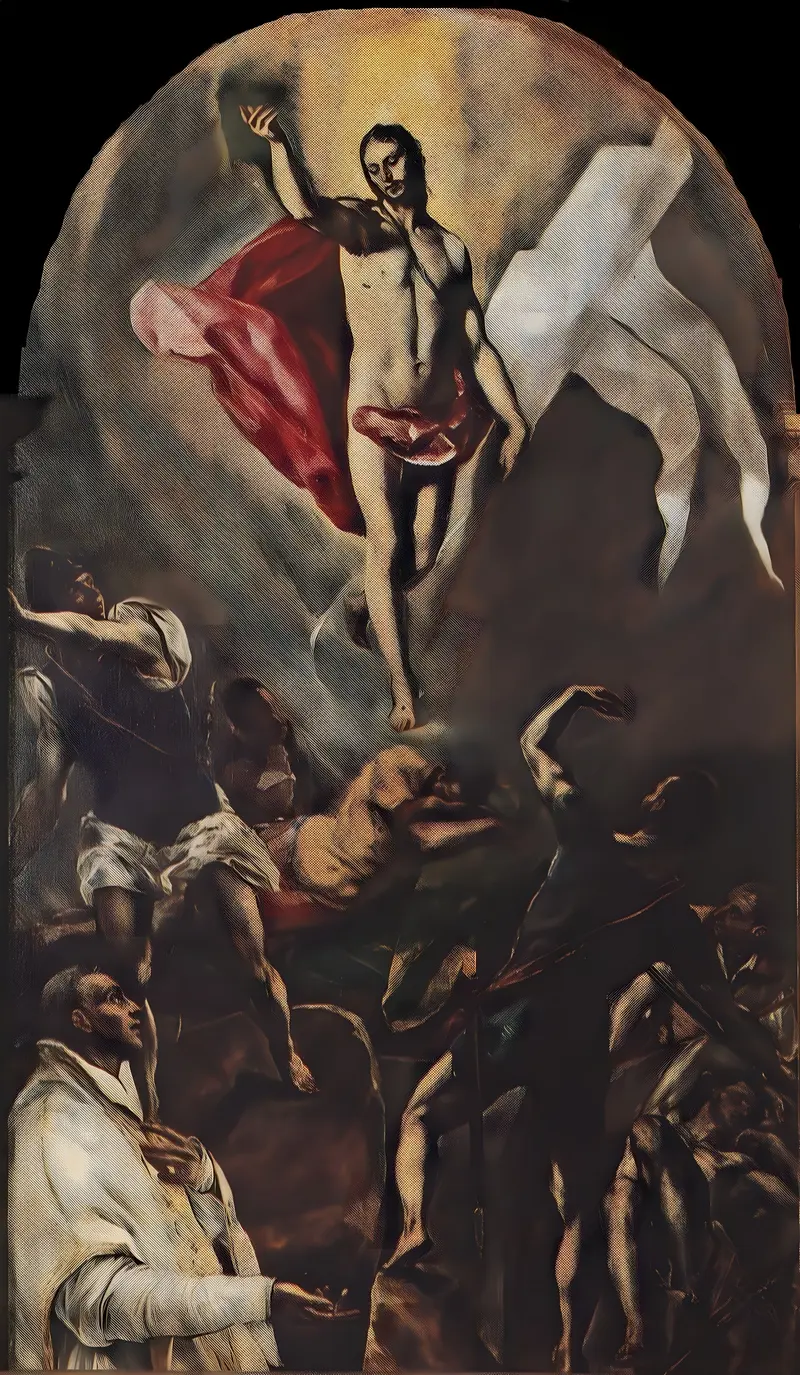
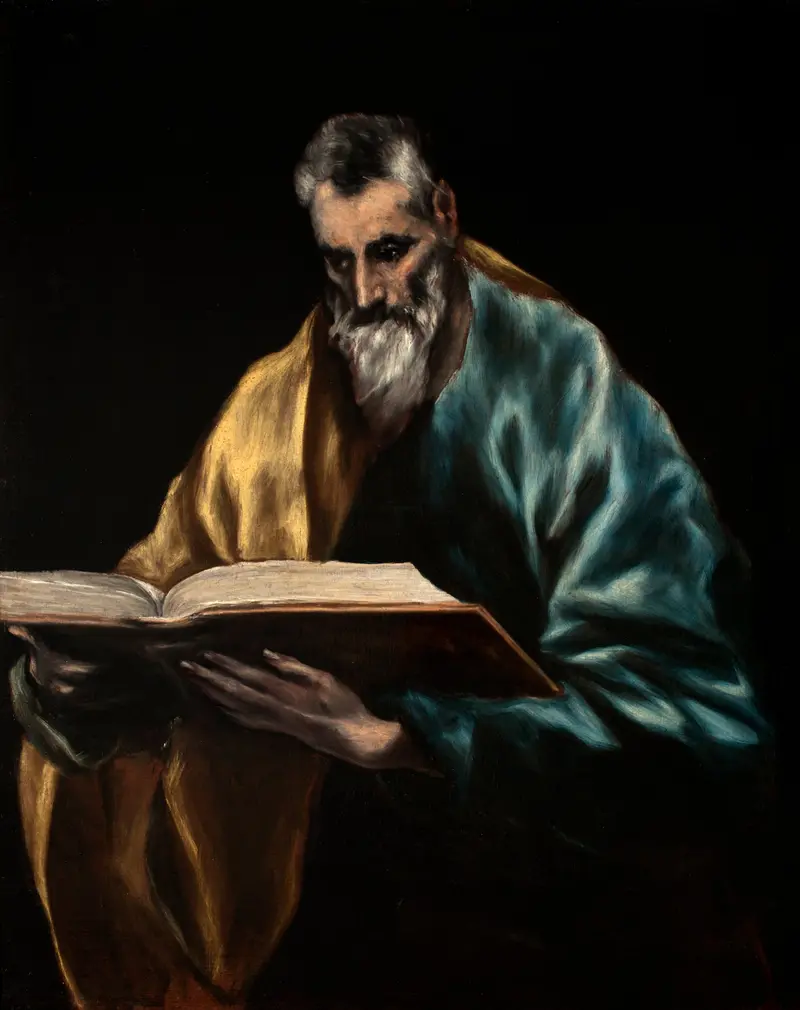

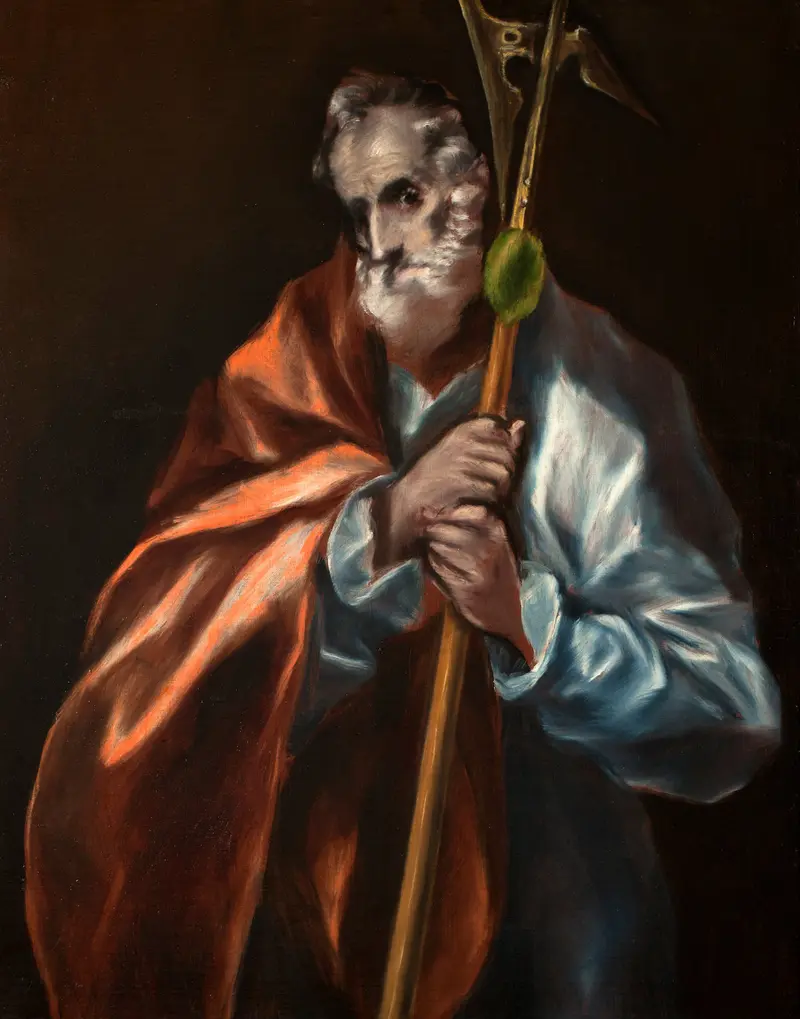
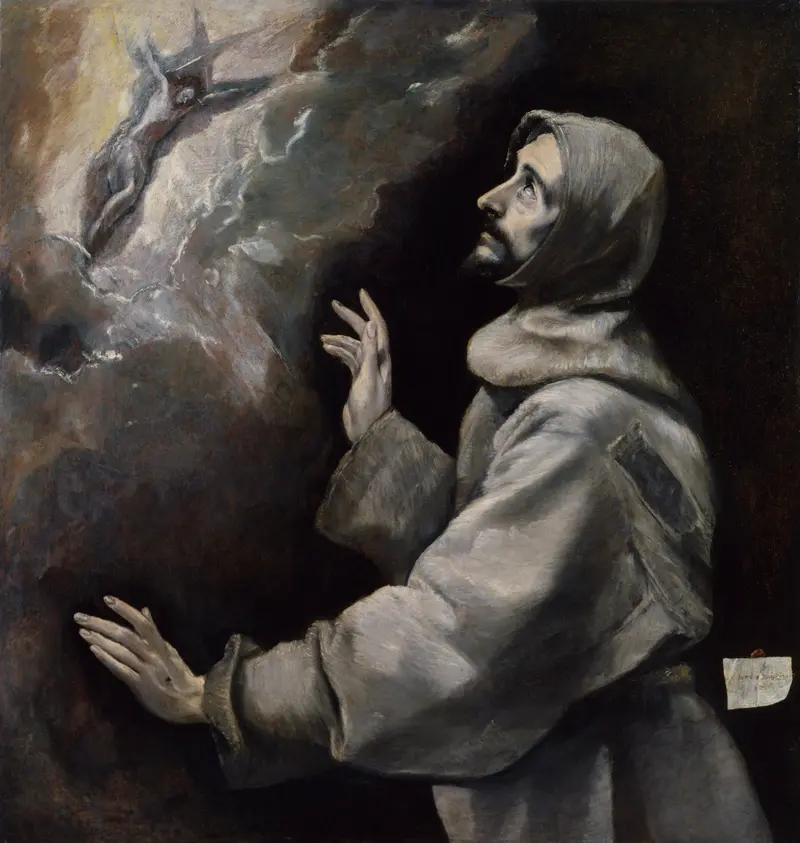
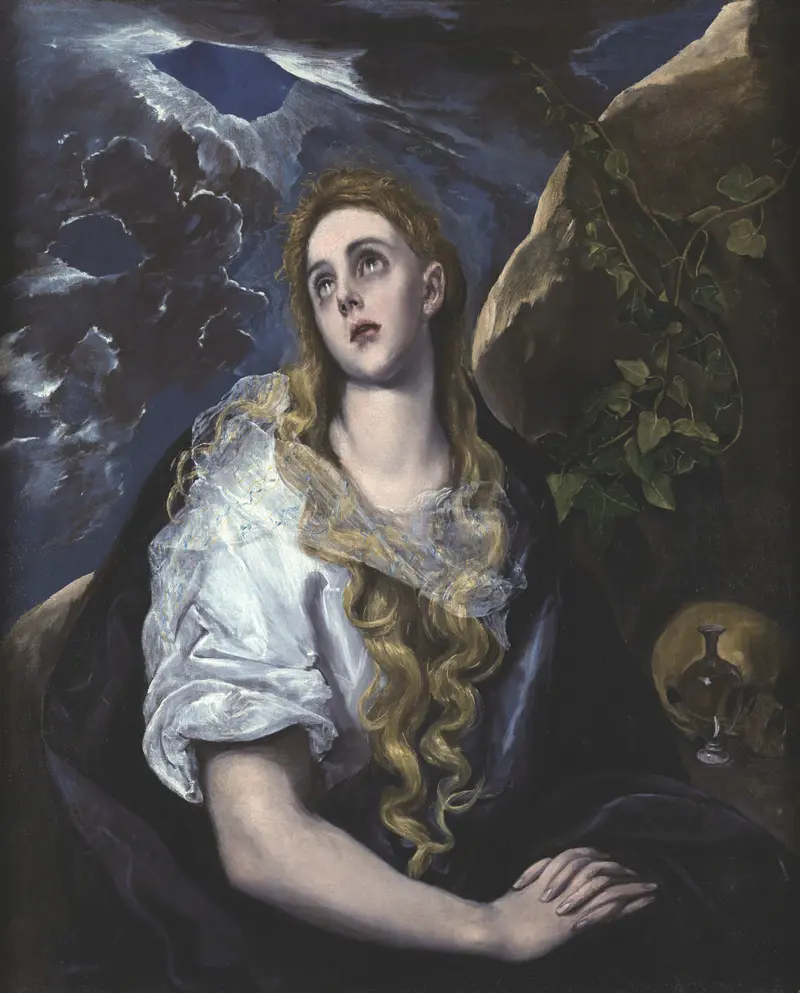
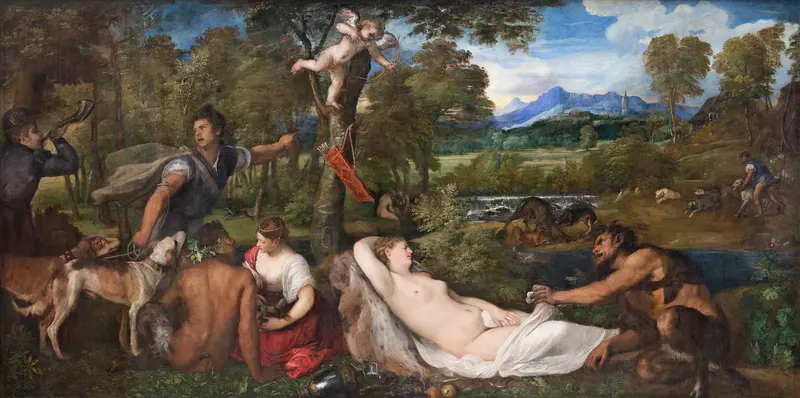
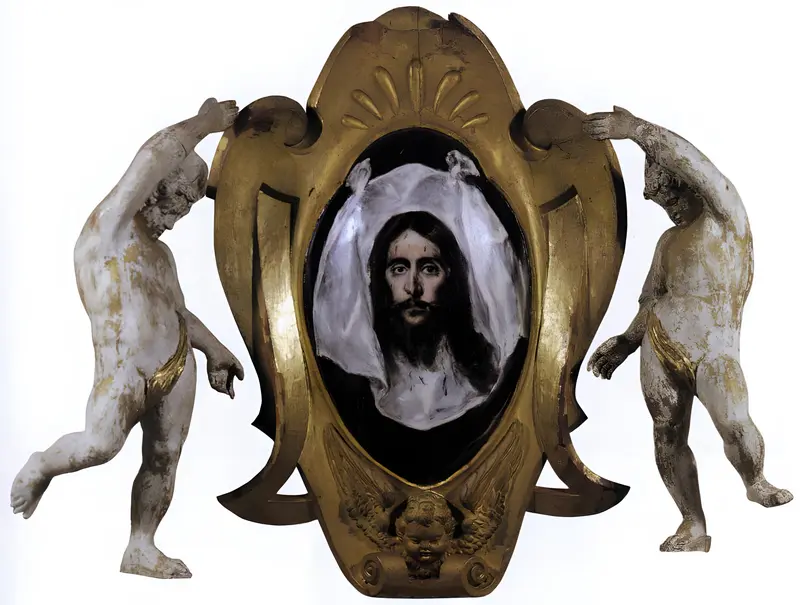
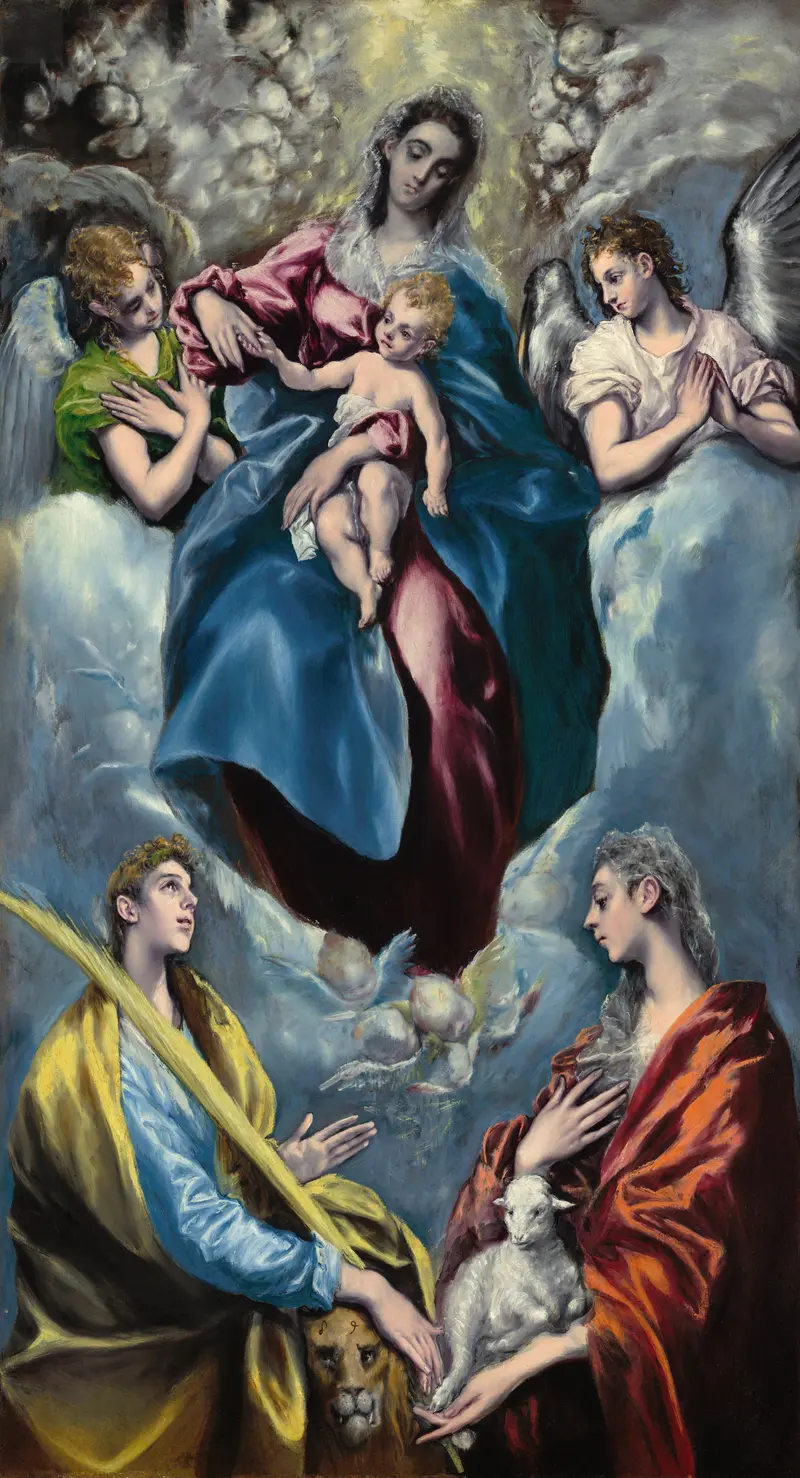
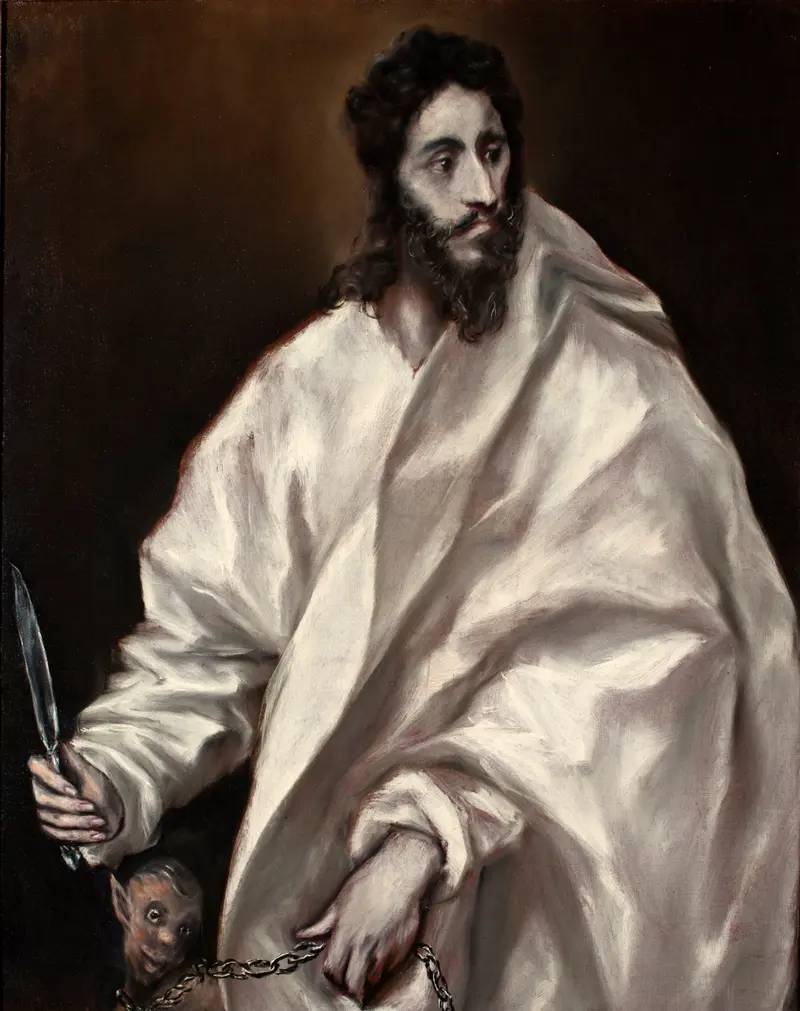
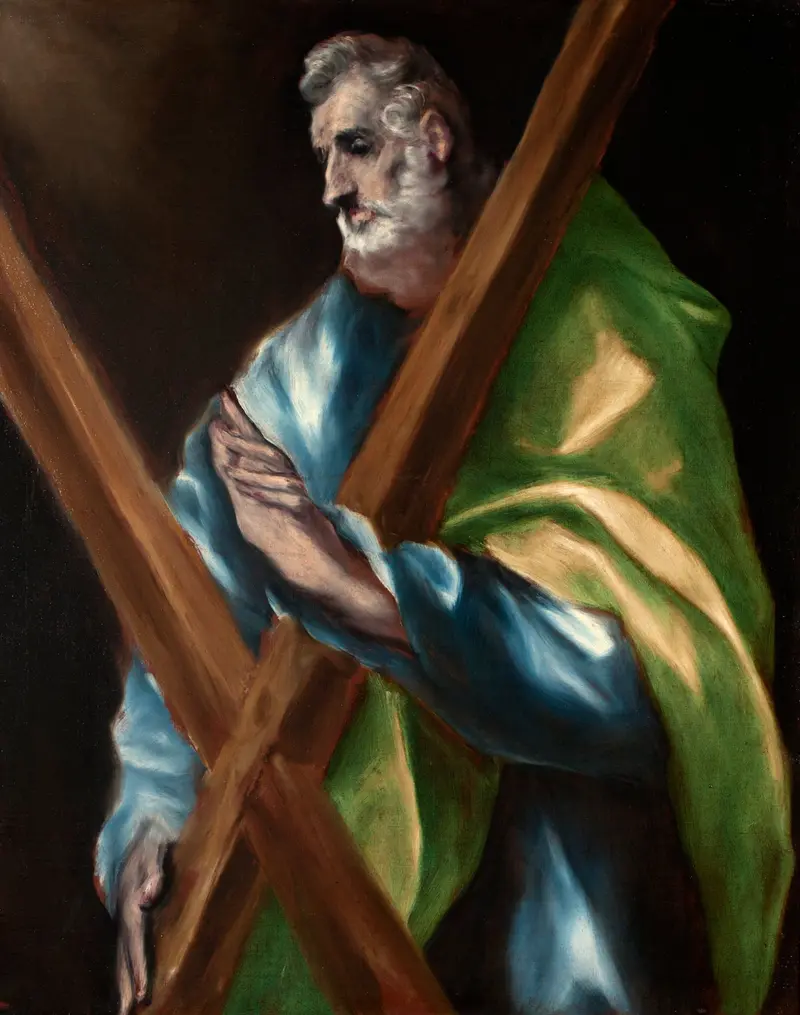
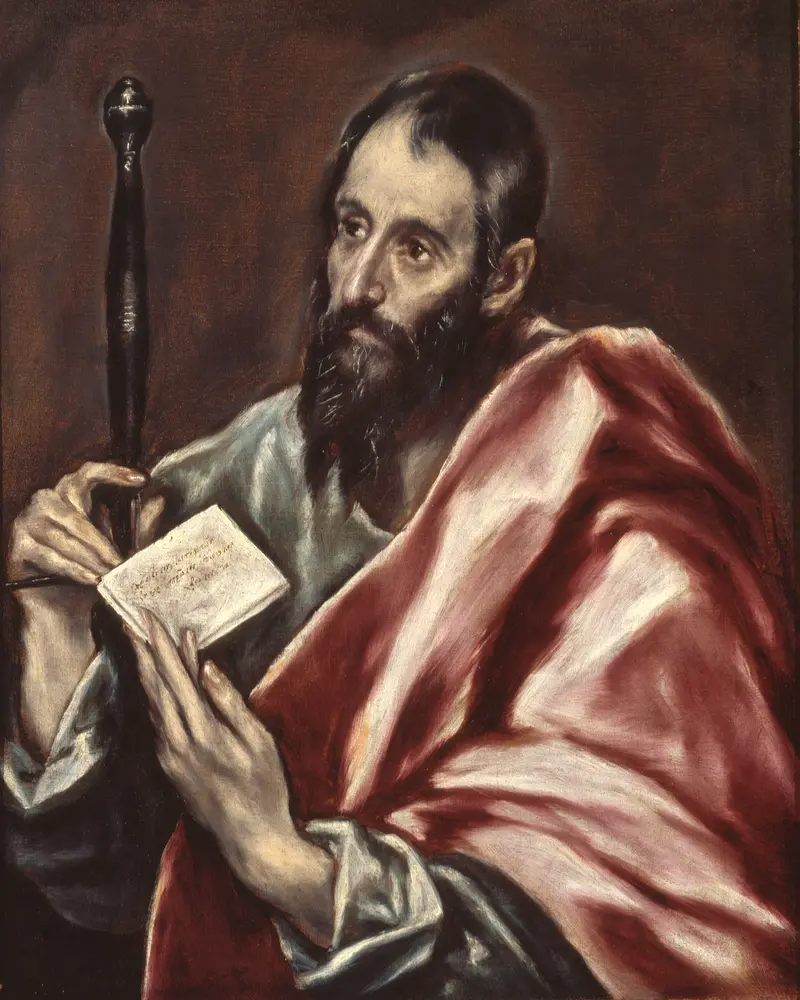
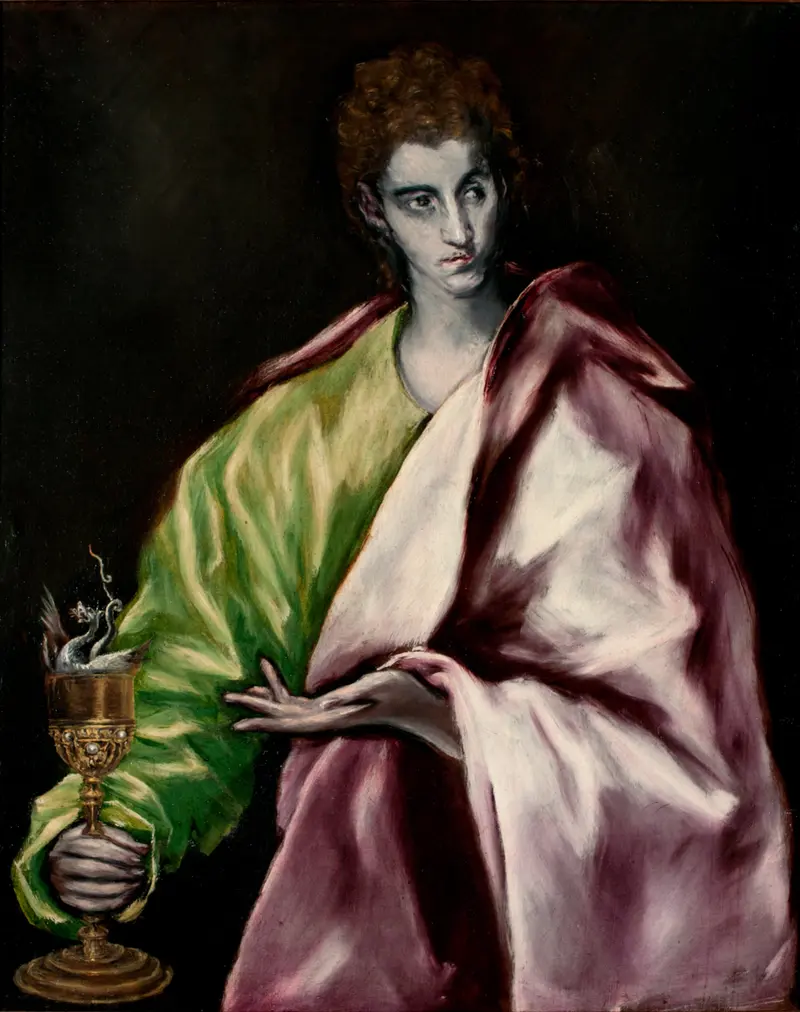
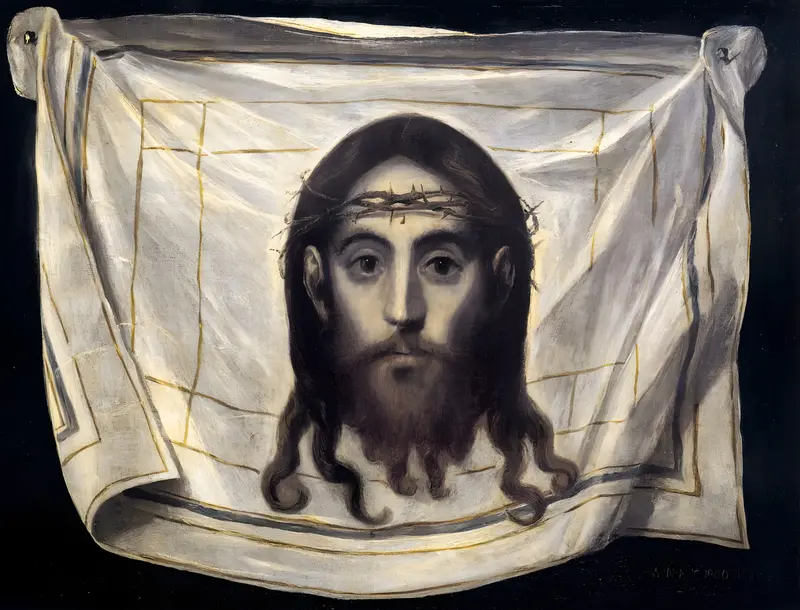
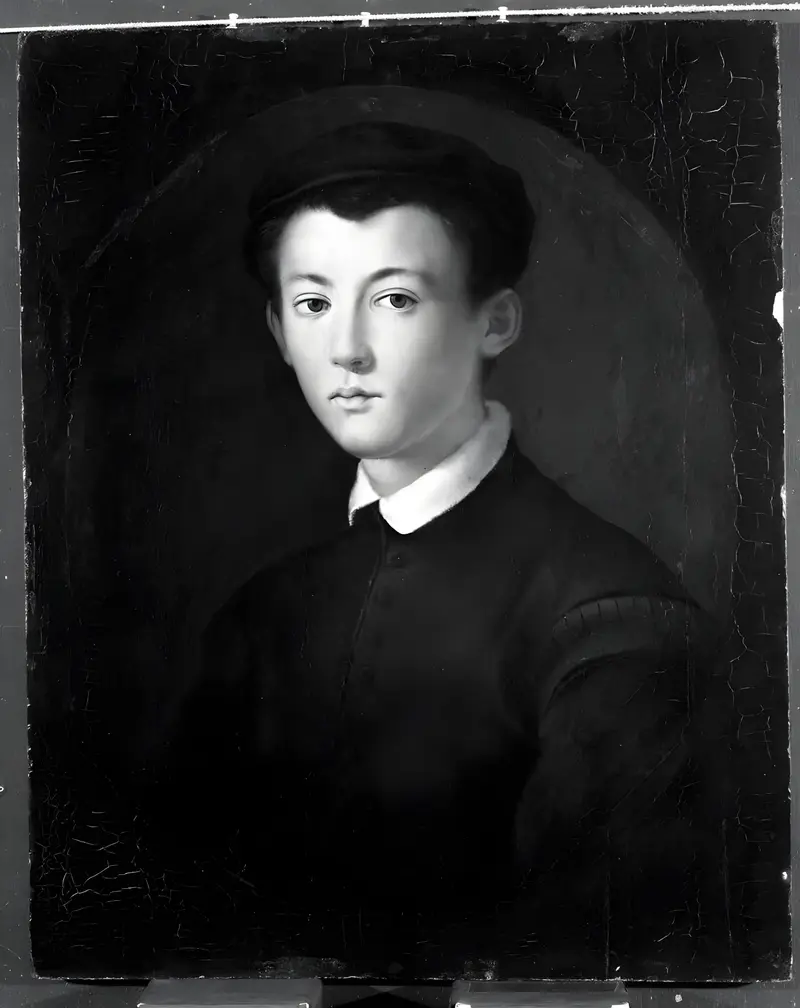
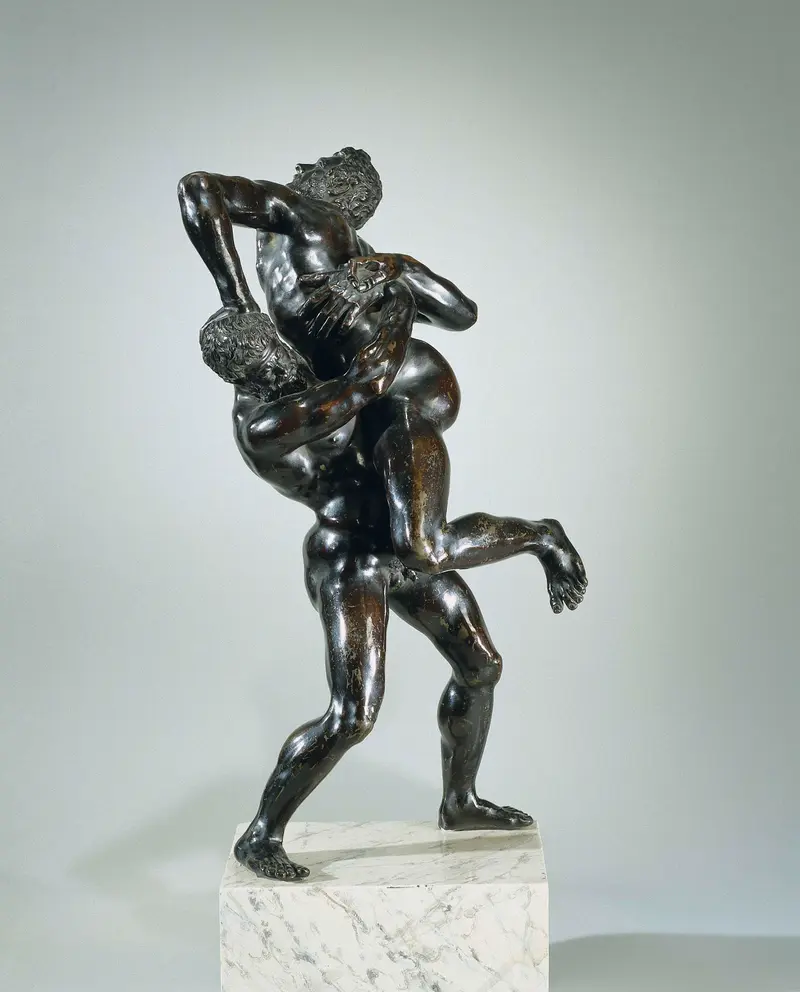
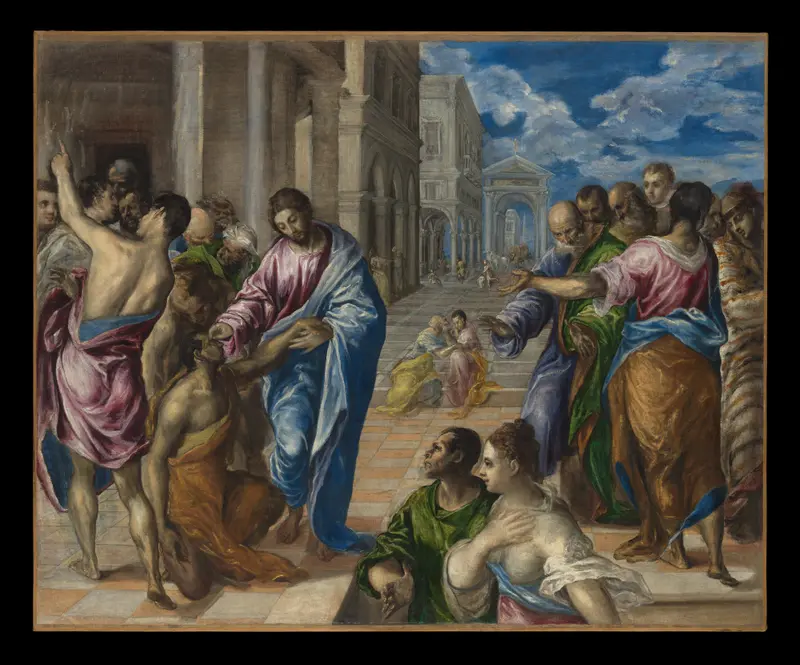
Famous Mannerist paintings
The best-known Mannerist paintings, from Florence and Rome to Toledo. Click any painting to see it up close and download it free.
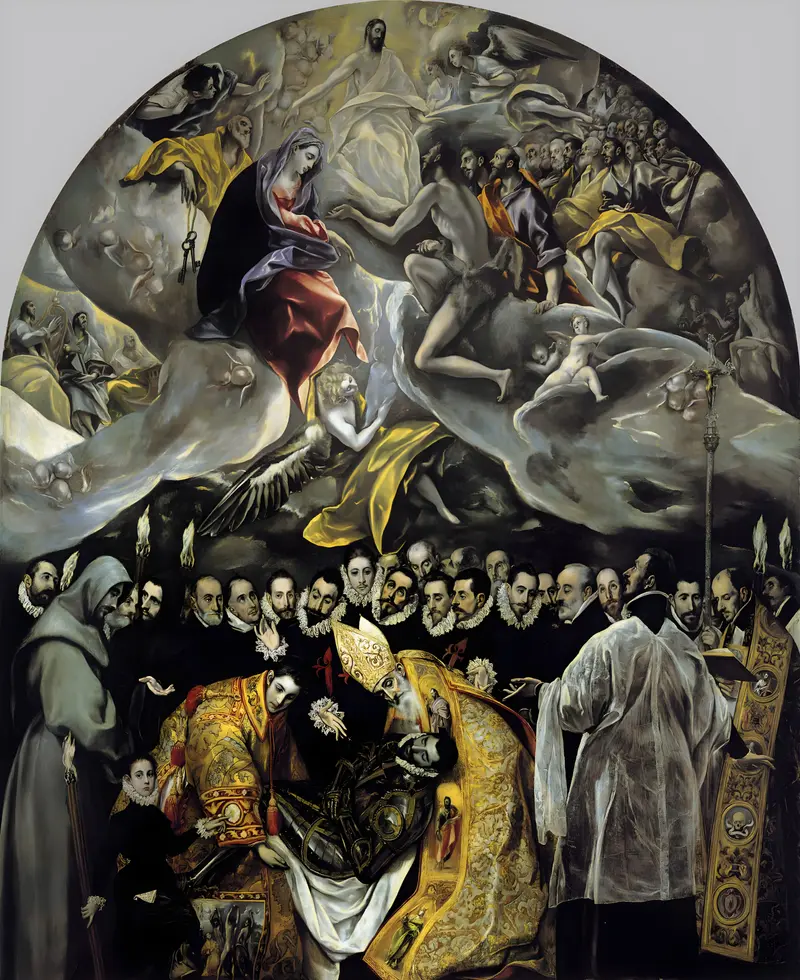 The Burial of the Count of OrgazEl Greco
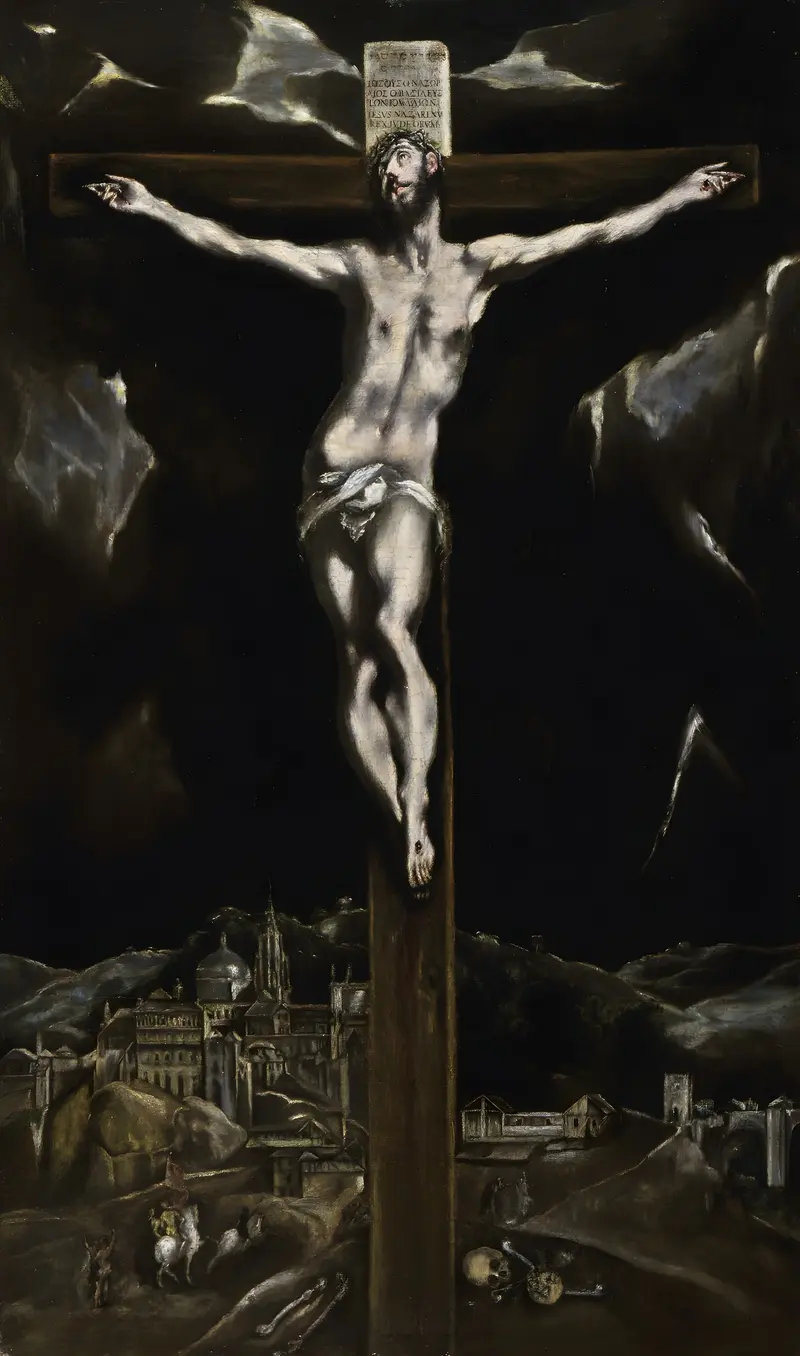
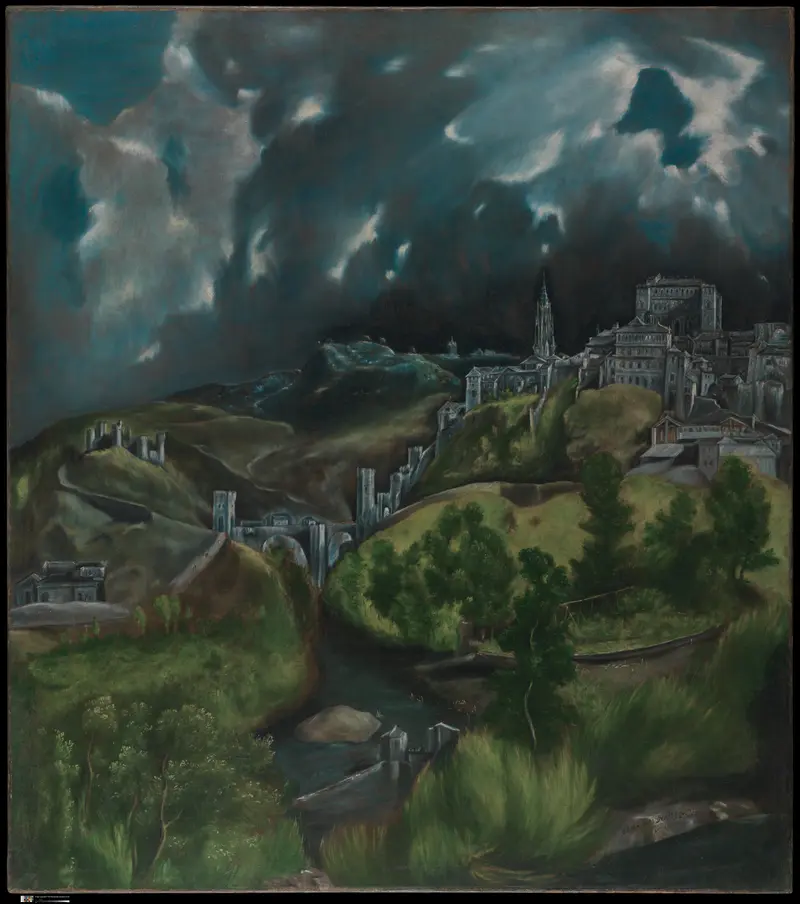
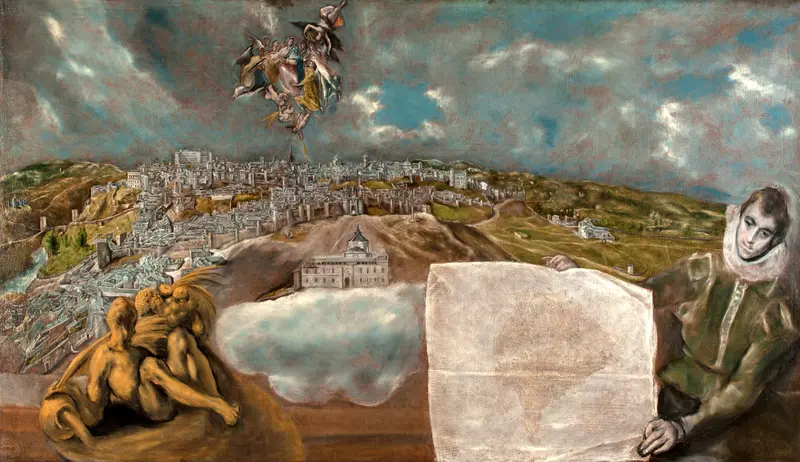
 View of ToledoEl Greco
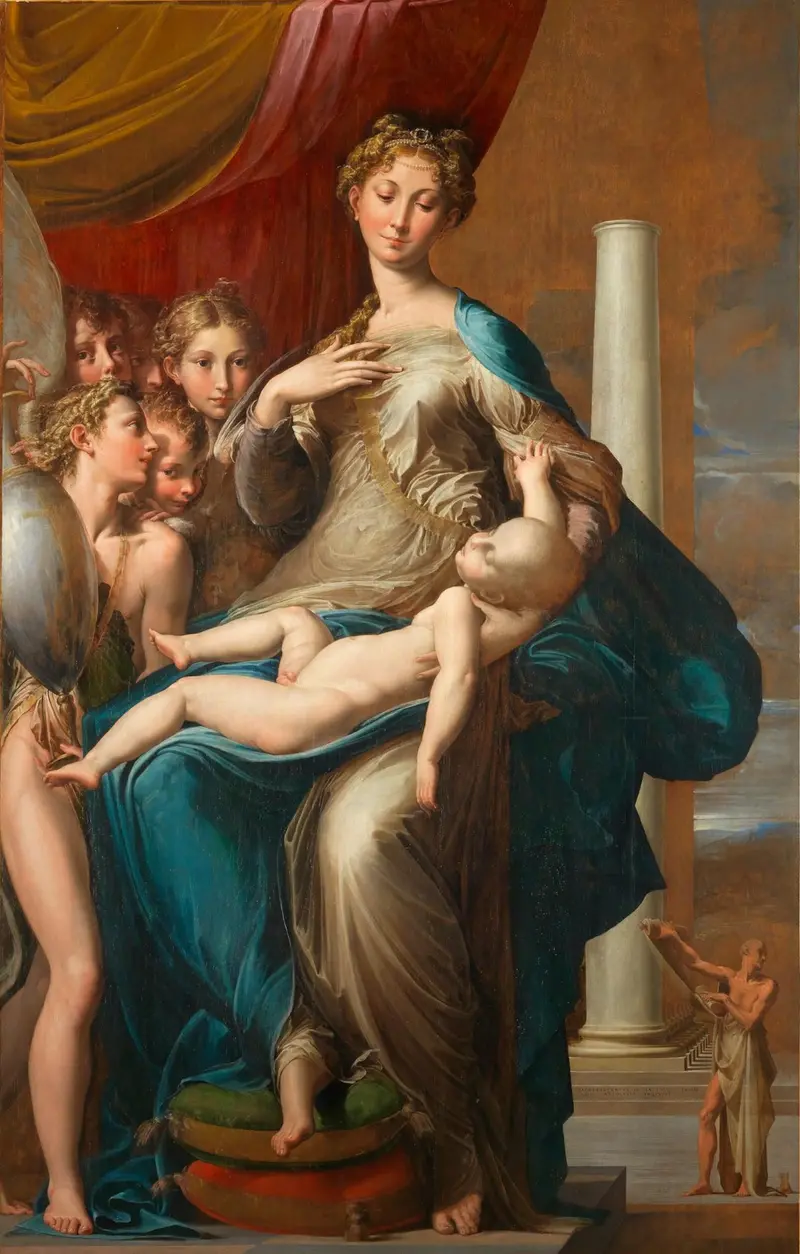 Madonna with the Long NeckParmigianino
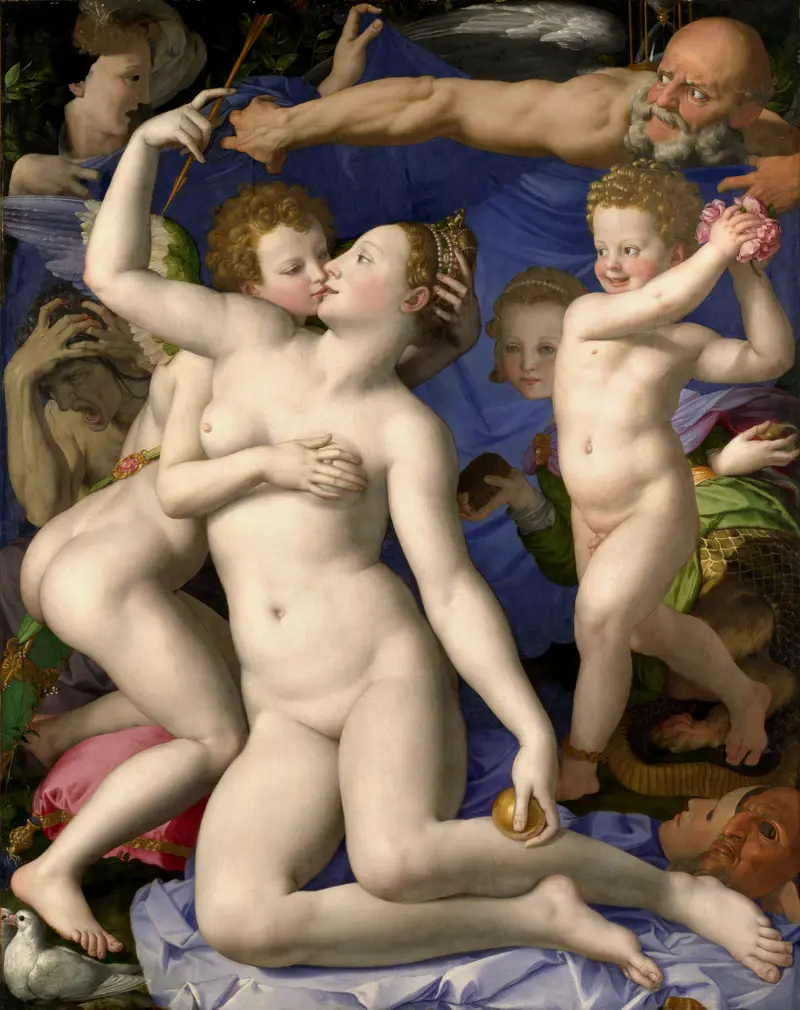 Venus, Cupid, Folly and TimeAgnolo Bronzino
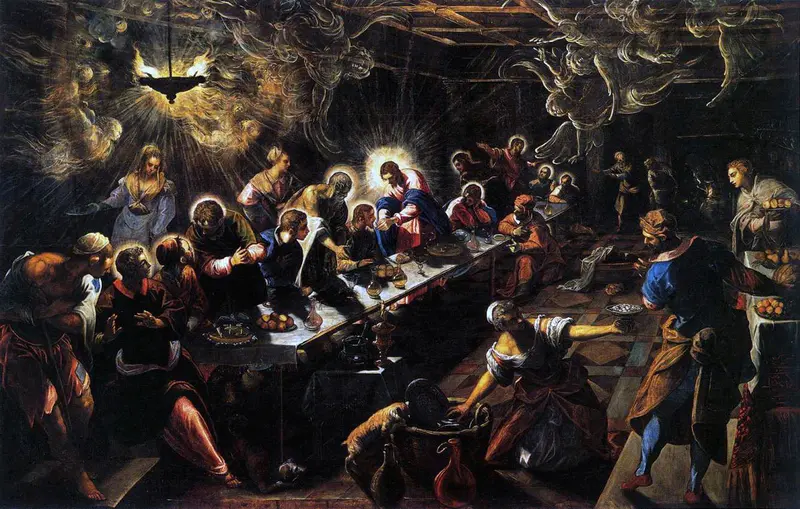 The Last SupperTintoretto
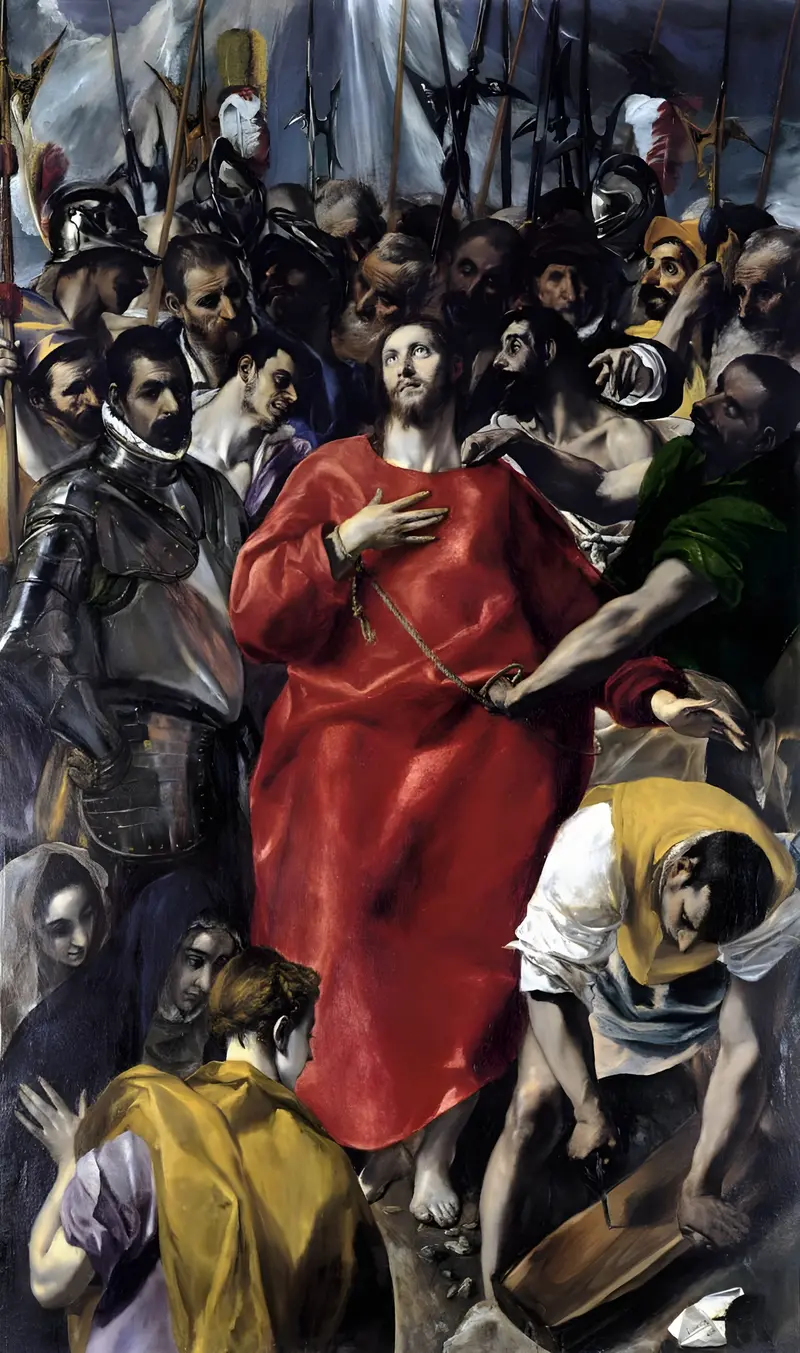
 The Disrobing of Christ (El Expolio)El Greco
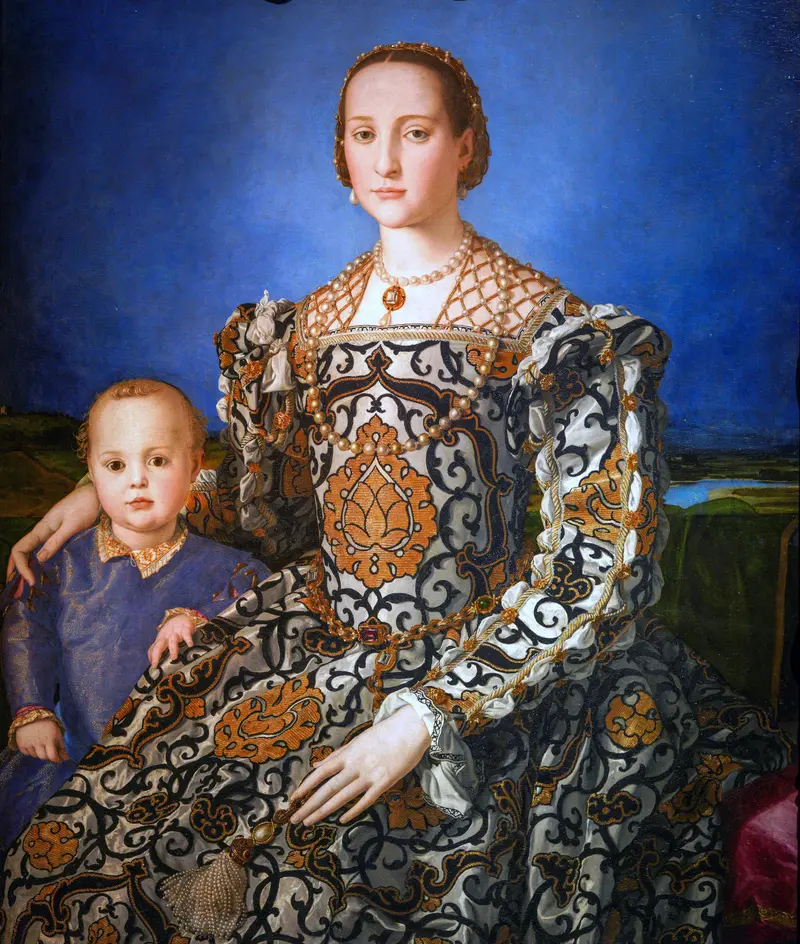 Eleonora di Toledo with Her Son GiovanniAgnolo Bronzino
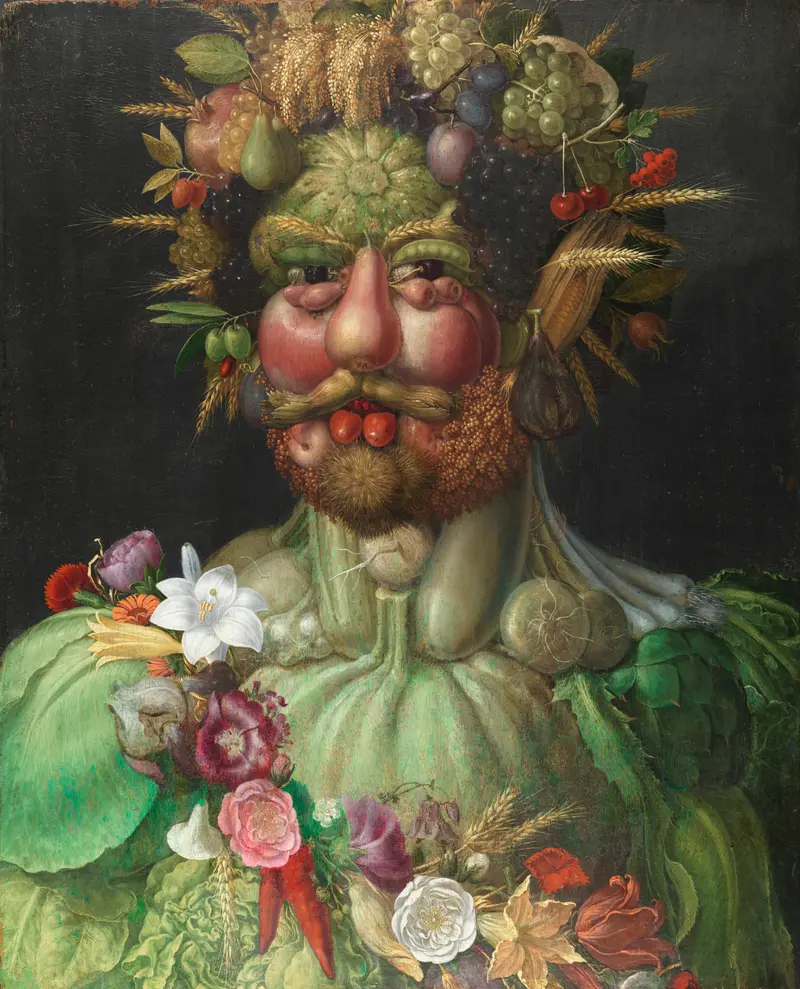 Rudolf II as VertumnusGiuseppe Arcimboldo
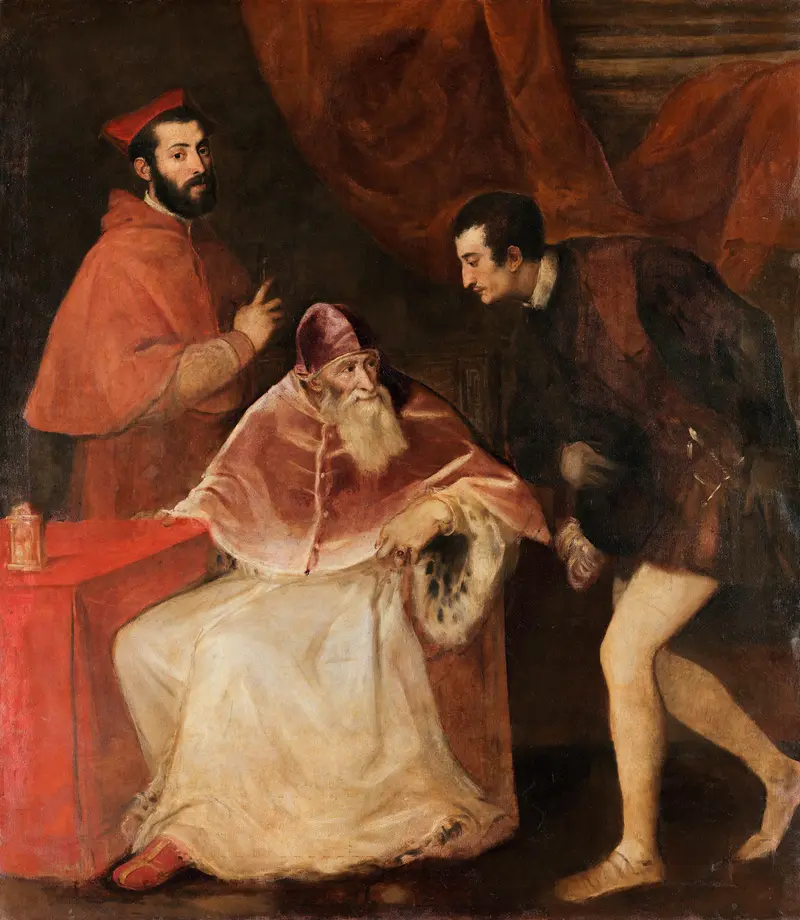 Pope Paul III and His GrandsonsTitian
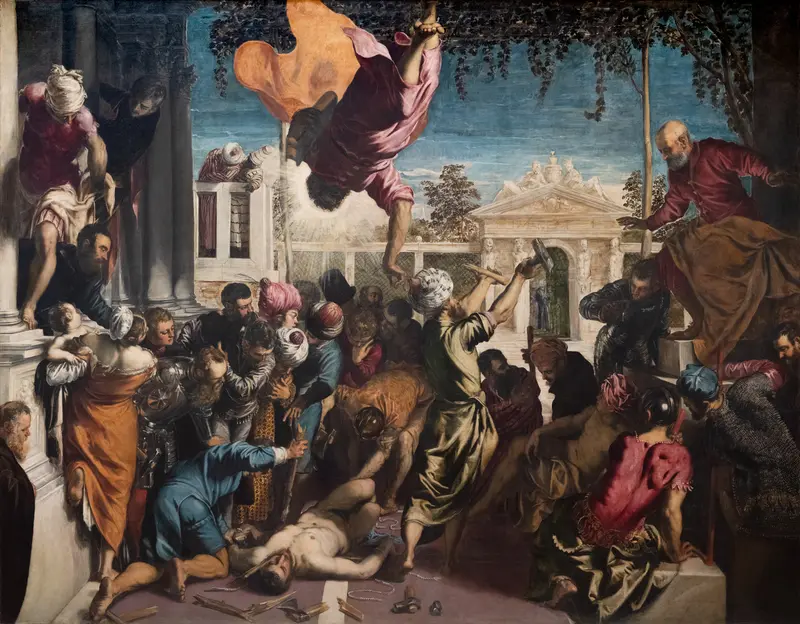 The Miracle of the SlaveTintoretto
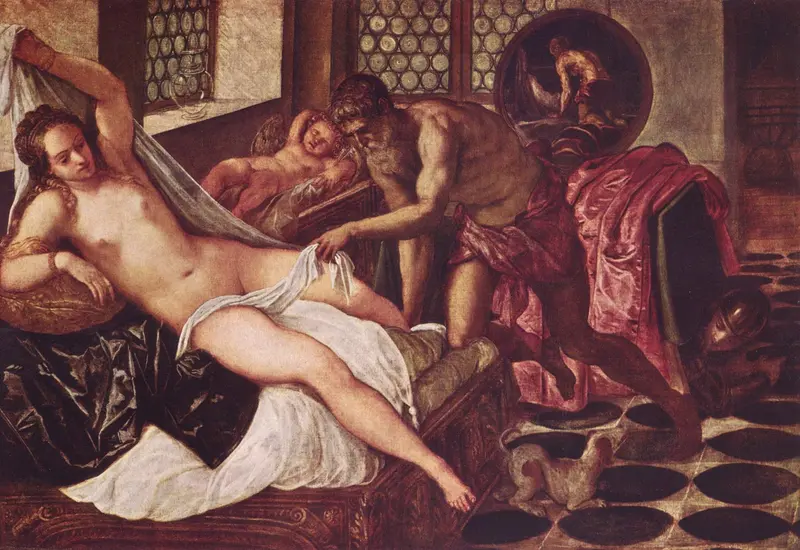 Venus and Mars Surprised by VulcanTintoretto
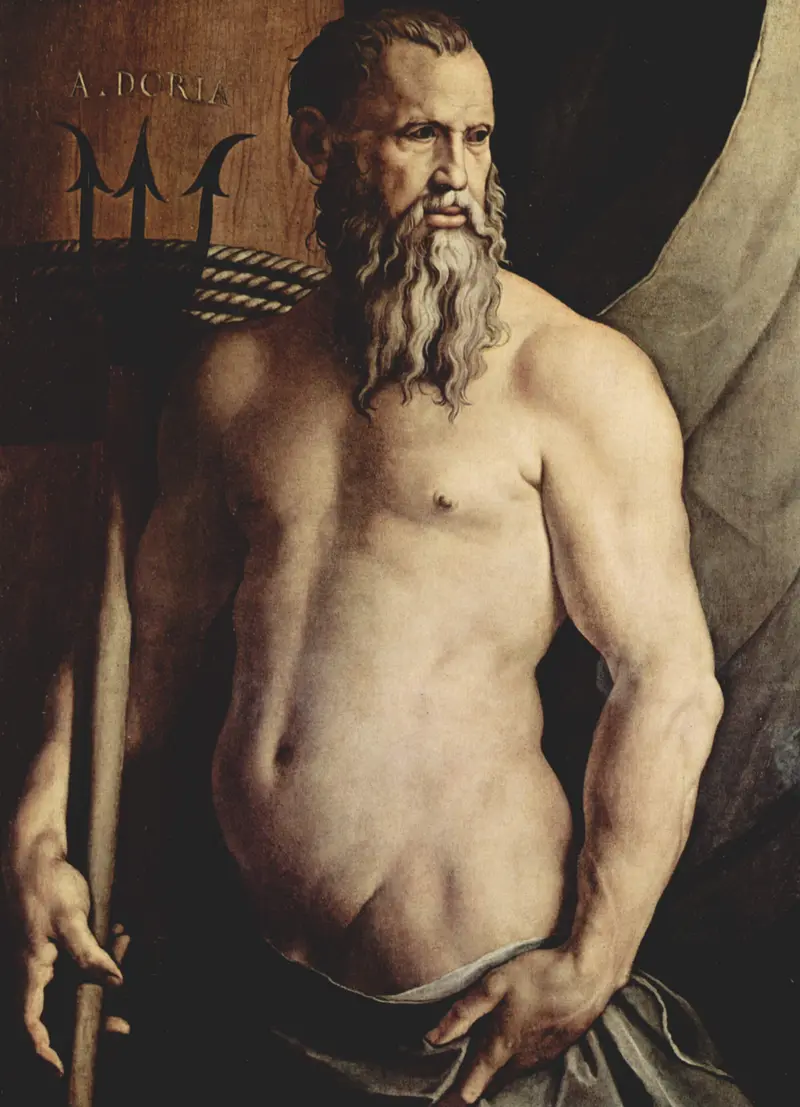 Andrea Doria as NeptuneAgnolo Bronzino
Mannerist painters
Ten painters at the heart of Mannerism, from Florence, Parma and Venice to Toledo, Prague and Haarlem. Each link opens all their paintings.
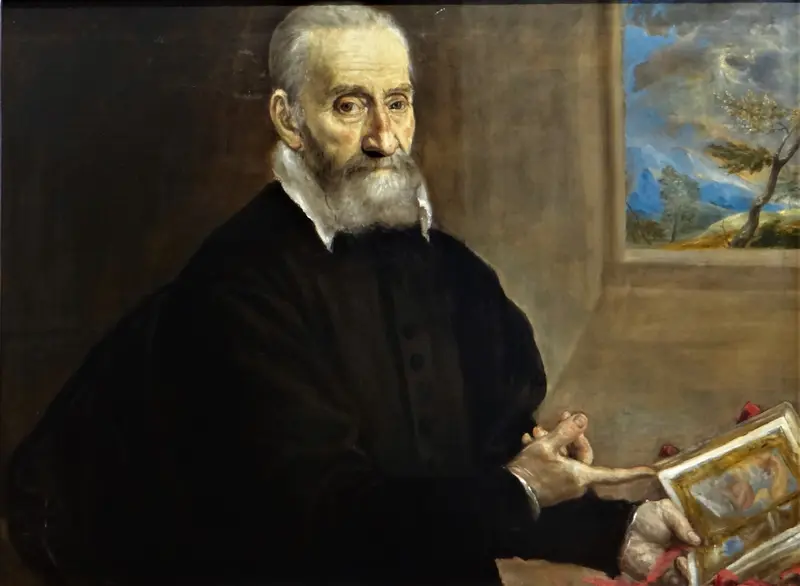 El Greco1541–1614. Born in Crete and trained in Venice, where he developed his intense, colorful Mannerist style; he had settled in Toledo by 1577 and painted mostly for its churches.
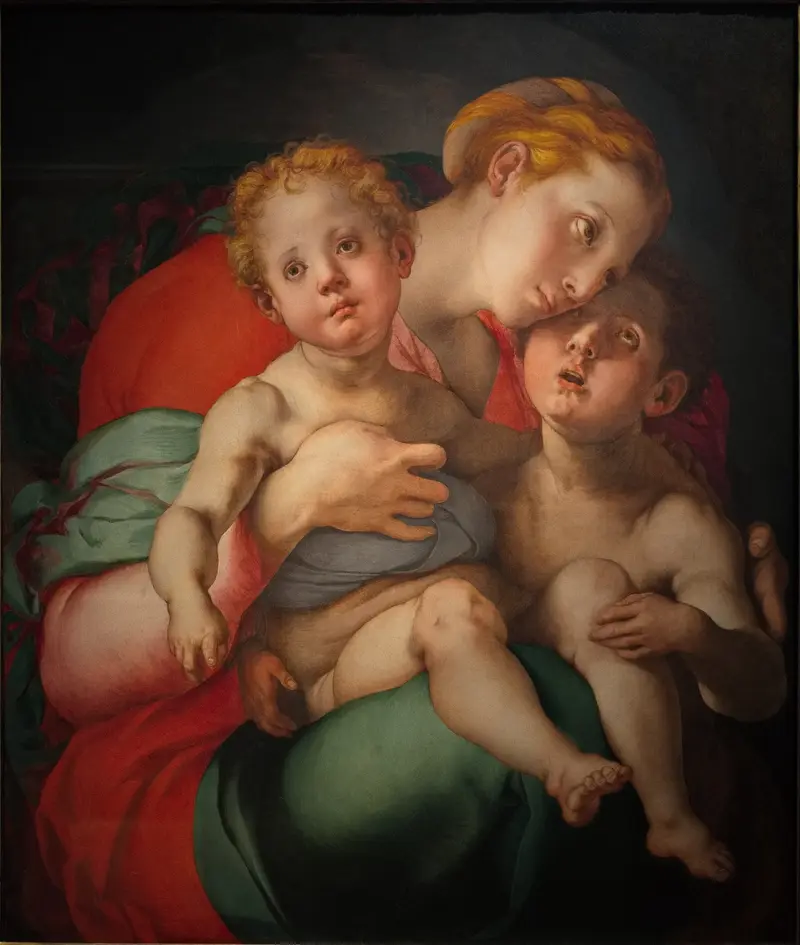 Pontormo1494–1557. Jacopo Carucci, named after his Tuscan birthplace; the National Gallery calls him the main exponent of an early, expressive form of Mannerism. Bronzino was his pupil.
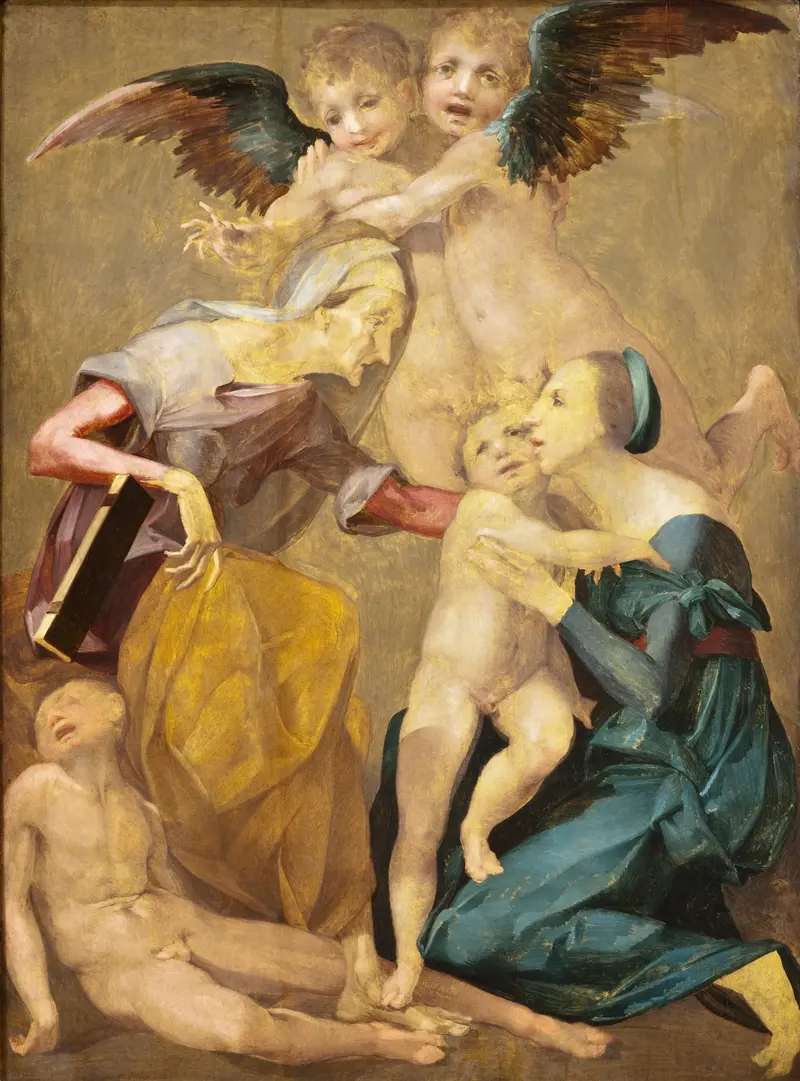 Rosso Fiorentino1494–1540. 'The Redhead from Florence', with Pontormo a pioneer of Early Mannerism; after the Sack of Rome in 1527 he went to France and decorated the royal château at Fontainebleau.
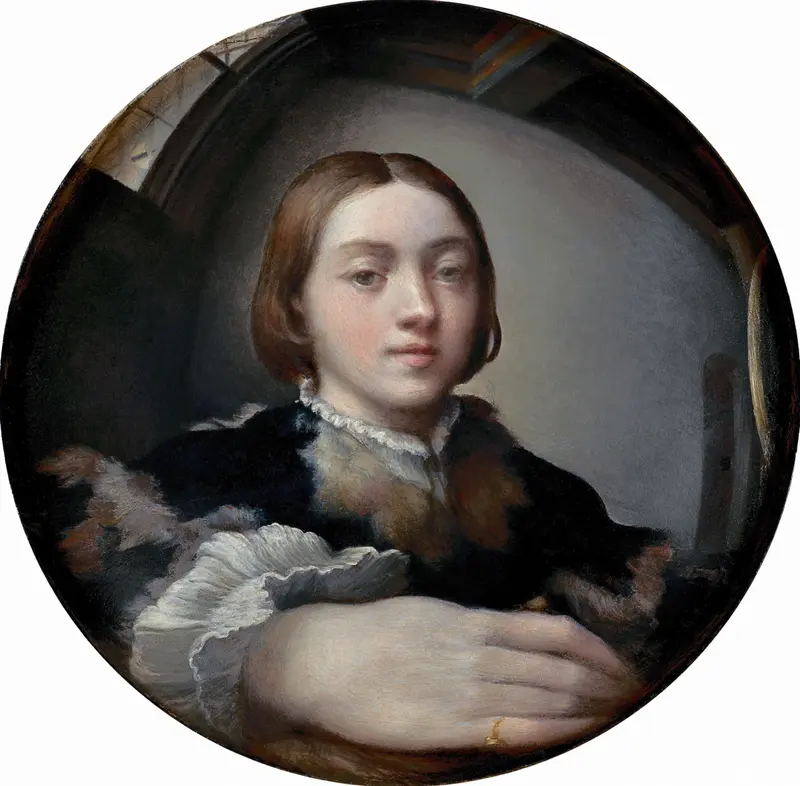 Parmigianino1503–1540. Born in Parma, one of the originators and leading exponents of Mannerism, the National Gallery says; he worked in Rome from 1524 until the Sack of 1527, then in Bologna and Parma.
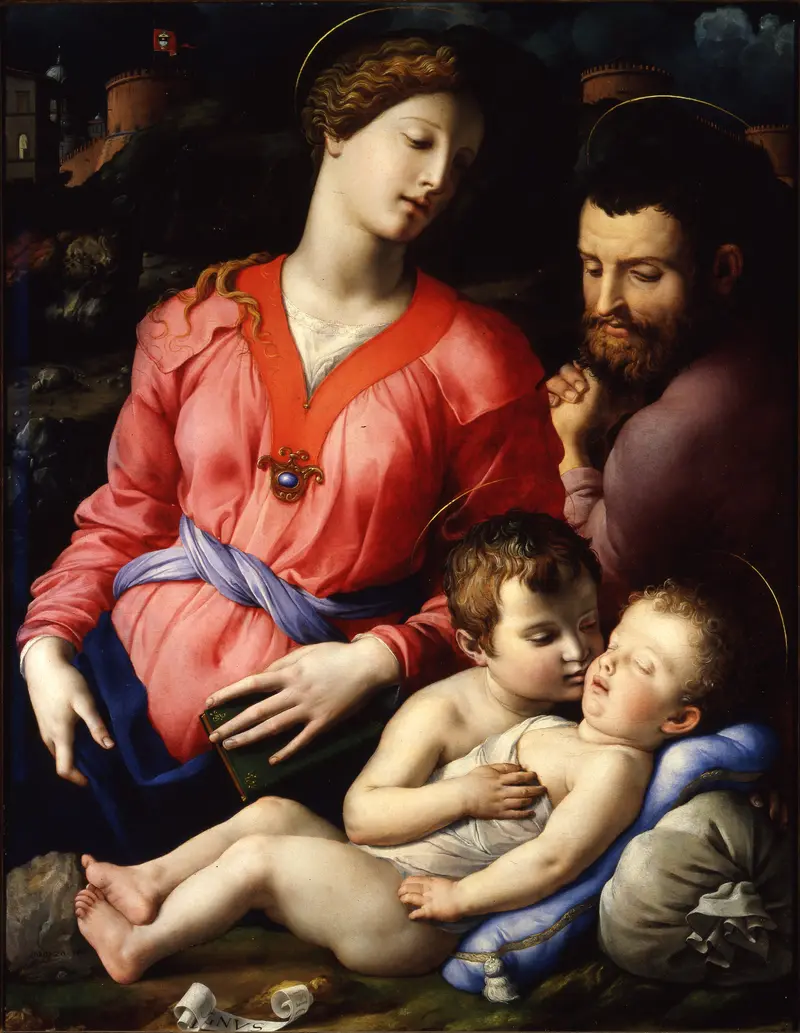 Agnolo Bronzino1503–1572. Pontormo's pupil and the leading painter of mid-16th-century Florence, chiefly famous for his portraits of Cosimo I de' Medici, Eleonora di Toledo and their court.
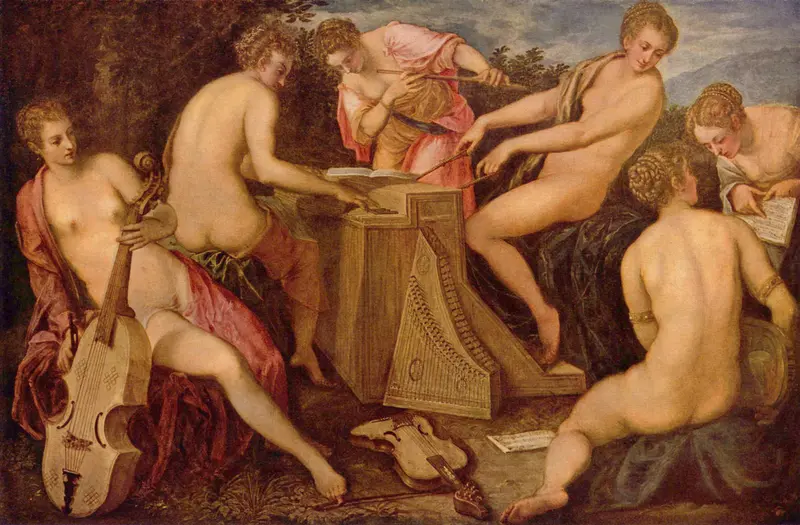 TintorettoAbout 1518–1594. Venetian painter of large, dramatic narratives who wanted to combine Titian's color with Michelangelo's forms; the National Gallery says he is usually described as a Mannerist.
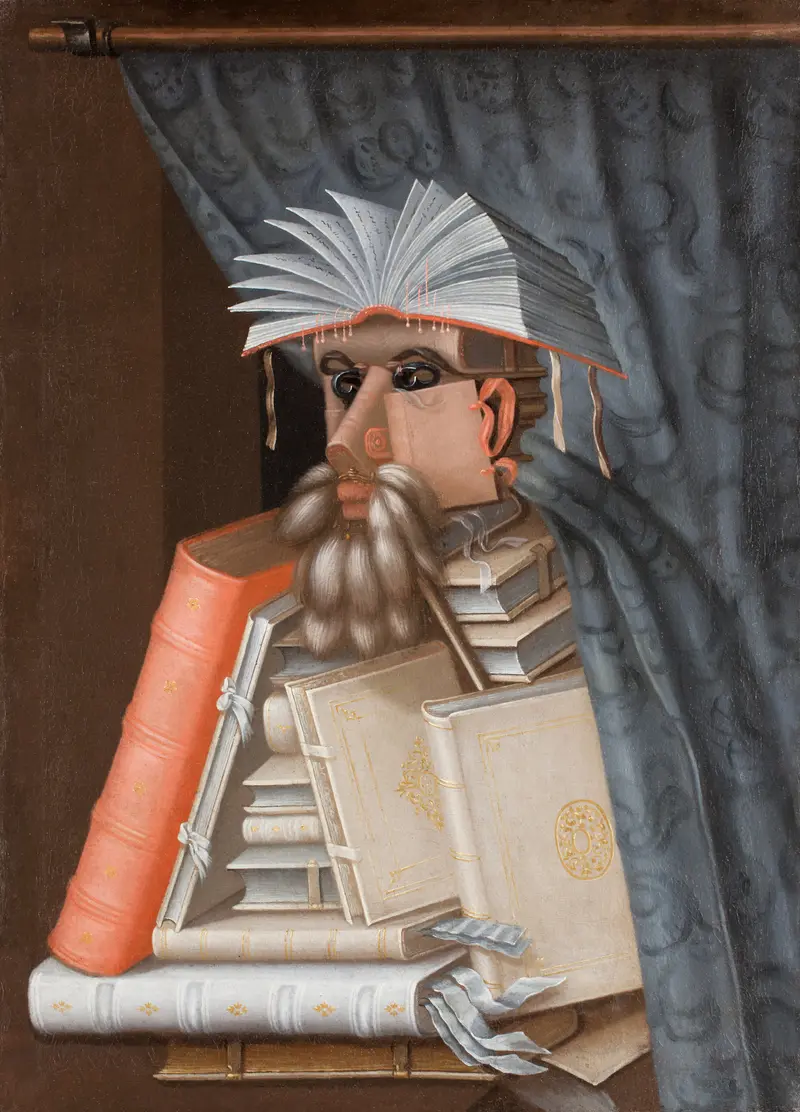 Giuseppe ArcimboldoDied 1593. Milanese painter who joined the Habsburg court in 1562 and served the emperors Ferdinand I, Maximilian II and Rudolf II in Vienna and Prague, painting heads built from fruit, flowers and books.
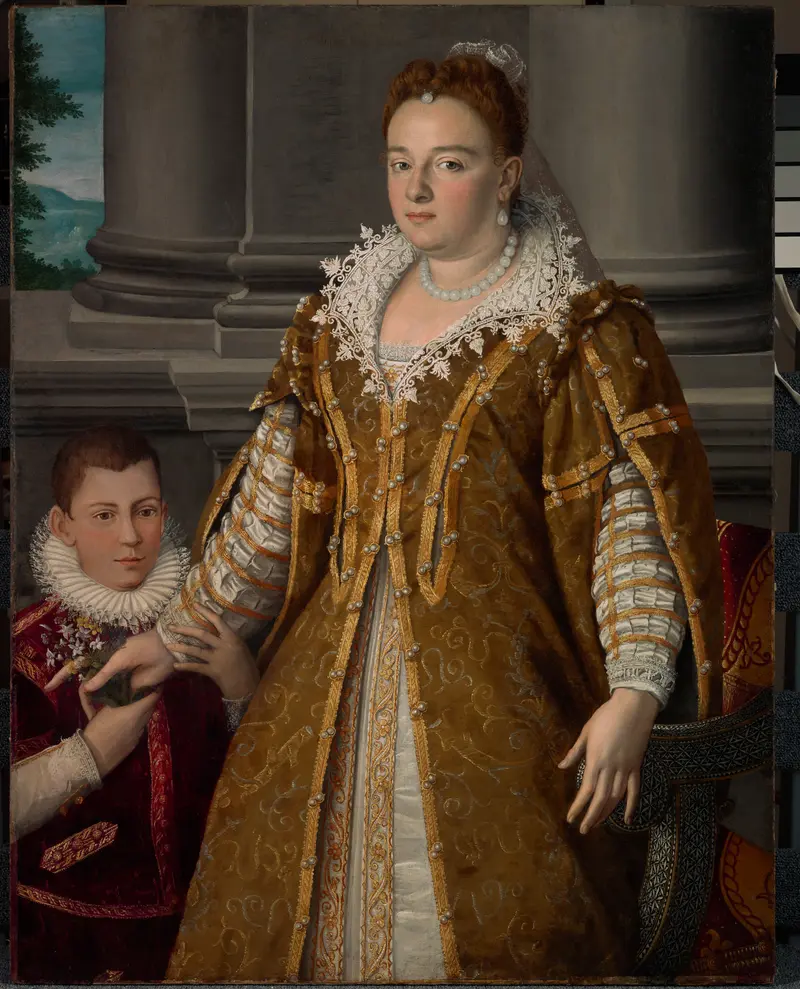
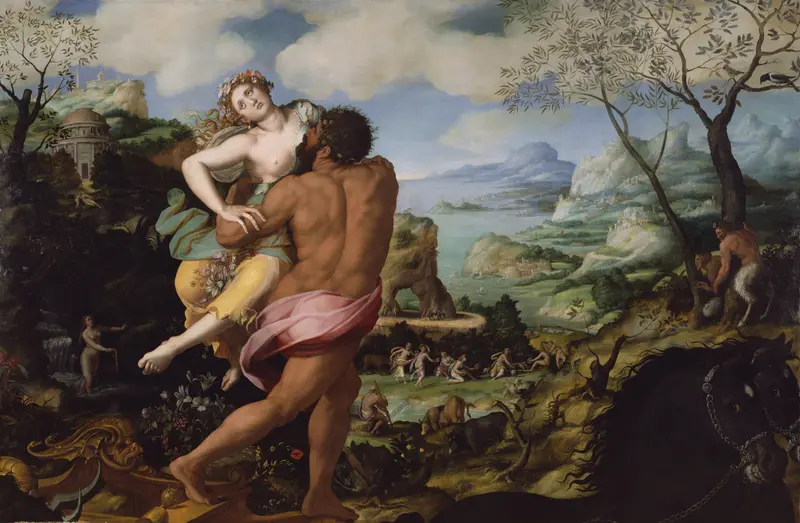 Alessandro Allori1535–1607. Florentine painter trained by Bronzino who worked for the Medici court, as in his portrait of Grand Duchess Bianca Capello with her son, now in the Dallas Museum of Art.
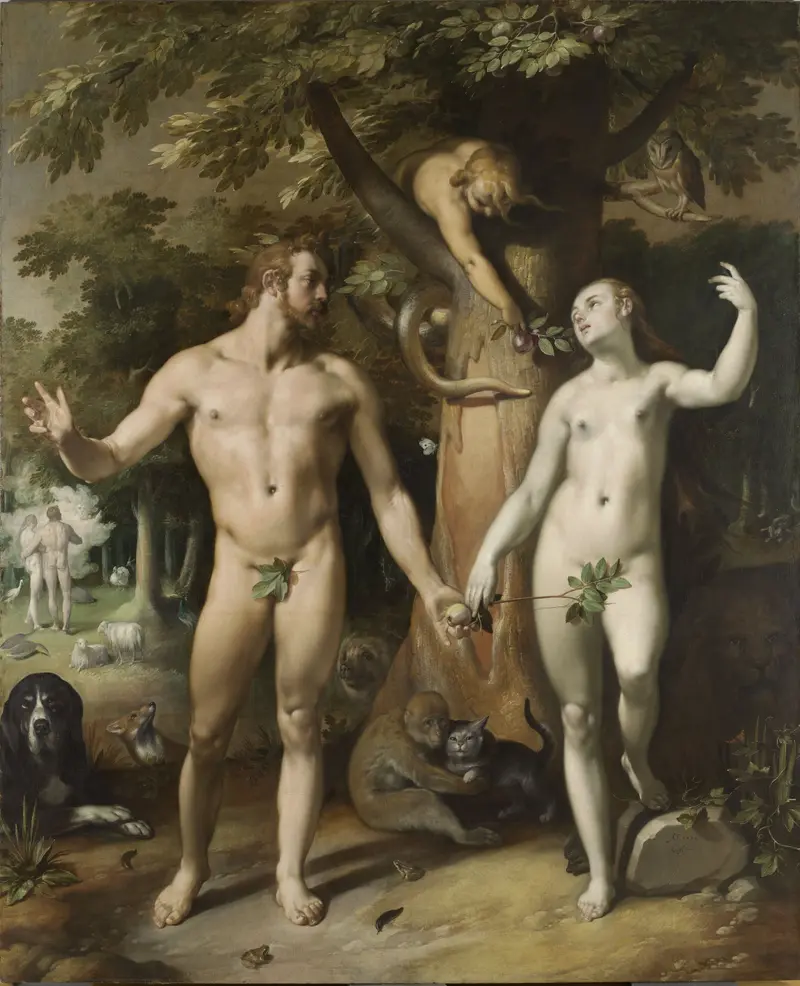 Cornelis van Haarlem1562–1638. With Hendrick Goltzius and Karel van Mander a leading figure of the Haarlem Mannerists, whose style came from the court of Rudolf II in Prague.
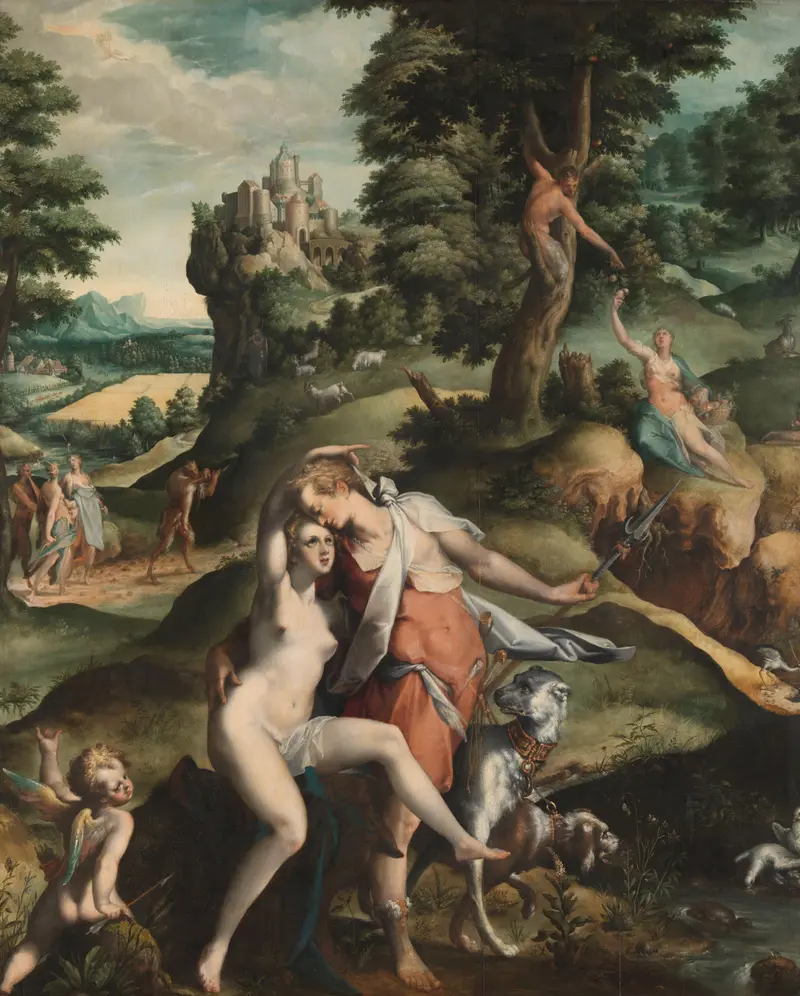 Bartholomeus Spranger1546–1611. Antwerp-born court painter to Emperor Rudolf II in Prague; the Rijksmuseum calls his tall, slender figures with small heads characteristic of his style.
El Greco paintings
Born in Crete and trained in Venice, El Greco developed his intense, colorful Mannerist style there and had settled in Toledo by 1577, the National Gallery in London says. His late Laocoön, the only classical subject he is known to have painted, shows his writhing line and lurid color.

Mannerist portraits
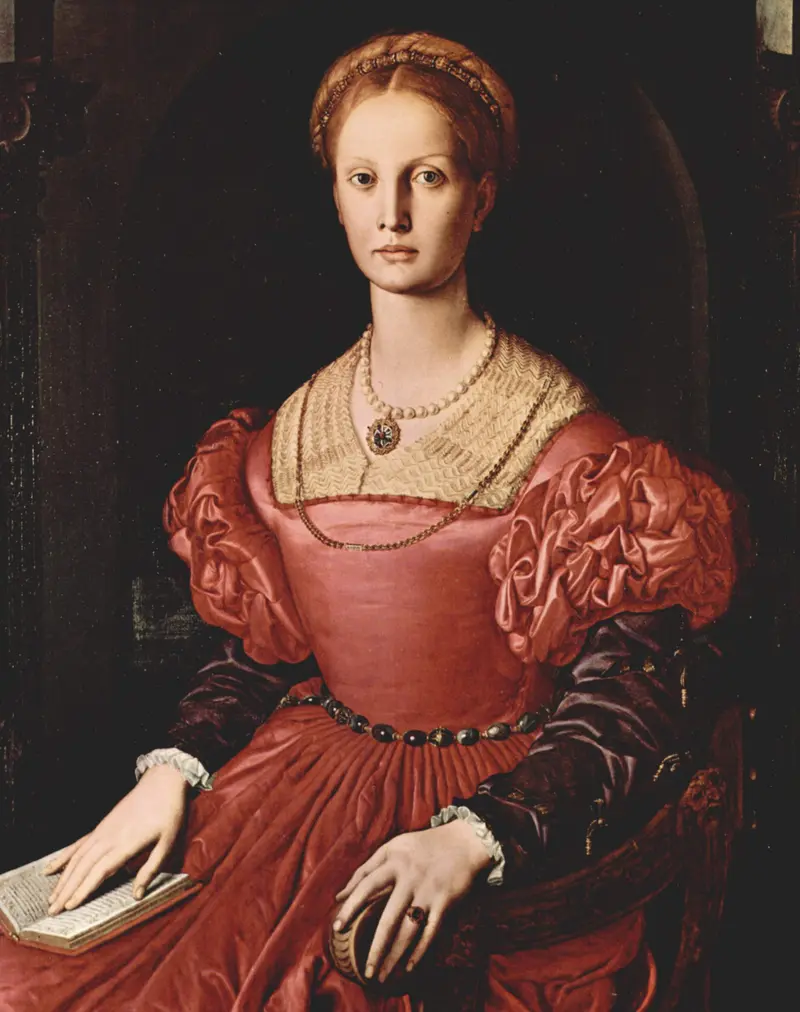
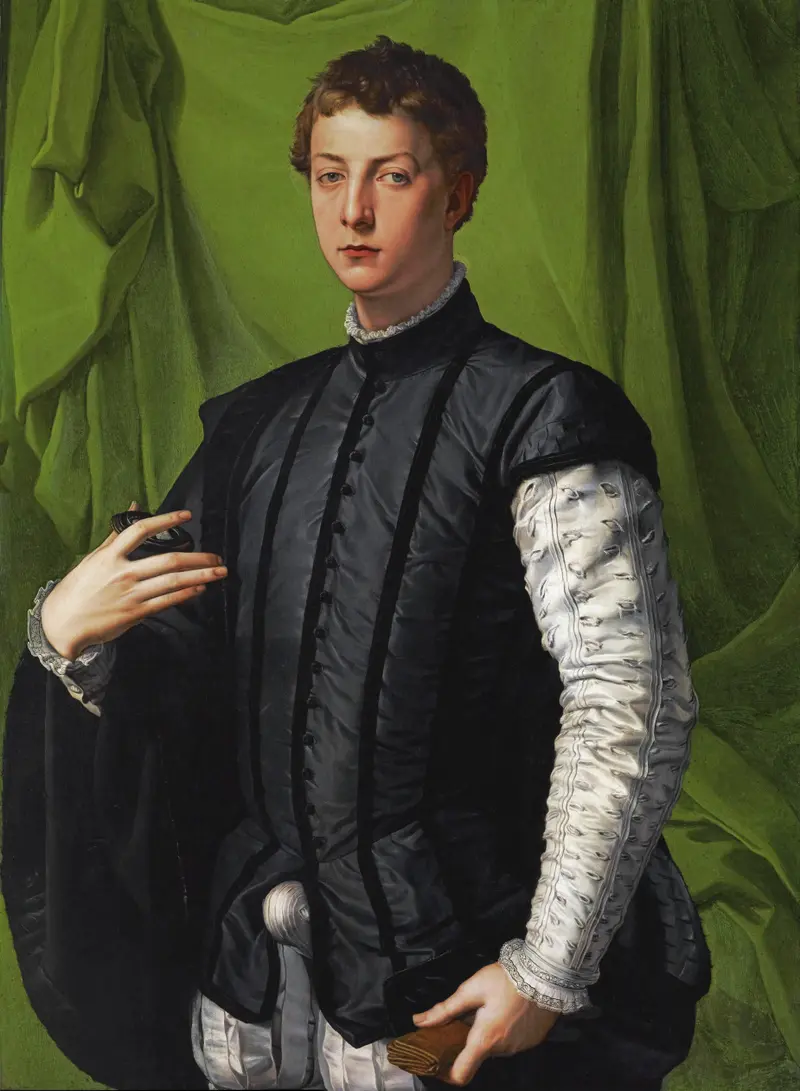
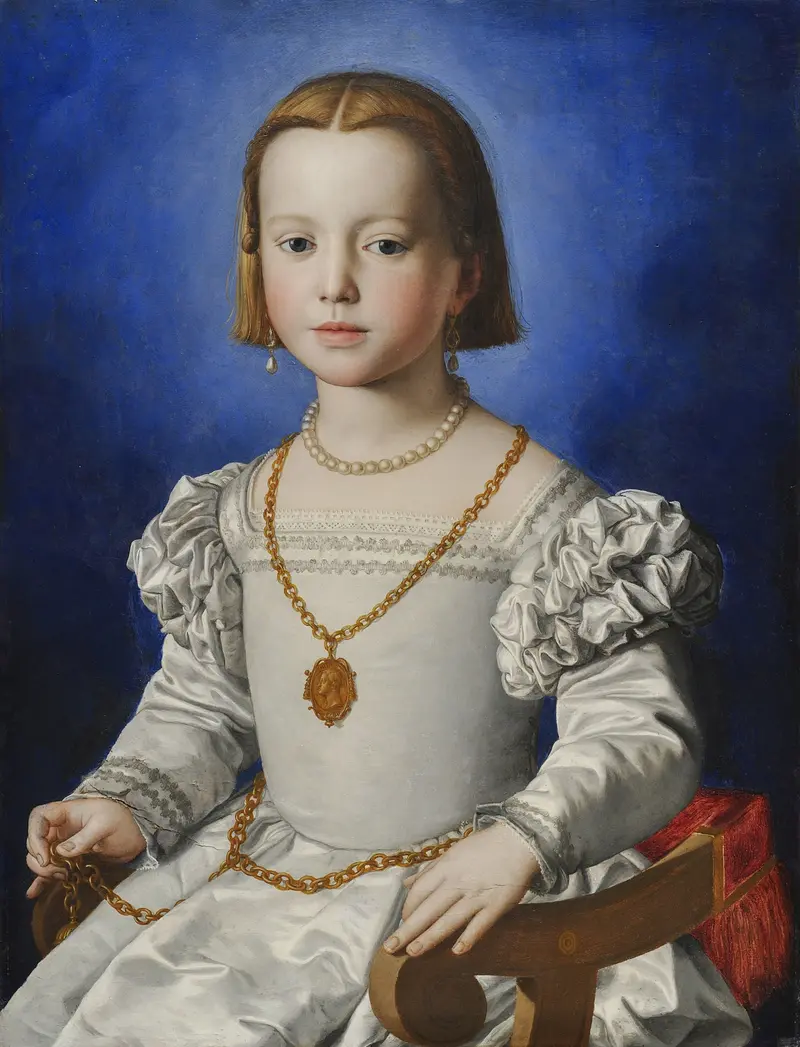
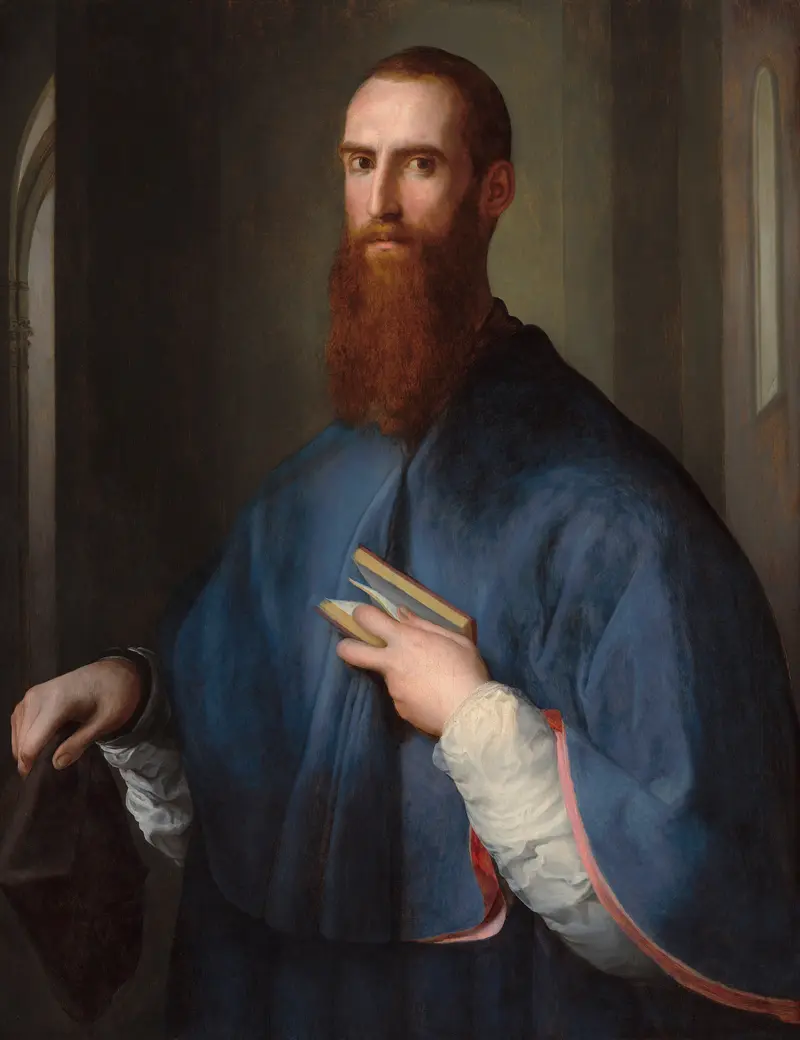
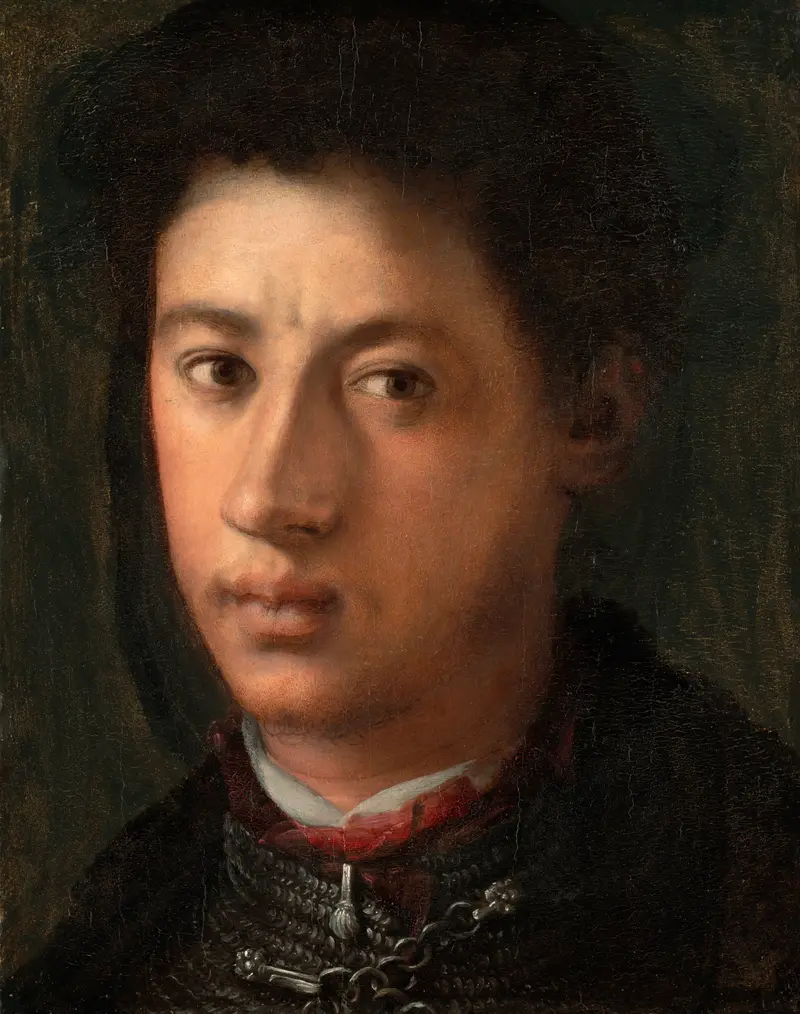
Bronzino is chiefly famous for his portraits of Cosimo I de' Medici, his wife Eleonora, their children and their court, the National Gallery in London says. His teacher Pontormo made a monsignor's small head look smaller still against the huge bulk of his cape, notes the National Gallery of Art.
Characteristics of Mannerism: how to recognize it
Artifice over nature
Bronzino blended away his brushstrokes into an enamel-like surface and lit the marble-like limbs with a glaring white light. Mannerist art, the National Gallery in London says, reacted against the harmony, proportion and naturalism of the High Renaissance.
Venus, Cupid, Folly and Time, Agnolo Bronzino
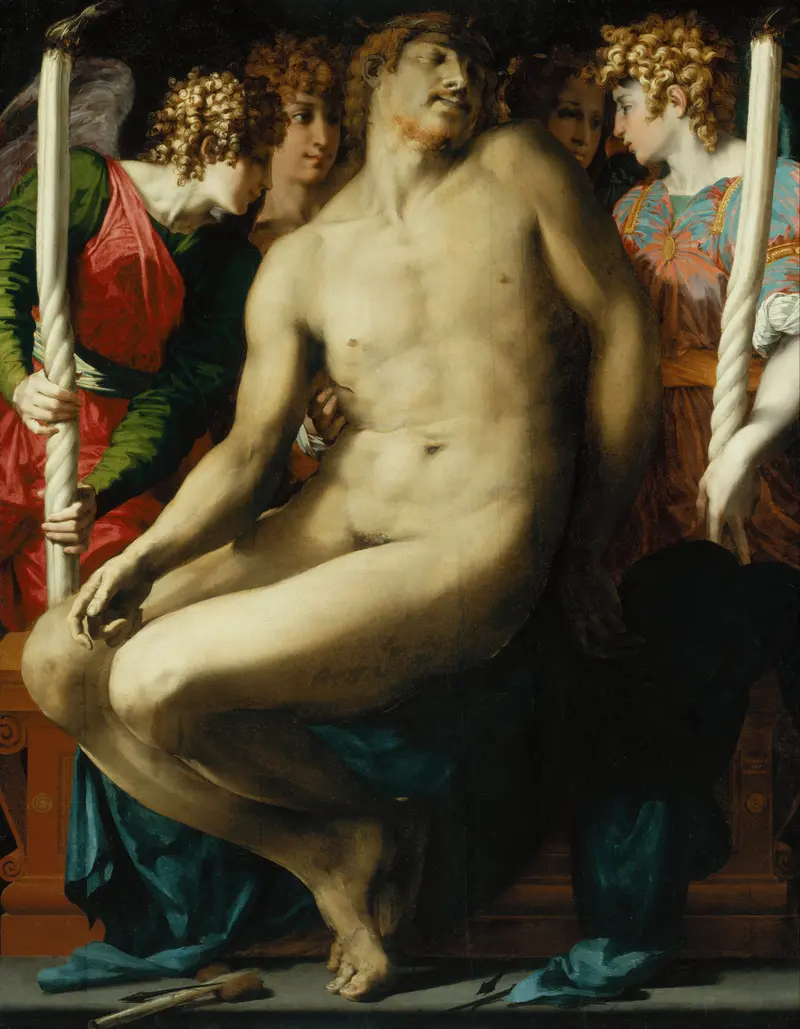
Stretched, twisting bodies
Rosso's Christ slumps sideways, heavy and elongated, among angels pressed into a shallow space. The Museum of Fine Arts, Boston, sums up Mannerism as strong, unusual colors, crowded or ambiguous space and elongated, often twisting figures.
The Dead Christ with Angels, Rosso Fiorentino
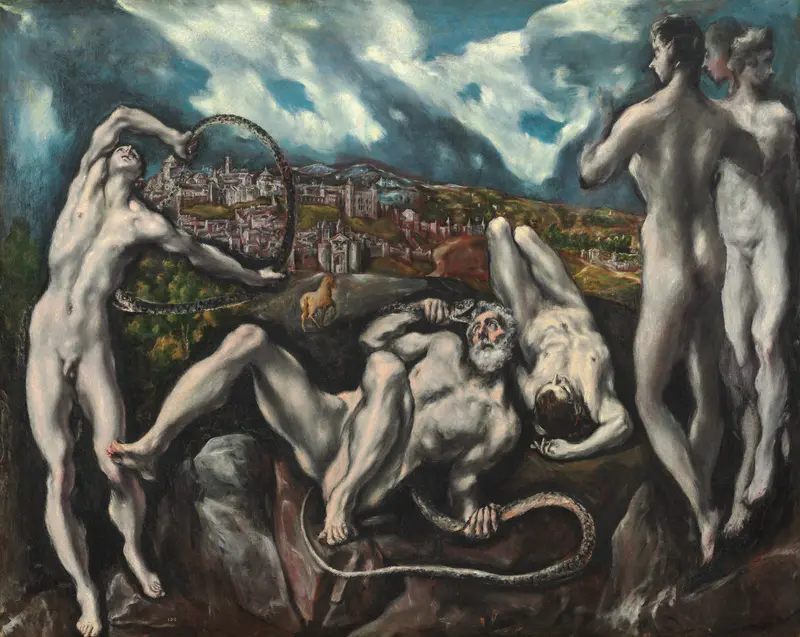
Unnatural color and space
El Greco's serpents, pale bodies and stormy Toledo sky do not obey ordinary light or perspective. The National Gallery of Art in Washington sees writhing line, lurid color, illogically conceived space and anti-natural flesh tones.
Laocoön, El Greco
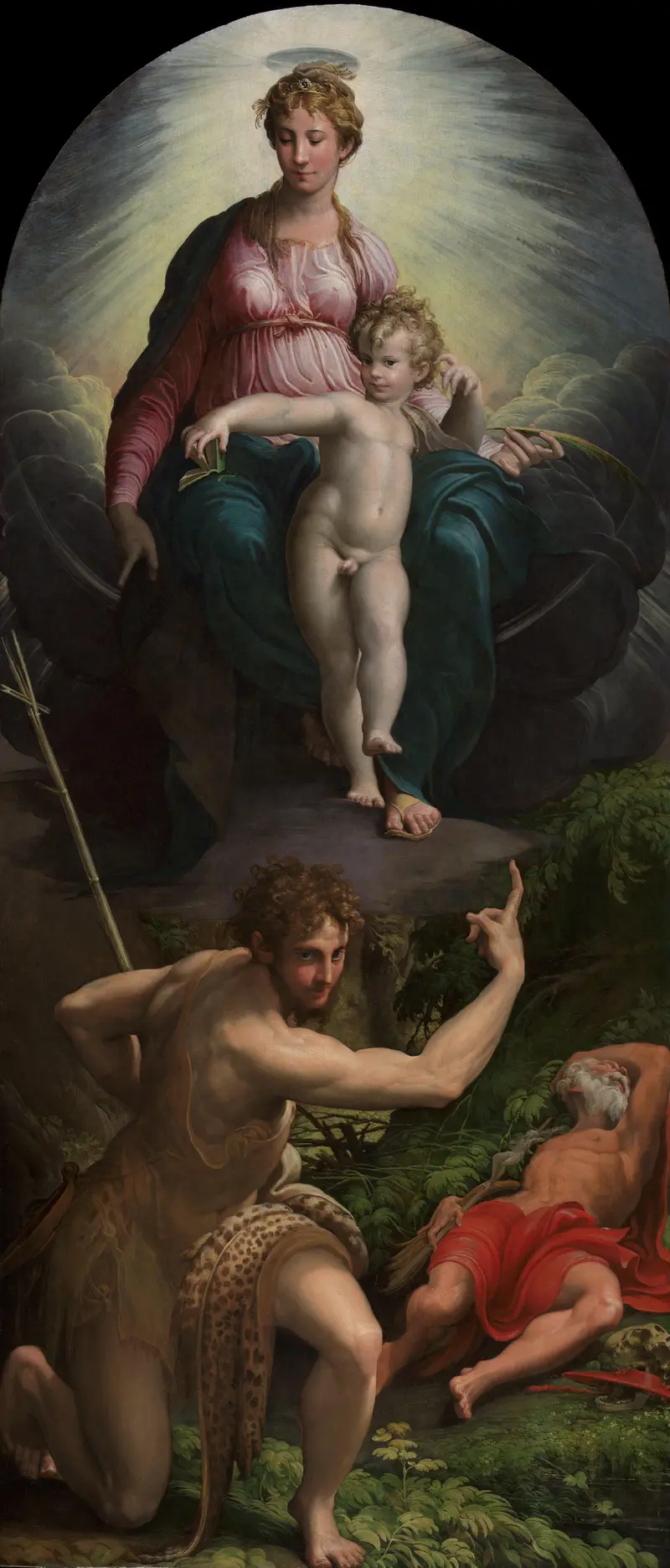
Distorted proportions, unsettling space
The Baptist points with an exaggeratedly long finger; the Virgin's legs are massive beside her delicate head and neck, and Jerome sleeps in a space that makes no sense. The National Gallery in London calls this unsettling spatial organization typical of the artists since described as Mannerists.
The Vision of Saint Jerome, Parmigianino
Cool, polished court portraits
The duchess sits as still as a statue, every thread of her brocade and every pearl painted with equal care. Bronzino, court painter to the Medici, is chiefly famous for such portraits, the National Gallery in London notes.
Portrait of Eleanor of Toledo with Her Son Giovanni de’ Medici, Agnolo Bronzino
Earth and heaven in two styles
El Greco painted the funeral below in blacks and greys, lit only by torches, and the heaven above in blues, reds and greens. The Church of Santo Tomé describes the two worlds as set apart by style, light and color.
The Burial of the Count of Orgaz, El Greco
Before and after Mannerism
 Renaissancec. 1400–1600
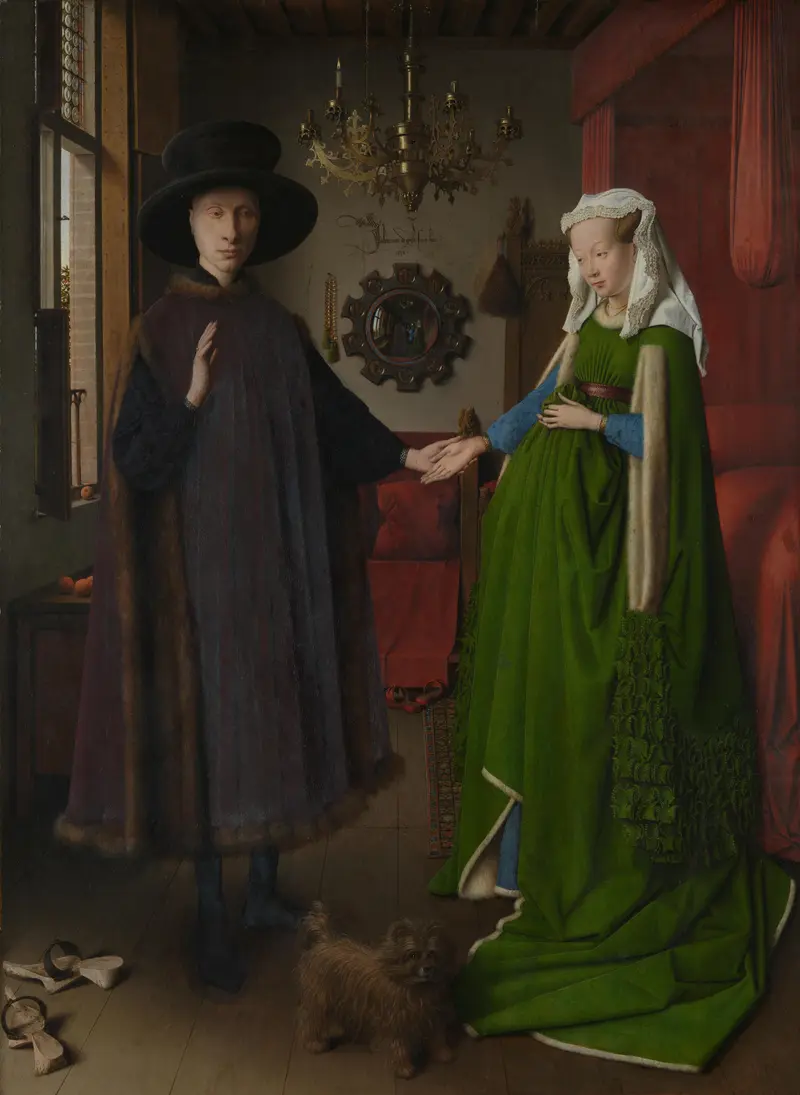 Northern Renaissance15th–16th century
- Mannerismc. 1520–1600
 Baroquec. 1590–1750
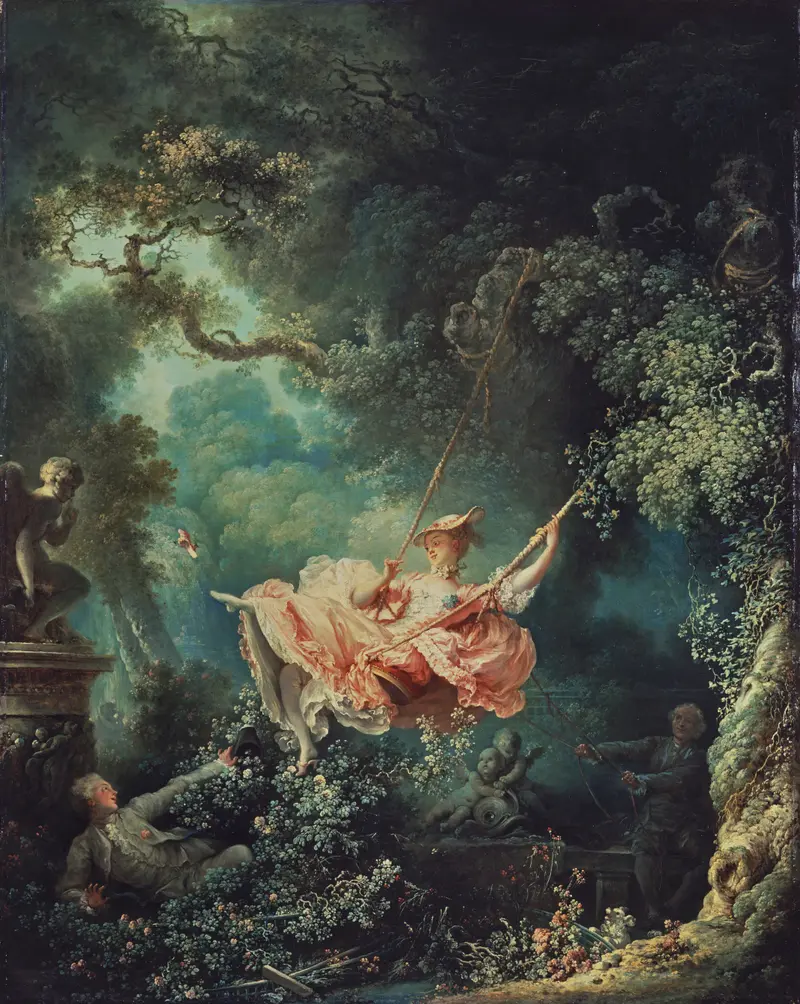 Rocococ. 1715–1770s
Mannerism vs Renaissance and Baroque
| Compared | Renaissance | Mannerism | Baroque |
|---|---|---|---|
| When | c. 1400–1600 | c. 1520–1600 | c. 1590–1750 |
| Composition | Balanced and harmonious | Artificial, crowded and complex | Strong diagonals and curves, full of movement |
| Figures | Idealized, after Greek and Roman models | Elongated, elegant, often twisting | Lifelike, often ordinary people |
| Color | Natural color and light | Strong, unnatural, decorative color | Strong contrasts of light and dark |
| Famous example | Leonardo, Mona Lisa | El Greco, The Burial of the Count of Orgaz | Velázquez, Las Meninas |
| Key artists | Leonardo, Michelangelo, Raphael | Pontormo, Bronzino, Tintoretto, El Greco | Caravaggio, Rubens, Velázquez |
List of Mannerist paintings and their artists
The Mannerist paintings above: who painted them, when, and where each one is today.
Show the listHide the list
| Painting | Painted by | Year | Medium | Size | Located in | City |
|---|---|---|---|---|---|---|
| The Burial of the Count of Orgaz | El Greco | 1586–1588 | Oil on canvas | 480 × 360 cm (189 × 141.7 in) | Church of Santo Tomé | Toledo |
| View of Toledo | El Greco | c. 1599–1600 | Oil on canvas | 121.3 × 108.6 cm (47.8 × 42.8 in) | Metropolitan Museum of Art | New York |
| Madonna with the Long Neck | Parmigianino | 1534–1540 | Oil on panel | 219 × 132 cm (86.2 × 52 in) | Uffizi Gallery | Florence |
| Venus, Cupid, Folly and Time | Agnolo Bronzino | c. 1545 | Oil on wood | 146.1 × 116.2 cm (57.5 × 45.7 in) | National Gallery London | London |
| The Last Supper | Tintoretto | 1592–1594 | Oil on canvas | 370 × 570 cm (145.7 × 224.4 in) | San Giorgio Maggiore, Venice | Venice |
| The Disrobing of Christ (El Expolio) | El Greco | 1577–1579 | Oil on canvas | 285 × 173 cm (112.2 × 68.1 in) | Toledo Cathedral | Toledo |
| Eleonora di Toledo with Her Son Giovanni | Agnolo Bronzino | 1544–1545 | Oil on panel | 115 × 96 cm (45.3 × 37.8 in) | Uffizi Gallery | Florence |
| Rudolf II as Vertumnus | Giuseppe Arcimboldo | 1590 | Oil on panel | 68 × 56 cm (26.8 × 22 in) | Skokloster Castle | Skokloster |
| Pope Paul III and His Grandsons | Titian | 1545–1546 | Oil on canvas | 210 × 176 cm (82.7 × 69.3 in) | Museo di Capodimonte | Naples |
| The Miracle of the Slave | Tintoretto | 1547–1548 | Oil on canvas | 415 × 541 cm (163.4 × 213 in) | Gallerie dell'Accademia | Venice |
| Venus and Mars Surprised by Vulcan | Tintoretto | c. 1555 | Oil on canvas | 135 × 198 cm (53.1 × 78 in) | Alte Pinakothek | Munich |
| Andrea Doria as Neptune | Agnolo Bronzino | c. 1545–1546 | Oil on canvas | 199.5 × 149 cm (78.5 × 58.7 in) | Pinacoteca di Brera | Milan |
| Self-Portrait in a Convex Mirror | Parmigianino | 1523–1524 | Oil on panel | 24.4 cm diameter | Kunsthistorisches Museum | Vienna |
| The Chess Game | Sofonisba Anguissola | 1555 | Oil on canvas | 72 × 97 cm (28.3 × 38.2 in) | National Museum in Poznań | Poznań |
| The Librarian | Giuseppe Arcimboldo | 1562 | Oil on canvas | 97 × 71 cm (38.2 × 28 in) | Skokloster Castle | Skokloster |
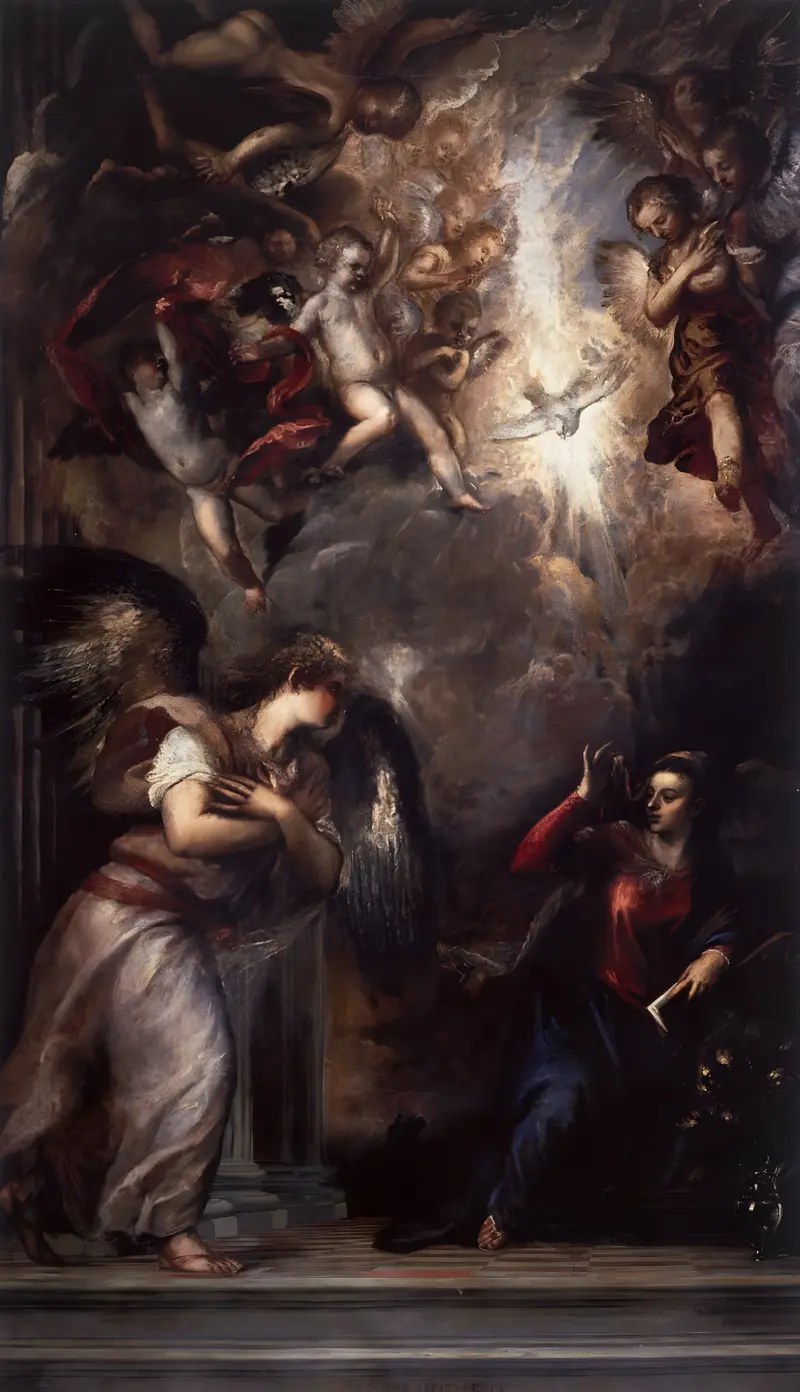
| The Annunciation | Titian | c. 1563–1566 | Oil on canvas | 403 × 235 cm (158.7 × 92.5 in) | San Salvador | Venice |
| The Vision of Saint Jerome | Parmigianino | 1526–1527 | Oil on wood | 342.9 × 148.6 cm (135 × 58.5 in) | National Gallery London | London |
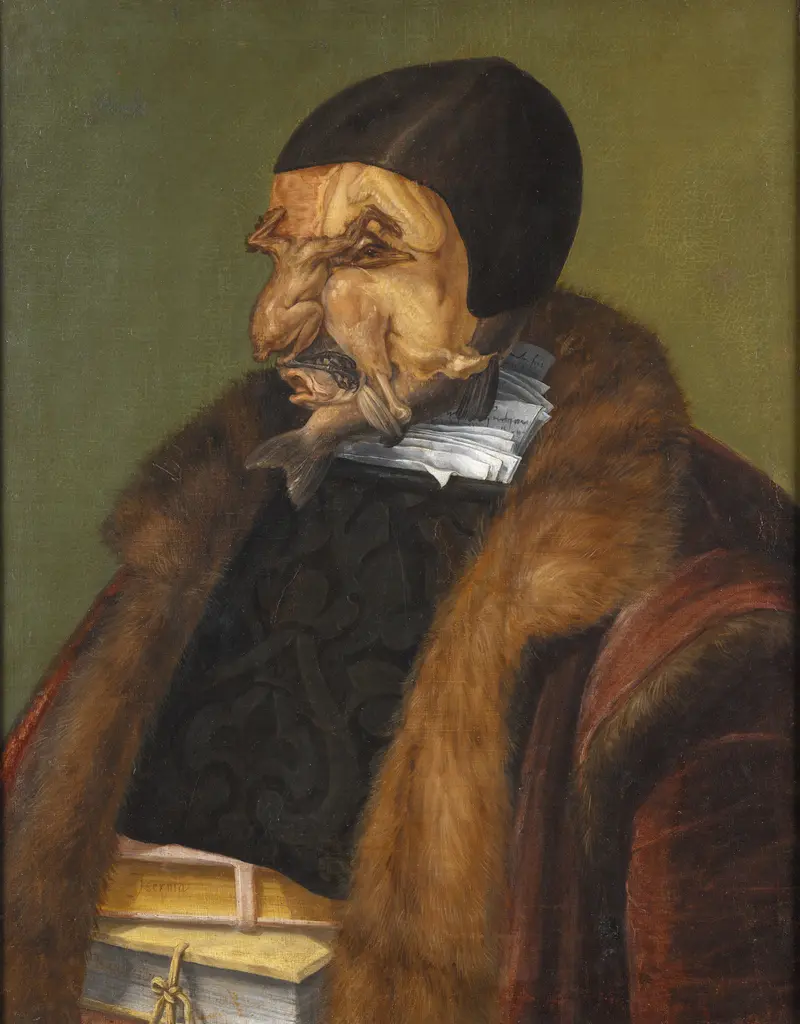
| The Jurist | Giuseppe Arcimboldo | 1566 | Oil on canvas | 64 × 51 cm (25.2 × 20.1 in) | Nationalmuseum | Stockholm |
| Portrait of the Artist's Father, Sister and Brother | Sofonisba Anguissola | c. 1559 | Oil on canvas | 157 × 122 cm (61.8 × 48 in) | Nivaagaard Museum | Nivå |
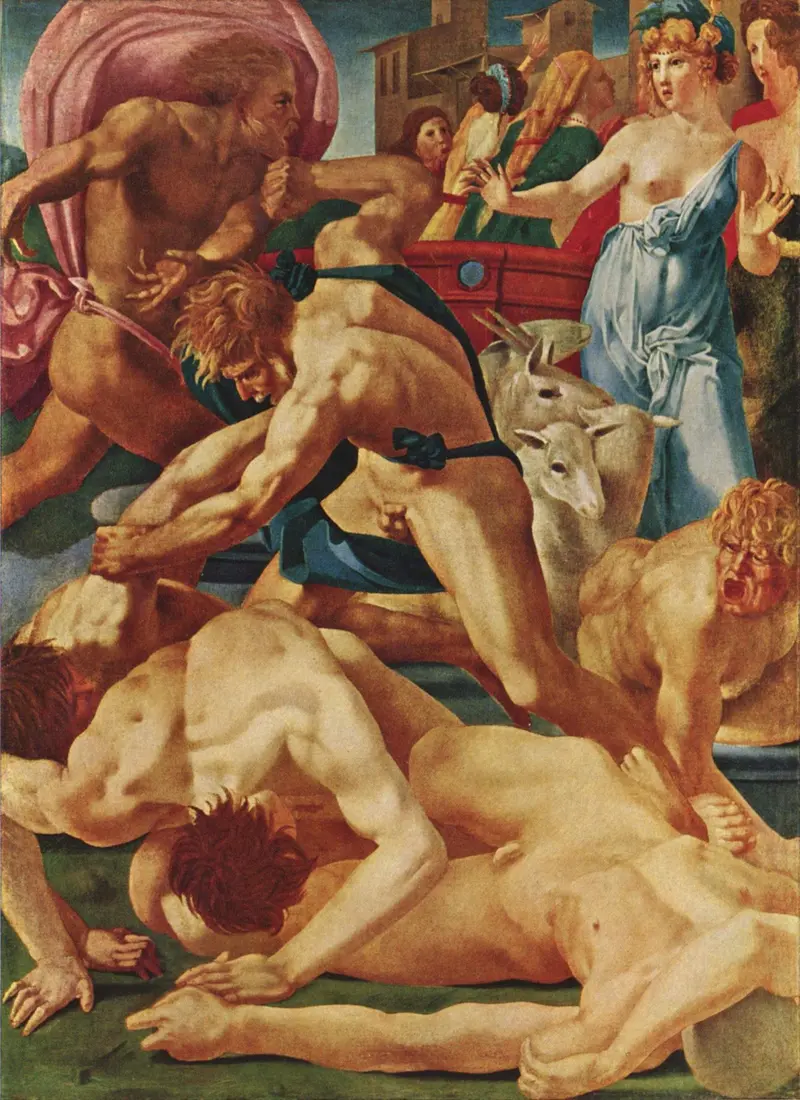
| Moses Defending the Daughters of Jethro | Rosso Fiorentino | 1523–1527 | Oil on canvas | 160 × 117 cm (63 × 46.1 in) | Uffizi Gallery | Florence |
| Portrait of a Halberdier | Pontormo | c. 1529 | Oil on panel, transferred to canvas | 92 × 72 cm (36.2 × 28.3 in) | J. Paul Getty Museum | Los Angeles |
| Jupiter and Antiope (The Pardo Venus) | Titian | c. 1552 | Oil on canvas | 196 × 385 cm (77.2 × 151.6 in) | Louvre Museum | Paris |
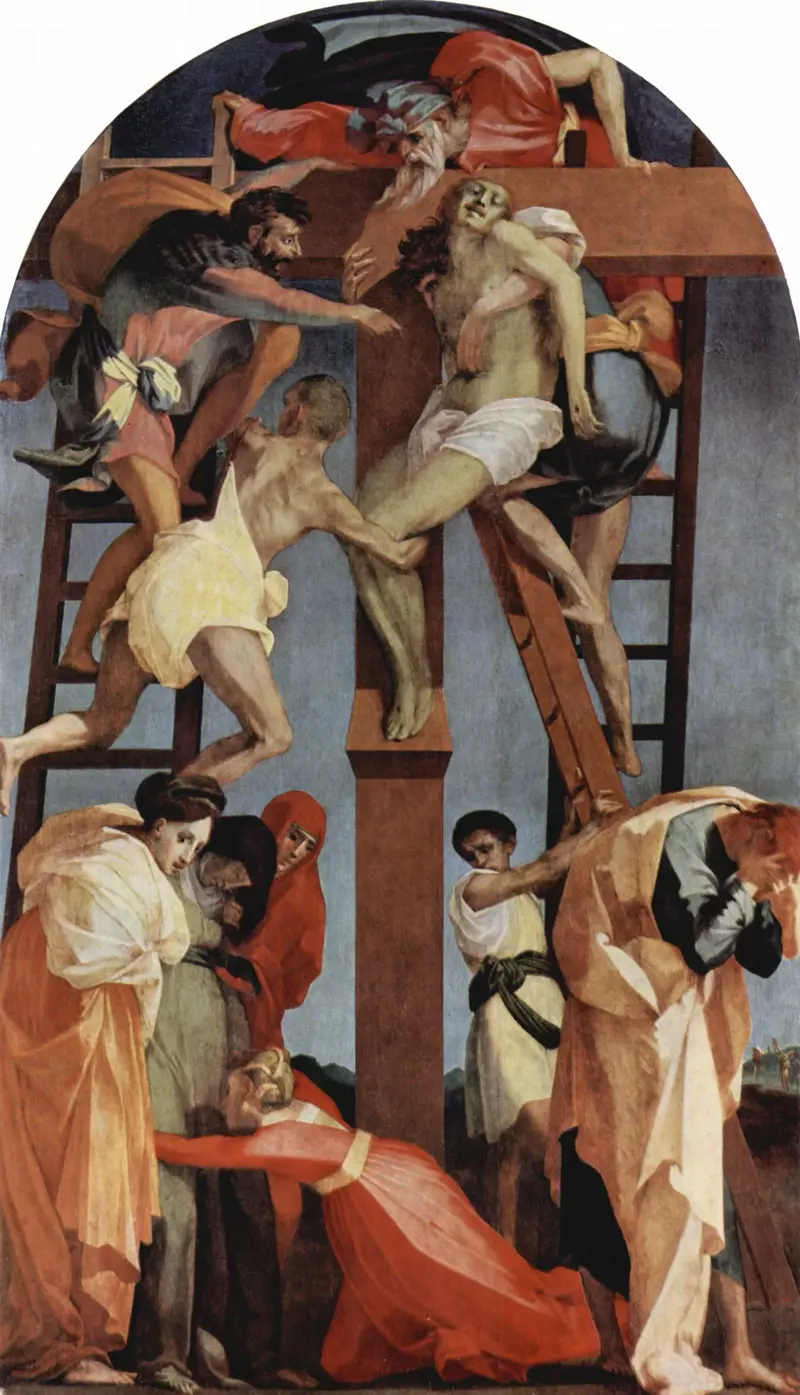
| Deposition from the Cross | Rosso Fiorentino | 1521 | Oil on panel | 375 × 196 cm (147.6 × 77.2 in) | Pinacoteca e Museo Civico di Volterra | Volterra |
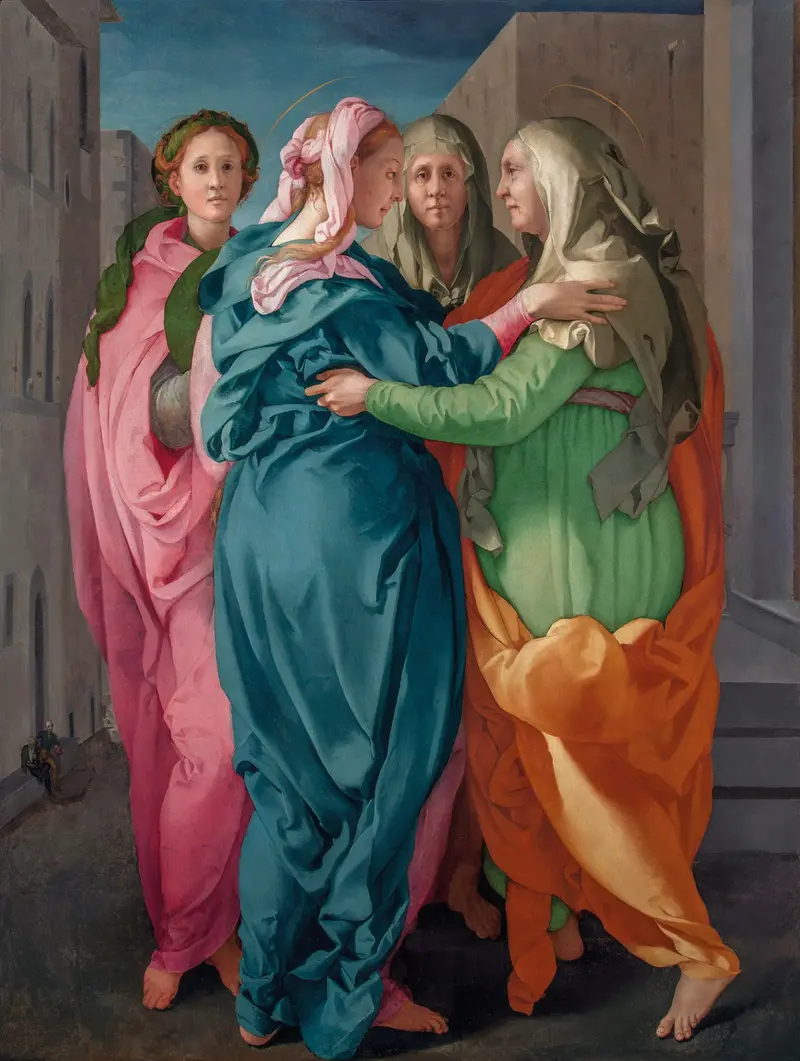
| The Visitation | Pontormo | c. 1528–1529 | Oil on panel | 202 × 156 cm (79.5 × 61.4 in) | Church of Santi Michele e Francesco, Carmignano | Carmignano |
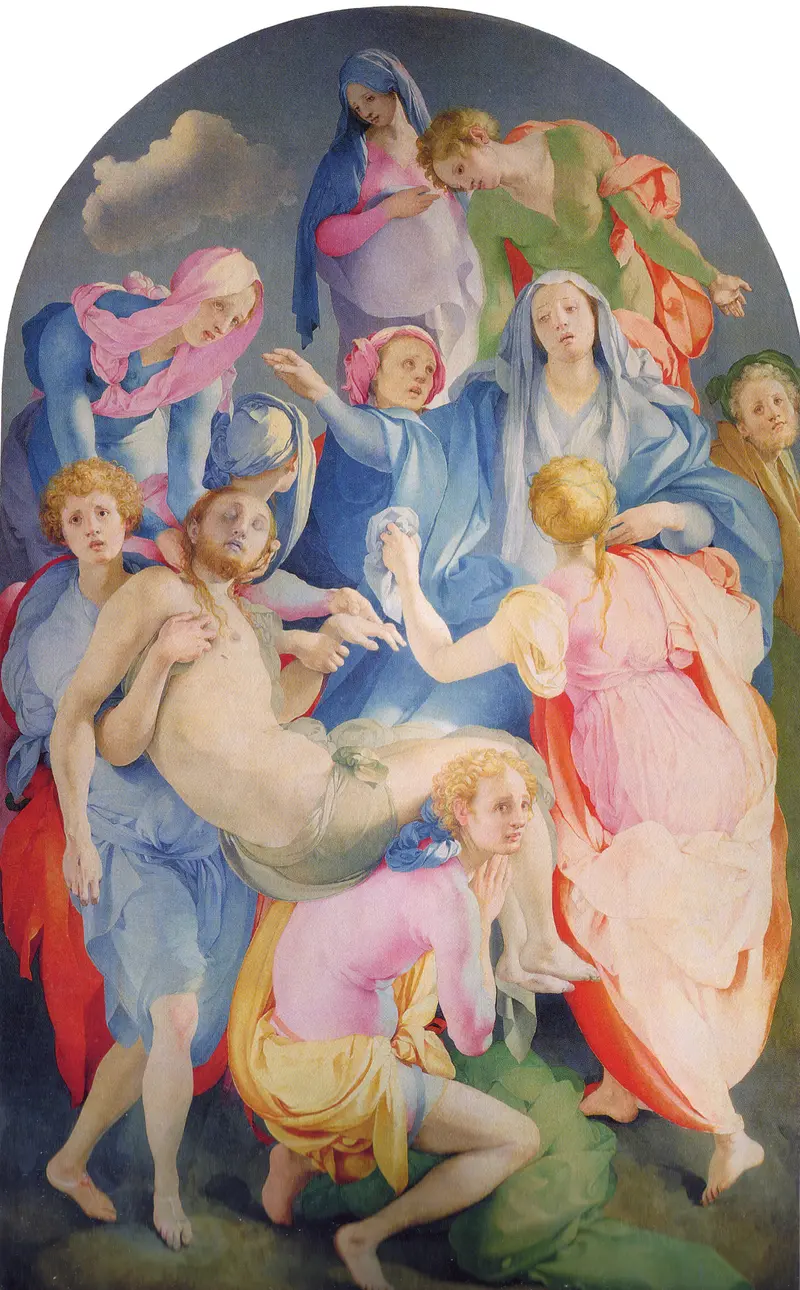
| The Deposition from the Cross | Pontormo | 1525–1528 | Oil on panel | 313 × 192 cm (123.2 × 75.6 in) | Church of Santa Felicita, Florence | Florence |
Mannerism: questions and answers
What does Mannerism mean in art?
In art, Mannerism means the elegant, artificial style that followed the High Renaissance in Italy from about 1520 to 1600. Tate describes it as the style of the followers of Raphael and Michelangelo, marked by artificiality, elegance and sensuous distortion of the human figure: rather than adopting the harmony of those masters, they built highly artificial compositions that showed off their skill. The Getty's art vocabulary adds a sense of fantasy, experiments with color and a new human form of elongated, pallid, exaggerated elegance.
Sources: Tate: Mannerist · Getty AAT: Mannerist
What are the characteristics of Mannerism in art?
Mannerist paintings have elongated, often twisting figures, crowded or ambiguous space and strong, unusual colors, as the Museum of Fine Arts, Boston, sums the style up. The National Gallery in London adds a highly finished, self-consciously stylized look, figures idealized after the example of Michelangelo, unnatural color used for decoration and expression, and intentionally complex and witty compositions. It sees all of this in Bronzino's Allegory, with its enamel-like surface, marble-like limbs and almost no depth.
Sources: Museum of Fine Arts, Boston (Google Arts & Culture) · National Gallery: Mannerist (glossary) · National Gallery London
When was the Mannerist period?
The Mannerist period ran from about 1520 to 1600, between the High Renaissance and the Baroque. Tate dates it from around 1520 to 1600 and the Getty's art vocabulary from the 1520s to about 1590, after the High Renaissance peak of about 1500–1530. Around 1600 Annibale Carracci came to be seen as rescuing Italian art from the excesses of Mannerism, the National Gallery in London says, but some painters kept the style longer: El Greco worked in Toledo until his death in 1614, and Joachim Wtewael was one of the main Mannerists in Holland in the early 17th century.
Sources: Tate: Mannerist · Getty AAT: Mannerist · Tate: Renaissance · National Gallery: Annibale Carracci · Metropolitan Museum of Art · National Gallery: Joachim Wtewael
Where did Mannerism start?
Mannerism started in Italy, in Florence and Rome, and then spread across Europe. The Getty's art vocabulary says it developed chiefly in Rome, and the National Gallery in London says it was first produced in Italy and then exported to the rest of the continent. Its first painters were Florentines, Pontormo and Rosso Fiorentino. After the Sack of Rome in 1527, Rosso moved north and in 1530 went to France to work on the royal château at Fontainebleau; El Greco took the style to Toledo in Spain; and Bartholomeus Spranger, court painter to Emperor Rudolf II in Prague, shaped the Mannerists of Haarlem.
Sources: Getty AAT: Mannerist · National Gallery: Mannerist (glossary) · National Gallery: Rosso Fiorentino · National Gallery: El Greco · National Gallery: Joachim Wtewael
Who were the main Mannerist painters?
The main Mannerist painters were Pontormo, Rosso Fiorentino, Parmigianino and Bronzino in Italy, Tintoretto in Venice and El Greco in Spain. The National Gallery in London calls Pontormo the main exponent of an early, expressive Mannerism, Rosso a pioneer of it, Parmigianino one of its originators and leading exponents, and Bronzino, Pontormo's pupil, the leading painter of mid-16th-century Florence. It says Tintoretto is usually described as a Mannerist and that El Greco developed his intense, colorful Mannerist style in Venice. In the north, Cornelis van Haarlem, Hendrick Goltzius and Karel van Mander led the Haarlem Mannerists.
Sources: National Gallery: Pontormo · National Gallery: Rosso Fiorentino · National Gallery: Parmigianino · National Gallery: Bronzino · National Gallery: Jacopo Tintoretto · National Gallery: El Greco · National Gallery: Cornelis van Haarlem
What are some examples of Mannerist art?
Well-known examples of Mannerist art include Parmigianino's Madonna with the Long Neck, Bronzino's Venus, Cupid, Folly and Time and his portrait of Eleonora di Toledo with her son, Pontormo's Deposition in Santa Felicita, Rosso Fiorentino's The Dead Christ with Angels, Arcimboldo's Vertumnus and El Greco's The Burial of the Count of Orgaz. The National Gallery in London says the Allegory epitomizes the erudite, courtly art of Mannerism; the Uffizi files the Madonna with the Long Neck and Eleonora under Mannerism; Skokloster Castle tags Vertumnus as Mannerism; and the Museum of Fine Arts, Boston, calls Rosso one of the style's primary practitioners.
Sources: National Gallery London · Uffizi Gallery: Madonna with the Long Neck (Google Arts & Culture) · Uffizi Gallery (Google Arts & Culture) · Skokloster Castle: Vertumnus (Google Arts & Culture) · Museum of Fine Arts, Boston (Google Arts & Culture) · Friends of Florence: Pontormo, Deposition from the Cross
What is El Greco's painting style?
El Greco's style is an intense, colorful Mannerism with elongated figures, unnatural color and visionary light. The National Gallery in London says he was born in Crete and deeply influenced by Byzantine art there, trained in Venice under Titian, learned from Tintoretto and the Bassano family, studied Michelangelo and Raphael in Rome in 1570, and had settled in Toledo by 1577. In his late Laocoön, the National Gallery of Art in Washington sees writhing line, lurid color and illogically conceived space, with figures that seem incorporeal.
Sources: National Gallery: El Greco · National Gallery of Art, Washington: Laocoön (Google Arts & Culture)
Was Michelangelo a Mannerist?
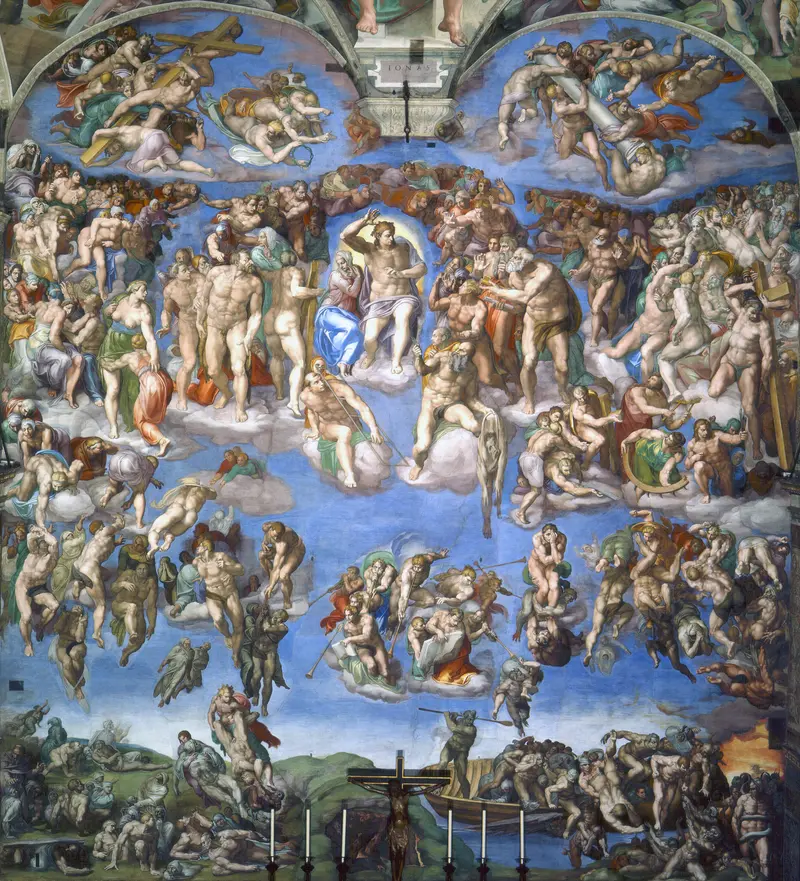
Michelangelo is usually counted as a master of the High Renaissance, but his work was the main source of Mannerism. The National Gallery in London calls him the hero of the High Renaissance and says his Sistine Chapel ceiling, with its innumerable figures in complex, twisting poses and its exuberant color, is the chief source of the Mannerist style. Tate defines Mannerism as the style of the followers of Raphael and Michelangelo from around 1520 to 1600, the years in which Michelangelo himself painted the Last Judgment on the chapel's altar wall, in 1536-1541.
Sources: National Gallery: Michelangelo · Tate: Mannerist · Vatican Museums: Sistine Chapel
How is Mannerism different from the Renaissance?
Renaissance painting aimed at harmony, balance and natural-looking figures; Mannerism, which followed from about 1520, made them deliberately artificial, elongated and complex. Tate says the Mannerists, rather than adopting the harmonious ideals of Raphael and Michelangelo, went a step further to create highly artificial compositions. The National Gallery in London says Mannerist art reacted against the High Renaissance ideals of harmony, proportion and naturalism, and stressed intellectual sophistication, unnatural elegance, artifice and instability.
Sources: Tate: Mannerist · National Gallery London · Getty AAT: Mannerist
What techniques did Mannerist painters use?
Mannerist painters used smooth, highly finished surfaces, strong artificial light and shifting, unnatural colors. In Bronzino's Allegory, the National Gallery in London points to brushstrokes blended away into an almost enamel-like surface, bright white artificial lighting on clearly outlined, marble-like limbs, a shallow composition like a relief sculpture with no real background, ultramarine blue made from lapis lazuli, and cangiante colors that change like shot silk. The Getty's art vocabulary also notes experiments with color and materials.
Sources: National Gallery London · Getty AAT: Mannerist
What influence did Mannerism have?
Mannerism spread across Europe and kept returning in later art. Tate says the elegant artificiality of Elizabethan court painting in Britain can be seen as an echo of it, and that it influenced later artists such as Henry Fuseli. The National Gallery in London says Parmigianino's widely circulated etchings carried his manner throughout Europe. In Toledo, the parish of Santo Tomé notes that Goya, and after him Picasso, saw in El Greco the first Impressionist.
Sources: Tate: Mannerist · National Gallery: Parmigianino · Church of Santo Tomé, Toledo: El Greco (Spanish)
What is Northern Mannerism?
Northern Mannerism is the Mannerist style as it developed in the Netherlands and at the imperial court in Prague in the late 16th and early 17th centuries. The National Gallery in London says the Haarlem Mannerists, led by Cornelis van Haarlem, Hendrick Goltzius and Karel van Mander, took their style from the artists at the court of Rudolf II, where the Antwerp-born Bartholomeus Spranger was court painter, and that Joachim Wtewael in Utrecht first met the style at Fontainebleau. The Rijksmuseum calls Spranger's tall, slender figures with small heads characteristic of his work.
Sources: National Gallery: Cornelis van Haarlem · National Gallery: Joachim Wtewael · Rijksmuseum: Spranger, Venus and Adonis
Where can you see Mannerist paintings?
Florence has many of them: the Uffizi holds Parmigianino's Madonna with the Long Neck, Rosso Fiorentino's Moses Defending the Daughters of Jethro, Bronzino's Eleonora di Toledo with her son, and Pontormo's Deposition is still in the church of Santa Felicita. In London, the National Gallery has Bronzino's Allegory and works by Pontormo, Rosso Fiorentino and Parmigianino. In Toledo, El Greco's The Burial of the Count of Orgaz still hangs in the Church of Santo Tomé and The Disrobing of Christ in the cathedral; his View of Toledo is in the Metropolitan Museum of Art in New York.
Sources: Uffizi Gallery: Madonna with the Long Neck (Google Arts & Culture) · Uffizi Gallery · Uffizi Gallery (Google Arts & Culture) · Friends of Florence: Pontormo, Deposition from the Cross · National Gallery London · National Gallery: Pontormo · National Gallery: Rosso Fiorentino · National Gallery: Parmigianino · Church of Santo Tomé, Toledo: El Greco (Spanish) · Toledo Cathedral: Places of interest (Spanish) · Metropolitan Museum of Art
Is Mannerist art in the public domain, and can I download it free?
Yes. Every painter on this page died by 1638, so their paintings are in the public domain in the United States and in countries where copyright ends 70 years after the artist's death. You can download them free and use them for anything, including commercial projects. A few countries have their own rules on photographs of artworks, so check them if you publish outside the U.S.
Sources: Cornell University Library: Copyright Term and the Public Domain
How we chose the famous paintings
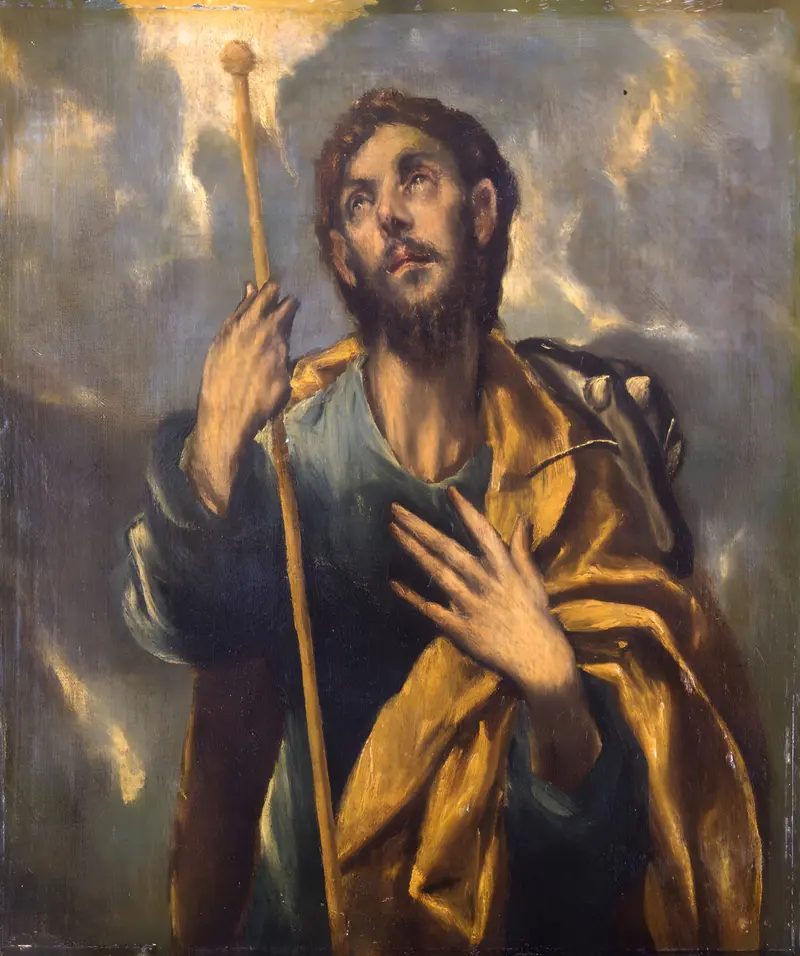
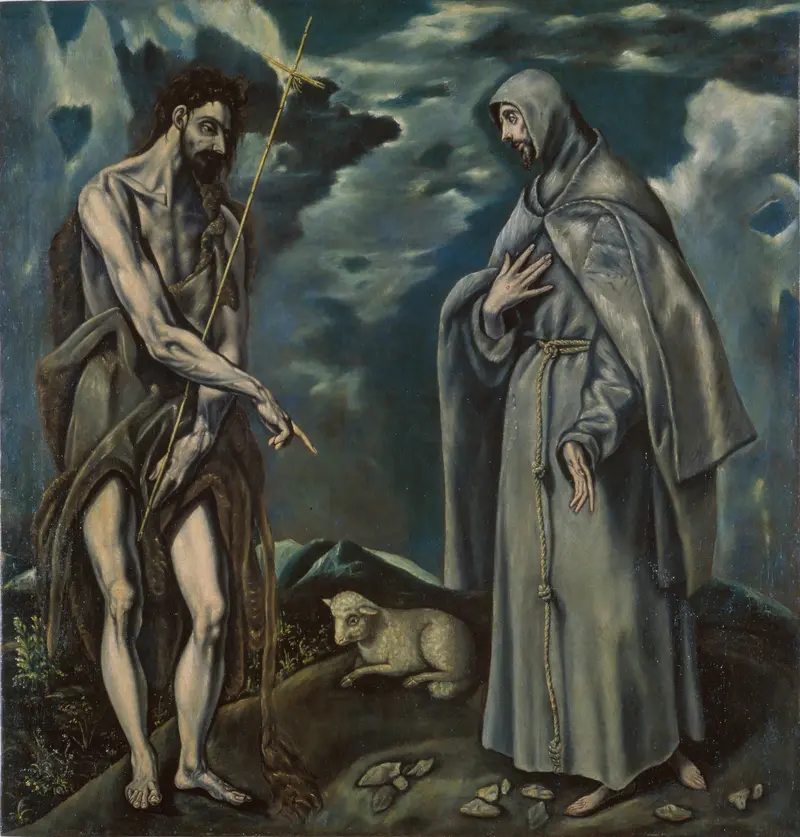
The famous paintings on this page are the Mannerist paintings known most widely around the world, measured by the number of languages that have an encyclopedia entry about each one, checked in November 2026. No painter has more than three of them, which is why El Greco's Vision of Saint John and Laocoön appear in the El Greco row further down, and we list only paintings known in at least two languages.
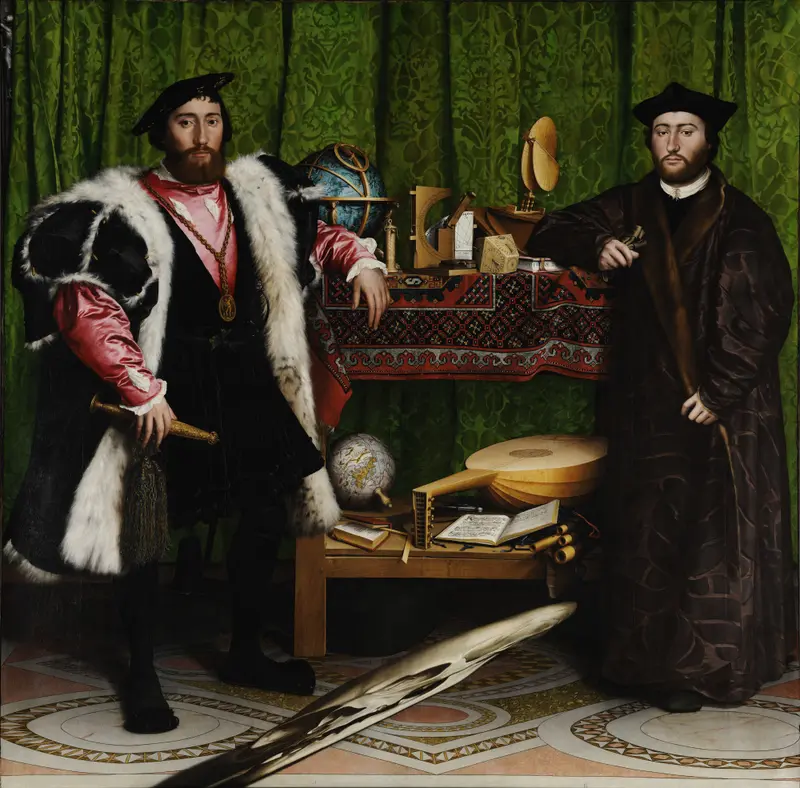
We include only paintings that our catalogue, the holding museum or Wikidata classes as Mannerist. Titian's works belong with the Renaissance, so we include only those that both our catalogue and Wikidata class as Mannerist. We do not yet have a clean image of the whole of Michelangelo's Last Judgment, so it is not listed; Holbein's The Ambassadors, which some sources also call Mannerist, belongs with the Northern Renaissance.
Dates, sizes and locations come from the museums' own records and from Wikidata.
Spotted a mistake? Tell us and we will correct it.