
Portrait of Lucrezia Panciatichi — History & Facts
The first thing that draws the eye in Portrait of Lucrezia Panciatichi is the poised, almost statuesque calm of the sitter, her gaze meeting ours with a steady, unblinking directness. The painter, Agnolo Bronzino, has chosen a moment of composed dignity: Lucrezia’s right hand rests gently on an open book, a subtle nod to learning or piety, while her left displays a ring, the fingers elegantly arranged to show off both jewelry and self-possession. The light falls evenly across her face and the lustrous folds of her gown, illuminating the intricate textures of silk, gold, and pearls, and leading the viewer from her serene expression down to the rich details of her costume.
Every element, from the crisp ruff to the elaborate necklace, is rendered with a precision that signals both the sitter’s status and the painter’s technical mastery. This portrait belongs to the world of the Florentine court in the mid-16th century, a time when images like this were less about likeness than about identity and social role. The year 1545 places the work at the height of the Mannerist movement, when artists such as Bronzino were celebrated for their refined, almost icy elegance and their ability to capture the outward signs of virtue and nobility. Portraits of this kind were commissioned to assert lineage, learning, and moral standing—qualities encoded in the sitter’s pose, attire, and the objects she holds.
Now housed in the Uffizi Gallery, this painting stands as a testament to a culture obsessed with appearances, where every fold of fabric and every glint of jewelry was a carefully chosen signal. Look again at her face: it is as much a mask as a likeness, inviting us to wonder what lies behind that perfect composure.
More Artworks by Agnolo Bronzino

Eleonora Of Toledo
Agnolo Bronzino
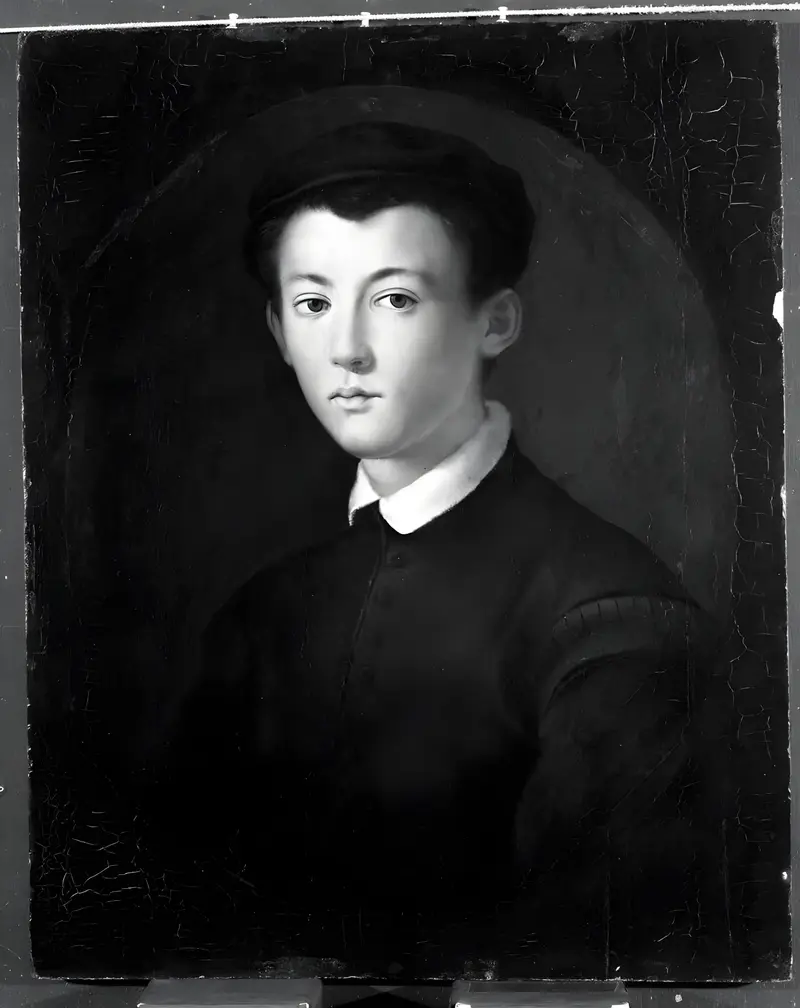
Portrait of a Young Man
Agnolo Bronzino
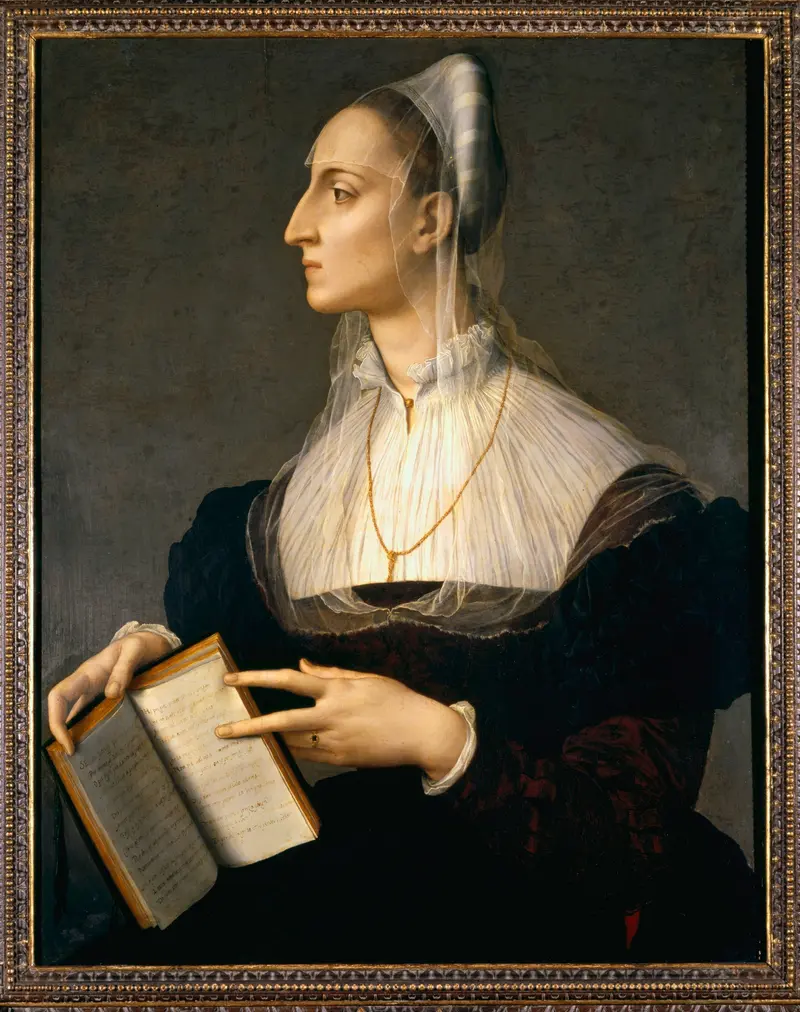
Portrait Of Laura Battiferri
Agnolo Bronzino

Venus, Cupid And Satyr
Agnolo Bronzino
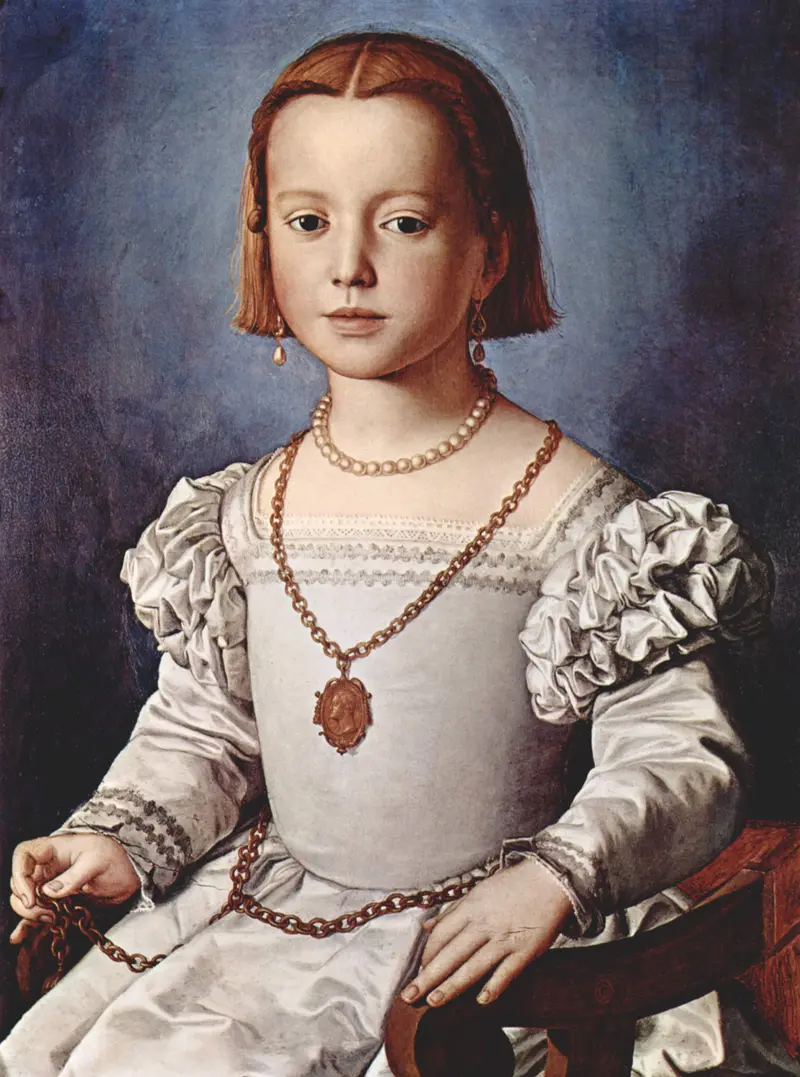
Bia Di Cosimo De‘ Medici
Agnolo Bronzino
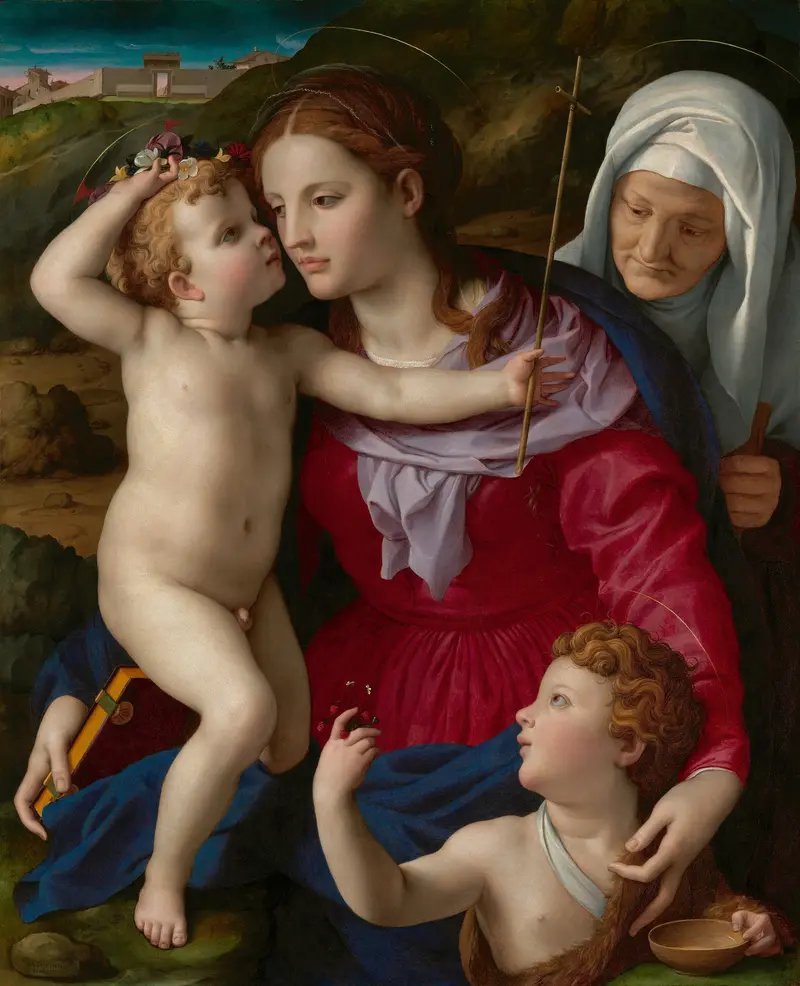
Virgin and Child with Saint Elizabeth and Saint John the Baptist
Agnolo Bronzino
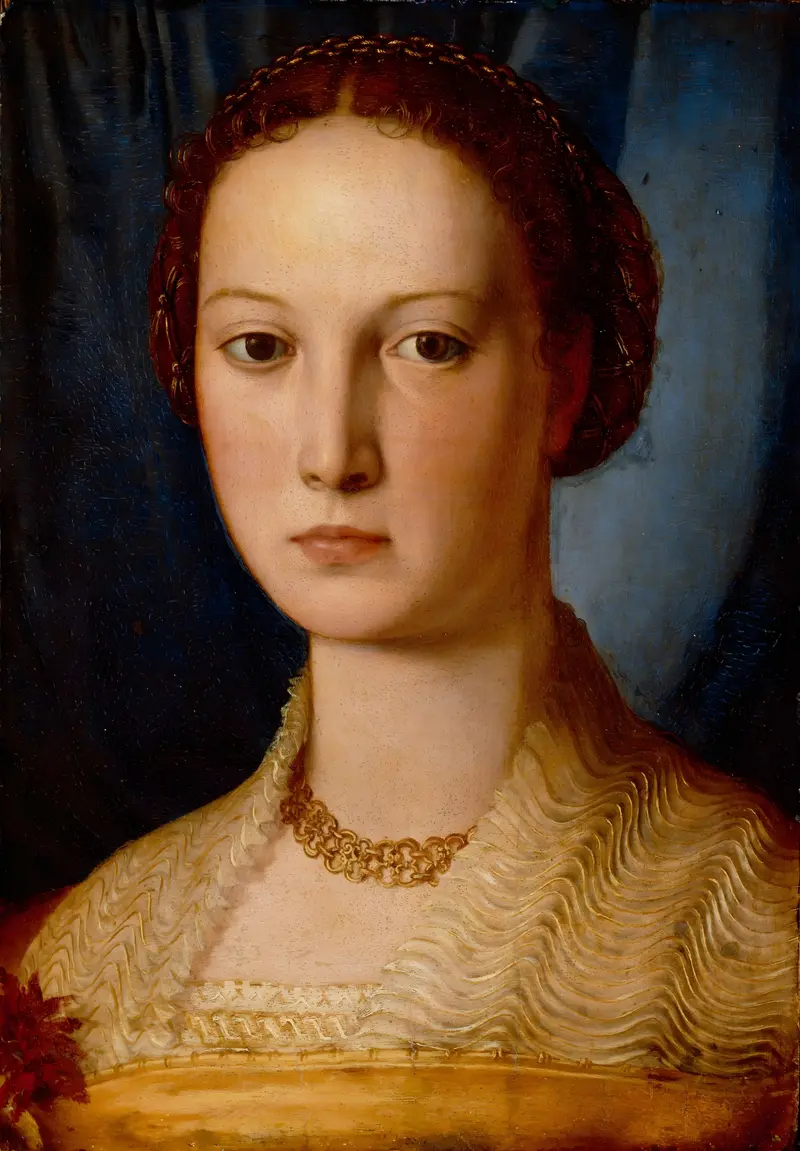
Costanza Da Sommaia
Agnolo Bronzino
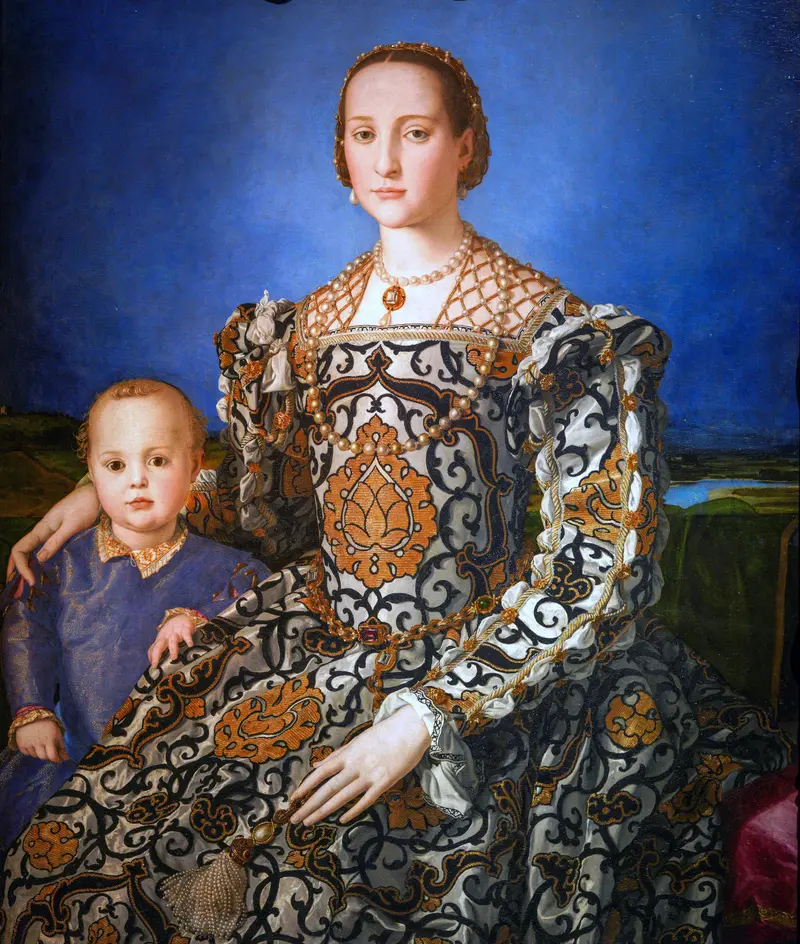
Portrait of Eleanor of Toledo with Her Son Giovanni de’ Medici
Agnolo Bronzino
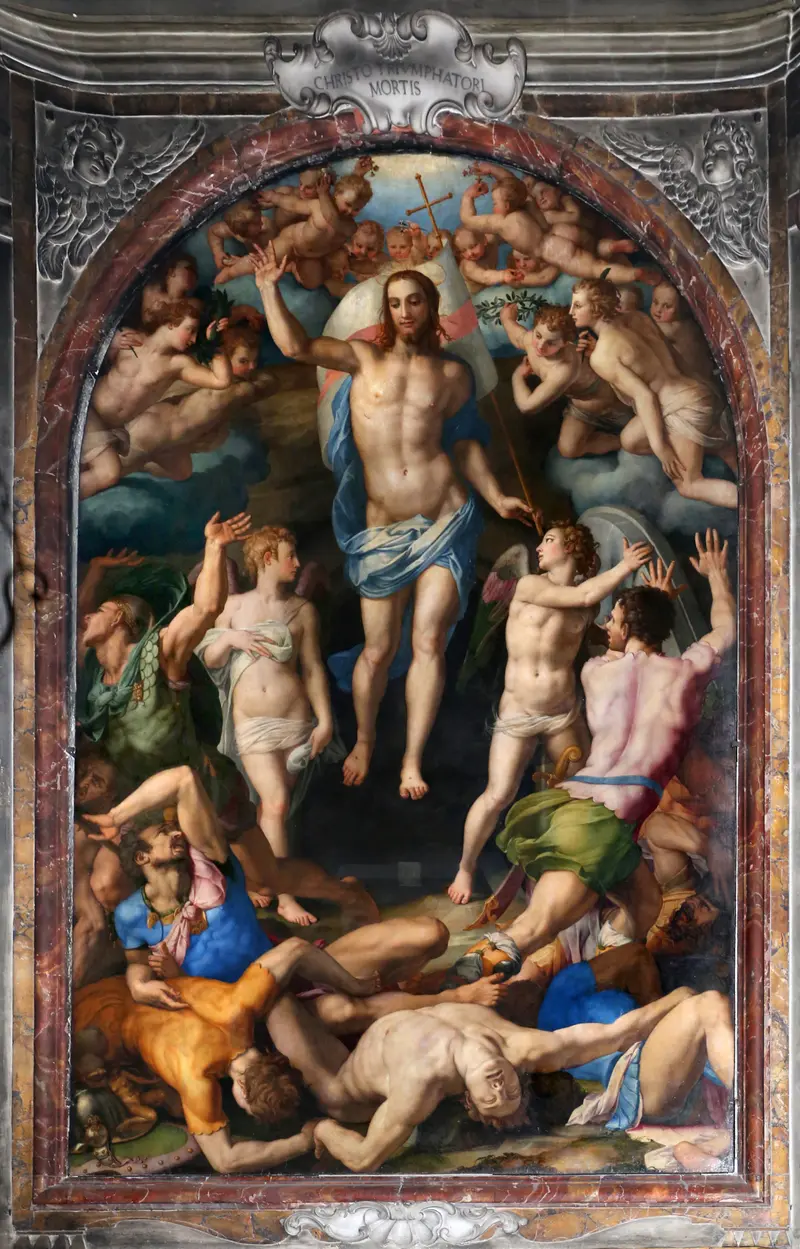
Resurrection Of Christ
Agnolo Bronzino
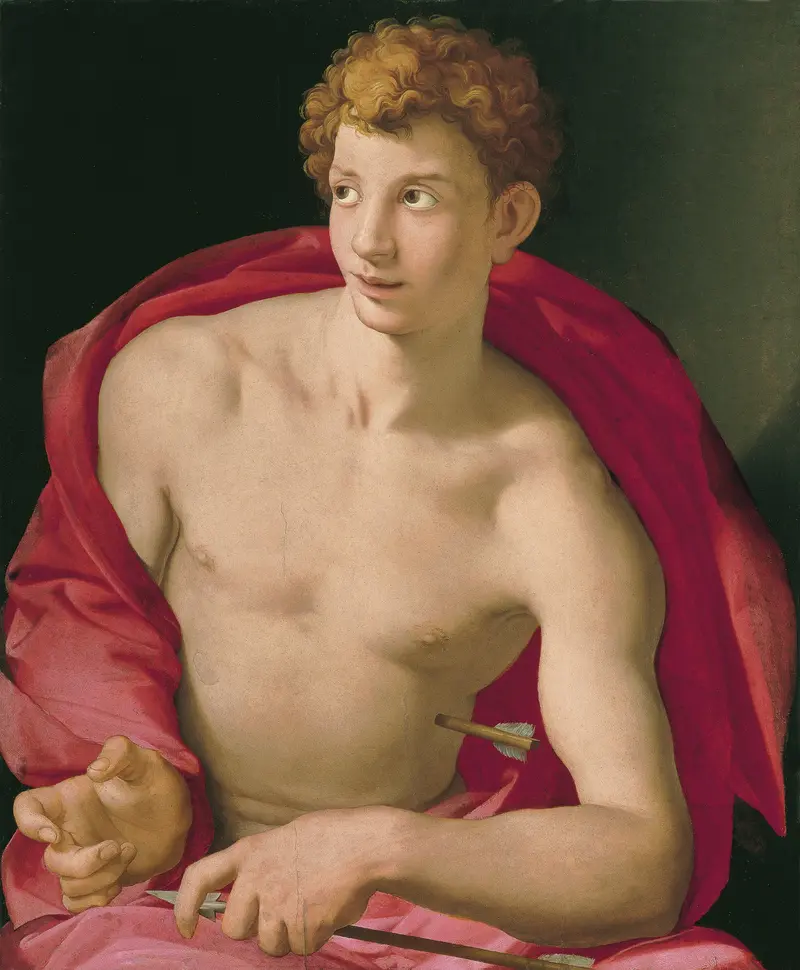
Saint Sebastian
Agnolo Bronzino





