
Porträtstudie Lucia Kiel — History & Facts
The first thing that catches the eye in Porträtstudie Lucia Kiel is the immediacy of the sitter’s gaze—direct, almost challenging, suspended in a world of quick, confident brushwork. The face, luminous against a swirl of green and blue, seems to emerge from the canvas itself, unfinished edges and all. The artist, August Macke, leaves much of the ground bare, as if inviting us to imagine the rest of the story.
The collar is sketched in with just a few strokes, the background a riot of movement, yet the eyes hold steady, anchoring the entire composition. Light falls across the cheeks and forehead, warming the features and setting off the cool shadows, while the palette—vivid, playful—signals the optimism and experimentation of its era. Painted in 1913, this portrait study belongs to a moment when German artists like Macke were breaking away from academic tradition, searching for new ways to capture personality and presence. Portraits of the early twentieth century often aimed to reveal the inner life of the sitter, not just their outward appearance.
In this case, the work’s unfinished quality and bold color choices speak to a world in flux—just before the First World War, as artists and patrons alike sought fresh visions of modern life. Today, housed in the Wuselig collection, Porträtstudie Lucia Kiel stands as a vibrant fragment of that restless, hopeful time, its energy still radiating from the canvas. Look again at those blue eyes: they seem to ask what you, too, might discover in a world remade by color and form.
More Artworks by August Macke
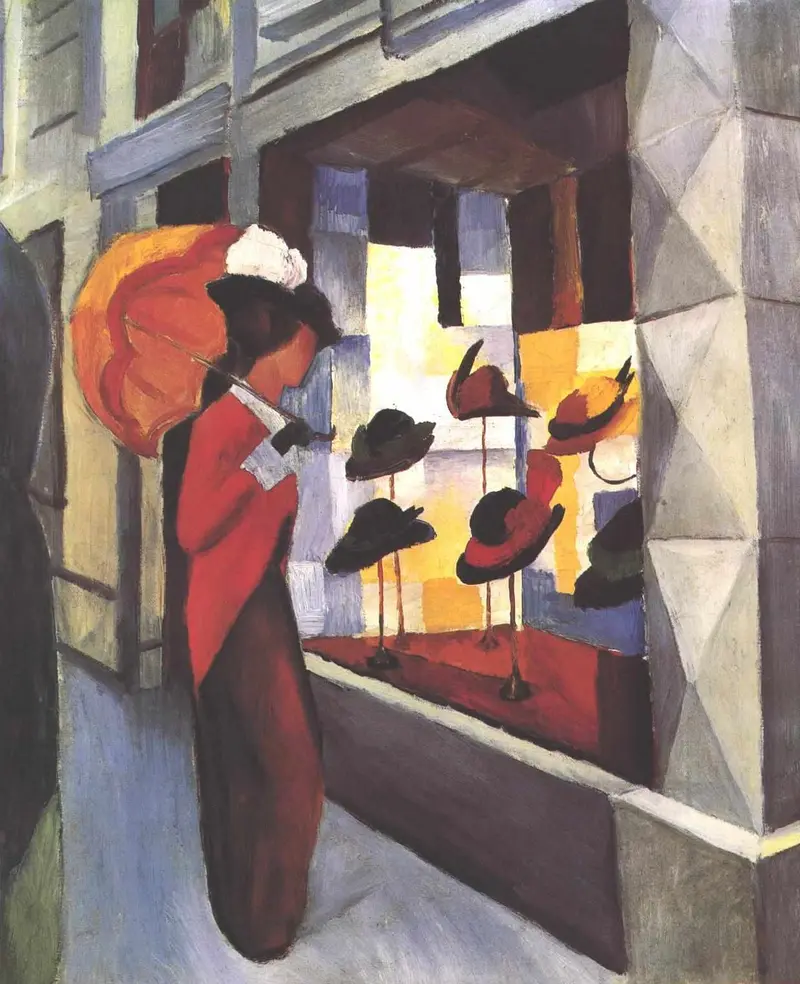
Woman with a Parasol in Front of a Hat Shop
August Macke

Street with Church in Kandern
August Macke
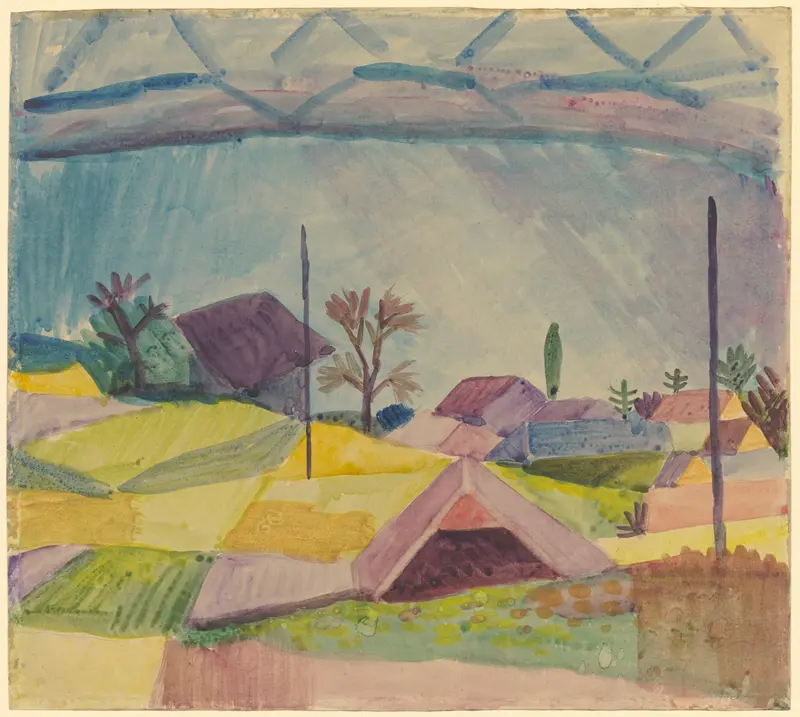
View of Hilterfingen
August Macke

Paar im Nachen
August Macke
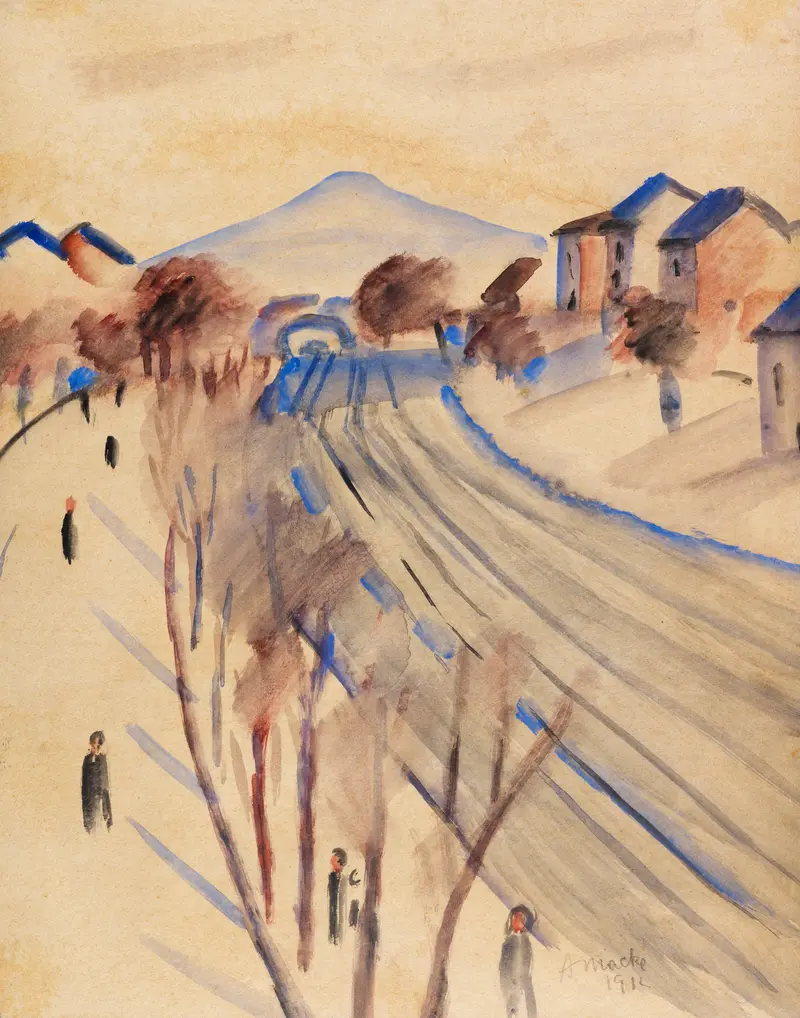
Ölberg mit Bahngleisen II
August Macke
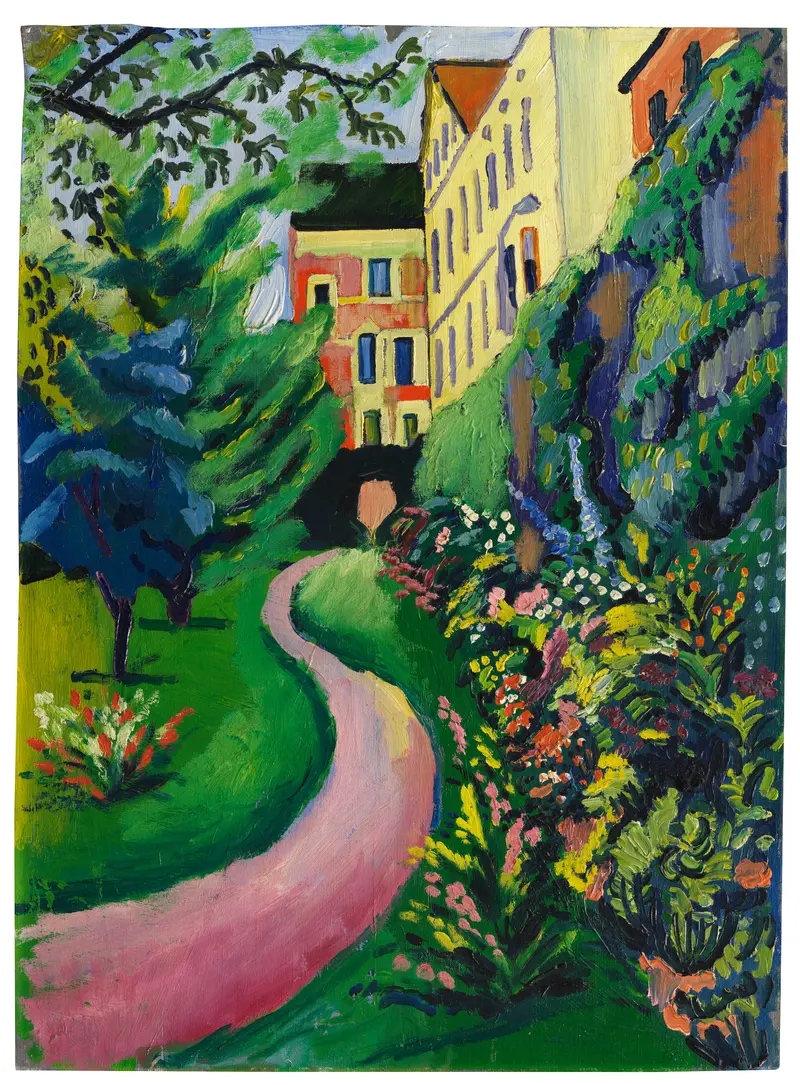
Unser Garten mit blühenden Rabatten
August Macke
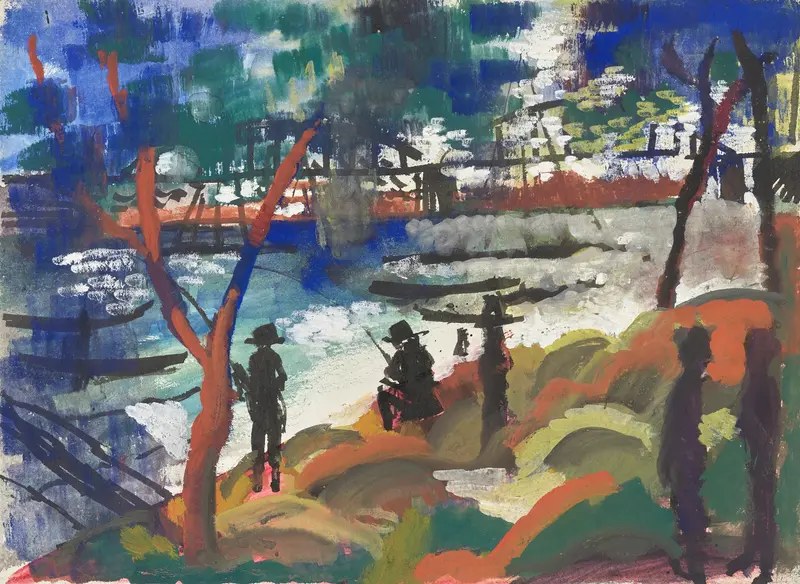
Angler am Fluss
August Macke
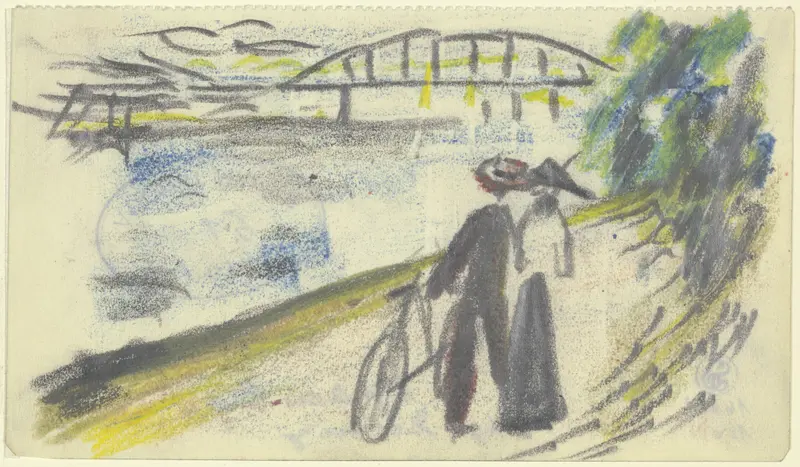
Path at the Rhine
August Macke
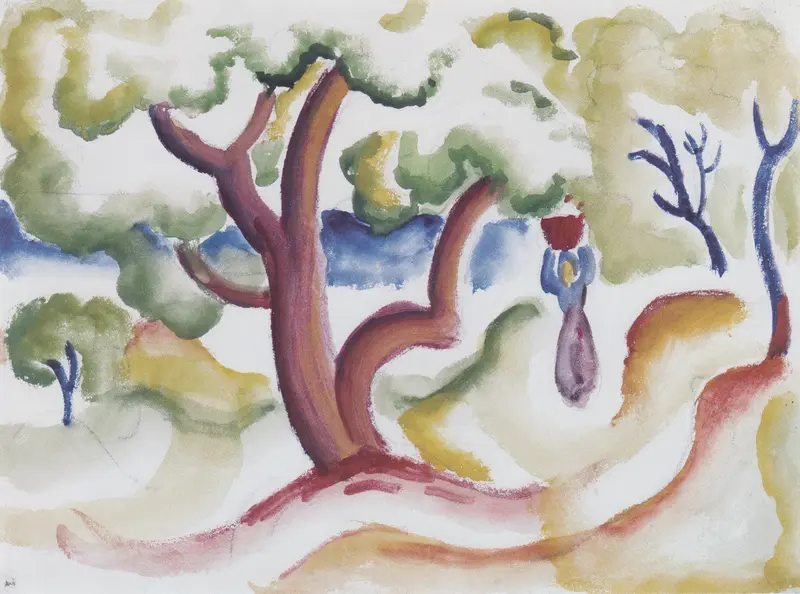
Frau mit Krug unter Bäumen
August Macke
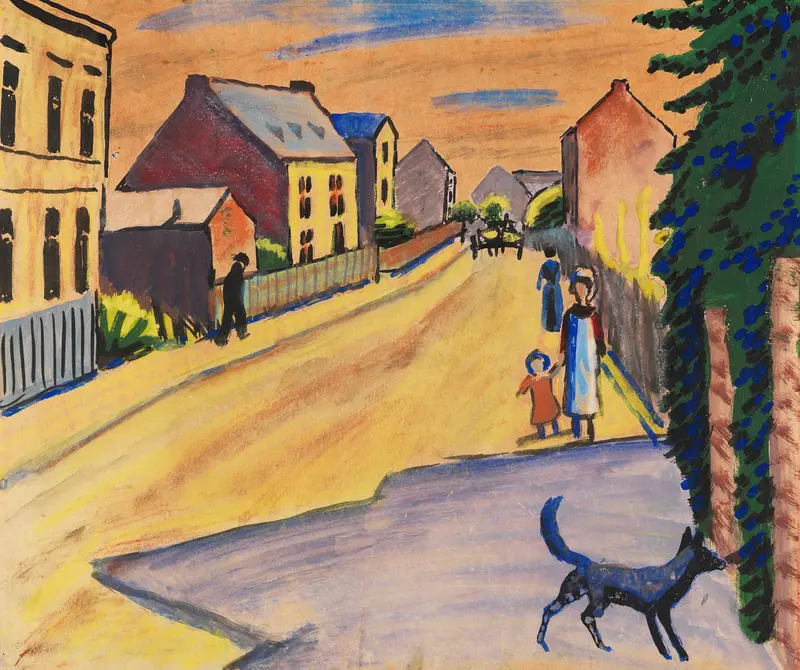
Sonnige Straße mit Hund
August Macke





