Portret van een man — History & Facts
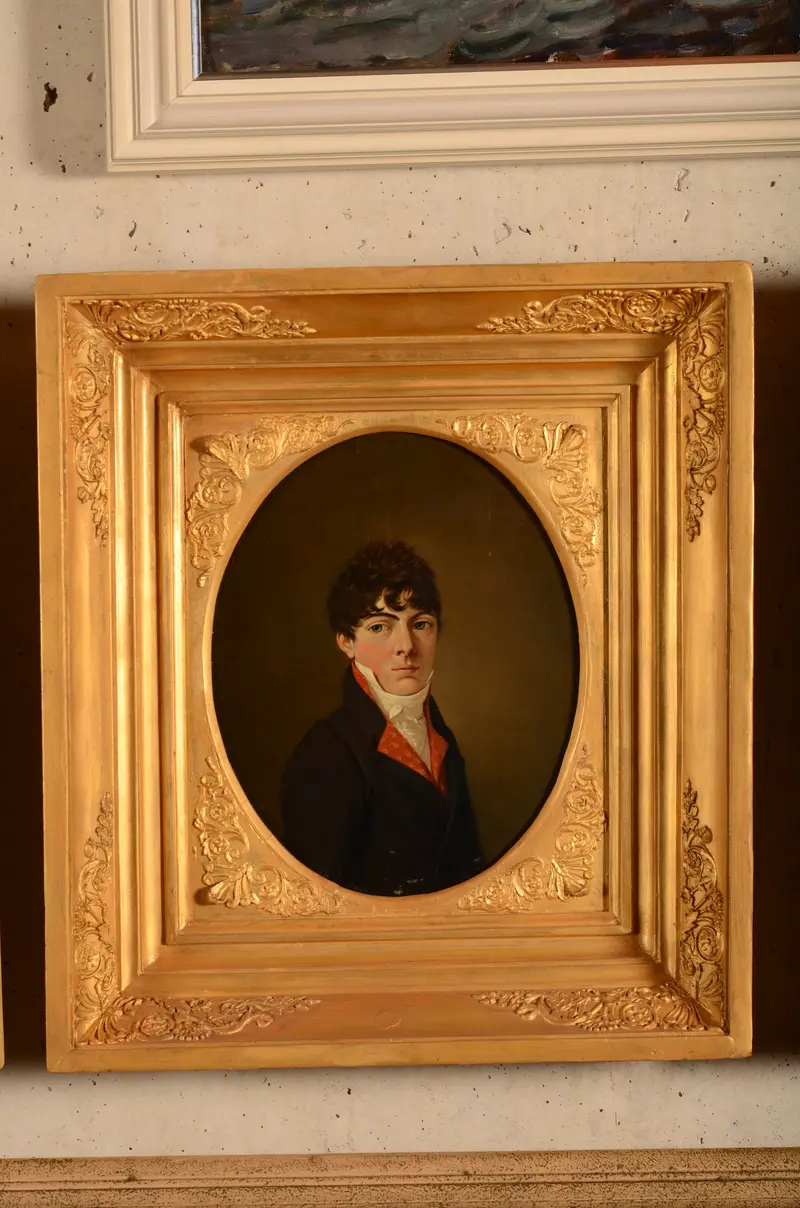
What first draws the eye in Portret van een man by Adrianus de Visser is the unwavering, almost searching gaze of its sitter. The man’s head is turned slightly to the left, but his eyes meet ours directly, as if caught mid-thought or in the midst of a quiet reckoning. Each curl of his powdered wig is meticulously rendered, framing a face marked by age and experience.
The soft, even light falls across his features, picking out the gentle furrows of his brow and the subtle set of his mouth—neither smiling nor stern, but somewhere in between. The darkness of his coat and the muted background push the face forward, commanding the viewer’s attention and inviting speculation about the life behind those steady eyes. Painted in 1795, this portrait belongs to the world of late eighteenth-century Dutch society, a time when portrait miniatures were treasured as tokens of memory and status. Such works were often commissioned by families or individuals keen to preserve their likeness for posterity or to send to distant loved ones.
The oval format and intimate scale suggest it was meant to be held close, perhaps in a private cabinet or as part of a cherished collection. Though history has kept few traces of the sitter’s identity or the specific circumstances of this commission, the painting now resides in the Rijksmuseum collection, a quiet testament to the era’s fascination with individuality and remembrance. Look again at the sitter’s eyes: they hint at a story that, though lost to time, still lingers in paint.