Portrett av Edmund Theobald Harbitz — History & Facts
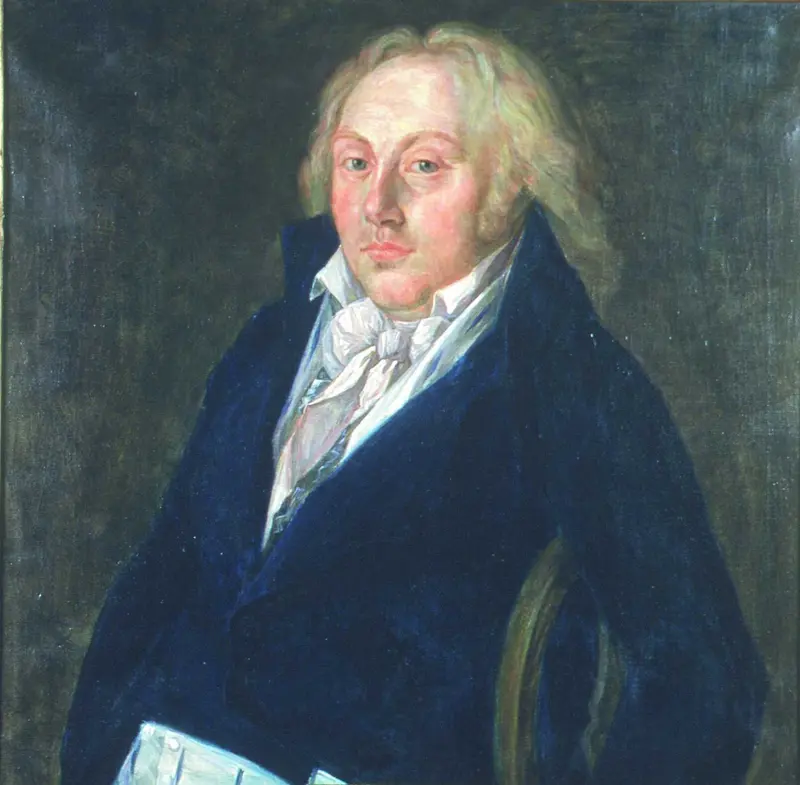
What first draws the viewer in Portrett av Edmund Theobald Harbitz is the quiet gravity of the sitter’s gaze—a look that seems to weigh both the viewer and the world beyond the canvas. The face emerges from a deep, nearly monochrome field, the sharp collar and dark coat setting off the pallor of the skin and the cool blue of the eyes. The brushwork lingers on the planes of the face, catching the subtle creases at the brow and the thoughtful downturn of the mouth.
Light falls from the left, modeling the features with a gentle clarity, while the background remains resolutely shadowed, as if the man is stepping out from memory itself. This is not a portrait of bravado, but of inwardness and reflection. Painted in 1917, one year after the death of its subject, this work belongs to a long tradition of commemorative portraiture, where likeness is meant not only to record but to honor. The early twentieth century in Norway saw such portraits commissioned for civic, professional, or familial remembrance, often displayed in institutions or private homes as a mark of respect.
This painting, a copy after an earlier 1910 work by August Eiebakke, now resides in the Oslo Museum (accession number OB.00282), a testament to both the sitter’s and the artist’s place in the city’s cultural memory. History has kept few traces of this particular canvas’s journey, but its somber dignity invites us to linger, searching for the story behind those steady, searching eyes.