
Post Mill on a Riverbank — History & Facts
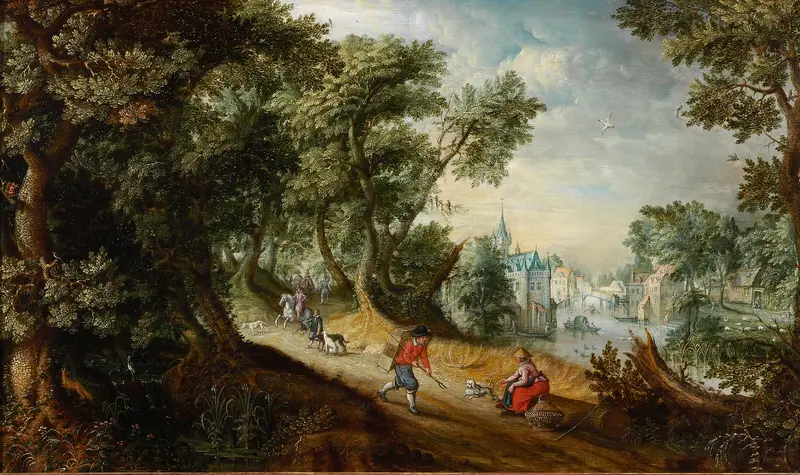
What first seizes the eye in Post Mill on a Riverbank is the sense of teeming life, each figure caught mid-gesture as if the painter had pressed pause on a bustling Flemish day. The post mill itself towers above the scene, its dark wooden body almost architectural in its gravity, but all around it, the world is in motion: horses jostle, travelers negotiate the winding road, and villagers cluster in animated groups. The light, cool and clear, picks out the bright garments of the figures and glances off the river, drawing the viewer’s gaze from the mill’s shadowed base to the sunlit village beyond.
Even the clouds seem to drift with purpose, echoing the flow of people and animals below. Every detail—the angle of a rider’s hat, the careful placement of a cart—invites the viewer to linger, piecing together the small dramas of daily life. Painted between 1610 and 1620, this work by Adriaen van Stalbemt belongs to a world where landscape painting was rapidly gaining favor among collectors and burghers of the Low Countries. Scenes like this, full of everyday activity and local architecture, were prized for their ability to capture both the prosperity and the rhythms of a changing society.
The anonymous hands who might have commissioned such a scene were often merchants or city officials, eager to display their connection to the land and its industry. While history has kept few traces of this particular painting’s early journey, it now resides in a modern collection, a testament to the enduring fascination with the landscapes and labors of the early seventeenth century. Each time the eye returns to the painting, another story seems to unfold among the travelers and townsfolk, as if the landscape itself were always on the verge of speaking.
More Artworks by Adriaen van Stalbemt

Countryside landscape with staffage
Adriaen van Stalbemt
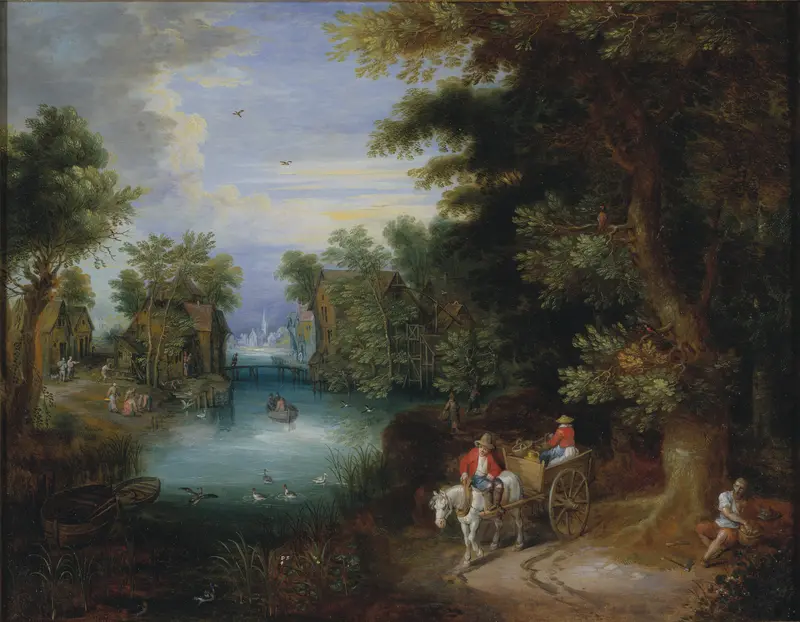
River Landscape with Peasants
Adriaen van Stalbemt
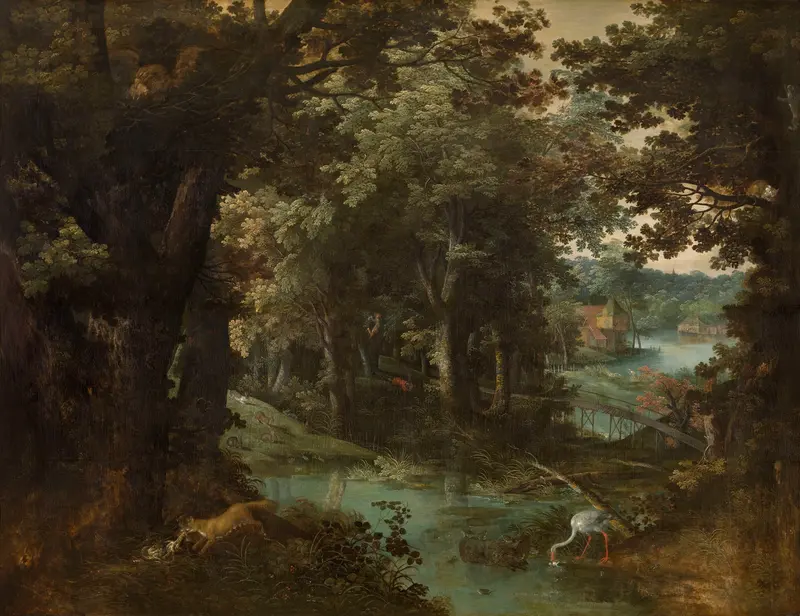
Landscape with Beast Fables
Adriaen van Stalbemt
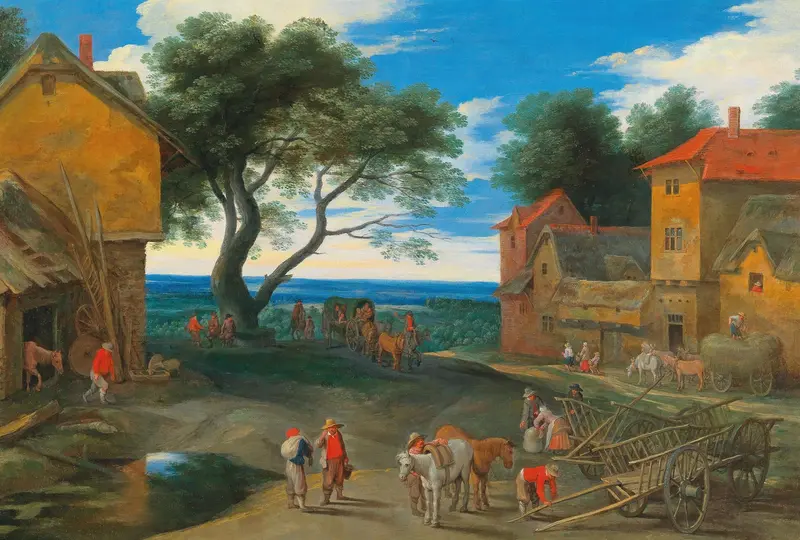
Travellers in a landscape with buildings
Adriaen van Stalbemt
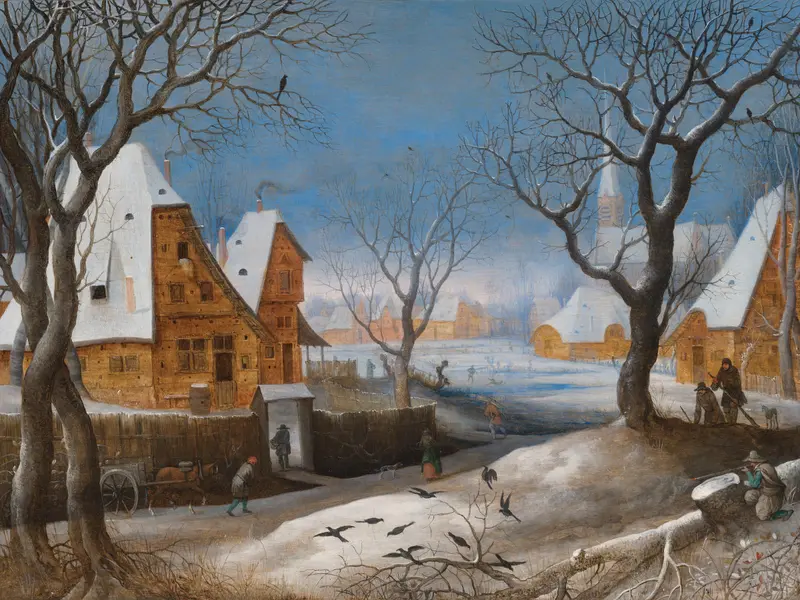
A winter landscape, with figures in a village
Adriaen van Stalbemt
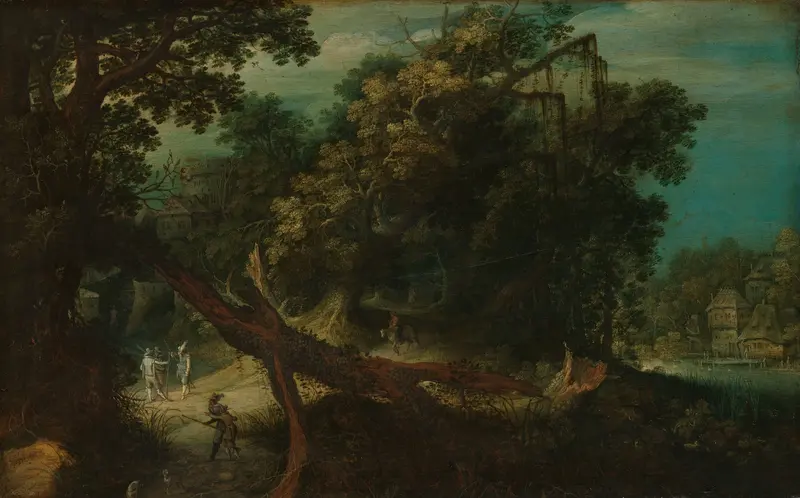
Shooters in a Forest Glade
Adriaen van Stalbemt
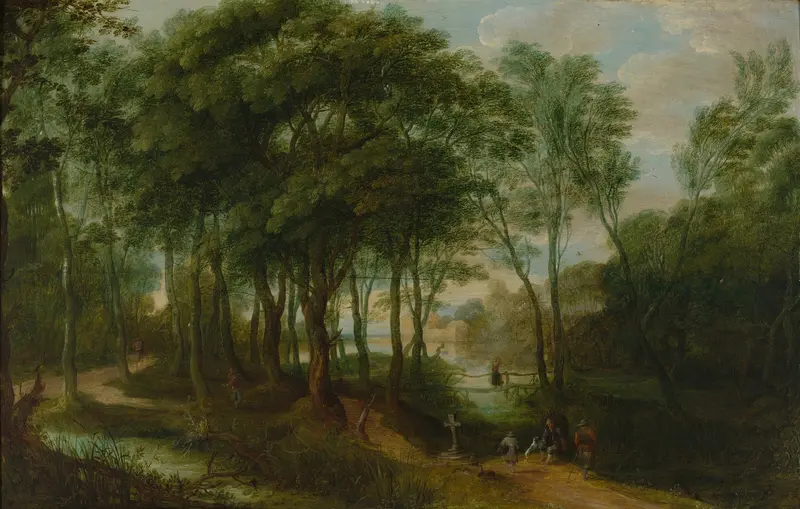
Figures On A Wooded Path, With A Building Behind
Adriaen van Stalbemt
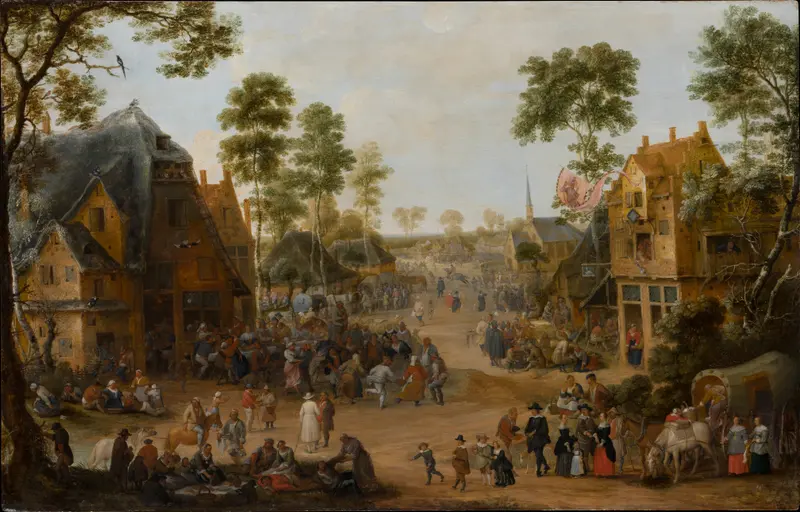
Village Church Festival
Adriaen van Stalbemt
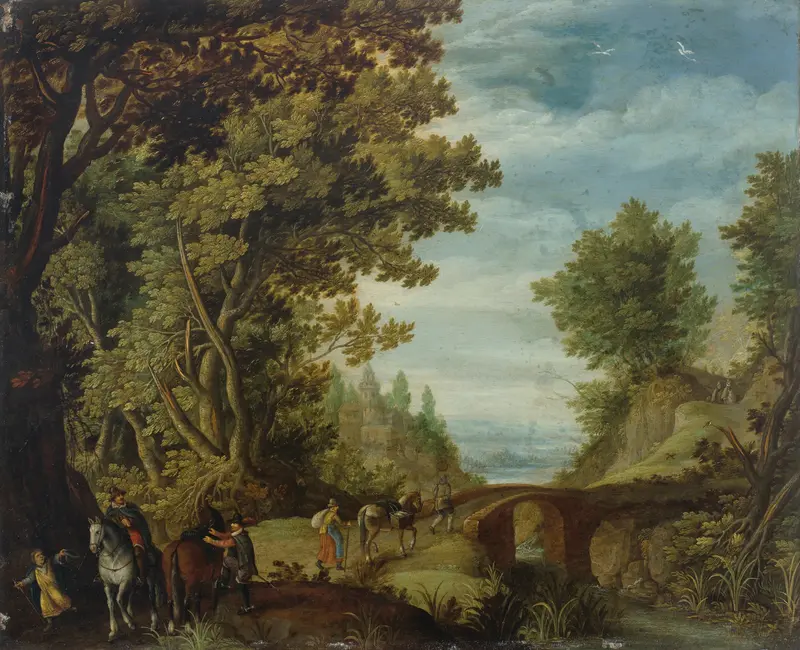
A wooded landscape with travelers crossing a bridge
Adriaen van Stalbemt
Landschap met rivier
Adriaen van Stalbemt
More Landscape Art

The Starry Night
Vincent van Gogh

View of Delft
Johannes Vermeer

Water Lilies
Claude Monet

The Grand Canal, Venice, looking north-west from the Ca' Corner to the Ca' Contarini degli Scrigni, with the campanile of Santa Maria della Carità
Canaletto

Windsor Castle
Canaletto

The Grand Canal looking North-East from the Palazzo Dolfin-Manin to the Rialto Bridge
Canaletto