Prancing White Horse — History & Facts
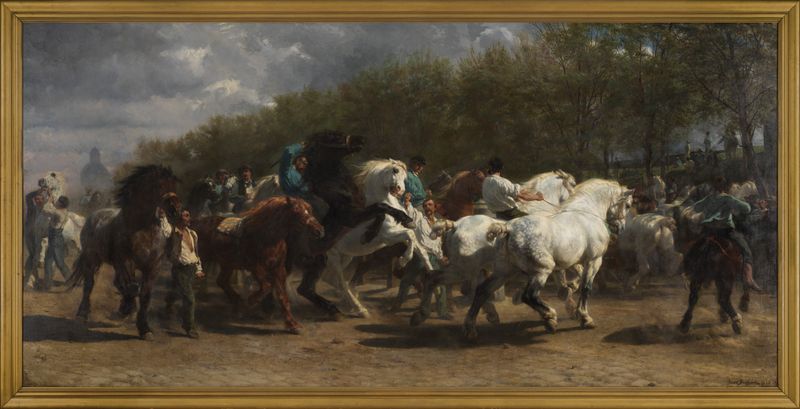
In the graceful arch of a white horse, one can sense a destiny tethered between the natural and the ethereal, a promise that lingers just beyond the surface. Look to the foreground, where the horse stands poised with its powerful legs and flowing mane. The artist’s brushwork captures the vitality of its spirit, each stroke conveying movement and energy. The delicate yet dynamic contrast of the white against the muted background amplifies the horse’s elegance, while subtle shades of blue and green wrap around it like whispers of nature, creating a dreamlike atmosphere that invites the viewer to ponder the deeper essence of freedom. Within this seemingly simple portrayal lies the tension of duality — strength and grace, freedom and restraint.
The horse, though wild and noble, is rooted in its surroundings, suggesting a balance between the untamed and the civilized. The gentle swirls of ink and wash evoke an air of fluidity, hinting at the ever-changing currents of life that guide us towards our own destinies. The composition invites contemplation, a meditation on the paths we take and the choices we make. During the mid to late Edo period, the artist was immersed in a vibrant cultural landscape that championed the beauty of nature and animal life.
Working in Japan between 1755 and 1799, Rosetsu found inspiration in the harmony of traditional themes and the emerging influences of Western art. His mastery in capturing the essence of his subjects reveals an artist at the precipice of change, illuminating the intricate dance between folklore, nature, and personal destiny.