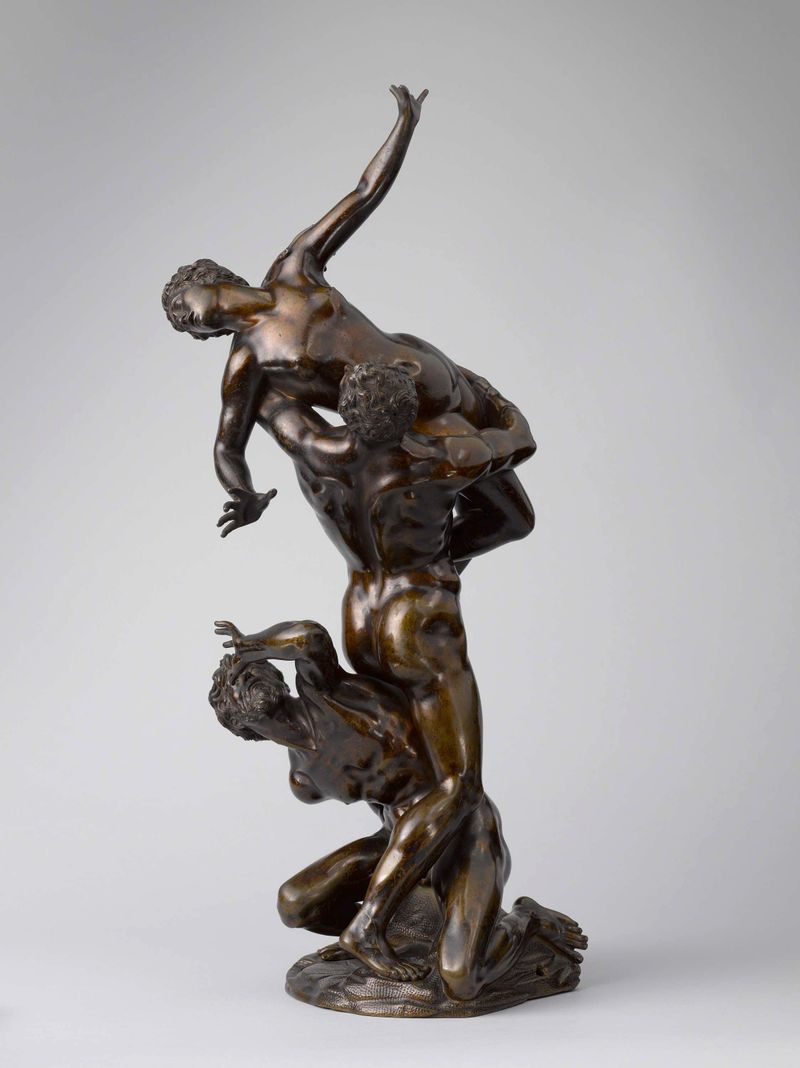
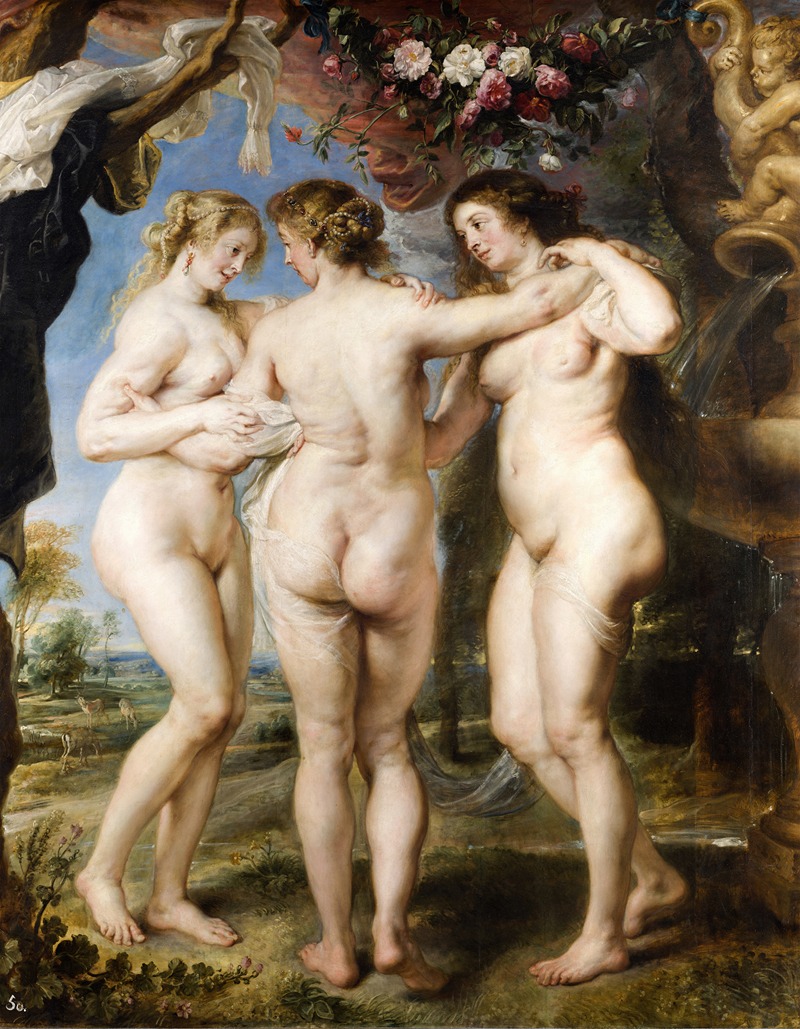
Prince Camaralzaman watching the robber of the Talisman — History & Facts
The air is thick with unspoken truths and longing, as memories swirl like dust motes in a sunbeam. At the heart of this narrative, we find the delicate interplay between vulnerability and observation, a moment that invites us to reflect upon the echoes of our past. Look to the left, where the protagonist's gaze is fixed on a figure cloaked in shadow. The rich, muted palette envelops the scene, evoking a sense of nostalgia and mystery.
Notice how the artist meticulously contrasts the warm, golden hues of the background with the cool, deep blues of the foreground, creating a visual dialogue that heightens the tension. Each brushstroke expresses a world of emotion, drawing us deeper into the silent drama unfolding before us. The act of watching becomes a metaphor for longing and the effects of memory. The figure, a prince suspended between duty and desire, embodies an inner conflict—the tension of knowing yet yearning for connection.
The robber, shrouded in darkness, could symbolize unfulfilled dreams or lost opportunities, while the talisman, a glimmer of hope, remains tantalizingly out of reach. This duality invites the viewer to ponder their own experiences of watching life unfold from the sidelines. The artist created this work in 1884, a time marked by a transition in the Victorian art scene, as artists began to move away from strict realism toward more evocative interpretations. Goodwin was influenced by the Pre-Raphaelites, favoring vibrant color and emotional depth, as he sought to capture the essence of human experience.
In this painting, he reflects both the turmoil of his own times and an enduring human sentiment, bridging the past and the present through his art.
More Artworks by Albert Goodwin
Browse all →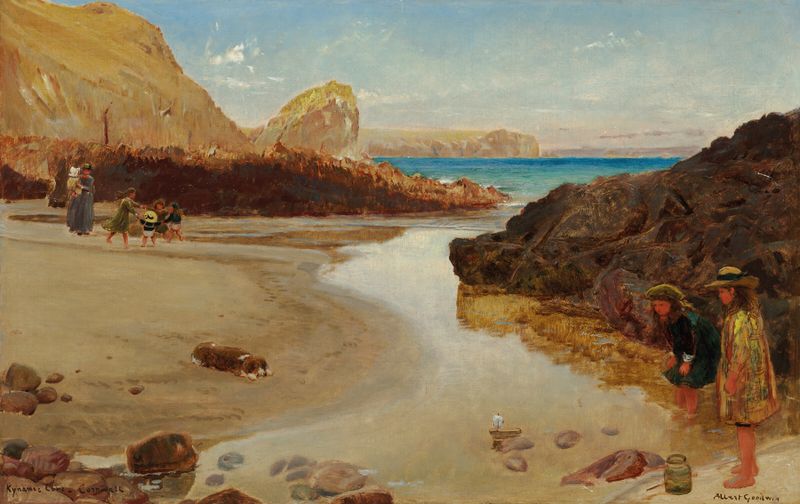
Kynance Cove, Cornwall
Albert Goodwin

Evening, St Hilda’s Abbey, Whitby, Yorkshire
Albert Goodwin

Sunset, Venice
Albert Goodwin
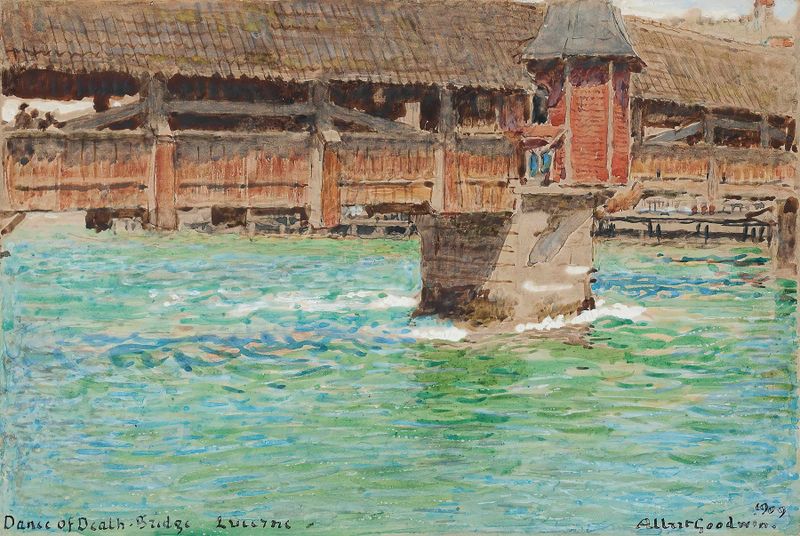
Dance Of Death Bridge, Lucerne
Albert Goodwin
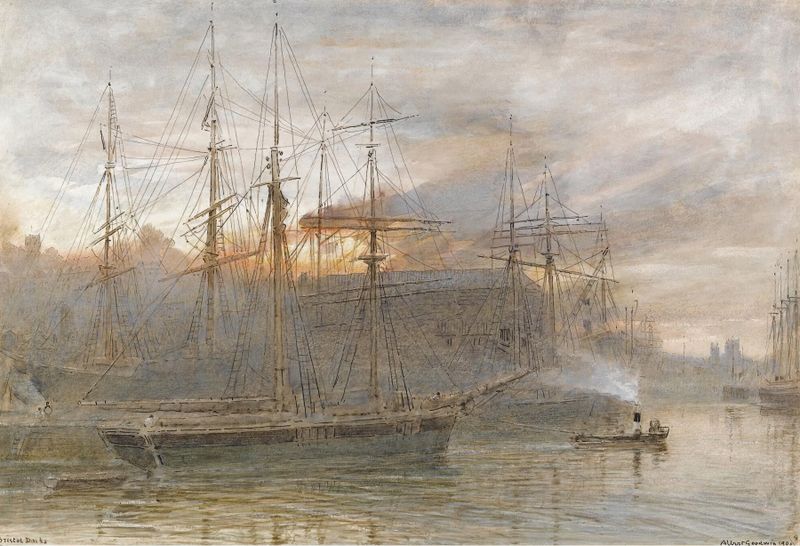
Bristol docks
Albert Goodwin

A view over Lake Lucerne
Albert Goodwin

Rockstone, Demerara, Guyana
Albert Goodwin

Autumn at Braunston, North Devon
Albert Goodwin

Night – faithful unto death
Albert Goodwin

Cabbage palms, Demerara, Guyana
Albert Goodwin