
Procession of a Korean Envoy — History & Facts
A vibrant procession unfolds before the viewer, a river of color and movement flowing across the canvas. Men in elegant attire, adorned with intricate patterns, stride confidently, their faces reflecting a mix of solemnity and purpose. The light dapples through the trees overhead, casting soft shadows that dance along the ground, while the air is thick with anticipation and reverence for the journey ahead. Look closely at the central figure, the Korean envoy, standing tall amongst his retinue.
Notice how the rich hues of his garments—a deep red adorned with gold—command attention, emphasizing his importance in this moment. The use of flowing lines and delicate brushwork in the garments and the surrounding foliage creates a sense of harmony, as if the figures are not just moving through space, but are part of a living tapestry. Each detail, from the flutter of silk to the subtle expressions of the attendants, brings life to this historical event. Beneath the surface, this artwork encapsulates the faith and cultural exchange between nations.
The envoy's dignified posture suggests a steadfast resolve, while the attentive expressions of the accompanying figures hint at the weight of their mission. This moment reflects not only personal duty but also the broader significance of diplomacy and the respect fostered through such encounters, illuminating an era marked by burgeoning international relations. Created in the late 17th century during Japan’s Edo period, the artist painted this scene amidst a time of relative peace and cultural flourishing. Kano Eikei, a prominent figure in the Kano school of painting, masterfully blended traditional Japanese techniques with influences from Chinese art, capturing the profound respect and ceremonial intricacies of such envoys.
This work underscores a pivotal moment in history, where the exchange of ideas, culture, and faith thrived, laying the groundwork for future interactions.
More Artworks by Kano Eikei
Browse all →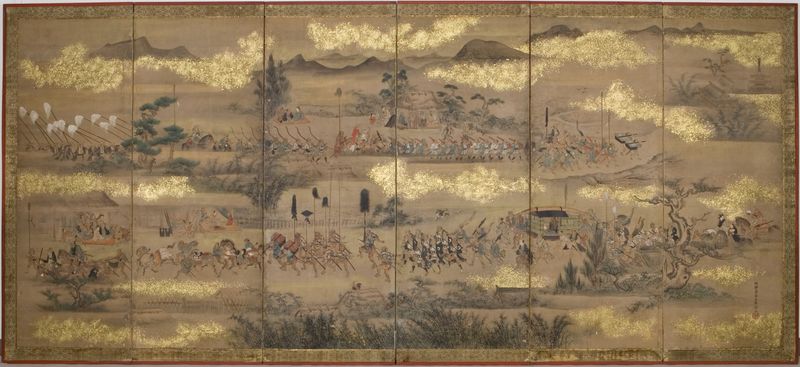
More Historical Art
Browse all →
The Night Watch Militia Company of District II under the Command of Captain Frans Banninck Cocq
Rembrandt van Rijn

Lincoln Memorial
Henry Bacon

The Third of May 1808
Francisco de Goya

Isaac and Rebecca, Known as ‘The Jewish Bride’
Rembrandt van Rijn

The Charge of the Mamelukes (1814)
Francisco de Goya

De vier ruiters van de apocalyps
Albrecht Dürer