Prospekt med ruiner — History & Facts
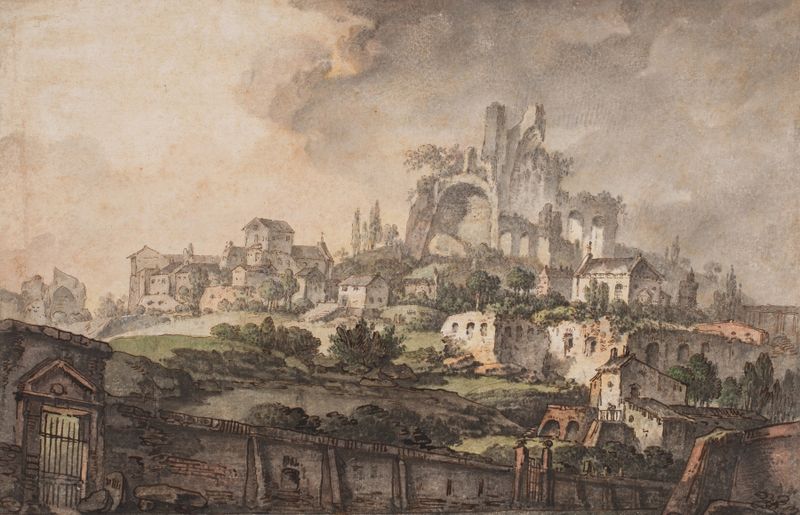
In the echo of divinity, art transcends mere craftsmanship, becoming a vessel for the soul’s whispers. Look to the center of this piece, where a delicate interplay of light illuminates the ruins, casting shadows that dance like memories upon the vibrant landscape. The soft greens and earthen browns create a serene backdrop, while the ruins, though crumbling, stand defiantly against time. Notice how the artist uses soft brushstrokes to create texture, allowing the viewer to feel the history embedded in every stone, as if the past breathes anew in this captured moment. Beneath the surface lies a tension between decay and beauty, a reminder of the impermanence of human endeavors.
The ruins symbolize both greatness lost and the potential for rebirth, suggesting that even in destruction, there is a sacred story waiting to be told. The juxtaposition of the natural landscape thriving around the remnants speaks to the resilience of life, hinting at the divine order that weaves through existence. Jens Petersen Lund painted this work during his years in the late 18th century, a time when the neoclassical movement was beginning to flourish in Europe. His exploration of historical themes coincided with a growing appreciation for nature and the sublime, reflecting a cultural shift towards valuing the emotional landscapes of humanity.
In this context, Prospekt med ruiner emerges not just as a scene, but as a profound commentary on the intersection of human achievement and the enduring power of nature.