‘Romersk’ prospekt med bro, tempelruin og rytterstatue — History & Facts
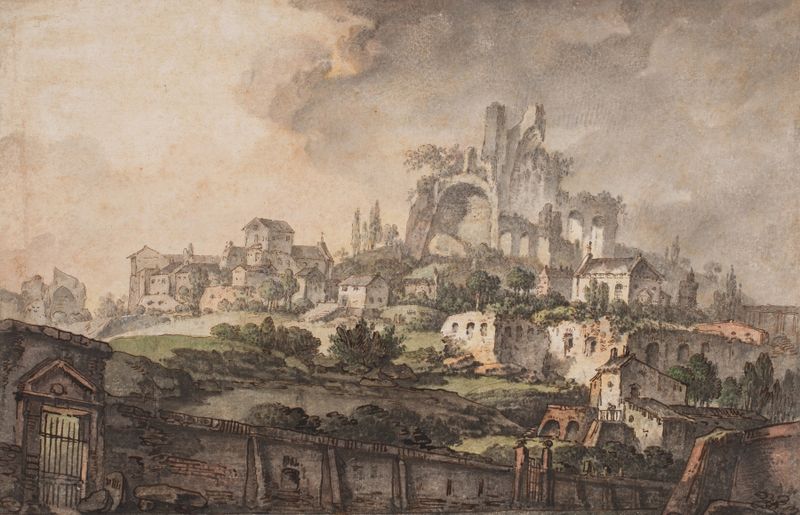
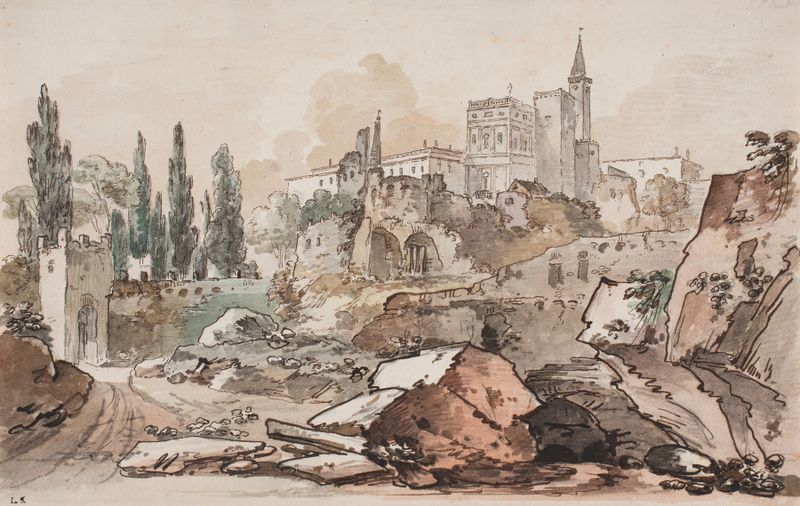
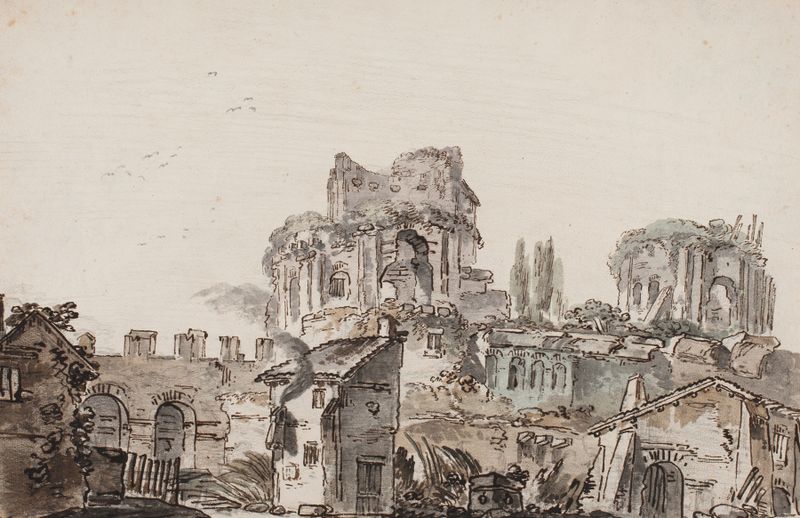
What secret hides in the quiet of the canvas? In a world where brushstrokes awaken a realm of forgotten tales, this artwork invites reflection on the passage of time and the essence of history. Look to the center of the canvas, where the ruins of the temple rise majestically against the horizon. The gentle brushwork creates an ethereal softness that contrasts with the rigid lines of the rytterstatue, standing as a sentinel overseeing the scene. Notice how the light spills over the landscape, painting shadows that dance across the ruins, revealing textures that pulse with the remnants of life.
The deliberate use of muted colors evokes a sense of nostalgia, enveloping the viewer in a serene yet haunting atmosphere. Delve into the intermingling of history and mythology within the piece. The statue, a symbol of power and remembrance, contrasts sharply with the dilapidated temple, suggesting the impermanence of glory. This juxtaposition provokes a meditation on legacy: what will remain once time has worn down our monuments? The path leading into the scene beckons the viewer, yet it feels treacherous, filled with echoes of stories long past, urging one to consider the weight of those who once walked it. Jens Petersen Lund painted this piece between 1730 and 1790, during a period marked by a growing interest in classical themes and the picturesque landscapes of antiquity.
Living in Denmark, he was influenced by the neoclassical movement that swept through Europe, blending the ideals of beauty and nature with historical reverence. This artwork reflects not only his artistic evolution but also the broader cultural shift towards exploring the remnants of the past, a quiet awakening of memory through art.