
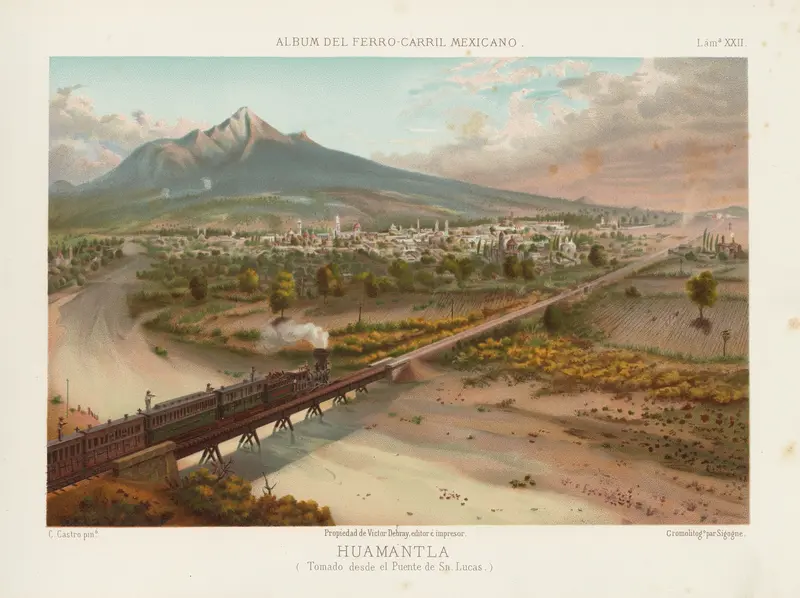
Puente de la Soledad; Tomado desde el Hospital, plate 3 — History & Facts
Could a single brushstroke hold eternity? In the chaotic embrace of urban life, moments collide and intertwine, each filled with silent stories waiting to be told. Look to the foreground, where the bustling figures spill into the scene, their movement contrasting sharply against the stillness of the bridge. Notice the way the artist layers hues of ochre and gray, creating a sense of texture that almost breathes with the vibrancy of daily life. The bridge itself looms in the background — an architectural spine, grounding the chaos of the city while simultaneously inviting the viewer to traverse its expanse.
The delicate strokes evoke a feeling of urgency, enhanced by the splashes of color that swirl around the pedestrians, hinting at the bustling energy of their lives. Yet amid this frenetic tableau, a deeper narrative emerges. The figures, though animated, seem isolated in their individual missions, highlighting the paradox of connection that city life presents. Each person is enveloped in their own world, battling personal chaos within the collective frenzy.
The bridge, symbolizing passage and transition, becomes a poignant metaphor for the human experience — a reminder of both our separateness and our shared journey through the tumult of existence. In 1877, while creating this work, the artist found himself amidst a rapidly changing society, marked by industrialization and urban expansion. Living in Mexico, he witnessed transformations that profoundly affected daily life and artistic expression. This period saw a shift towards capturing the essence of modernity, and Castro’s paintings reflected not only the environment around him but also the evolving human narrative within it.
More Artworks by Casimiro Castro

More Genre Scene Art

Banquet of the Officers of the St George Civic Guard
Frans Hals

Rembrandt and Saskia in the Scene of the Prodigal Son
Rembrandt van Rijn

Bal du moulin de la Galette
Pierre-Auguste Renoir

Quadrille at the Moulin Rouge
Henri de Toulouse-Lautrec

A Burial at Ornans
Gustave Courbet

When Will You Marry?
Paul Gauguin