
Queen Street, Auckland — History & Facts
In the midst of chaos, beauty often finds a way to emerge; it is in the quiet corners of a bustling city that we glimpse the raw truths of existence. Look to the left, where the architecture stands tall, its intricate details etched against a fading sky. The buildings, robust in their Victorian grandeur, seem to cradle the passing figures below. Notice how the muted palette of browns and grays is punctuated by the occasional vibrancy of a hat or a parasol, embodying the lively spirit of 19th-century Auckland while also casting a shadow of the tensions that often linger in crowded streets. Amidst the outward calm lies a subtle tension.
The vivid strokes depicting the people draw your eye to their hurried movements, suggesting an underlying urgency, perhaps hinting at the violence that can erupt in urban life. The juxtaposition of serene architecture with the restless figures and turbulent emotions brewing beneath the surface creates a poignant commentary on societal struggles—the weight of modernity pressing against the delicate veneer of civility. In 1889, amidst the rapid growth of Auckland and its transformations, Jacques François Carabain captured a city poised on the brink of change. In a period marked by social upheaval and urban development, he painted this scene that reflects both the vibrancy of life and the unvoiced conflicts within.
As the world around him was evolving, he found his canvas at the nexus of beauty and strife, inviting viewers to confront the dualities of their own existence.
More Artworks by Jacques François Carabain
Browse all →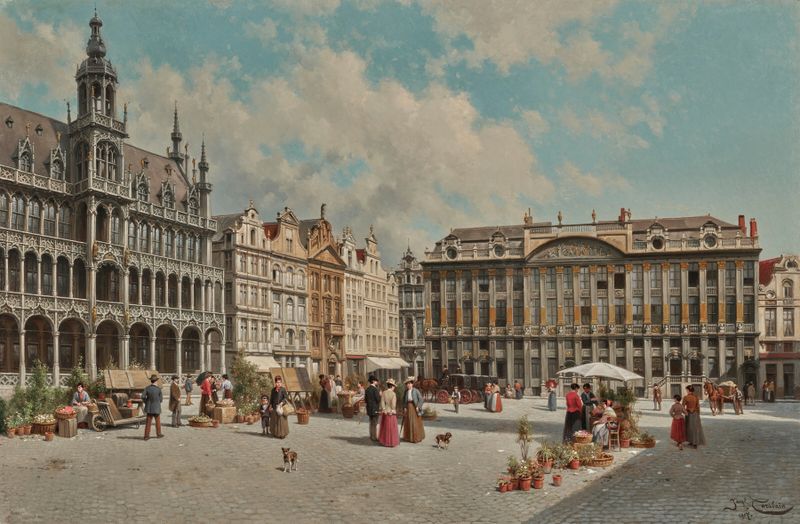
La Grand Place, Brussels
Jacques François Carabain
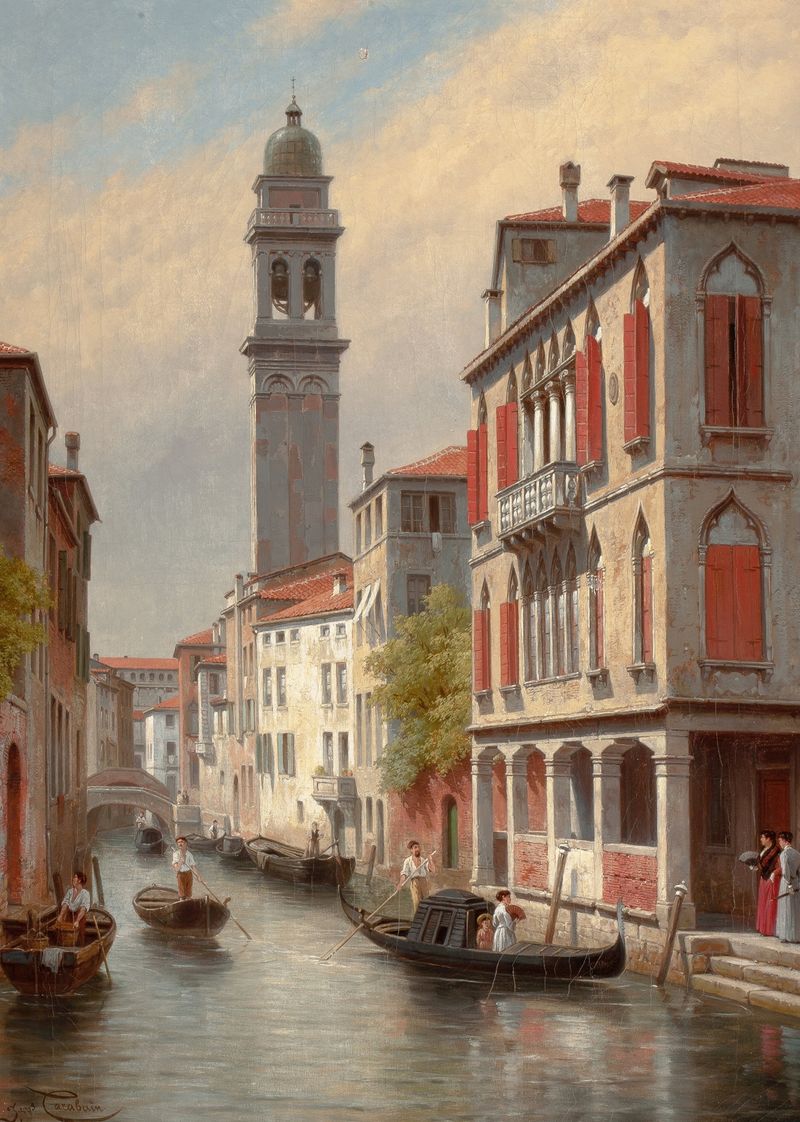
Une Vue a Venise, San Giorgio dei Greci, Italie
Jacques François Carabain
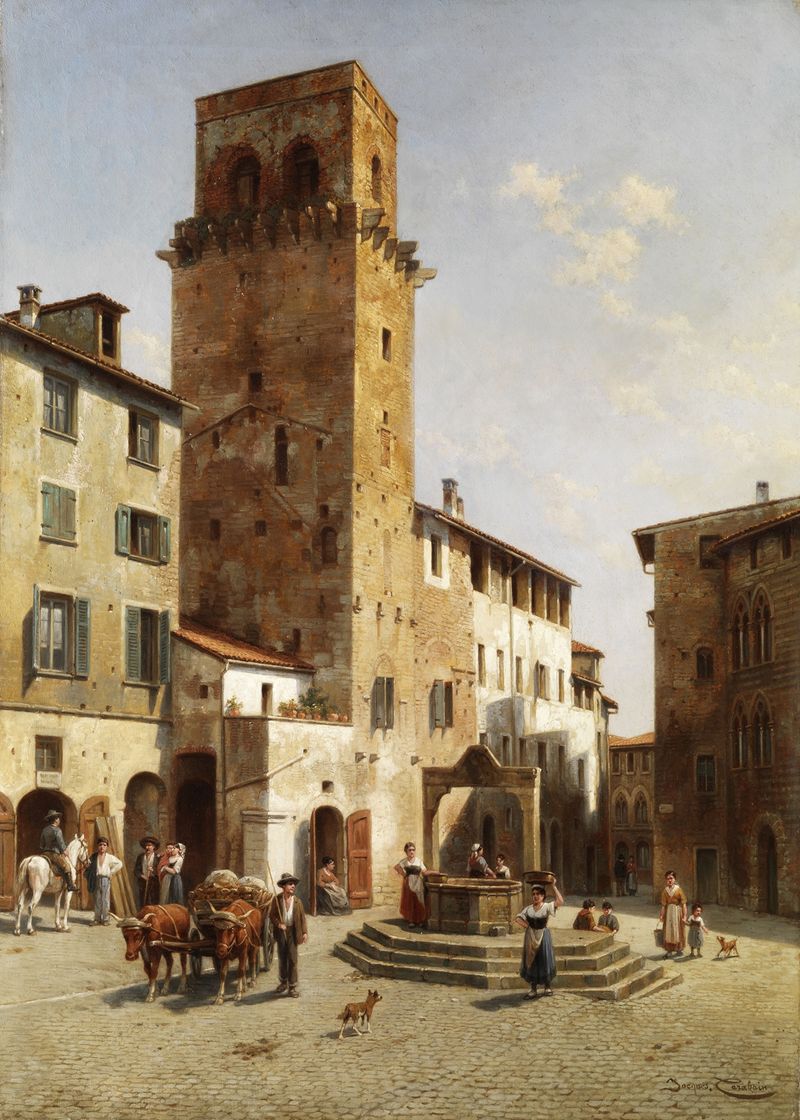
Platz in San Gimignano
Jacques François Carabain

The town square of Braunschweig
Jacques François Carabain

Venice, the Grand Canal
Jacques François Carabain
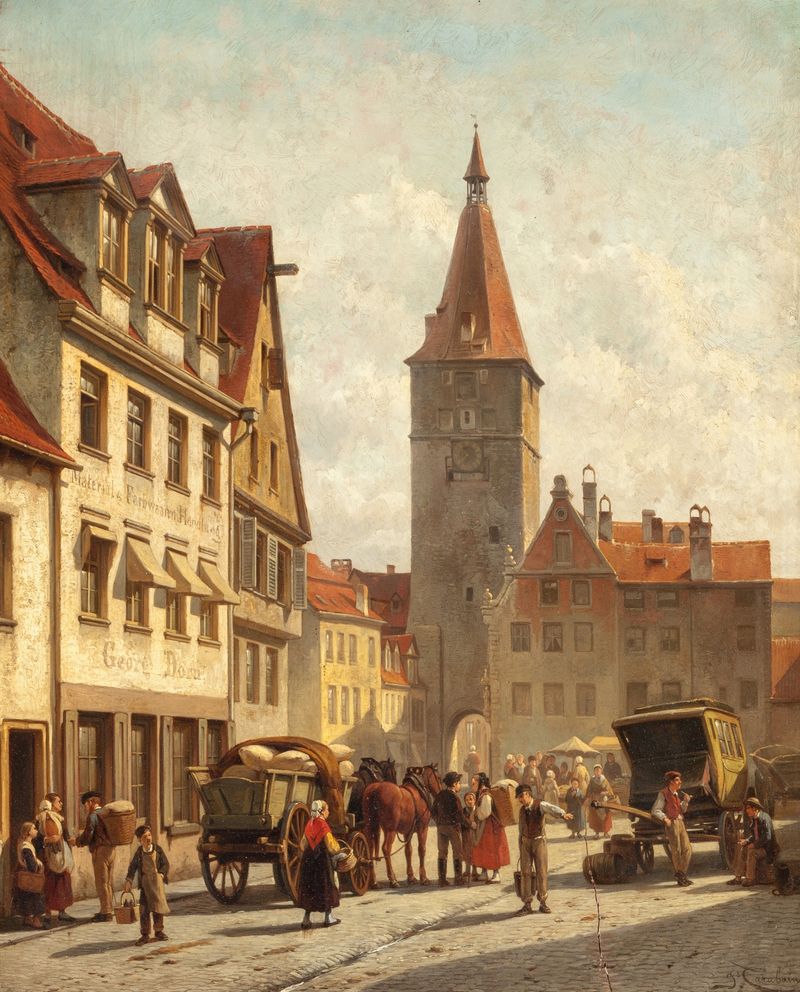
Market Day, Nuremberg, Germany
Jacques François Carabain
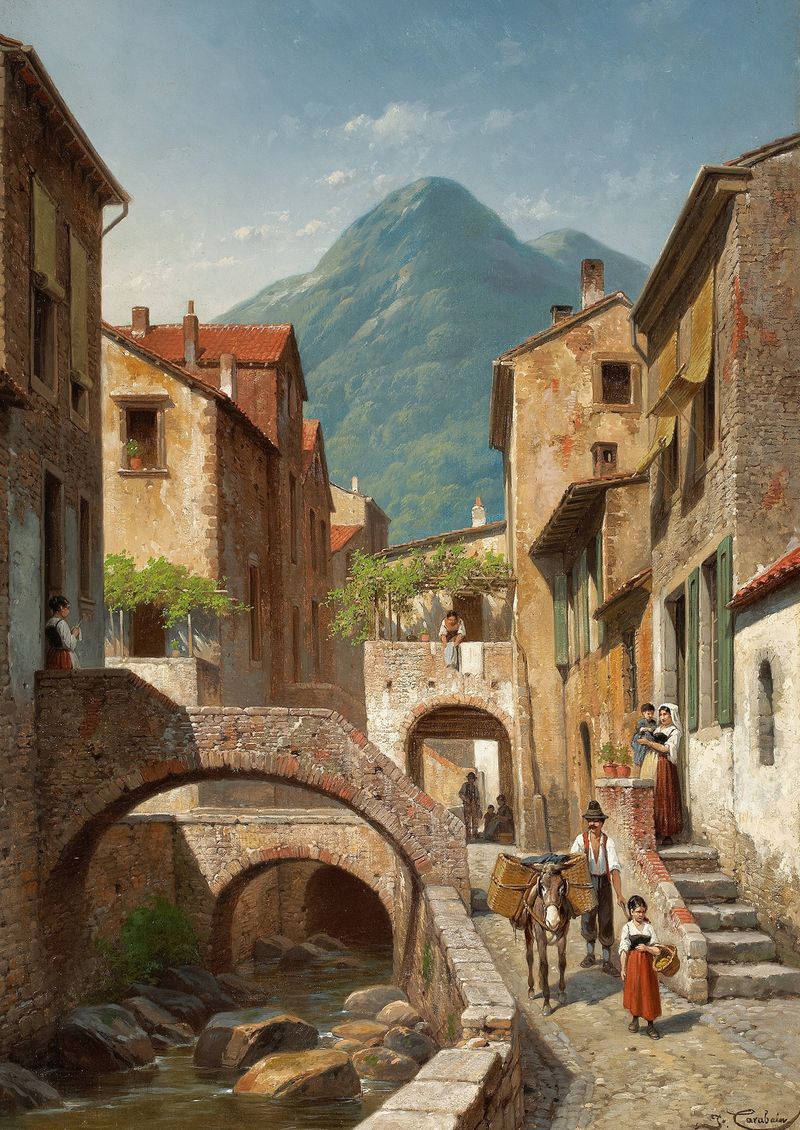
Italian Village Scene
Jacques François Carabain
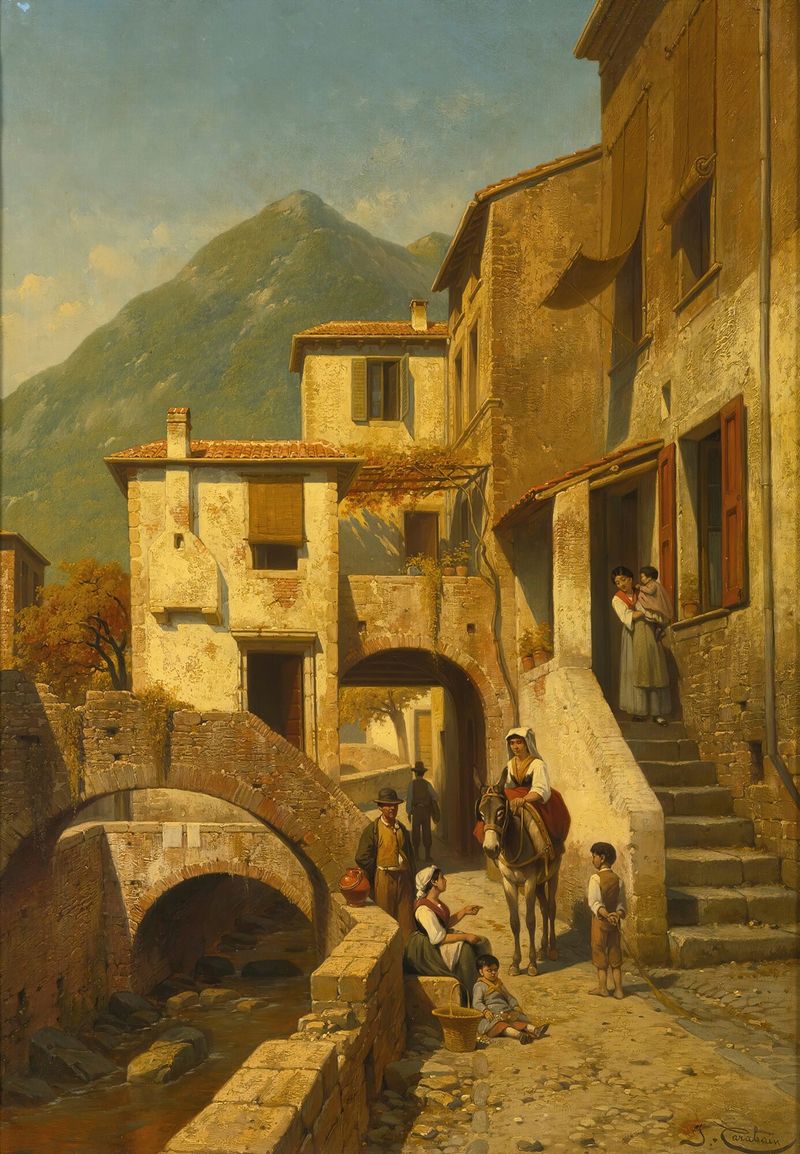
Rue A Monte-Rosso, Bord De La Mediterrane, Italie
Jacques François Carabain
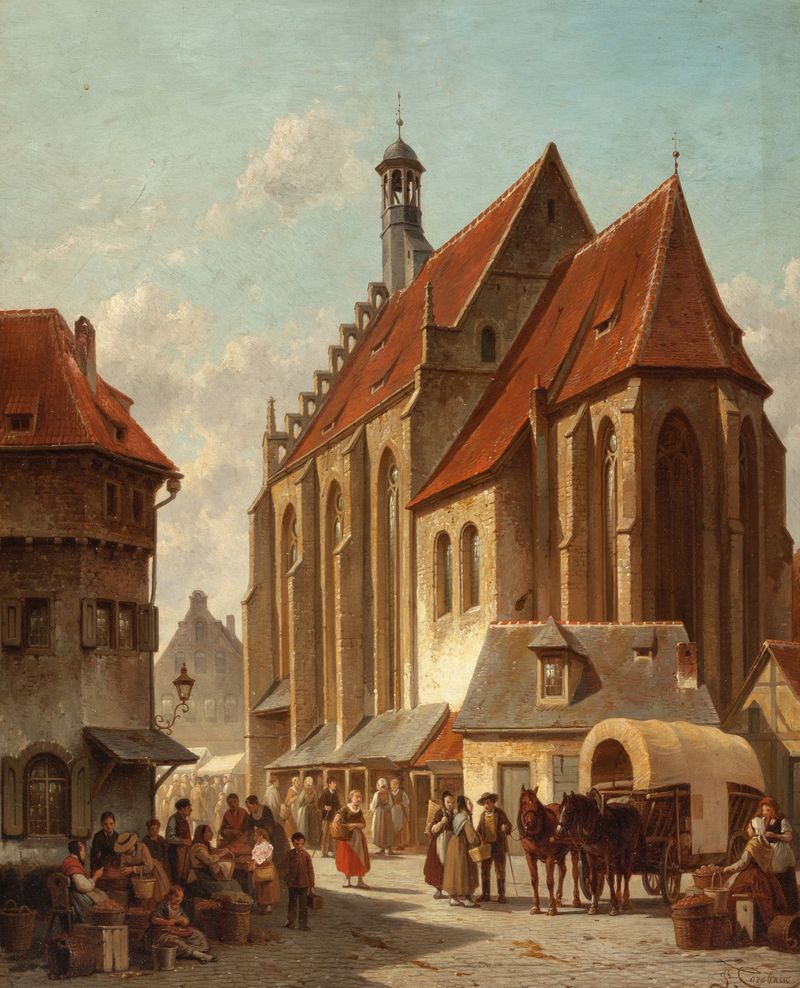
Scene in a Flemish Marketplace
Jacques François Carabain
More Architecture Art
Browse all →
The statue of Liberty
Frédéric Auguste Bartholdi

View of Houses in Delft, Known as ‘The Little Street’
Johannes Vermeer

View of Houses in Delft, Known as ‘The Little Street’
Johannes Vermeer

The Cathedral in Rouen. The portal, Grey Weather
Claude Monet

The yellow house
Vincent van Gogh

The Church in Auvers-sur-Oise, View from the Chevet
Vincent van Gogh