
Market Day, Nuremberg, Germany — History & Facts
Could a single brushstroke hold eternity? In Market Day, Nuremberg, Germany, the echoes of a bustling life blend with an undercurrent of loss that whispers through the vibrant scene. Look to the left at the sun-dappled canvas, where a cacophony of merchants and townsfolk unfurl before the viewer's eyes. The vivid reds and yellows of the vendors’ wares leap forward, while the earthy tones of cobblestone ground anchor the composition. Notice how the light falls upon the figures, casting shadows that seem to dance, suggesting movement and life amid the stillness of the painted moment.
The artist’s delicate brushwork captures the fabric of daily existence, revealing a rich tapestry of social interaction and fervor. Yet, beneath this lively surface, a poignant solitude emerges. The faces of the townspeople, although engaged in their chores, hint at deeper stories—perhaps of longing or unspoken grief. The marketplace, typically a hub of connection, subtly conveys the transitory nature of human experiences; each interaction is fleeting, a reminder of what cannot be held onto.
The juxtaposition of lively colors against the muted expressions evokes a sense of nostalgia, as if the artist is gently mourning the inevitable passage of time. In the 1890s, Carabain worked in an era marked by rapid industrial change and societal shifts. He was creating in Belgium, drawing from influences of the Realist movement and capturing everyday life with keen observation. This was a time when many artists sought to depict the essence of modernity, yet Carabain imbued his scenes with a sensitivity that suggested reflections on loss—the invisible threads connecting people through shared moments that are both vibrant and ephemeral.
More Artworks by Jacques François Carabain
Browse all →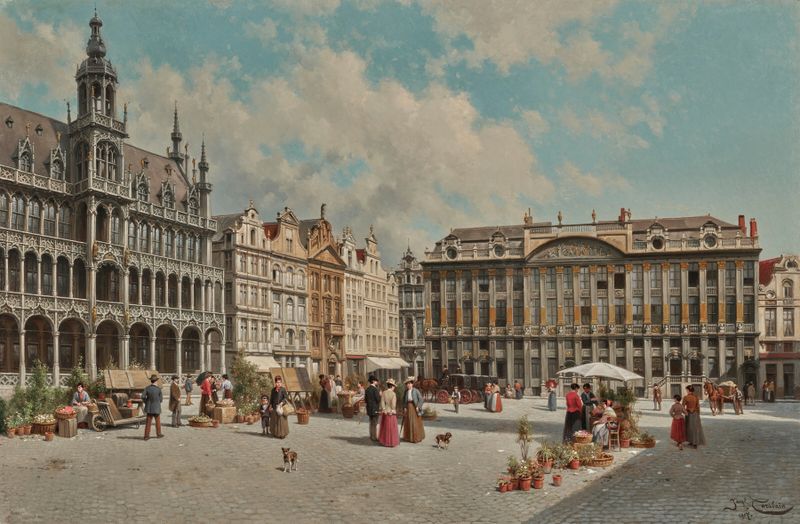
La Grand Place, Brussels
Jacques François Carabain
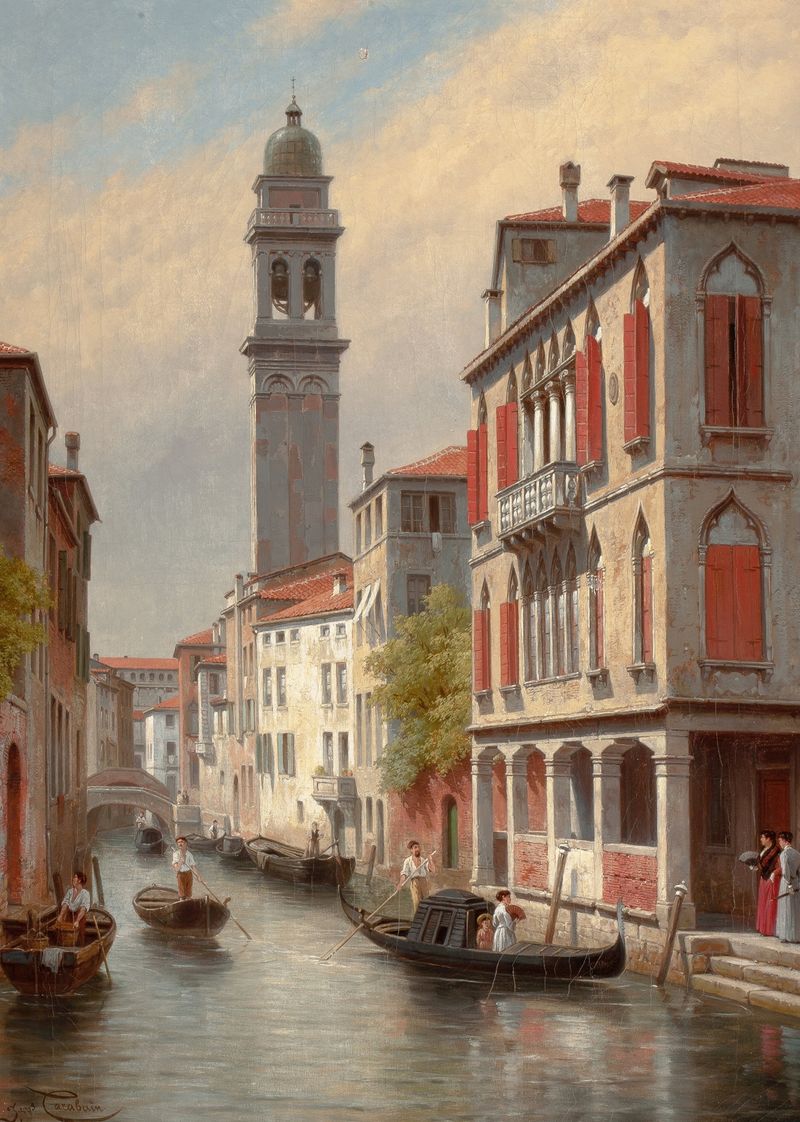
Une Vue a Venise, San Giorgio dei Greci, Italie
Jacques François Carabain
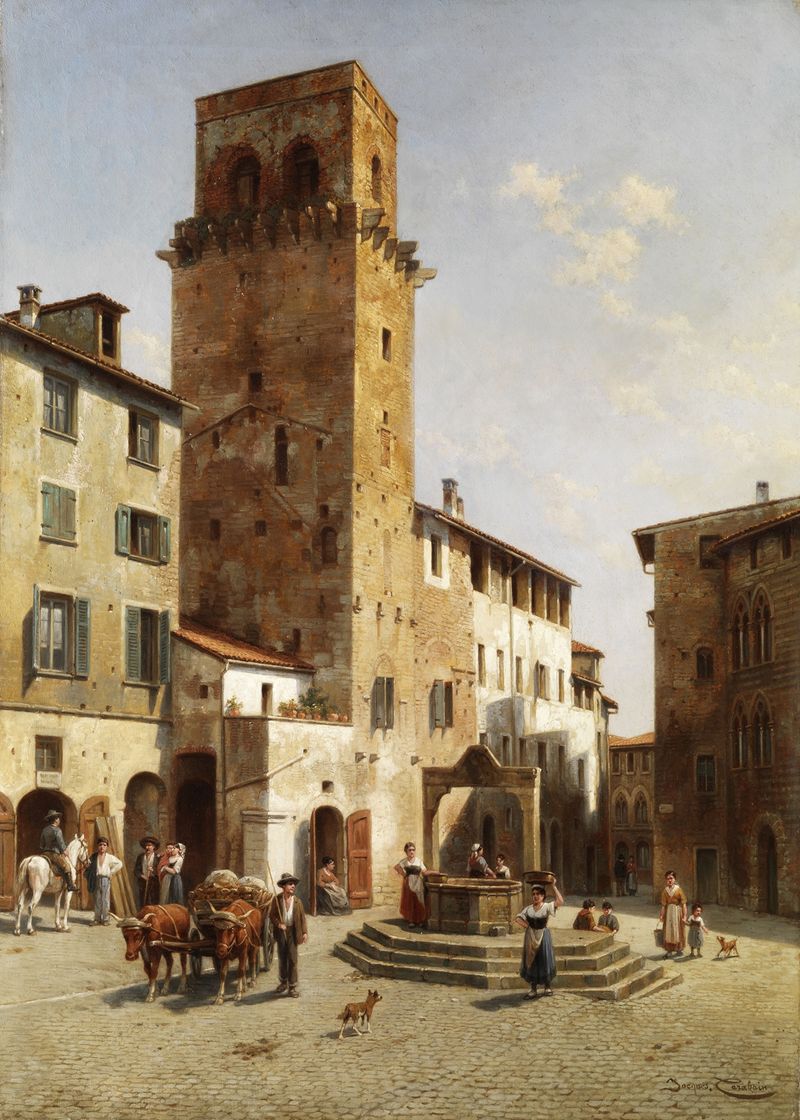
Platz in San Gimignano
Jacques François Carabain

The town square of Braunschweig
Jacques François Carabain

Venice, the Grand Canal
Jacques François Carabain
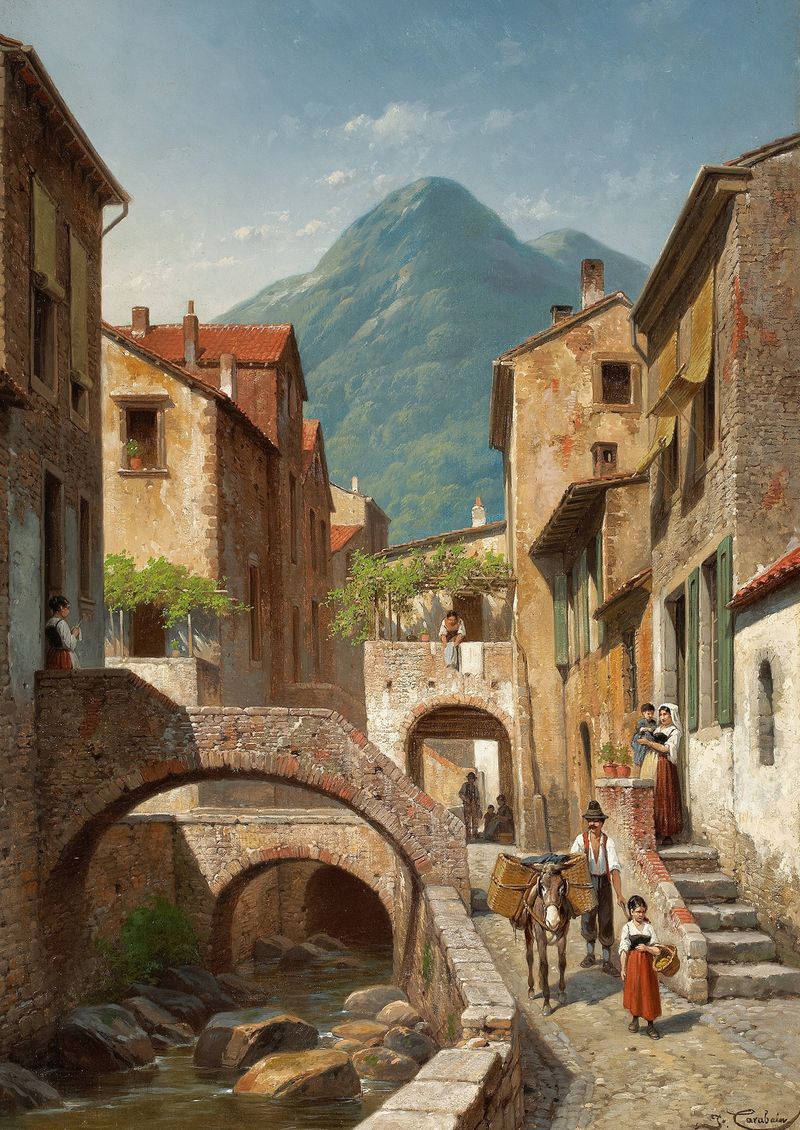
Italian Village Scene
Jacques François Carabain
Rue A Monte-Rosso, Bord De La Mediterrane, Italie
Jacques François Carabain
Scene in a Flemish Marketplace
Jacques François Carabain
Queen Street, Auckland
Jacques François Carabain





