Rain on the Scheldt — History & Facts
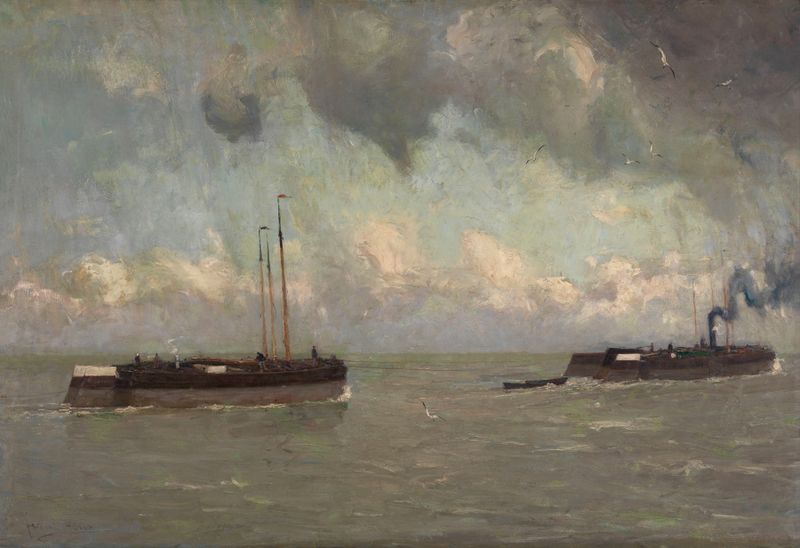
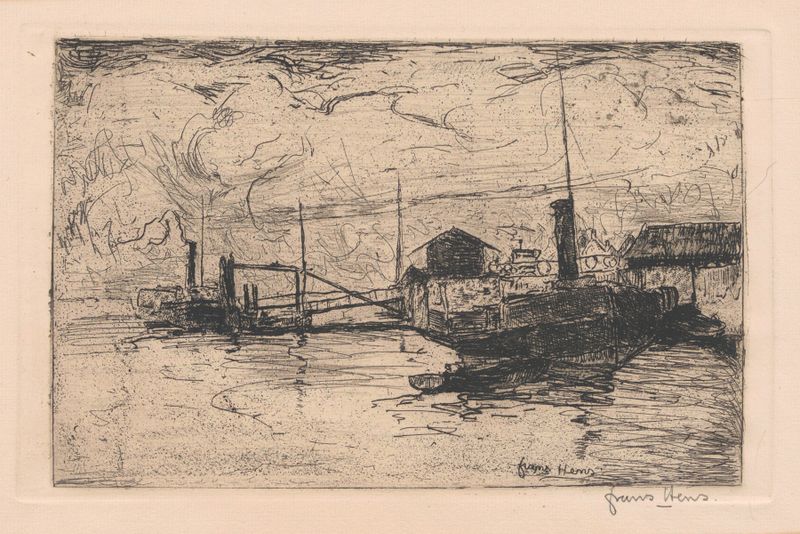
What if beauty was never meant to be finished? In the dance between the serene and the decaying, Rain on the Scheldt invites us to ponder the transient nature of existence. Begin by focusing on the muted palette of grays and blues, where rain blurs the edges of the landscape. The horizon melts softly into the waterway, creating a seamless connection that draws the eye across the canvas. Notice how the delicate strokes capture the movement of the falling rain, each droplet a whisper of nature’s symphony, merging the elements into a cohesive whole.
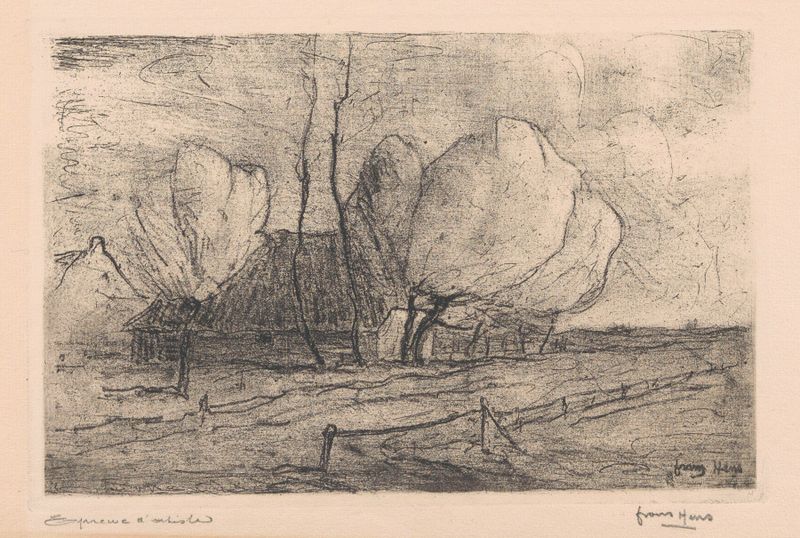
The somber sky looms overhead, its heavy clouds punctuated by fleeting moments of light that challenge the encroaching gloom. Within this scene lies a profound tension between beauty and decay. The water reflects a world in transition, where vibrant life succumbs to the inevitable passage of time. The broken trees along the bank, half-submerged and weathered, serve as metaphors for resilience and fragility, reminding the viewer of the cycle of life.
This juxtaposition evokes a quiet contemplation of loss, as the beauty of the moment hovers precariously, awaiting the next storm. Frans Hens created this evocative masterpiece during an era marked by the burgeoning influence of realism in the late 17th century. Living in the Netherlands, he was influenced by the waterways and landscape that encapsulated both the beauty and the struggle of daily life. This work emerges from a time of artistic transformation, where painters began to embrace the raw, unpolished aspects of nature, capturing not just the picturesque but the fleeting moments that resonate with deeper truths.