Ram Head, North by West — History & Facts
In the shifting landscapes of art, revelation often hides in plain sight, waiting for a discerning eye to unveil its mysteries. Focus on the swirling colors of the sky, where deep blues collide with vibrant oranges, suggesting the chaos of nature and the serenity of its beauty. Notice how the windswept terrain unfolds beneath the ram’s powerful silhouette, the brushstrokes conveying the relentless passage of time. The careful detailing of the ram’s horns draws your gaze, the texture contrasting with the soft, ethereal background—a dance of solid form against the formless sky. The painting speaks of duality—strength and fragility, presence and absence.
The ram embodies the enduring spirit of the wild, yet its isolated position hints at vulnerability, a reminder of nature's quiet, often overlooked struggles. This juxtaposition invites reflection on the relationship between humanity and the untamed world, urging viewers to confront their own role within the vast, indifferent landscape. John Thomas Serres painted this work amid the early 19th century, a time when the Romantic movement was flourishing, celebrating nature's grandeur. Living in England during a period marked by industrial upheaval, his art captures the tension between urbanization and the untouched wilderness, mirroring the anxieties of his contemporaries as they grappled with a rapidly changing world.
More Artworks by John Thomas Serres
Browse all →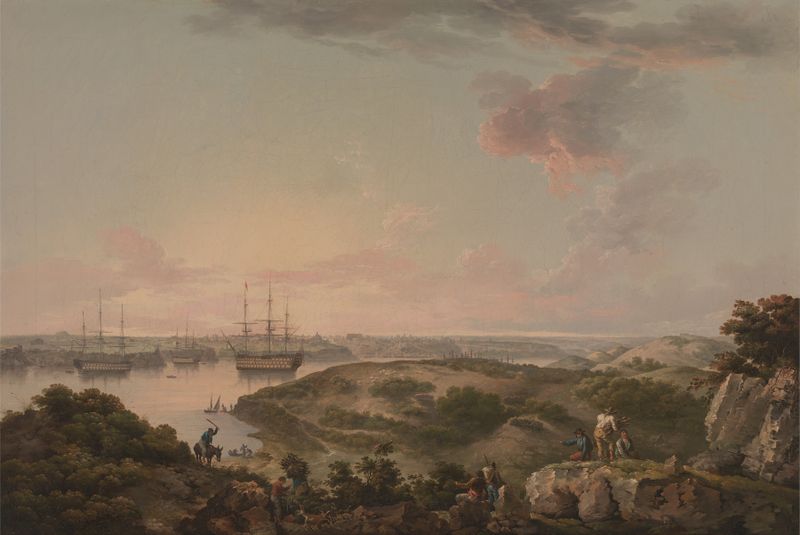
Port Mahon, Minorca with British Men-of-War at Anchor
John Thomas Serres
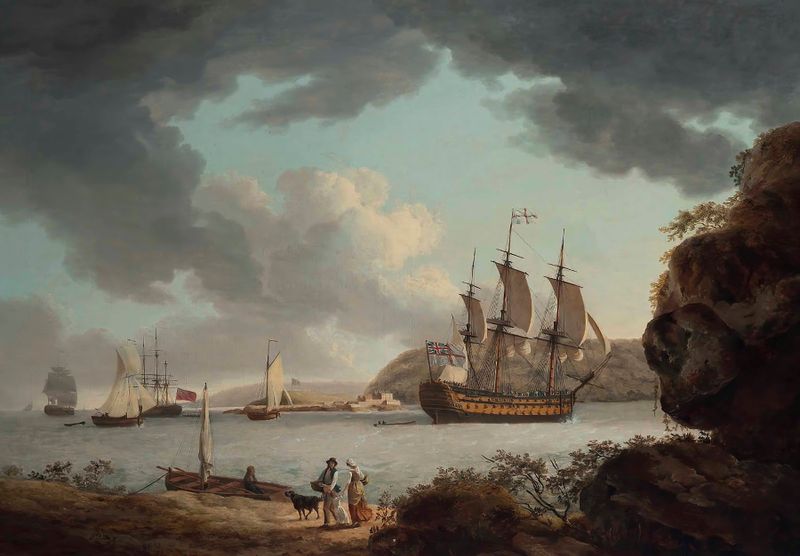
A Flagship Of The White Entering The Hamoaze And Approaching Plymouth Dock With Drake’S Island Off Her Port Quarter
John Thomas Serres
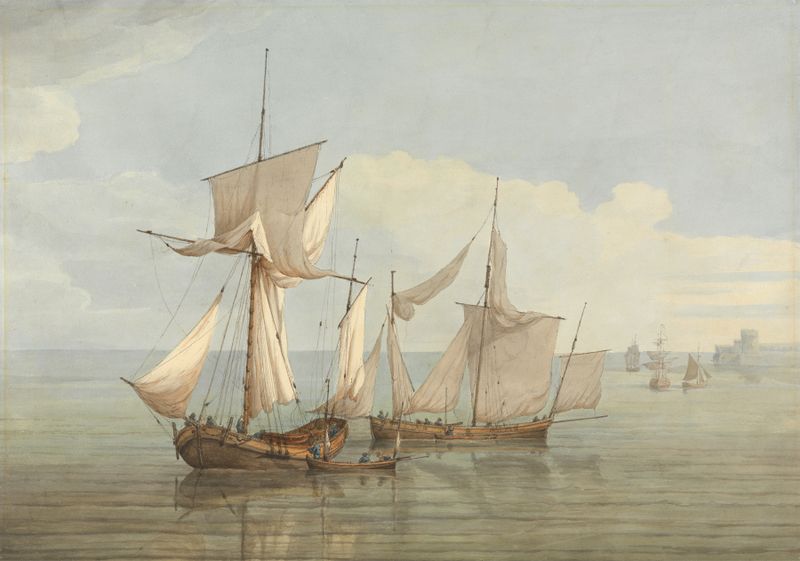
A Hoy and a Lugger with other Shipping on a Calm Sea
John Thomas Serres
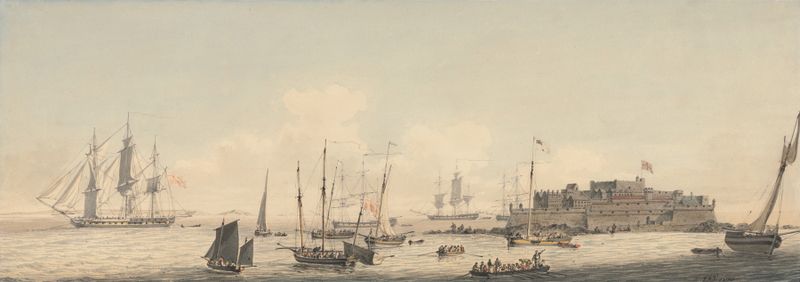
View of Castle Cornet, Guernsey, Channel Islands, with Shipping
John Thomas Serres
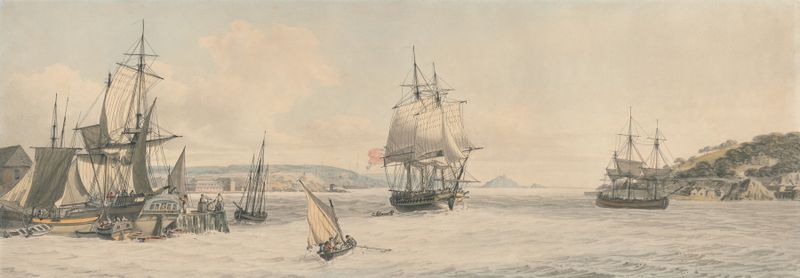
Plymouth Roads
John Thomas Serres

Gibraltar, South West by West
John Thomas Serres
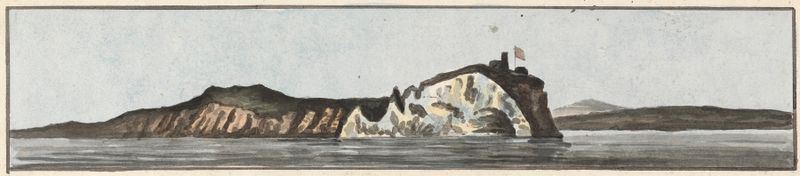
The Needles Bearing East
John Thomas Serres

The South Foreland and Shakespeare’s Cliff
John Thomas Serres

The North Foreland
John Thomas Serres

Gibraltar, The Signal House
John Thomas Serres