
Reiterszene aus dem ungarischen Feldzug — History & Facts
What first grips the eye in Reiterszene aus dem ungarischen Feldzug is the sense of motion—horses and riders burst through a haze of dust, their forms half-dissolved by the swirling air. The lead figure, twisting in the saddle, seems to glance back with urgency, his coat billowing and his mount’s legs flung wide in mid-gallop. The palette is all ochres and muted browns, the ground dry and sparse, the sky a pale wash that leaves the figures silhouetted against a vast, open emptiness.
Each brushstroke in the foreground plants us in the grit of the moment, while the background dissolves into suggestion, as if memory itself is fading at the edges. Painted in 1851, this work stands at the crossroads of history painting and the growing taste for realism that swept through mid-19th-century Europe. Scenes of cavalry and campaign life were in high demand, both as patriotic mementos and as windows onto the realities of war, especially in the wake of the Hungarian conflicts of 1848–49. Artists like August von Pettenkofen found their subjects in the everyday drama of soldiers and horses, not just in the grand clashes of armies.
While little is recorded about the specific journey of this painting—preserved here as a reproduction from an artbook—its restless energy and dust-choked palette invite us to linger, searching for the stories half-hidden in the haze.
Sources: Wikidata Q130753171 · Image source (Wikimedia Commons)
More Artworks by August von Pettenkofen

Der Kuss I
August von Pettenkofen
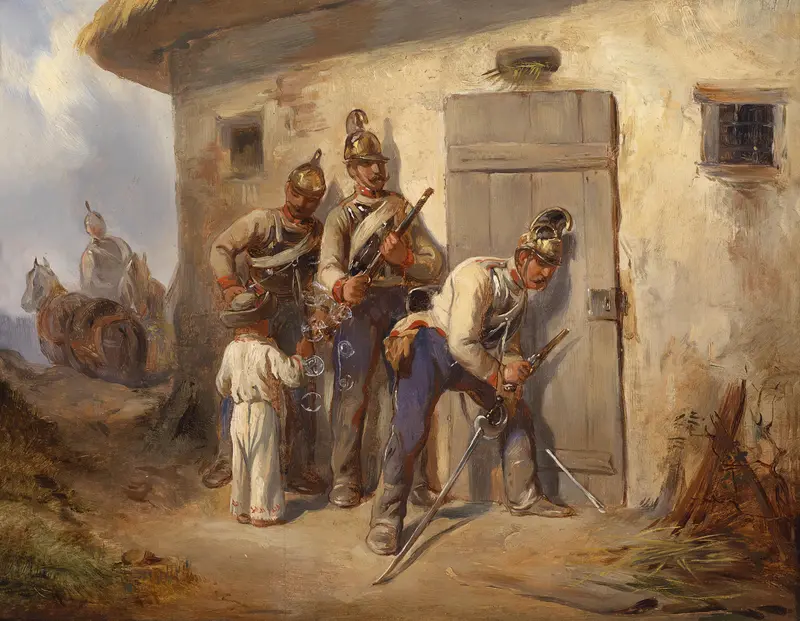
Österreichische Dragoner
August von Pettenkofen
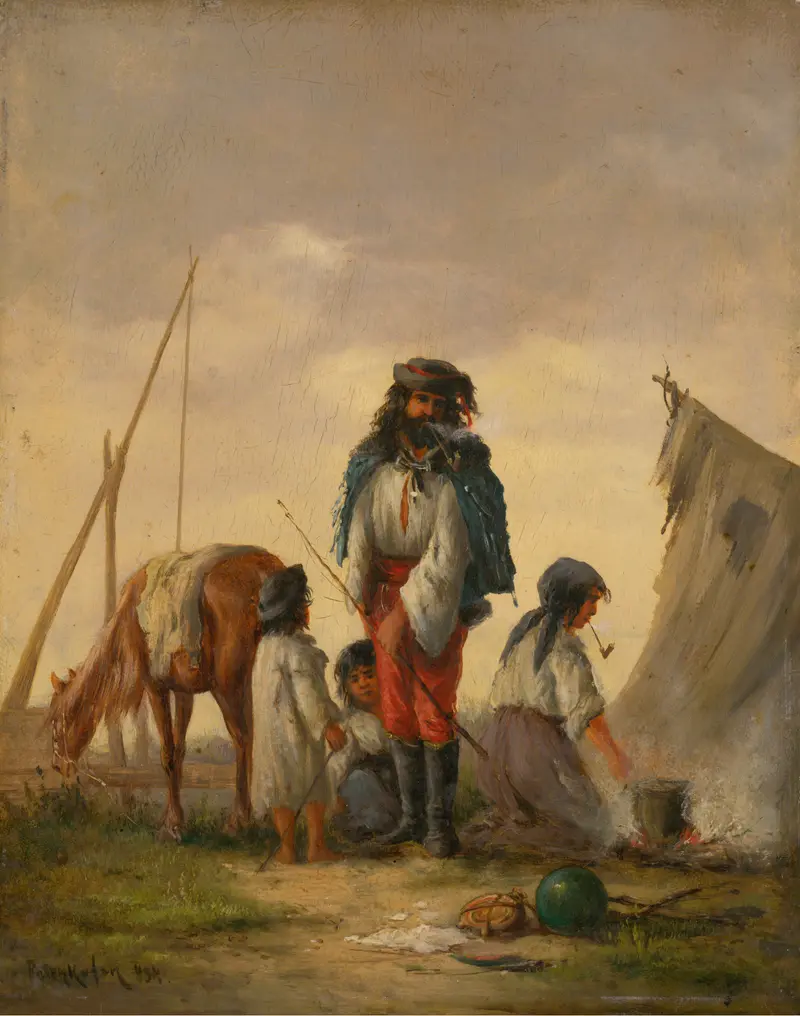
Gypsy Family
August von Pettenkofen
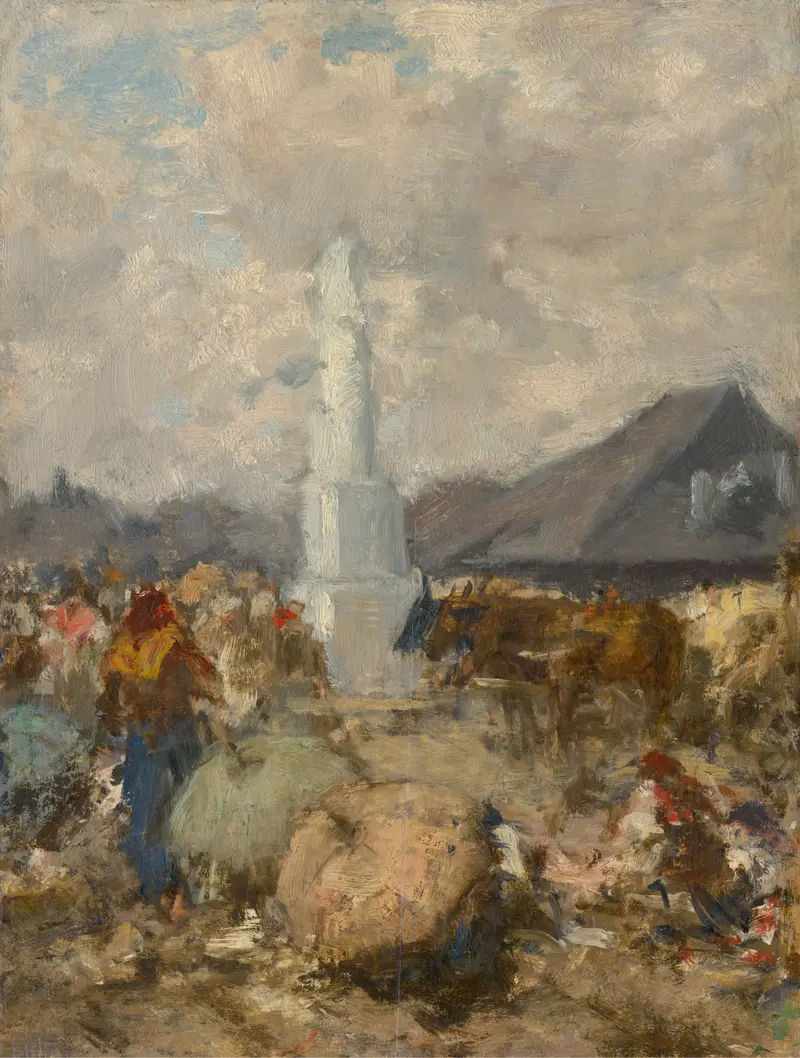
At the Market near the Holy Trinity Column in Szolnok
August von Pettenkofen
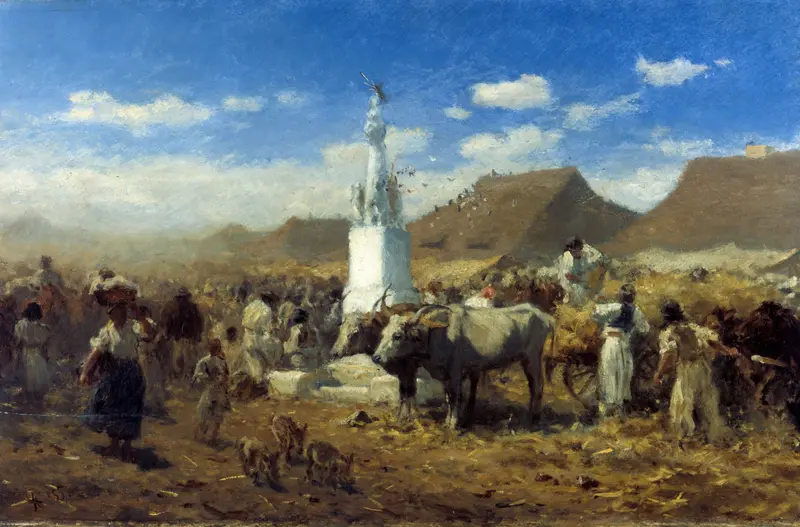
Fair in Szolnok (Market Day)
August von Pettenkofen
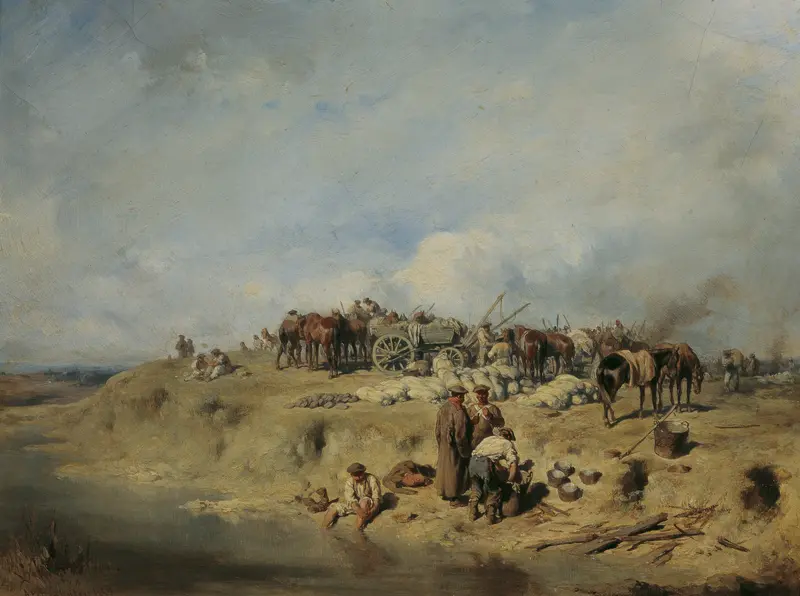
Biwak russischer Soldaten
August von Pettenkofen
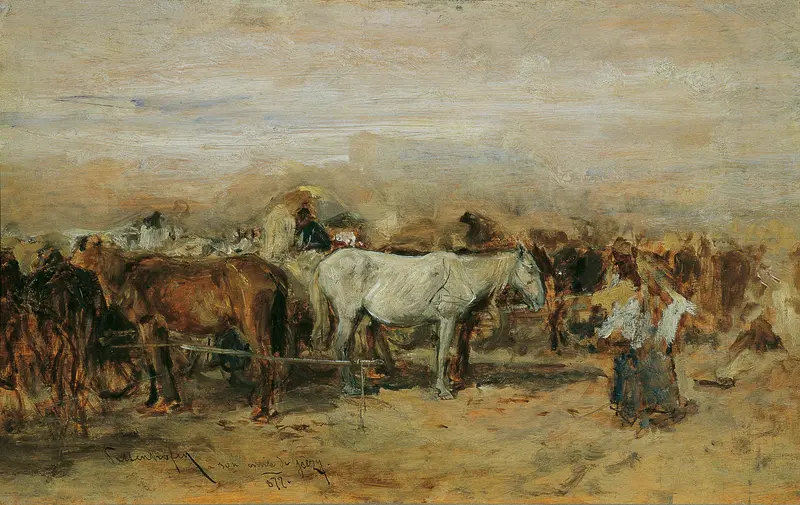
Pferdemarkt in Szolnok II
August von Pettenkofen
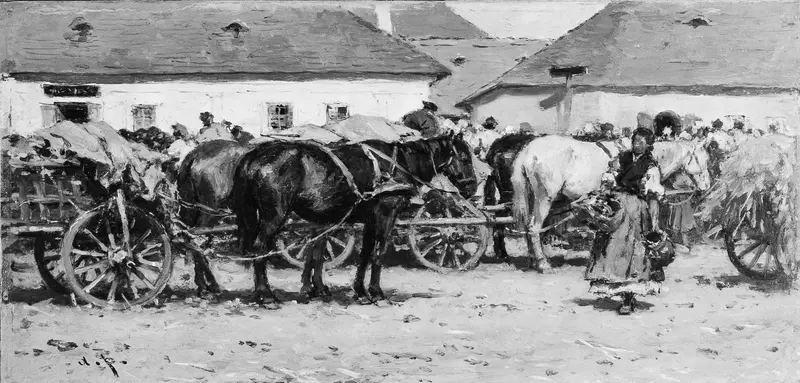
Market Scene
August von Pettenkofen
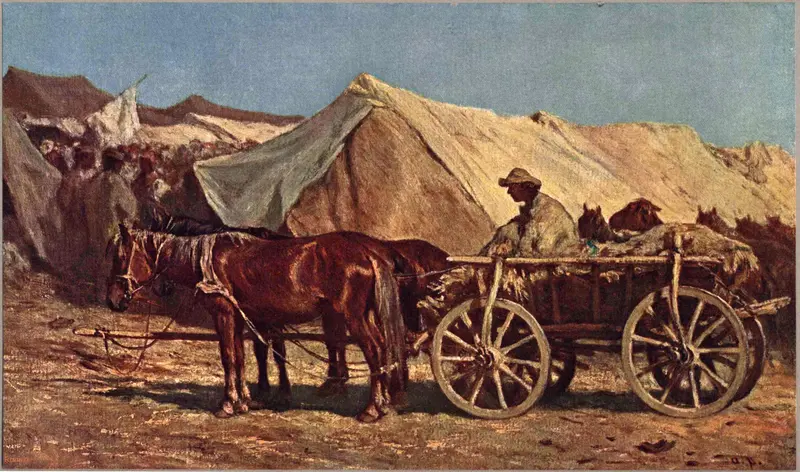
Ungarischer Markt
August von Pettenkofen
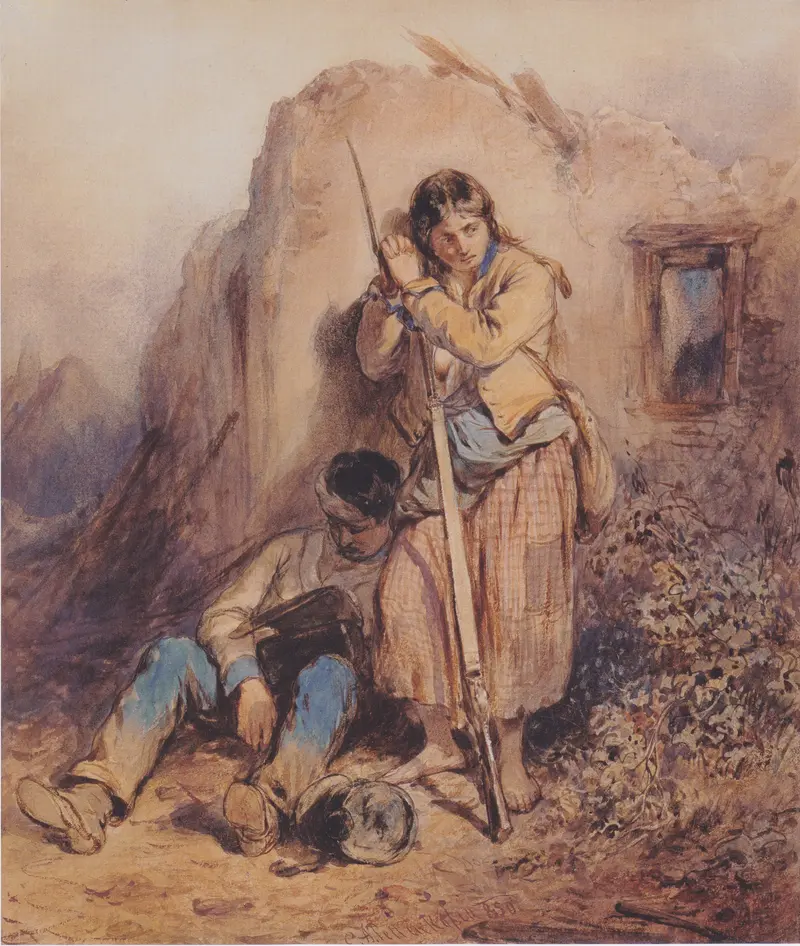
Ruhende Soldaten im ungarischen Feldzug
August von Pettenkofen





