At the Market near the Holy Trinity Column in Szolnok — History & Facts
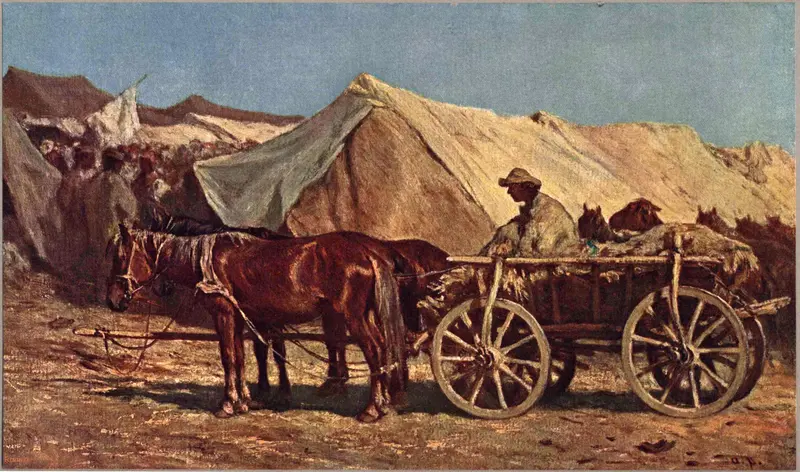
What draws the eye first in At the Market near the Holy Trinity Column in Szolnok is not a single figure, but the way the painter lets the scene dissolve into atmosphere and movement. The pale monument rises like a beacon at the heart of the canvas, its form softened by the brushwork, while the bustle of market life churns around it in earthy, restless tones. Rather than crisp outlines, August von Pettenkofen gives us the suggestion of people and animals, the sense of a crowd gathering and dispersing, the energy of commerce and conversation.
The sky, painted in broad, swirling strokes, presses down with a heavy, mutable light, as if the weather itself is part of the day’s negotiations. Every patch of color and every blurred gesture asks the viewer to linger, to search for stories in the haze. Works like this, created between 1865 and 1875, belong to a moment when artists across Europe were turning their attention to the everyday lives of rural communities. In Hungary, scenes of markets and village squares became a way to capture both national character and the rhythms of ordinary existence.
Pettenkofen, known for his sympathy toward peasant life, often painted outdoors, working quickly to seize the fleeting qualities of light and movement. The painting’s loose, impressionistic style reflects the influence of broader European trends, yet its subject is unmistakably local—a market at the foot of a holy column, a familiar landmark in towns like Szolnok. Though history has left few traces of this specific canvas beyond its presence in the Web umenia online catalog, its rough vitality invites us to imagine the sounds, scents, and exchanges that once filled this square.
Sources: Wikidata Q50692456 · Image source (Wikimedia Commons)
More Artworks by August von Pettenkofen

Der Kuss I
August von Pettenkofen
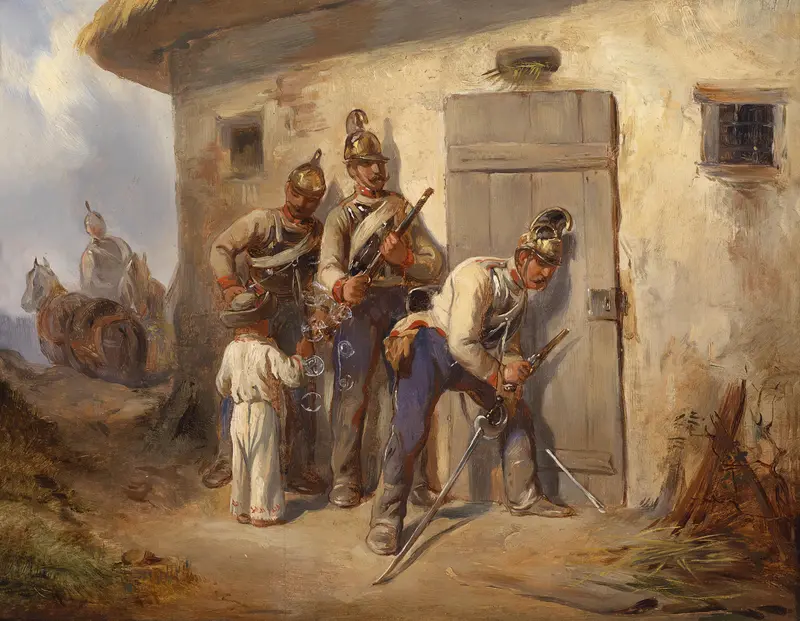
Österreichische Dragoner
August von Pettenkofen
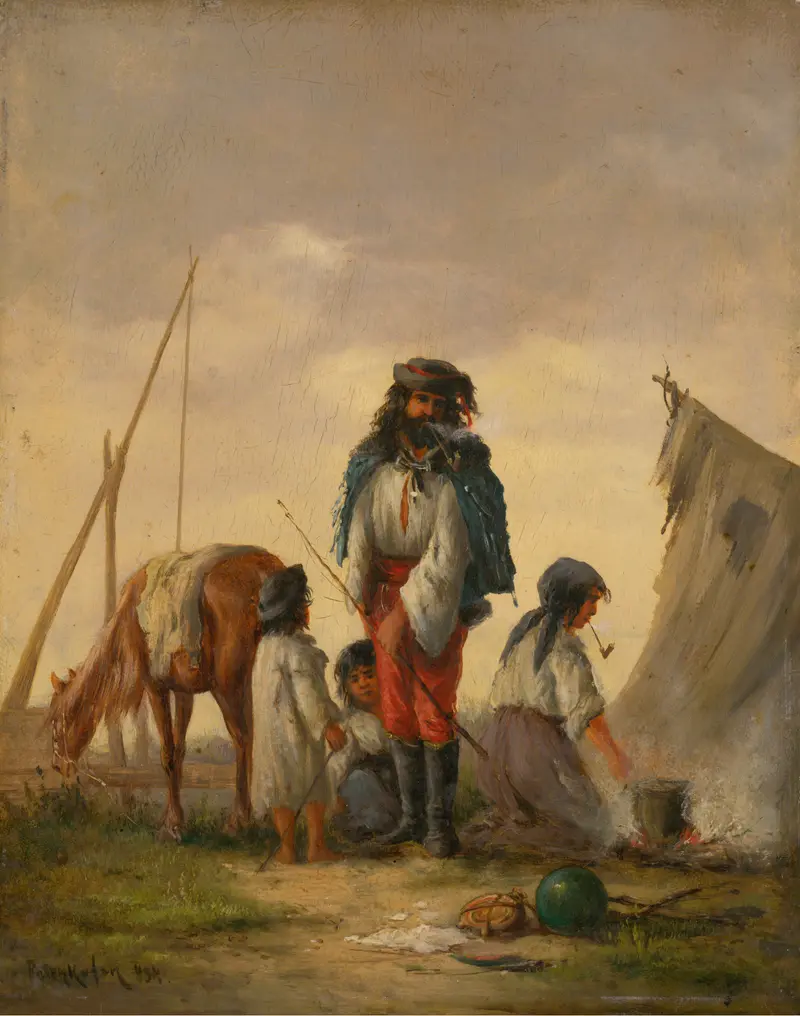
Gypsy Family
August von Pettenkofen
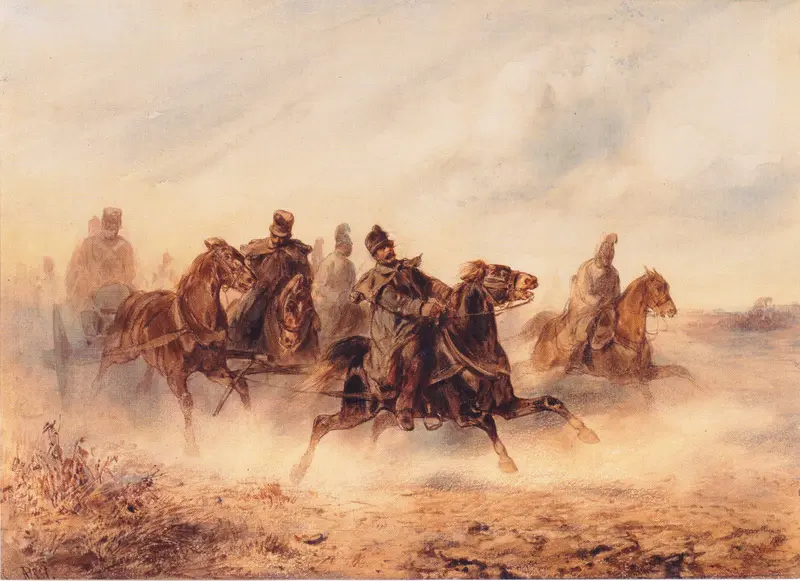
Reiterszene aus dem ungarischen Feldzug
August von Pettenkofen
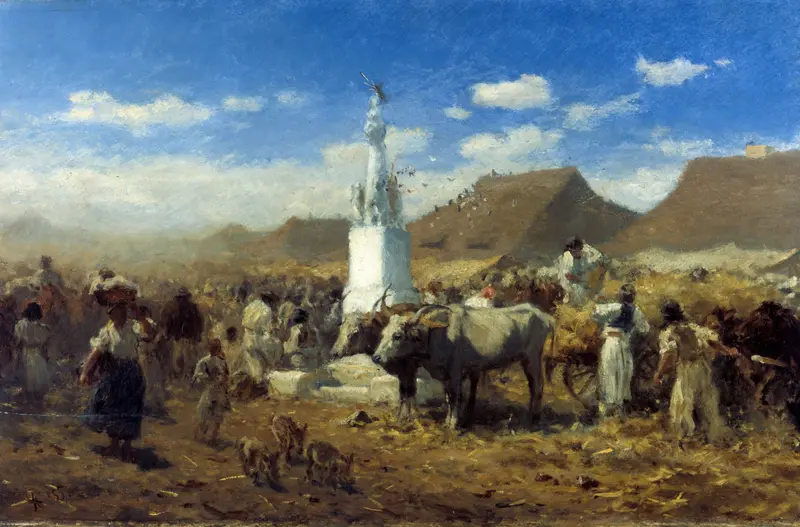
Fair in Szolnok (Market Day)
August von Pettenkofen
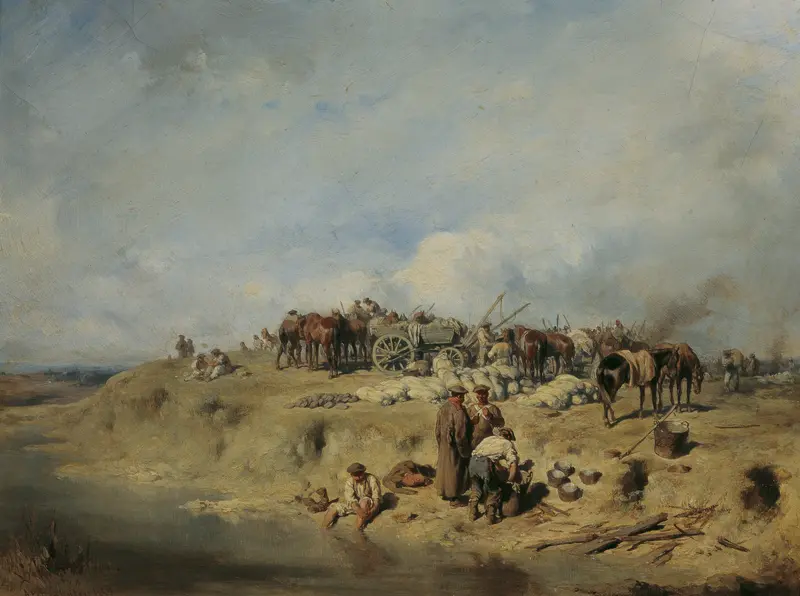
Biwak russischer Soldaten
August von Pettenkofen
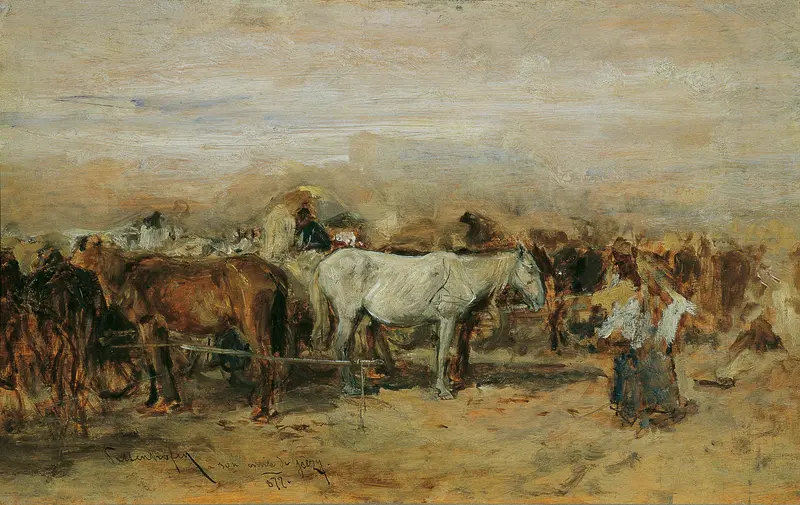
Pferdemarkt in Szolnok II
August von Pettenkofen
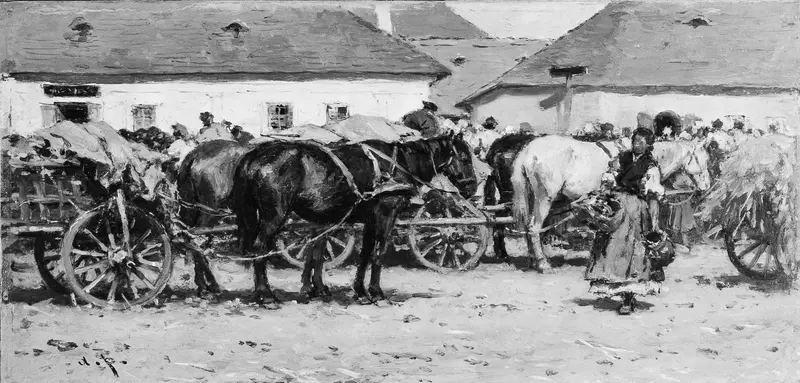
Market Scene
August von Pettenkofen
Ungarischer Markt
August von Pettenkofen
Ruhende Soldaten im ungarischen Feldzug
August von Pettenkofen