Restaurant Cavalier — History & Facts
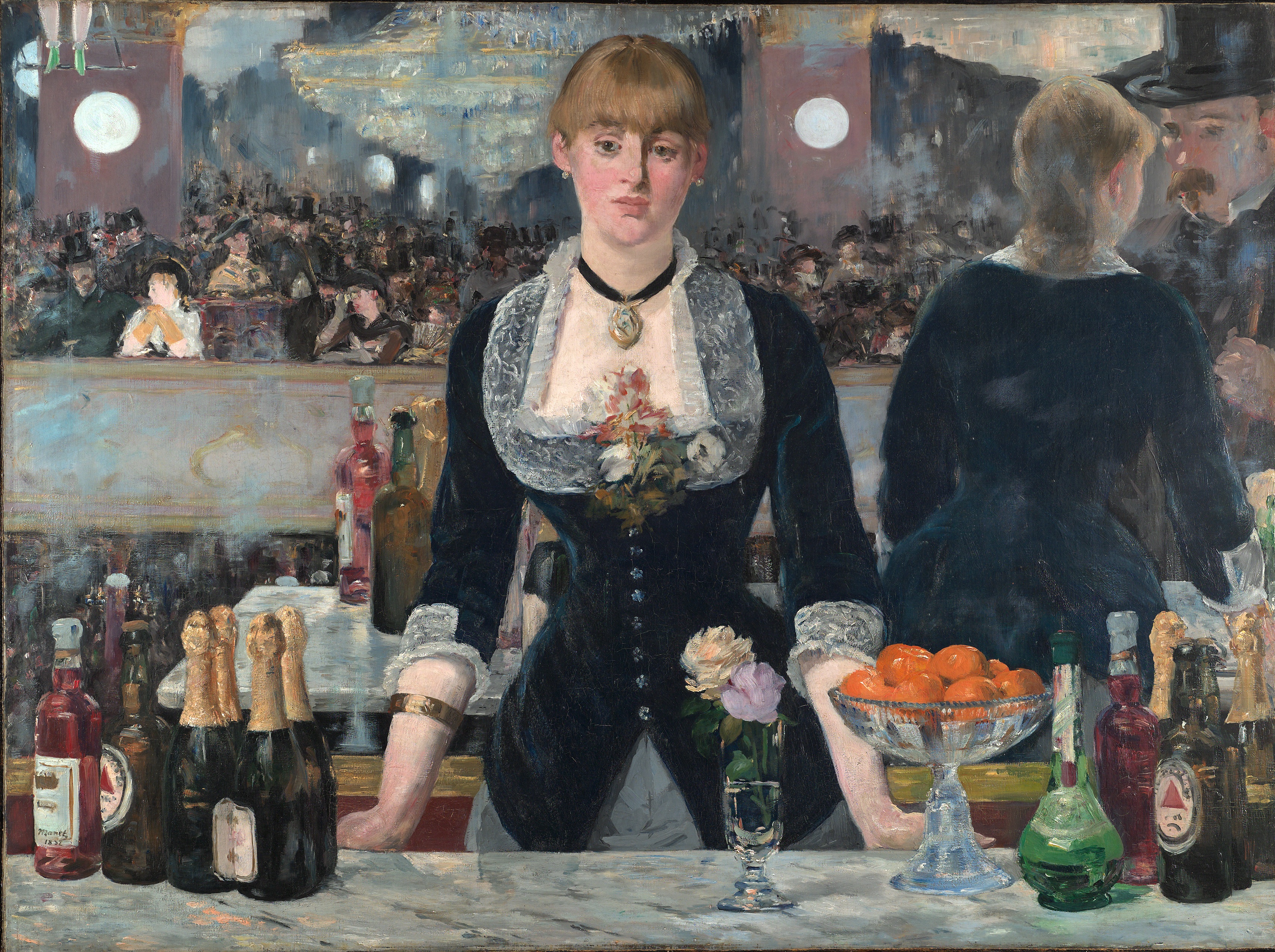
In the realm of artistry, voids can hold profound beauty, echoing the delicate interplay between absence and presence. Focus first on the bold strokes that define the contours of Restaurant Cavalier, sweeping your gaze across the canvas. The warm hues of ochre and gold envelop the scene, evoking a sense of intimacy and warmth. Notice how the light dances across the surfaces, creating a soft glow that invites viewers into a world both inviting and elusive.
The careful placement of figures—diners lost in conversation—suggests a vibrant life, yet the space around them feels expansive, hinting at the emptiness that coexists with their presence. Dig deeper into the painting's emotional landscape. The harmonious blend of colors creates a serene atmosphere, yet the voids of unoccupied space around the figures speak to the loneliness that can pervade even the liveliest of places. Each brushstroke captures a moment frozen in time, while simultaneously hinting at what lies beyond the frame—a narrative unfolding in silence.
The contrasts between light and shadow, filled and unfilled spaces, capture the essence of human connection and isolation. In 1904, David Young Cameron painted this work during a period of personal and artistic evolution. Living in Scotland, he was experimenting with the interplay of light and form, drawing inspiration from the Impressionist movement and the burgeoning modernist trends of his time. This painting reflects both his skill and the cultural shifts occurring in the art world, where traditional forms were giving way to a more expressive and subjective approach.
More Artworks by David Young Cameron
Browse all →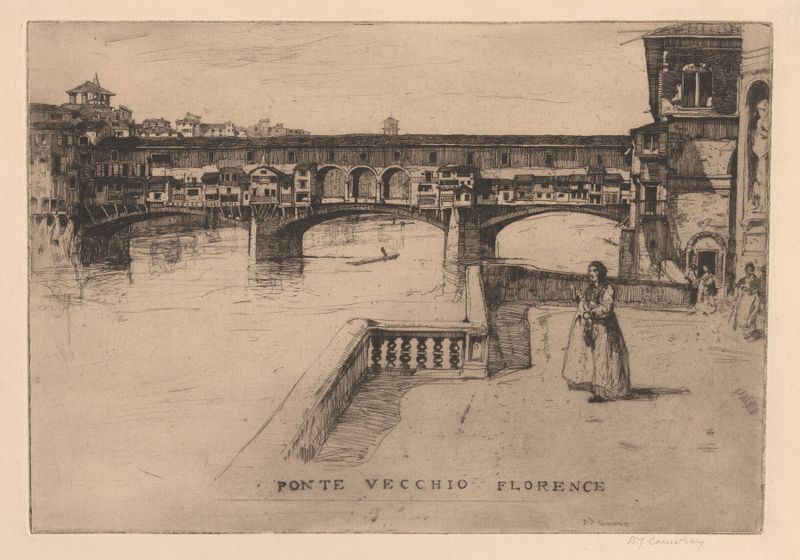
Ponte Vecchio
David Young Cameron

The Deanery, Winchester
David Young Cameron
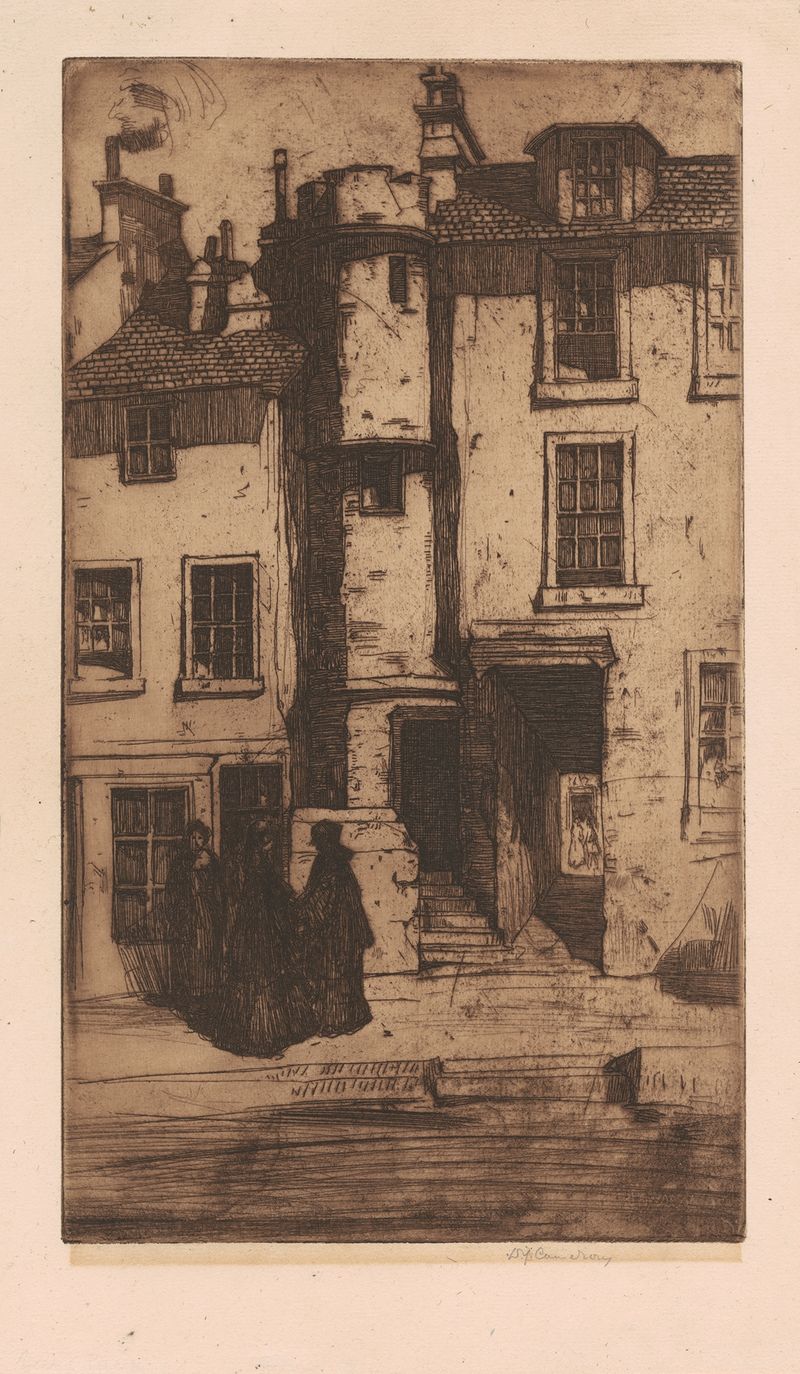
Old Houses, Stirling
David Young Cameron
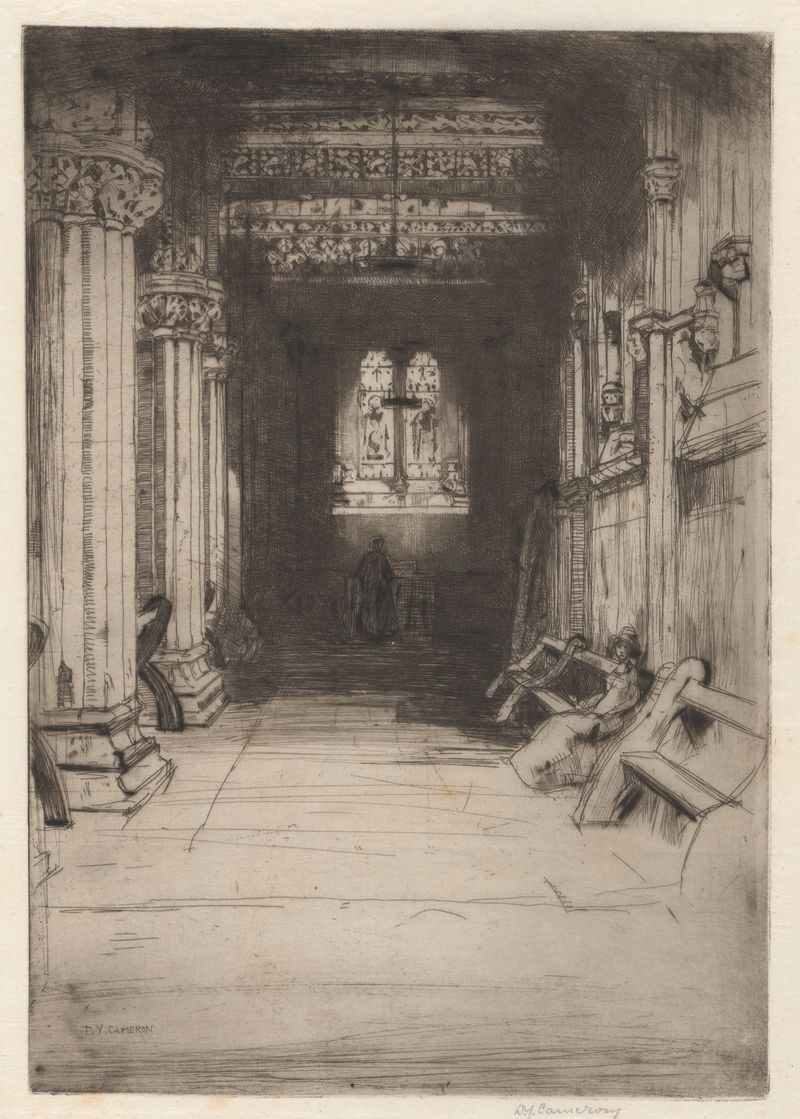
Rosslyn Chapel
David Young Cameron

The Old Museum, Beauvais
David Young Cameron
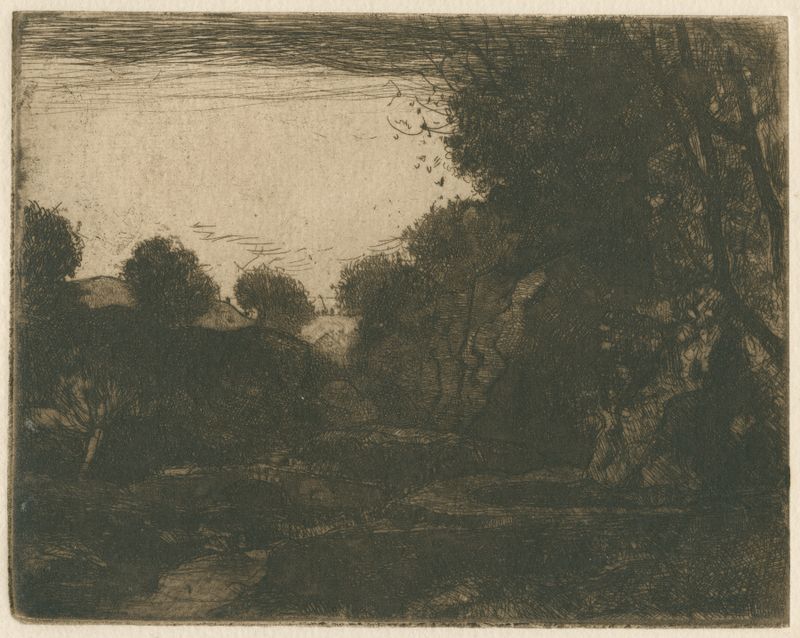
On the Bradford
David Young Cameron

The Smithy
David Young Cameron
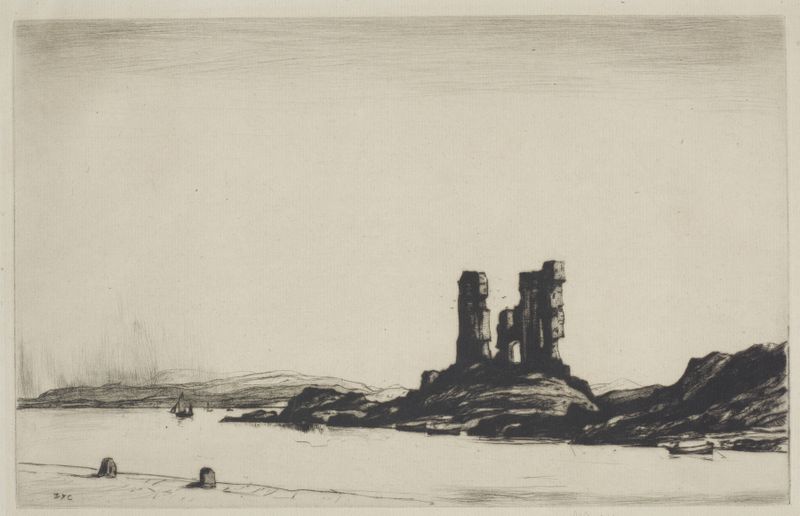
Castle Moyle
David Young Cameron
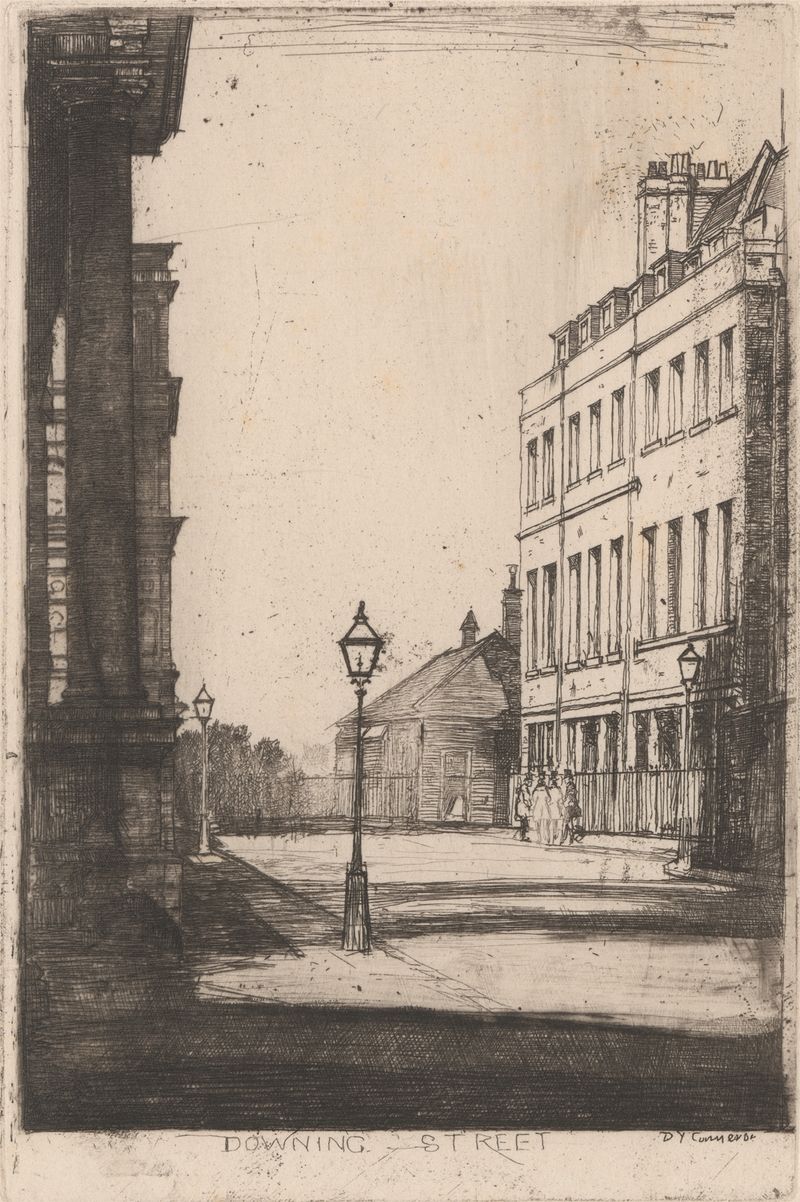
Downing Street
David Young Cameron

Glasgow Cathedral
David Young Cameron