River Gorge, Autumn — History & Facts
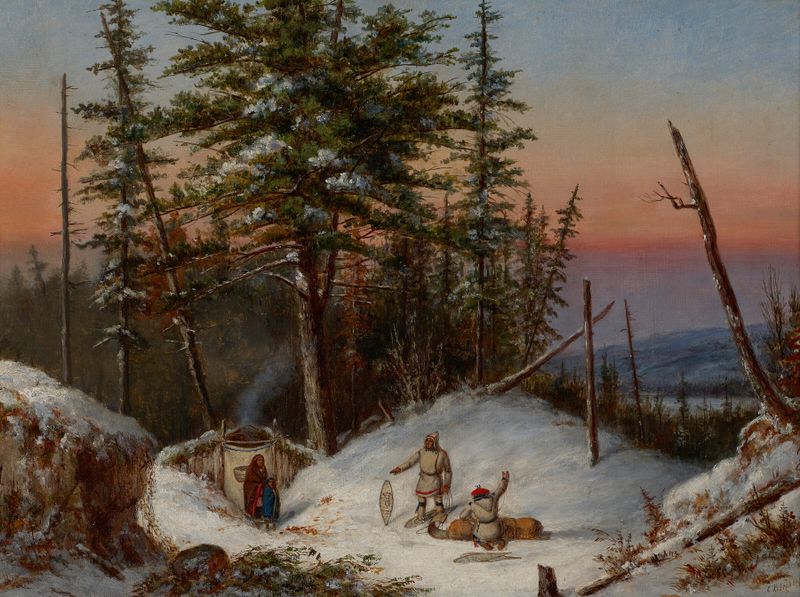
When did color learn to lie? In the embrace of autumn, hues blend not just to reflect nature's splendor but to fill a void that echoes deeper truths. Look to the left at the vibrant oranges and deep reds painting the foliage, each brushstroke laden with emotion. The river carves through the canvas, its cool blue contrasting sharply with the warm tones of the trees, suggesting a delicate balance between warmth and isolation. Notice how the sunlight dapples the surface of the water, creating a shimmering path that seems to guide the viewer into the scene, while the dark undercurrents below hint at hidden depths. Here, the juxtaposition of life and decay emerges; the brilliant foliage is a reminder of fleeting beauty, while the turbulent waters symbolize the relentless passage of time.
Krieghoff captures not just the moment but the tension between the vibrant exterior and the void it conceals. The reflections in the water serve as metaphors for introspection, leading us to question what lies beneath the surface of even the most picturesque scenes. In 1858, Krieghoff was living in Canada, deeply inspired by the landscapes surrounding him. This period marked his exploration into capturing not just the visual splendor of nature but its emotional resonance.
As the art world shifted towards realism, he sought to evoke the sublime beauty of the Canadian wilderness, intertwining his personal reflections with the broader narrative of a changing landscape.