Settler’s Log House — History & Facts
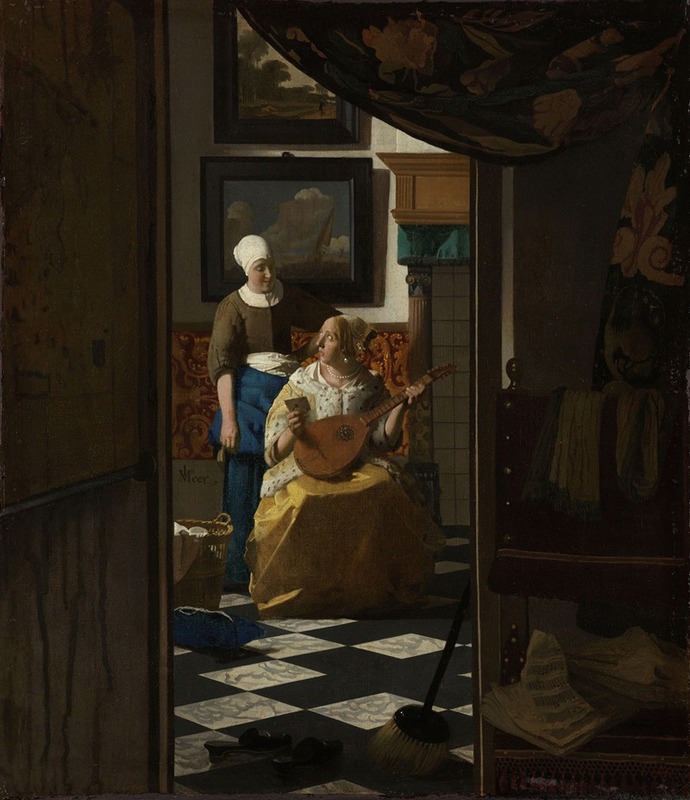
Is this a mirror — or a memory? The past echoes within the weathered walls of a humble dwelling, inviting contemplation on the fragility of life and the permanence of our surroundings. Look to the left at the rough-hewn logs, each one a testament to labor and survival. The earthy tones of browns and greens blend seamlessly with the soft, muted light pouring in through the small window. Notice how the shadows dance across the floor, hinting at stories long forgotten.
A sparse table stands center stage, adorned only with the essentials, drawing the eye toward the symbol of simple existence amidst the quiet turmoil of the world outside. The juxtaposition of the log house against the vast, untamed wilderness speaks to the tension between civilization and nature. Each crack and crevice in the wood seems to whisper of lives lived and lost, encapsulating the inevitability of mortality. The small, flickering light from an unseen source hints at warmth and comfort, yet also serves as a reminder of the transient nature of human endeavor, as fleeting as the fading daylight. In 1856, while creating this work, the artist found himself in Canada, a land of burgeoning settlements and rich storytelling.
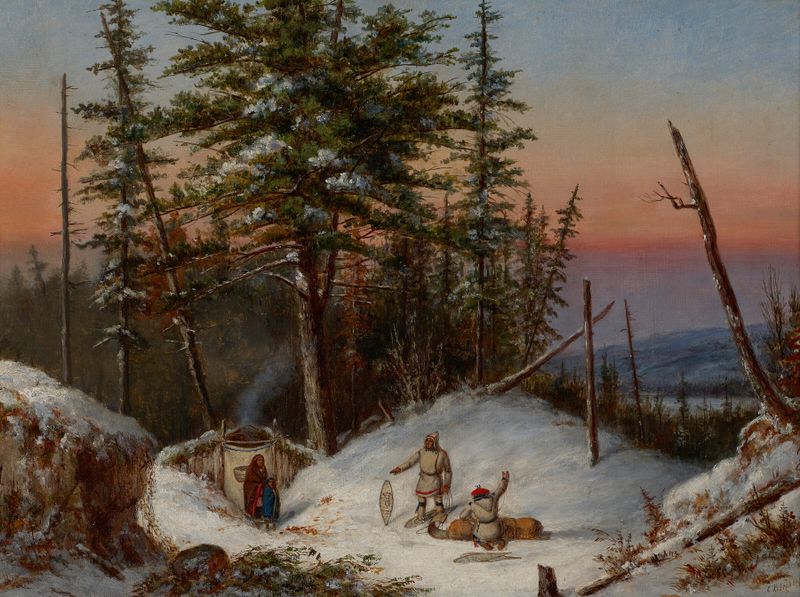
Cornelius David Krieghoff captured the essence of his surroundings during a time when artists began to explore the intersection of daily life and the vast wilderness. The year marked a period of transformation in North America, reflecting both the challenges faced by settlers and the beauty of their environments, thus anchoring his artwork in a pivotal moment of cultural evolution.