Trappers on the Frontier — History & Facts
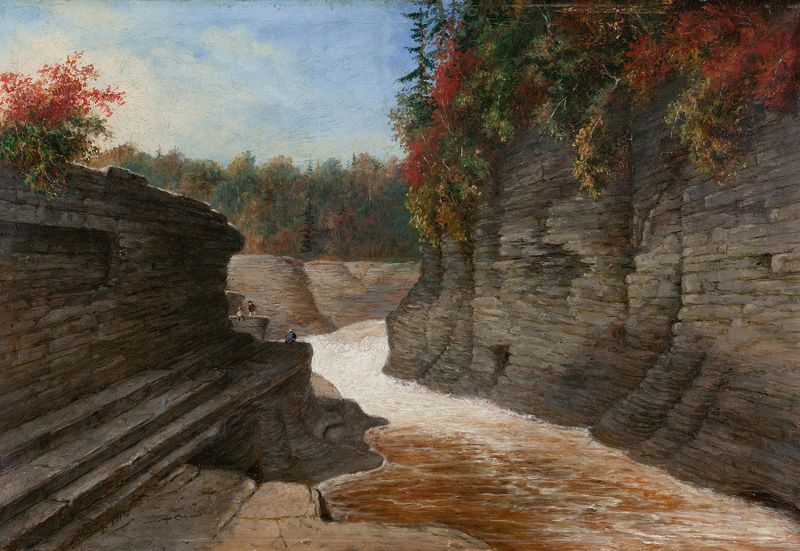
Can beauty exist without sorrow? In the rugged expanse of wilderness, where nature’s majesty intertwines with the struggles of survival, the answer is as elusive as the wind. Focus on the foreground, where a group of trappers navigates the untamed landscape; their worn faces and rugged attire speak volumes about the chaos and hardship they endure. Notice the carefully rendered textures of their clothing, each fold and crease a testament to labor. The muted palette of earthy browns and deep greens frames the figures, while the hints of crisp white snow introduce a stark contrast that captures the biting chill of the environment.
The composition draws the viewer's eye across the canvas, from the determined trappers to the sprawling wilderness that surrounds them. Yet, within this apparent harmony lies an undercurrent of tension. The juxtaposition of the trappers' labor and the vast, indifferent wilderness evokes a poignant sense of isolation and struggle. The stillness of the snow-laden trees stands in stark contrast to the dynamic movement of the figures, hinting at the chaos underlying the beauty of their existence.
This duality reflects the intricate relationship between man and nature—a dance of survival amidst the relentless forces of the wild. Painted during a time of profound change in the mid-19th century, the artist was deeply influenced by the growing fascination with North America's untamed landscapes. Working in Canada, Krieghoff captured the essence of frontier life, reflecting the hardships faced by settlers and trappers amid the expansion of a nation. His work not only chronicled a moment in time but also served to explore the evolving identity of a land and its people.