The Artist at Niagara — History & Facts
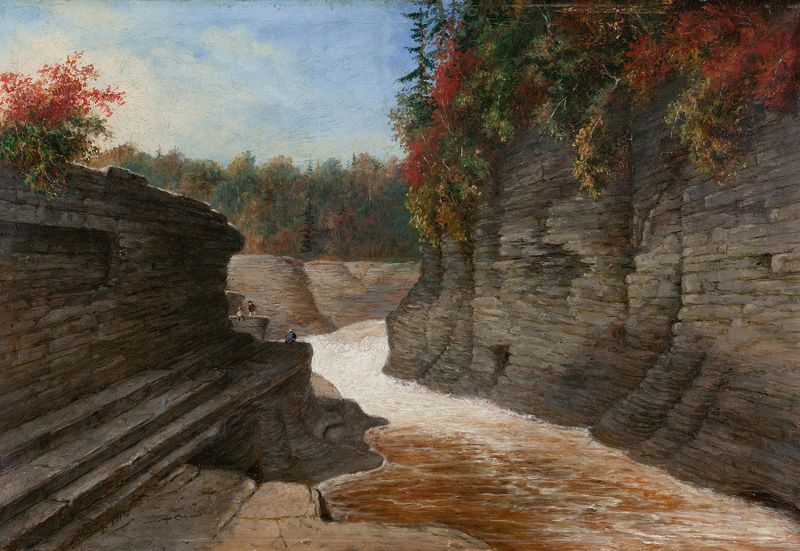
What secret hides in the quiet of the canvas? A stillness lingers, concealing the weight of unspoken truths and unrealized dreams. Look to the center, where a figure stands poised before the thundering cascade of Niagara Falls. Notice the way the vibrant greens and soft blues intertwine, capturing the essence of nature's power juxtaposed against the artist's solitary presence. The meticulous brushwork brings texture to the rocks and movement to the water, drawing your gaze toward the tumultuous rush of the falls, both beautiful and terrifying. As you explore further, contemplate the distance between the artist and the natural wonder before him.
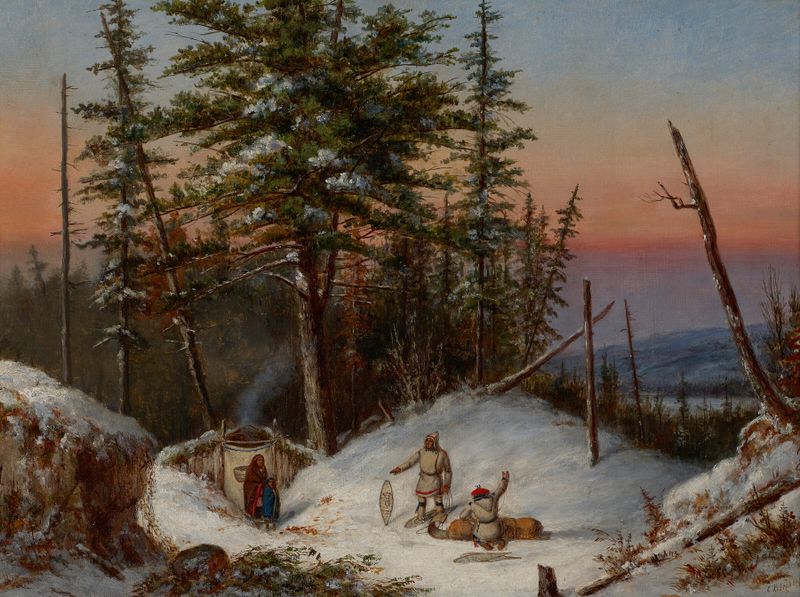
This scene encapsulates a tension between the exhilaration of creation and the isolation it can impose. The figure’s unassuming stance suggests a moment of contemplation, as if he is grappling with feelings of betrayal—both from the world he observes and the artistic ideals he strives to embody. The light filtering through the mist hints at an ethereal quality, suggesting that the beauty of the scene may also cloak deeper emotional currents. Cornelius David Krieghoff created this piece in 1858 while establishing himself in Canada, a time when the world of art was shifting towards impressionist ideals.
Amidst his growing reputation and the burgeoning Canadian art scene, he sought to capture the rugged beauty of his new homeland, reflecting both personal and collective responses to the rapidly changing landscape of the 19th century.