
River Landscape — History & Facts
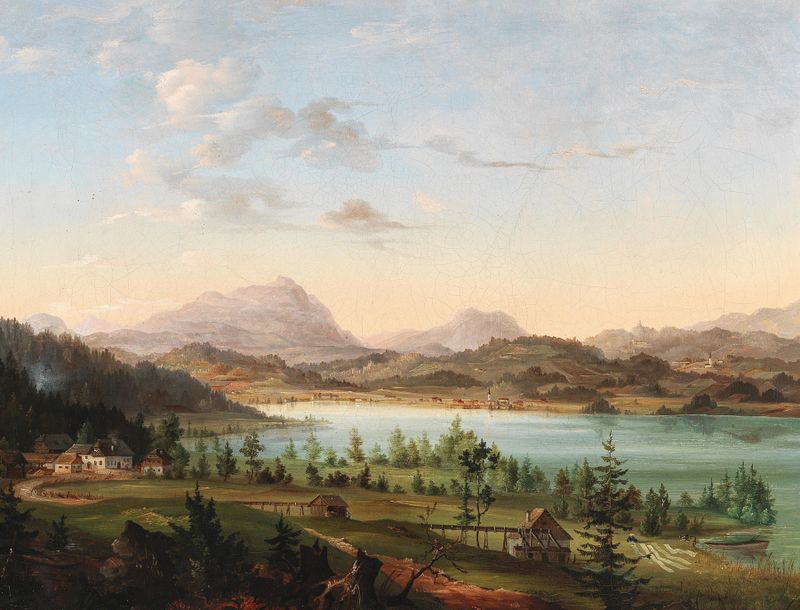
Did the painter know this moment would outlive them? As the brush met the canvas, the essence of decay intertwined with the beauty of nature, a fleeting whisper captured for eternity. Look to the foreground, where the river winds languidly, its gentle currents reflecting the delicate hues of twilight. Notice the soft interplay of blues and greens that evoke tranquility, contrasting sharply with the crumbling banks that suggest the slow passage of time. The trees, swaying slightly in an imagined breeze, create a natural frame, guiding the viewer’s eye deeper into the serene landscape. Yet beneath the serene exterior lies a poignant tension.
The dilapidated structures on the riverbank remind us of human impermanence against the backdrop of an ever-changing natural world. The juxtaposition of life and decay invites contemplation on the inevitable cycle of birth, growth, and dissolution. Each brushstroke resonates with both nostalgia and acceptance, compelling us to reflect on our own transient existence. Created during an unspecified period in River Landscape, the artist embraced a picturesque style that mirrored the romantic ideals of his time.
Willroider's work emerged when the Romantic movement was flourishing, emphasizing nature’s beauty while subtly acknowledging its fragility. The tranquility of this scene stands in stark contrast to the emerging industrialization of the late 19th century, encapsulating a poignant moment where art, nature, and the specter of decay intersect.
More Artworks by Josef Willroider
Browse all →
An der Isar
Josef Willroider
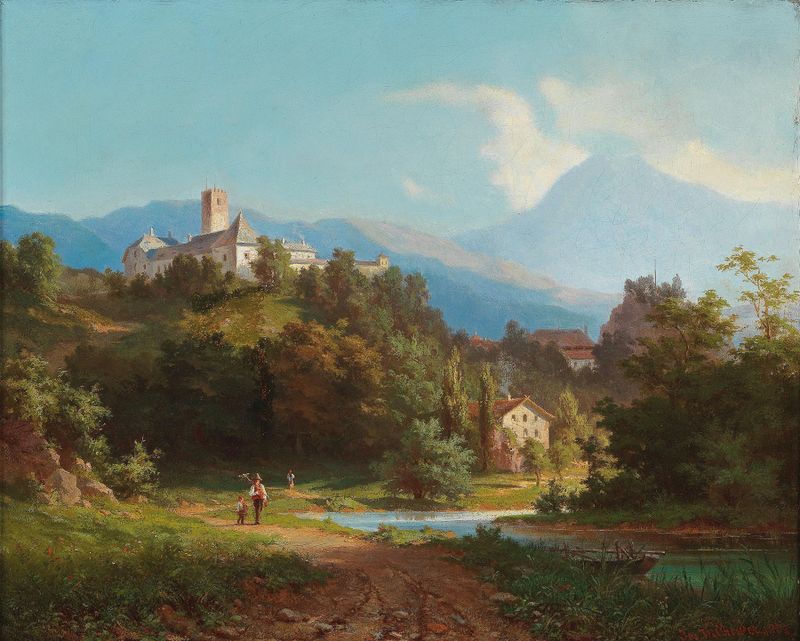
Ansicht einer Burg
Josef Willroider

Bavarian River Landscape with Women Gathering Wood
Josef Willroider

By the Wayside Cross
Josef Willroider
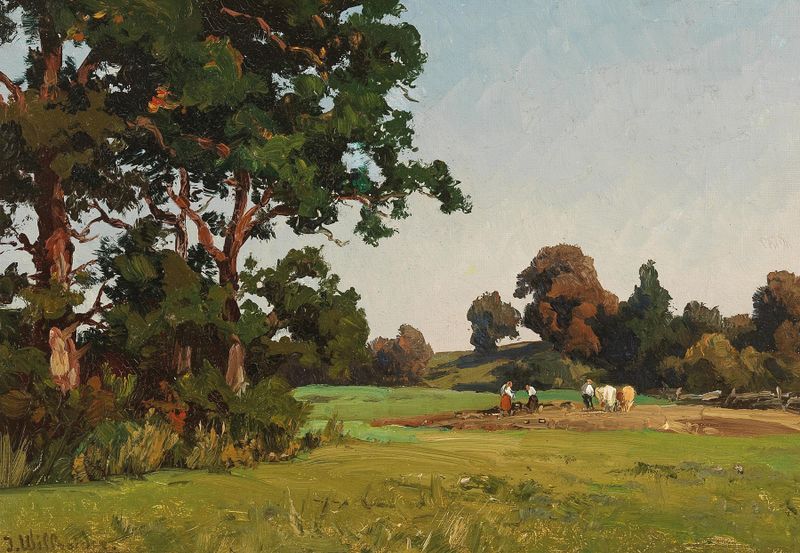
Am Feld
Josef Willroider
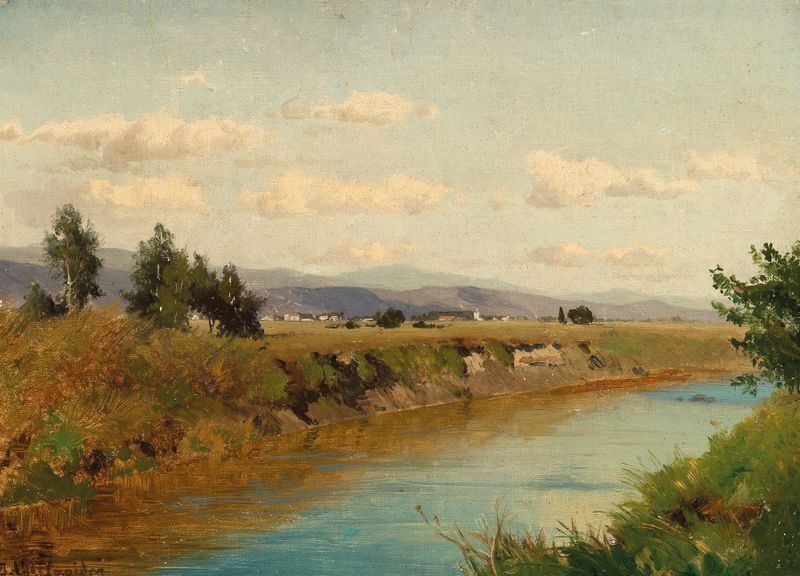
A Summer Landscape with Stream
Josef Willroider
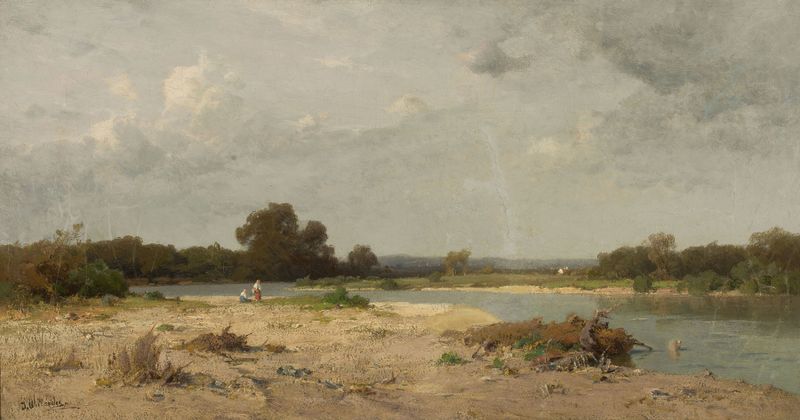
Waterside landscape
Josef Willroider

Landschaft mit abziehendem Gewitter
Josef Willroider

Blick auf Villach
Josef Willroider
A View of Lake Ossiach
Josef Willroider





