
River Landscape — History & Facts
This duality resonates deeply within the quiet yet profound echoes of nature, where hope intertwines with sorrow, much like the flowing waters of a river. Look to the left at the sweeping horizon, where rolling hills dissolve into a soft, golden glow. The muted palette of greens and browns enchants the viewer, accentuated by gentle strokes that capture the fluidity of the river. The interplay of light and shadow across the water's surface creates a shimmering effect, inviting you to trace its meandering path toward the distant horizon. Yet, there is more beneath the serene surface.
Notice the dark, brooding clouds hovering above, hinting at an impending storm or perhaps a metaphor for life's uncertainties. The solitary figure fishing on the banks whispers of solitude and contemplation, embodying a resilient spirit that persists amid nature's capriciousness. It is a poignant reminder that even in the face of adversity, there remains a sliver of hope glistening like sunlight on water. Jan van Goyen painted River Landscape in 1653 during a period of significant artistic evolution in the Dutch Republic.
At this time, the artist was exploring themes of landscape painting, often reflecting the harmony between humanity and nature. The burgeoning trade and prosperity of the era influenced his work, alongside the challenges of their turbulent world, capturing both the beauty and fragility of existence.
More Artworks by Jan van Goyen
Browse all →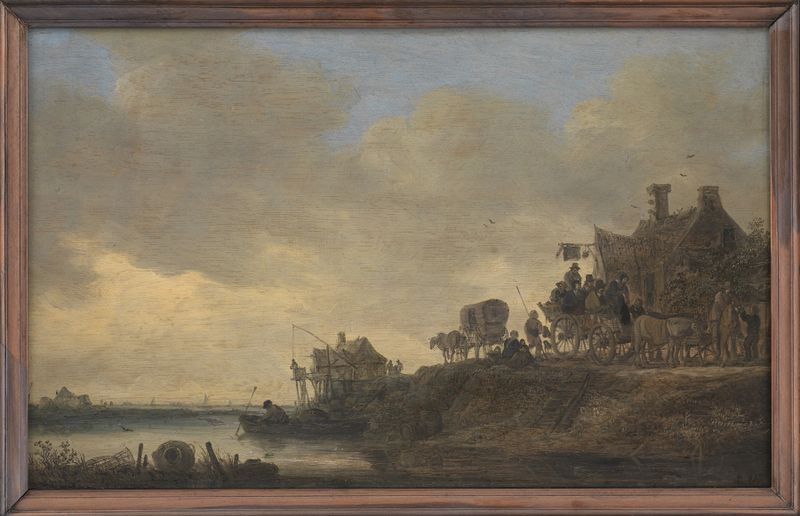
River Scene with the ‘Swan’ Tavern
Jan van Goyen

The Valkhof in Nijmegen
Jan van Goyen
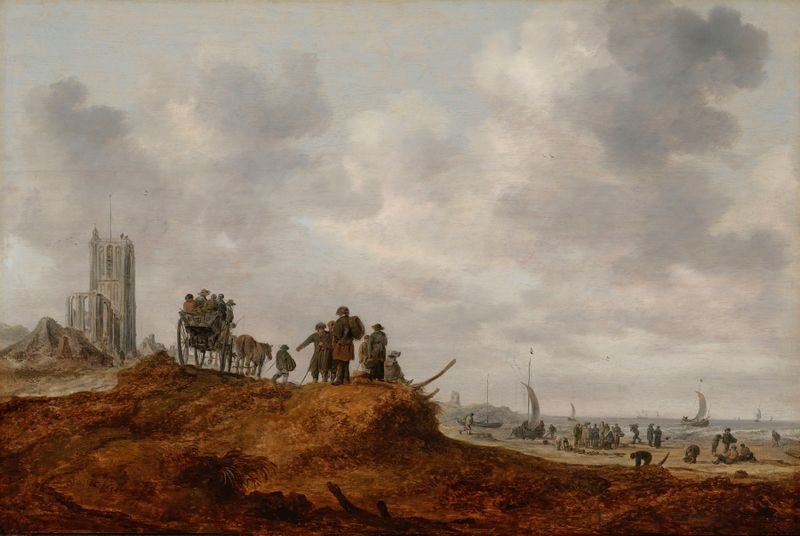
The Old Church at Egmond aan Zee
Jan van Goyen
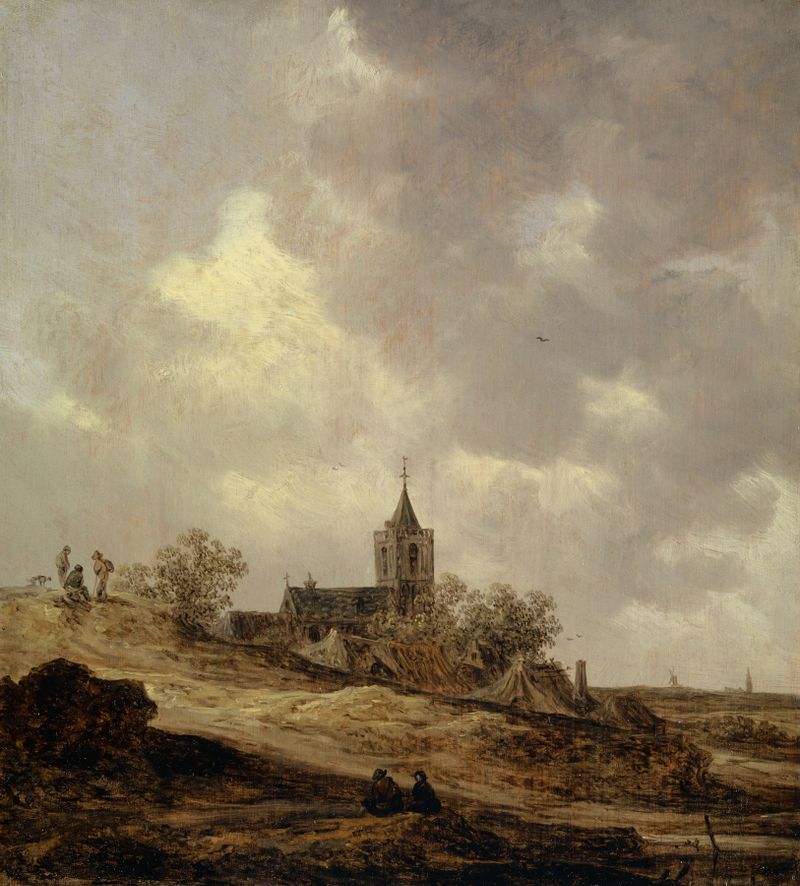
Village Church seen from the Dunes
Jan van Goyen
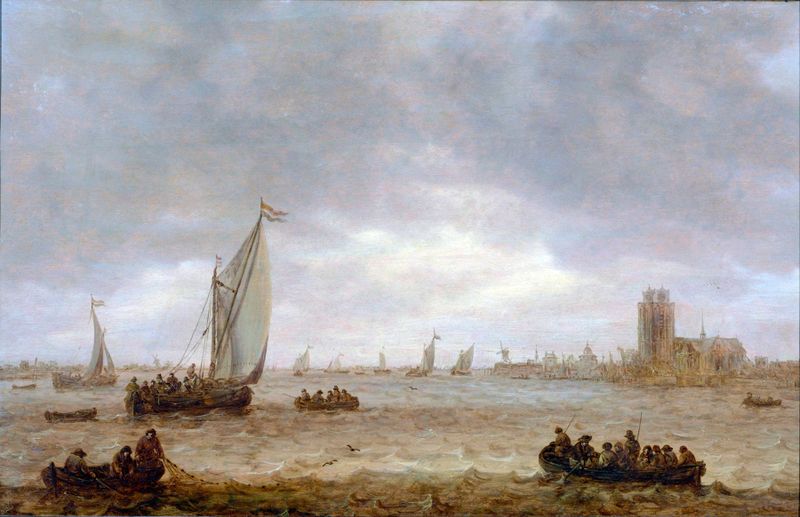
Mouth of the Meuse
Jan van Goyen

River Landscape with the Pellecussen Gate near Utrecht
Jan van Goyen
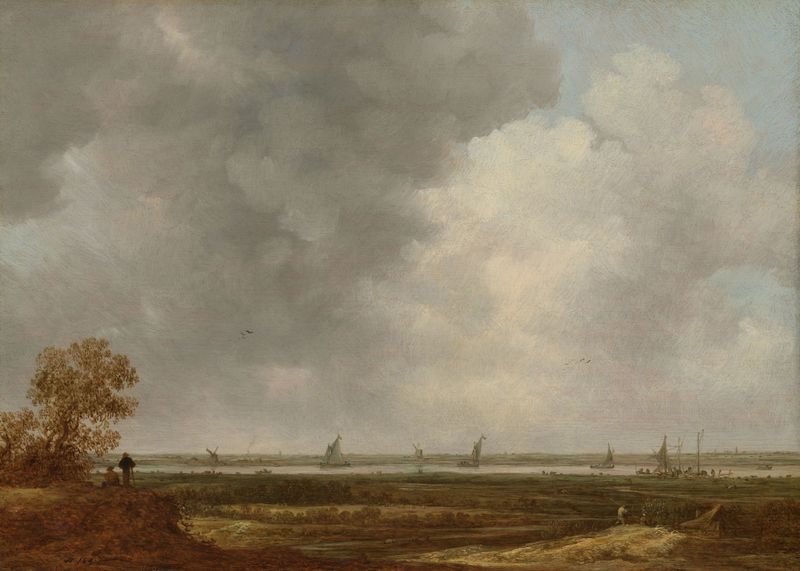
Panoramic View of a River with Low-lying Meadows
Jan van Goyen
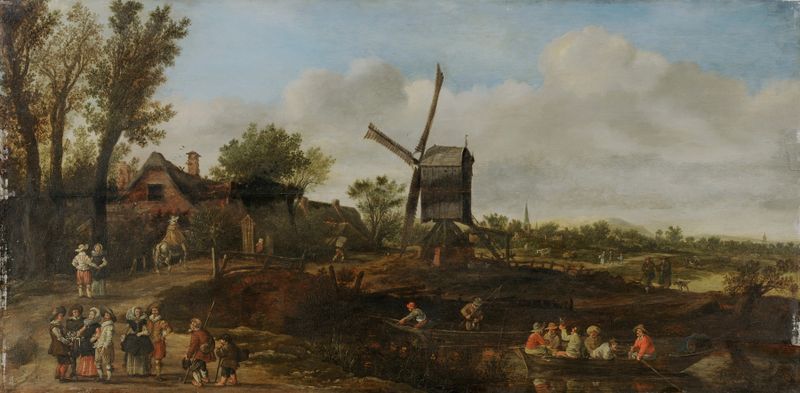
Dutch Landscape
Jan van Goyen
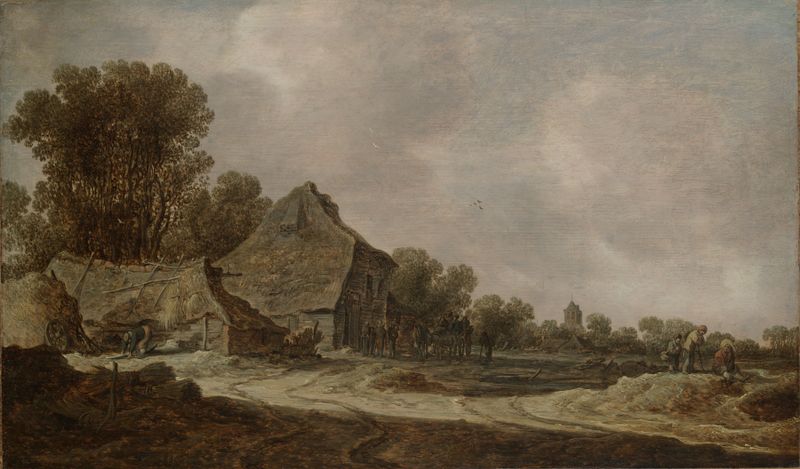
A Sandy Road with Thatched Cottages
Jan van Goyen
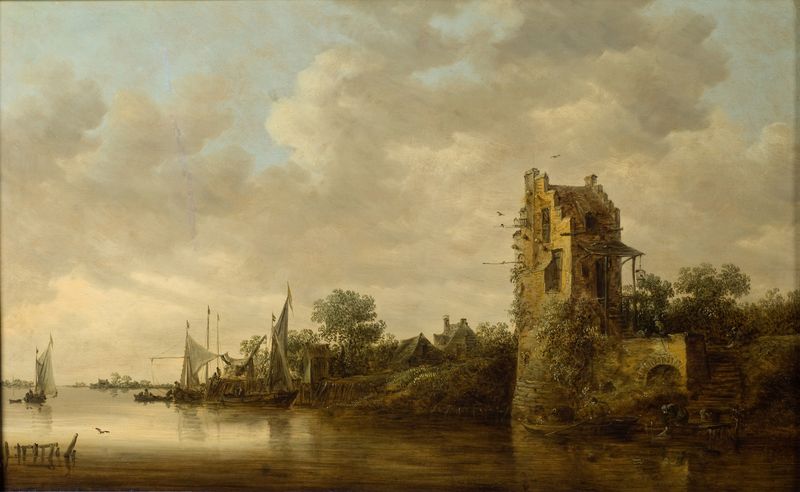
Riverside with an Old Tower
Jan van Goyen





