River Landscape with Rise of Cliffs — History & Facts
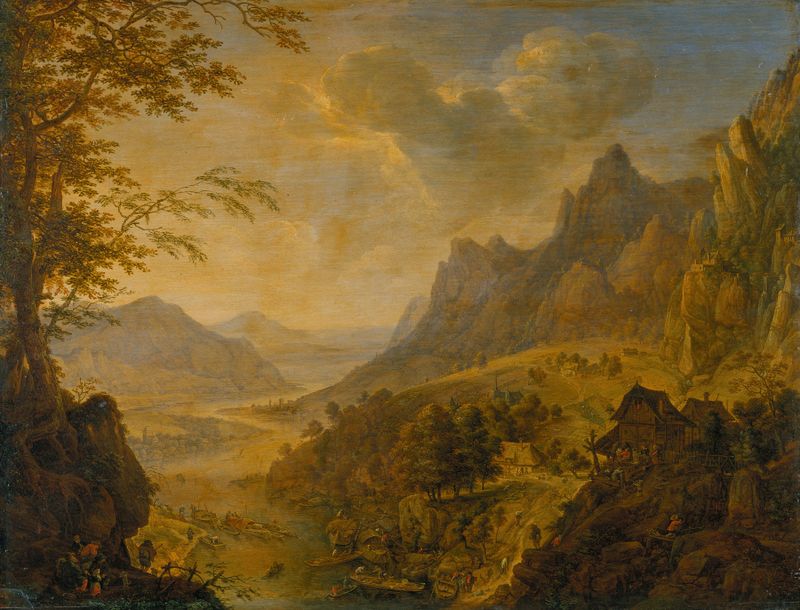
In the interplay between nature's raw energy and the meticulous hand of the artist, movement dances across the canvas. The rhythmic flow of the river beckons us to seek a deeper understanding of the forces that shape both the landscape and our own lives. Focus first on the sweeping curves of the river, gleaming with dappled light as it winds through the foreground. The cliffs rise dramatically to the left, their textured surfaces rendered in earthy tones, contrasting sharply with the vibrant greens and blues that animate the water and sky.
The brushstrokes are energetic, suggesting a breeze that stirs the scene, inviting the viewer to feel both the tranquility of the landscape and the underlying dynamism of nature. Hidden within this serene setting are the whispers of tension between stability and change. The cliffs, steadfast and majestic, stand in stark juxtaposition to the fluidity of the river below, symbolizing the constant struggle between permanence and transience. The billowing clouds above, rendered with swift, almost chaotic strokes, evoke a sense of impending transformation, as if nature itself is alive with breath and motion. Created in 1650, during a period of remarkable artistic development in the Netherlands, the piece reflects the artist's engagement with landscape painting and the growing appreciation for natural beauty.
Saftleven, having closely studied the techniques of earlier masters, found his voice amidst a flourishing era of artistic exploration, marking a pivotal moment in his career as he embraced the synthesis of observation and imagination in his work.