
River Scene with Boats — History & Facts
A river opens wide under a sky brushed with the soft light of late afternoon, drawing the viewer’s gaze deep into the painting’s gentle recession. The sails of Dutch boats catch the wind, their flags bright against the clouds, while on the banks, travelers and townsfolk pause, exchange, and watch the bustling waterway. Every figure is busy with purpose: a man leans from horseback to greet a friend, a fisherman lowers his basket, and ferrymen guide their crowded vessel across the current.
The sweep of the river is the true protagonist here, its surface animated by reflections and the promise of distant journeys. The palette—muted earths and cool greys—evokes the damp clarity of the northern light, while the low horizon gives the sky a quiet dominance, inviting the eye to linger on every drifting sail. Painted in 1643, this river scene belongs to the world of the Dutch Golden Age, when waterways were the lifeblood of commerce and daily life. Artists like Adam Willaerts specialized in such lively panoramas, celebrating the prosperity and order of the Republic through scenes of ordinary activity.
These works were sought after by the urban elite, eager to display their pride in a landscape shaped by human hands and ingenuity—note the windmill, the ferry, the carefully tended banks. This particular panel, once in the collection of The Metropolitan Museum of Art and dated by the artist himself, is a testament to the enduring appeal of such scenes, even as the details of its own journey through history have faded. Stand before it and you join a long line of viewers, drawn to the river’s edge to watch the world pass by.
More Artworks by Adam Willaerts
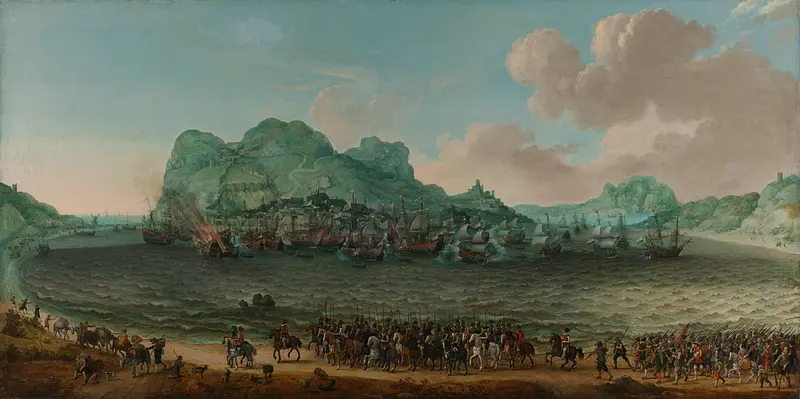
Victory over the Spanish near Gibraltar by a Fleet Commanded by Admiral Jacob van Heemskerck, 25 April 1607
Adam Willaerts
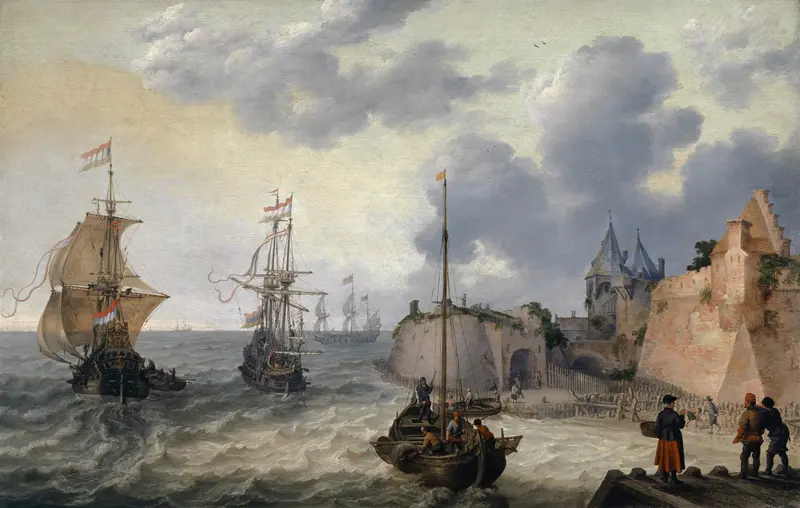
Dutch Harbour with Sailing Ships
Adam Willaerts
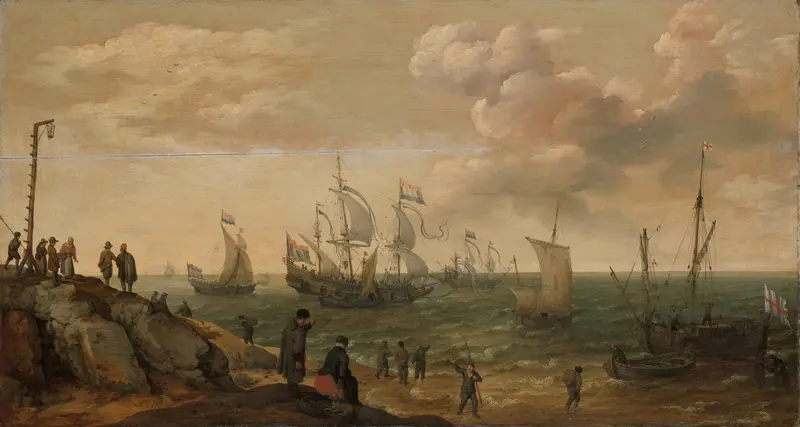
Ships along the Shore
Adam Willaerts
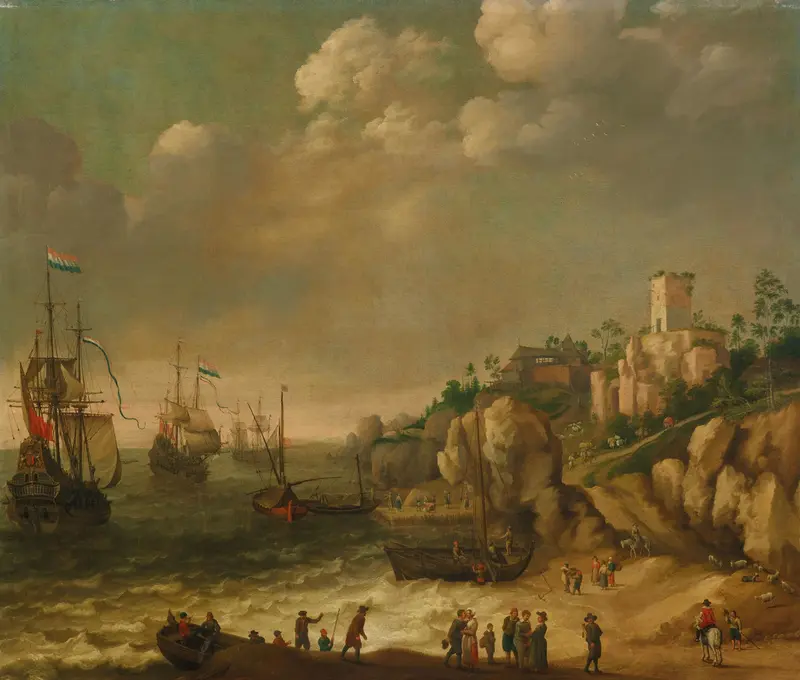
Dutch ships in front of a rocky coast with figures, buildings beyond
Adam Willaerts
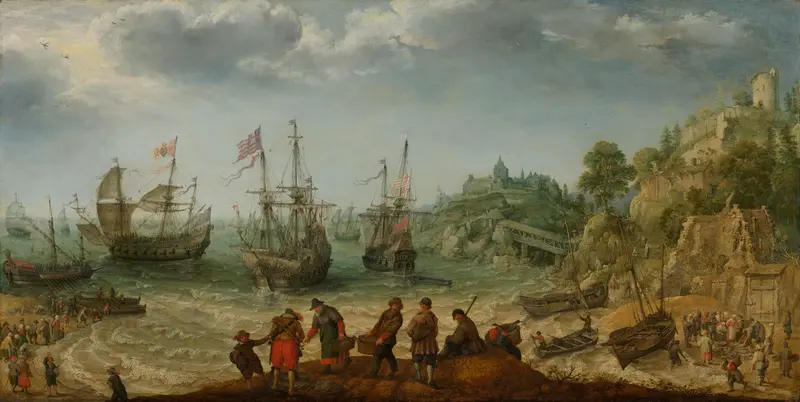
Ships off a Rocky Coast
Adam Willaerts
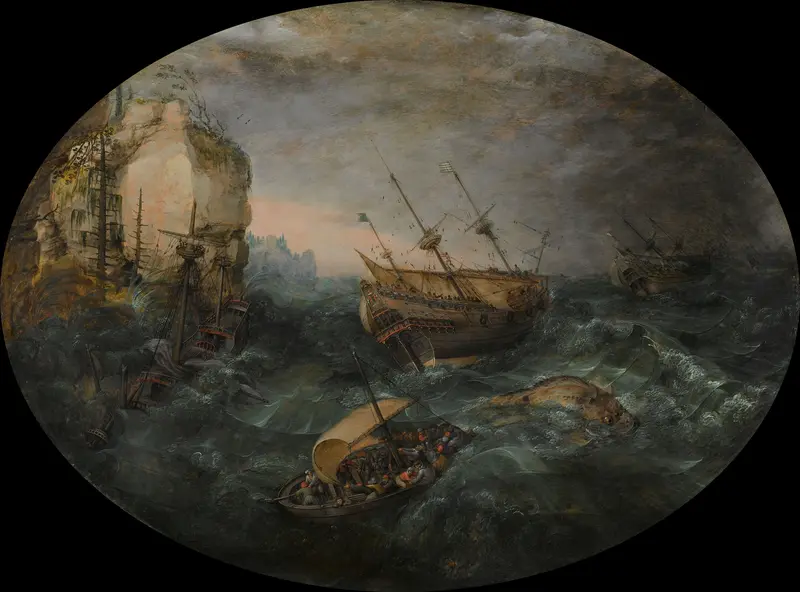
Shipwreck off a Rocky Coast
Adam Willaerts
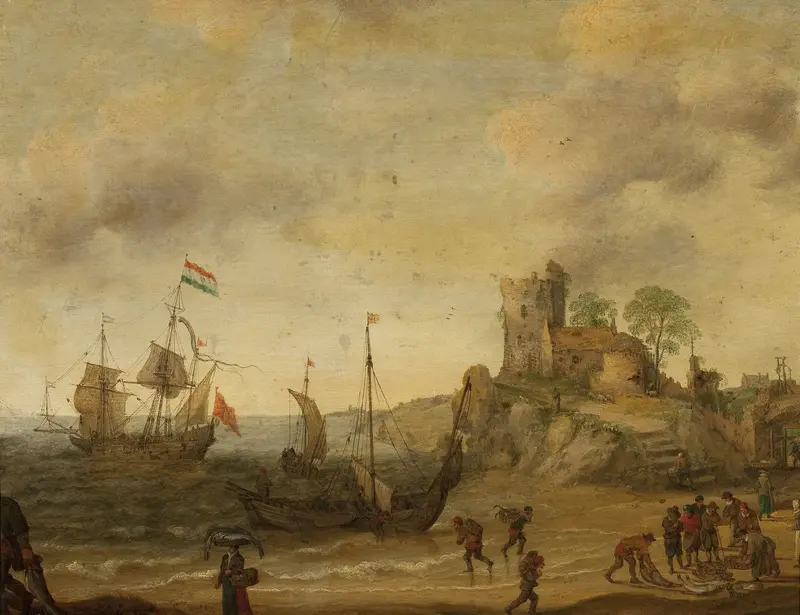
Fishermen at the seaside
Adam Willaerts
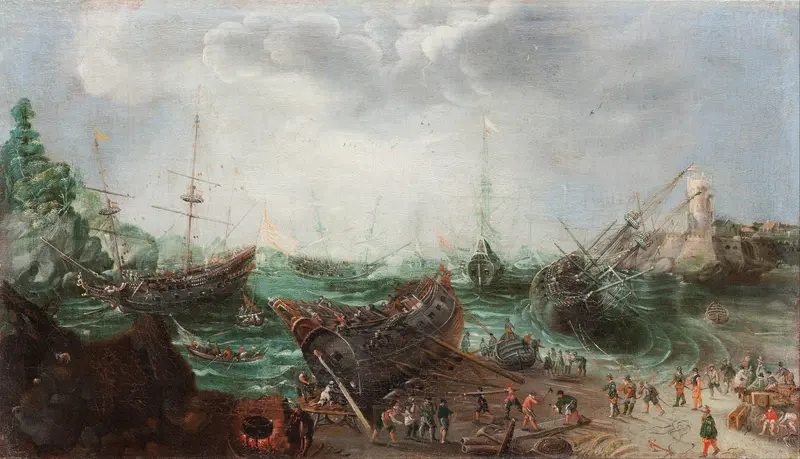
Harbour scene
Adam Willaerts
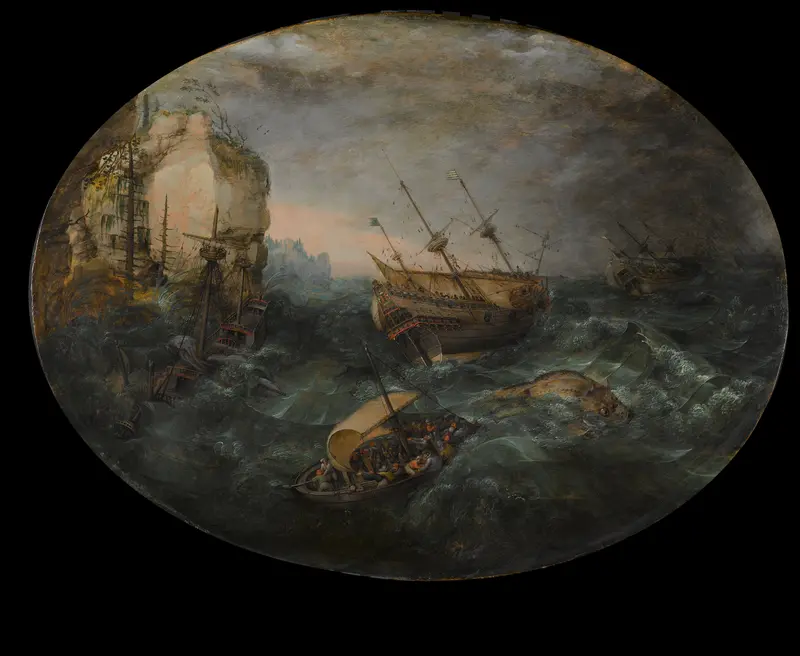
Shipwreck off a Rocky Coast
Adam Willaerts
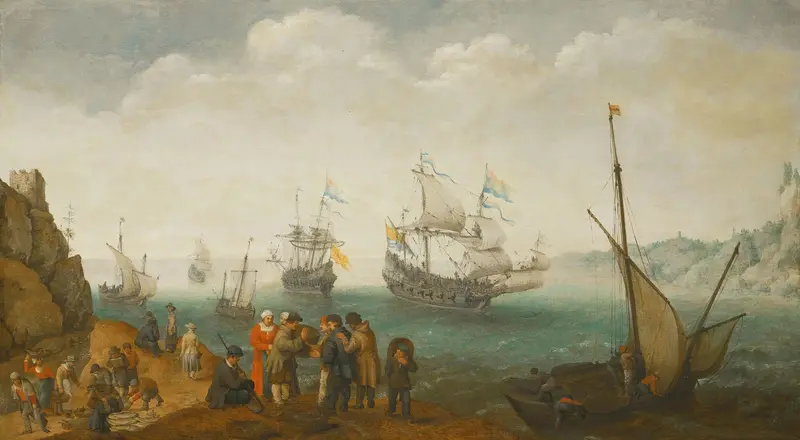
A Marine With Five Vessels Out To Sea And Another In Port, And With Groups Of Largely Male Figures Engaged In Buying Or Selling Fish Or Other Wares
Adam Willaerts





