River Wall, Oporto — History & Facts
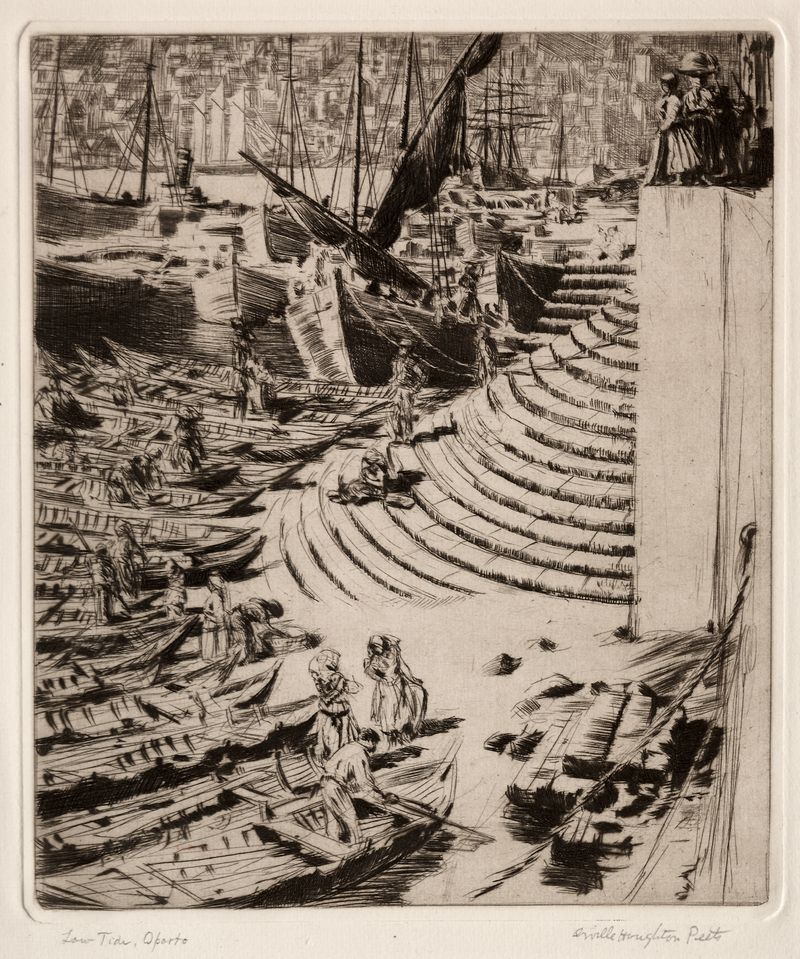
When did color learn to lie? In the depths of decay, beauty breathes its last. Orville Houghton Peets captures the fleeting essence of a city on the brink, where the vibrancy of a landscape hides the whisper of erosion beneath every brushstroke. Look to the left at the crumbling stone wall, its texture a patchwork of earthy browns and faded greens. Notice how the light filters through the leaves overhead, creating an interplay of shadow and illumination that breathes life into the ruins.
The ochre tones blend harmoniously with hints of rust, inviting the viewer to explore the contrast between the wall's sturdy facade and the fragility of nature's reclaiming touch. Delve deeper into the painting, and you'll find a dialogue between permanence and transience. The graffiti scrawled upon the wall suggests a human presence, defiant yet ephemeral, while the growth of vines tells a story of nature's slow but inevitable victory over man-made structures. This tension between the static and the dynamic invokes a sense of nostalgia for what has been lost and what might still endure. Peets created River Wall, Oporto in the early 1920s, during a time of artistic exploration and change in America.
Influenced by the rise of modernism, he sought to capture the interplay of light and shadow in everyday scenes, all while reflecting the socio-economic decay prevalent in many urban environments. His work, a testament to the passage of time, resonates with a poignancy that speaks to the heart of the viewer.