Riviergezicht — History & Facts
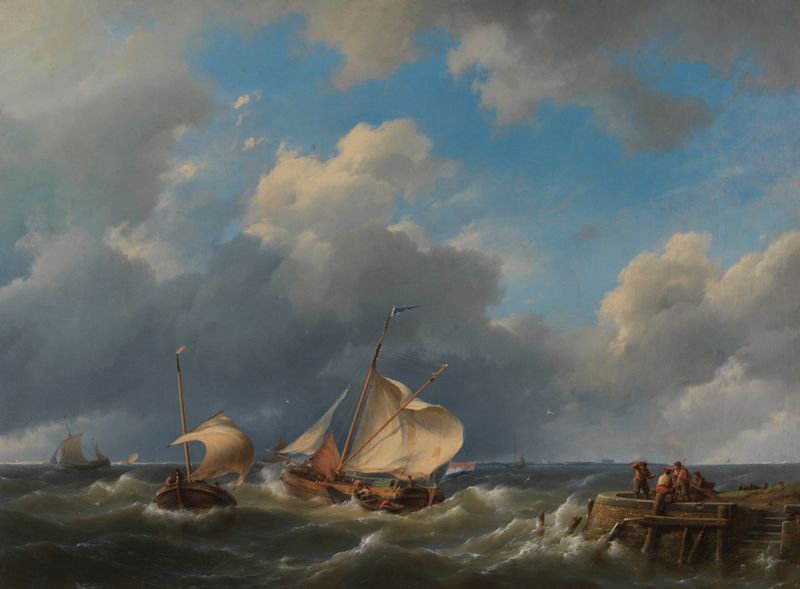
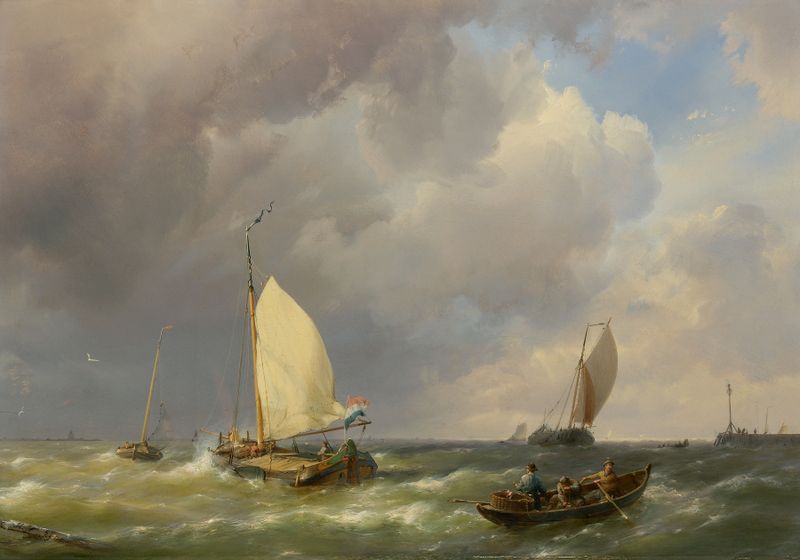
Could a single brushstroke hold eternity? In Riviergezicht, the delicate balance between the ephemeral and the eternal unfolds before our eyes, inviting us to contemplate the fragility of beauty in nature. Look to the right at the riverbank where soft hues of greens and browns blend seamlessly—a testament to the artist's masterful technique. The light dances upon the surface of the water, capturing fleeting moments with each shimmering reflection. Notice how the gentle curves of the landscape guide your gaze towards the horizon, drawing you deeper into the scene.
The atmospheric depth created by layered brushwork infuses the composition with an inviting serenity. As you explore further, observe the contrast between the serene water and the distant, stormy sky, a metaphor for the duality of existence—the calm before the tempest. Each element carries an emotional weight, from the fragile leaves perched precariously on the branches to the lonely figure on the path, embodying solitude in a vast, interconnected world. This tension between tranquility and unrest encapsulates the human experience, prompting reflections on our own place within nature's grand design. Hermanus Koekkoek the elder painted Riviergezicht during a period when Romanticism was gaining momentum in the art world, emphasizing emotion and the sublime beauty of the natural world.
While the exact date of this piece remains uncertain, it embodies the artist's dedication to capturing the essence of Dutch landscapes amidst a time of shifting artistic ideologies. Influenced by both tradition and innovation, Koekkoek’s work reflects a moment in history when nature was celebrated, even as industrialization began to transform society.