
Rivierlandschap. — History & Facts
Who listens when art speaks of silence? In the quiet embrace of a landscape, a void beckons, inviting contemplation and reflection. Look to the horizon where soft, undulating hills meet a tranquil river, its surface shimmering under a muted sky. The composition draws the eye toward the serene waters, framed by gentle greenery and rustic homes nestled along the banks. Notice how the light delicately bathes the scene, enhancing the rich greens and earthy browns, while the occasional splash of color from wildflowers breathes life into the overall tranquility. Beneath the surface calm lies a dichotomy of presence and absence.
The stillness of the water reflects not only the physical landscape but also a deeper emotional resonance, evoking a sense of longing for connection amidst isolation. The sparse figures, small and distant, hint at human vulnerability in nature’s vastness, creating a tension between the quiet beauty of the land and the void of human experience. Created in the mid-19th century, during a time of rapid change in the Netherlands, this work emerged as the artist explored the interplay between nature and civilization. Cornelis Springer, known for his detailed, atmospheric landscapes, painted at a moment when Romanticism was waning and realism began to take root.
His focus on serene rural scenes reflects both a nostalgia for simpler times and a commentary on the encroachment of industrialization on the Dutch countryside.
More Artworks by Cornelis Springer
Browse all →
The Royal Palace and the Nieuwe Kerk on the Dam, Amsterdam
Cornelis Springer
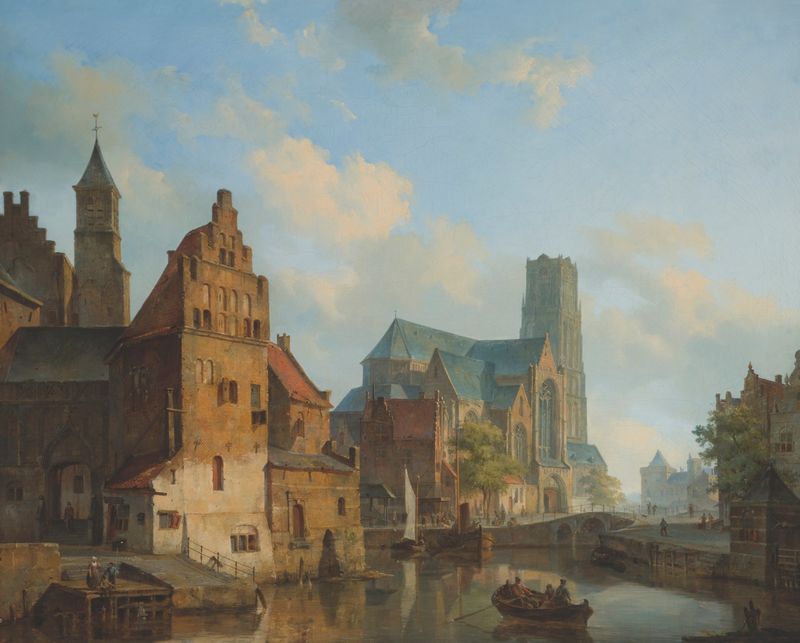
A View Of The Delftse Vaart And St Laurens Church, Rotterdam
Cornelis Springer

The Kerkgracht In Leiden
Cornelis Springer
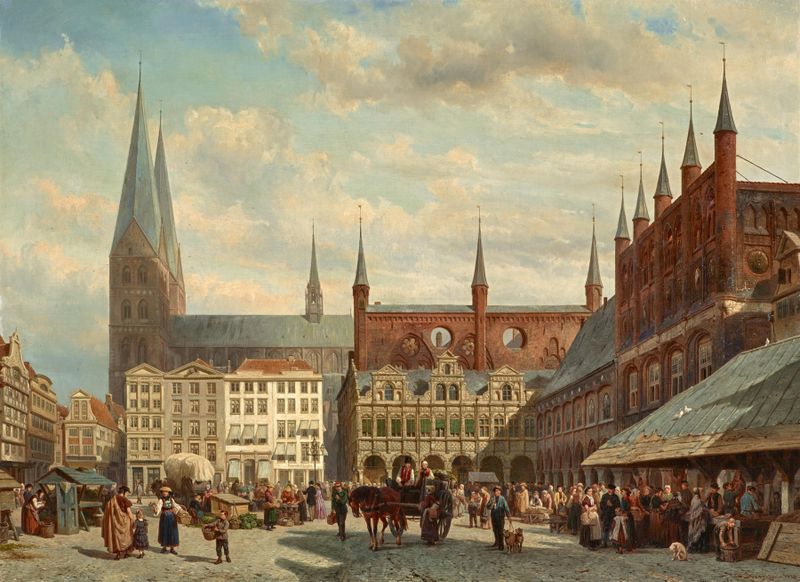
Ansicht des Lübecker Marktes
Cornelis Springer

View of The Hague
Cornelis Springer
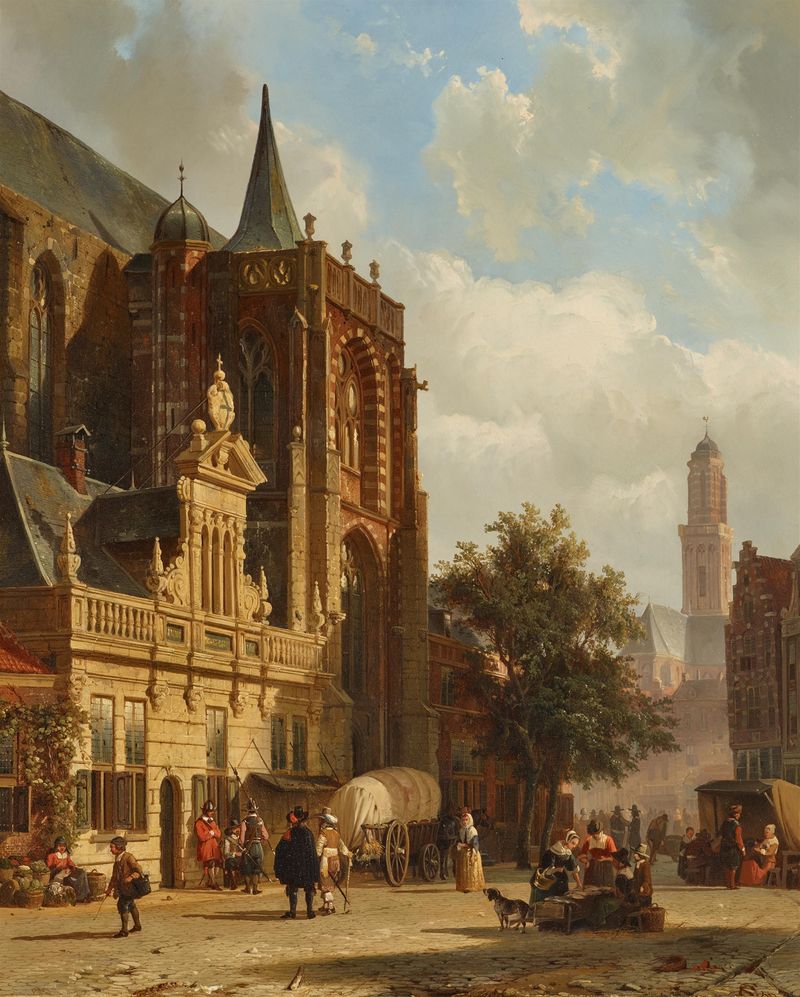
Der Grote Markt in Zwolle
Cornelis Springer
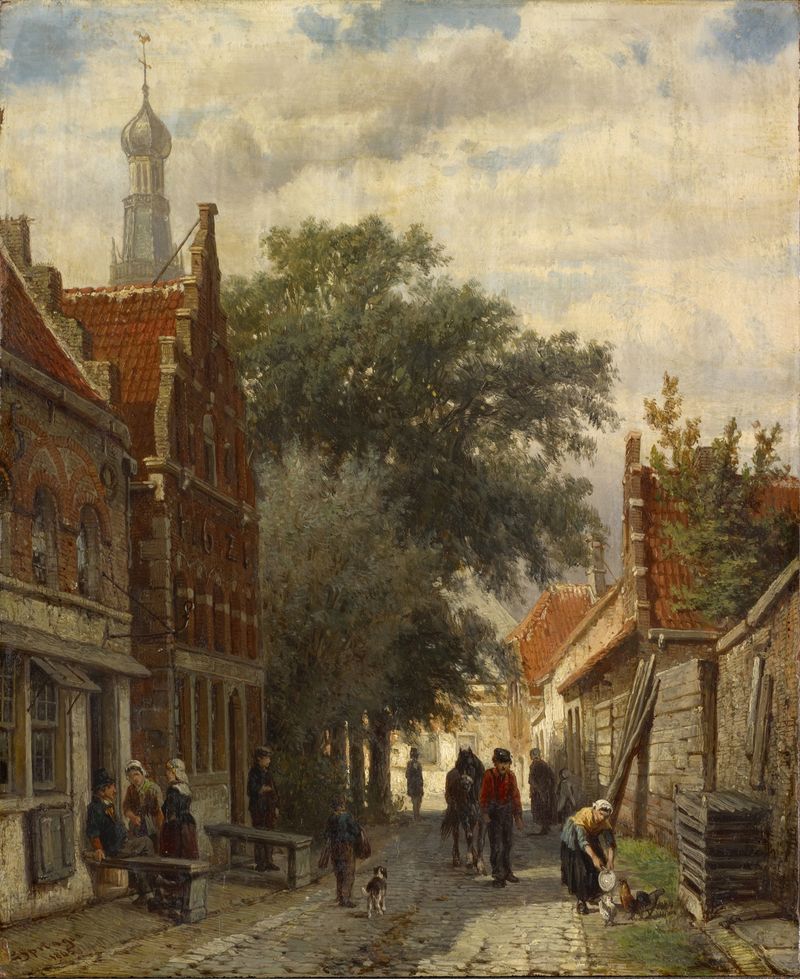
Street in Enkhuizen
Cornelis Springer

View of The Hague from the Delftse Vaart in the Seventeenth Century
Cornelis Springer
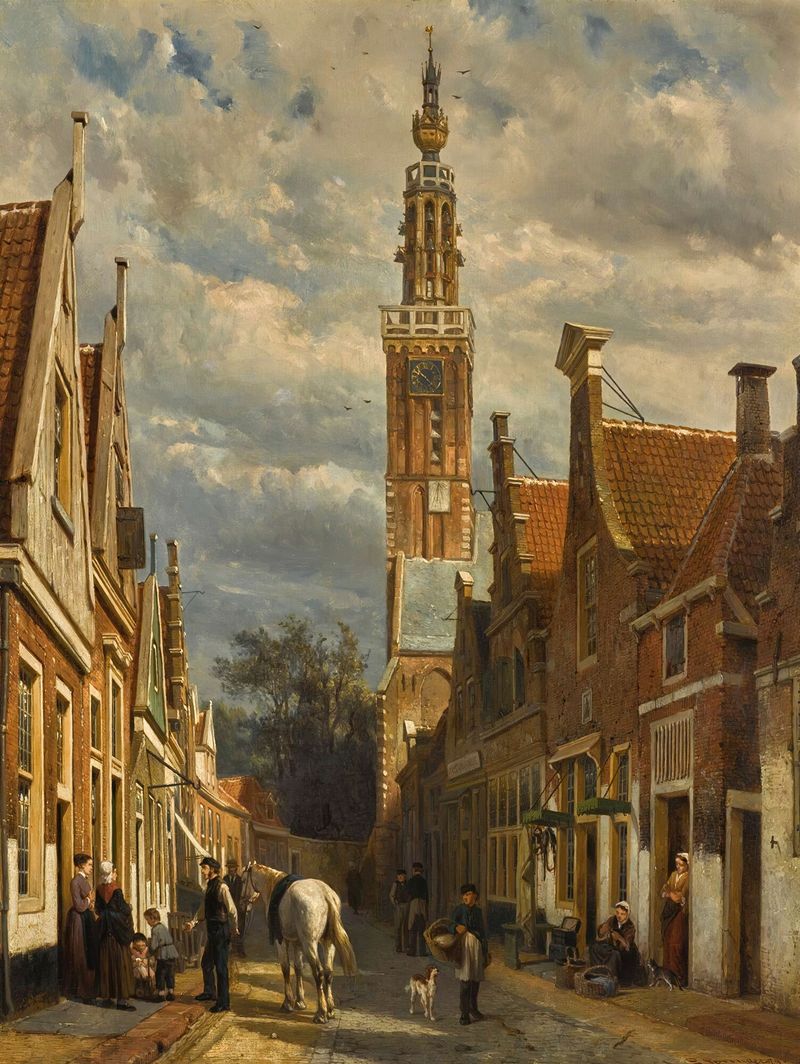
The carillon tower in Edam
Cornelis Springer
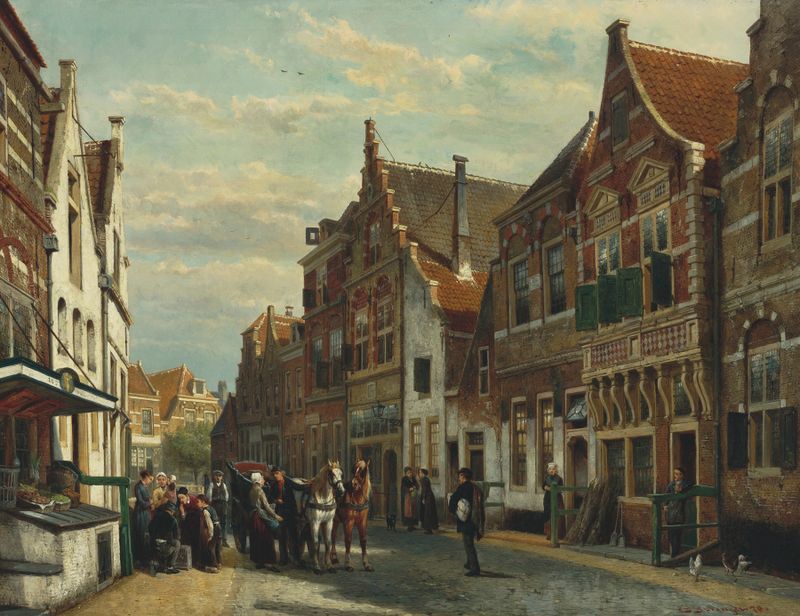
The Wijdstraat, Oudewater, in summer
Cornelis Springer





