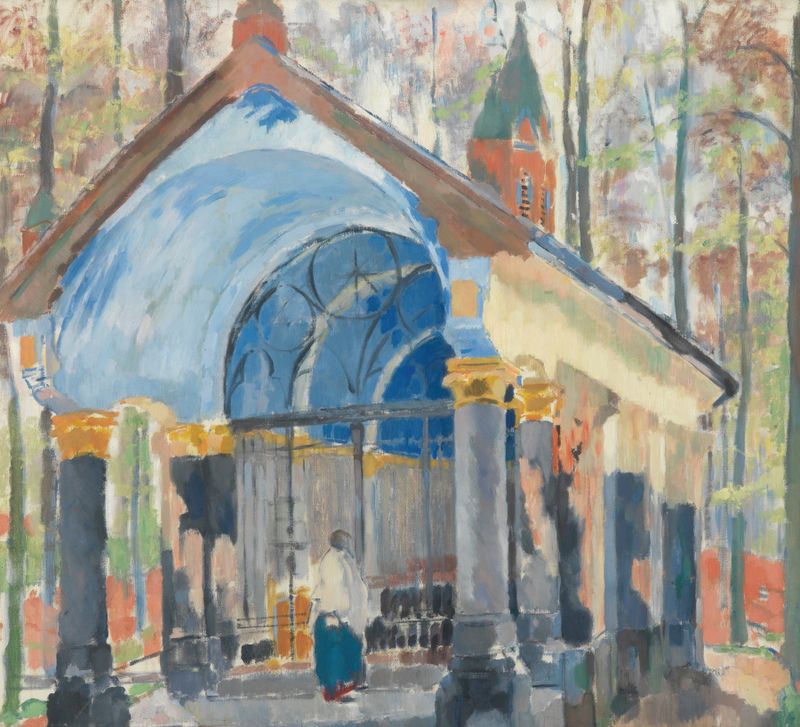
Road in the Rain – Amersfoort — History & Facts
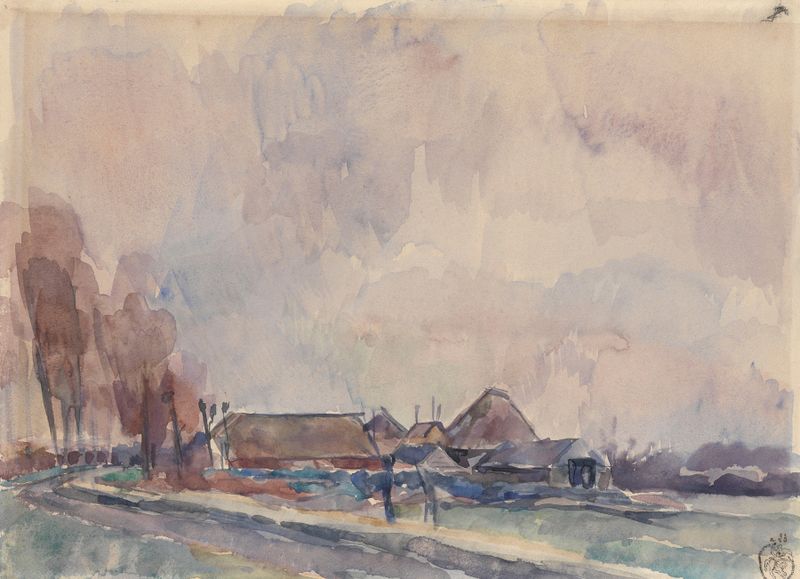
Can paint confess what words never could? In Road in the Rain – Amersfoort, the canvas breathes with a palpable sense of hope, inviting the viewer into a world drenched in emotion and atmosphere. Look to the foreground where vibrant brushstrokes depict the glistening pavement, shimmering in the aftermath of a summer rain. The artist’s choice of rich blues and soft greens melds seamlessly, drawing the eye along the winding road that beckons exploration. Notice how the delicate strokes create a rhythmic pattern—the trees lining the path sway gently, their leaves illuminated by a soft, diffused light that hints at a clearing sky, suggesting the promise of renewal. Yet, within this idyllic scene lies an undercurrent of tension.
The rain-washed landscape reflects a duality: the beauty of nature juxtaposed with the weight of transient moments. Each droplet embodies both the burden of time and the cleansing power of change, while the winding road symbolizes life's unpredictable journey towards hope and optimism. The empty path speaks to solitude, yet it invites wandering souls, echoing the universal struggle for purpose amid life’s storms. Rik Wouters painted this piece in 1914, a time marked by personal and societal upheaval.
Living in Belgium during the early stages of World War I, the artist faced the turbulence of conflict and loss. This painting emerged from a period of introspection, reflecting both his artistic aspirations and the resilience of the human spirit as he sought solace in the beauty of the world around him.