
Rock Cliffs along the Romanche — History & Facts
What secret hides in the quiet of the canvas? In this serene landscape, the vast emptiness speaks volumes, inviting contemplation and reflection. Look to the left at the rugged silhouettes of the rock cliffs, their jagged edges stark against the soft, muted sky. Notice how Huet crafts depth with layers of cool greens and blues, contrasting the warmth of earth-toned rocks that emerge from the foreground. The gentle interplay of light and shadow reveals the passage of time, an untouched beauty suspended in stillness, where the horizon seems to stretch infinitely. In the delicate interplay of texture, emotion flourishes.
The cliffs whisper of solitude, a reminder of nature’s grandeur and its capacity for isolation. The tranquil atmosphere is punctuated by the absence of human presence, evoking a sense of longing for connection amid the vastness. This emptiness resonates deeply, embodying both the sublime and the melancholic, as if inviting the viewer to search within for their own hidden truths. Created in 1858, this artwork arose during a transformative period in the artist's life, marked by his exploration of Romanticism’s fascination with nature.
At this time, Huet was establishing his reputation within the Parisian art scene, influenced by the works of earlier Romantic painters. The landscape he presents is not merely a view; it is a personal reflection of a world where nature stands sentinel over human emotion, capturing the quiet yet profound beauty of existence.
More Artworks by Paul Huet
Browse all →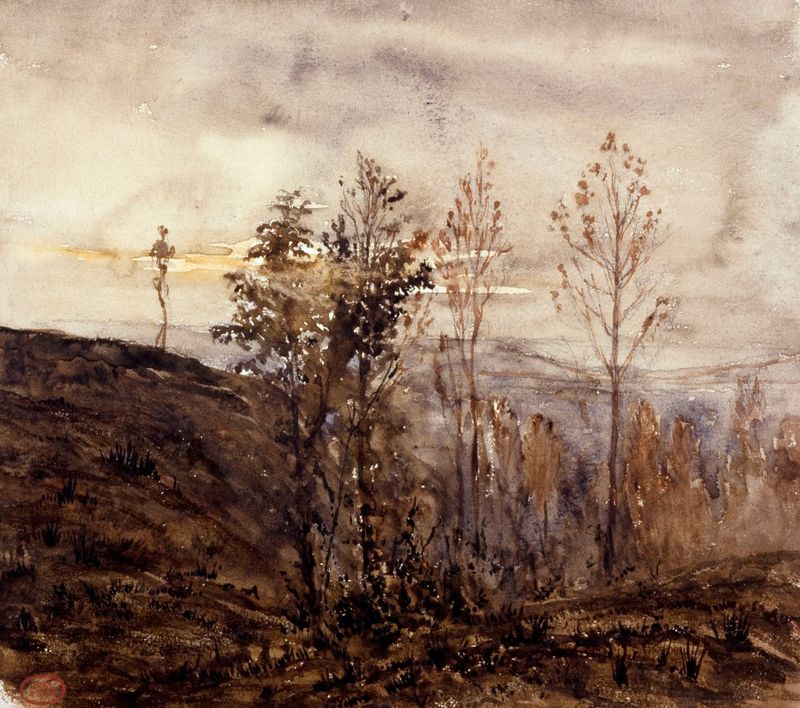
Les bois de Sèvres
Paul Huet

An Abbey by a Wooded Lake at Twilight
Paul Huet

Woodland Stream
Paul Huet
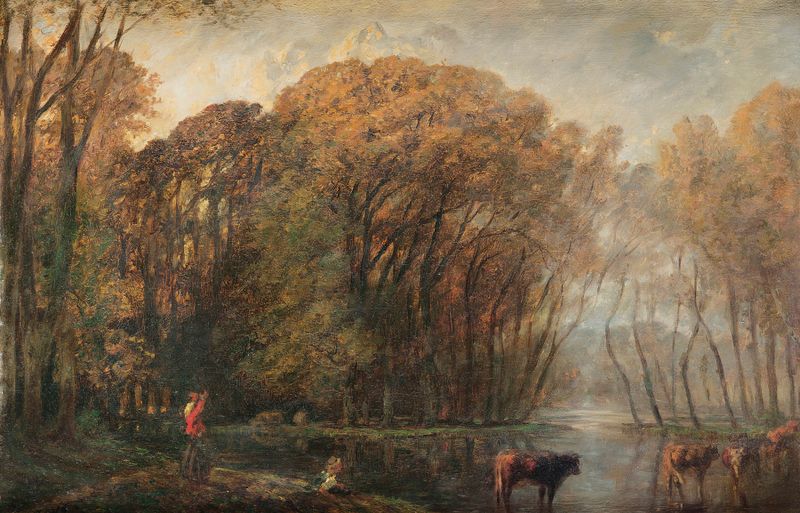
The Laïta in high tide, Brittany
Paul Huet

Sur la route de Nice
Paul Huet
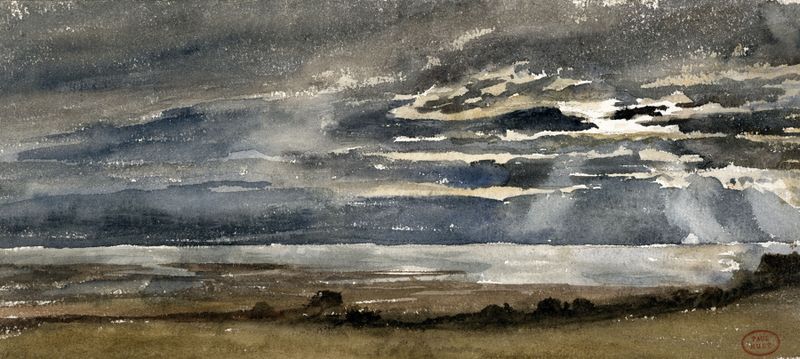
Soleil couchant
Paul Huet

A Wild Beech in Full Leaf
Paul Huet

Les Roches noirs, bij Villers
Paul Huet

Cannes
Paul Huet

Mountain View at Oisans (Isère)
Paul Huet





