
Rocky Coast with Ships and Figures — History & Facts
What first catches the eye in Rocky Coast with Ships and Figures is the sense of a world in motion, anchored between land and sea. The artist, Adam Willaerts, orchestrates a lively exchange: in the foreground, figures gather and work along the rocky shore, baskets in hand, their gestures suggesting the routines of trade or the return from a catch. The jagged rocks and windswept trees draw the viewer’s gaze upward to a chapel perched on a hill, while the sweep of the coast leads out to a bustling harbor where ships, their sails billowing, ride the churning waves.
The flags atop the masts hint at distant journeys and national pride, while the low horizon and expansive sky give the scene a breathless openness, inviting the viewer to imagine the stories unfolding both on land and at sea. Painted in 1627, this work belongs to a period when Dutch and Flemish artists were captivated by the drama of the coastline and the rhythms of maritime life. Scenes like this were prized by a new class of wealthy merchants and shipowners, who saw in them not only the beauty of their homeland but also the prosperity and adventure of seafaring trade. Adam Willaerts was known for his marine paintings, and works such as this—now in the Nationalmuseum—capture the restless energy of a world shaped by commerce, faith, and the unpredictable sea.
History has kept few traces of the individual lives depicted here, but the painting’s careful choreography of labor, leisure, and landscape still invites us to step into its bustling, windswept world.
More Artworks by Adam Willaerts
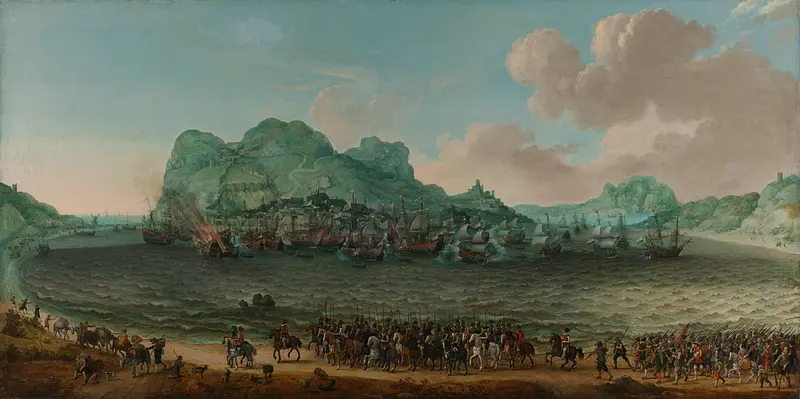
Victory over the Spanish near Gibraltar by a Fleet Commanded by Admiral Jacob van Heemskerck, 25 April 1607
Adam Willaerts
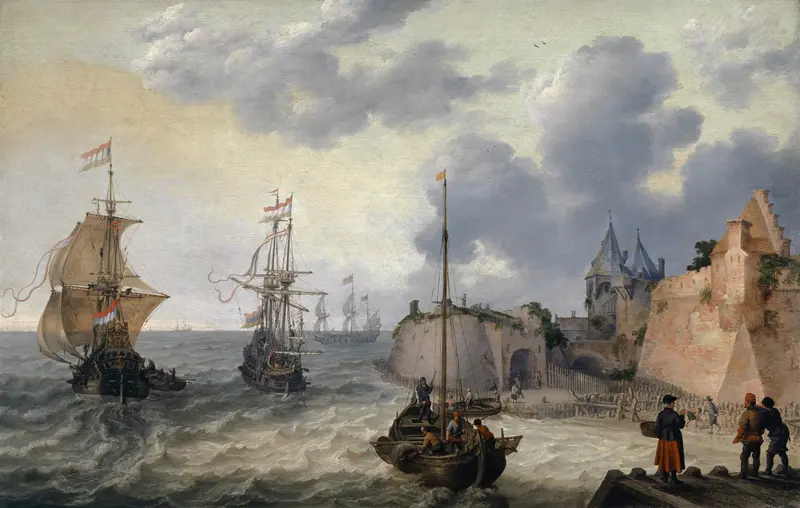
Dutch Harbour with Sailing Ships
Adam Willaerts
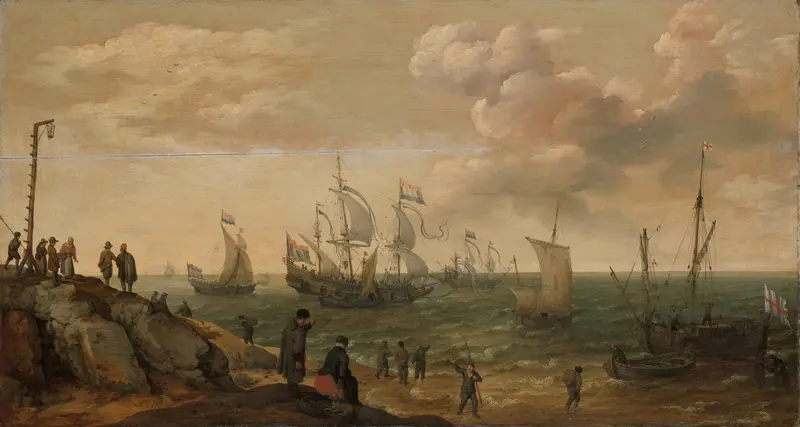
Ships along the Shore
Adam Willaerts
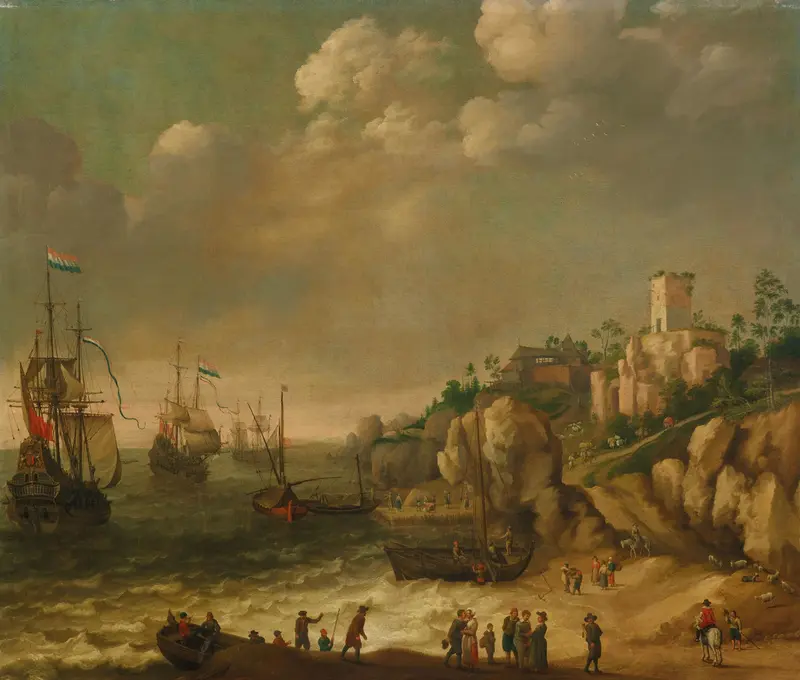
Dutch ships in front of a rocky coast with figures, buildings beyond
Adam Willaerts
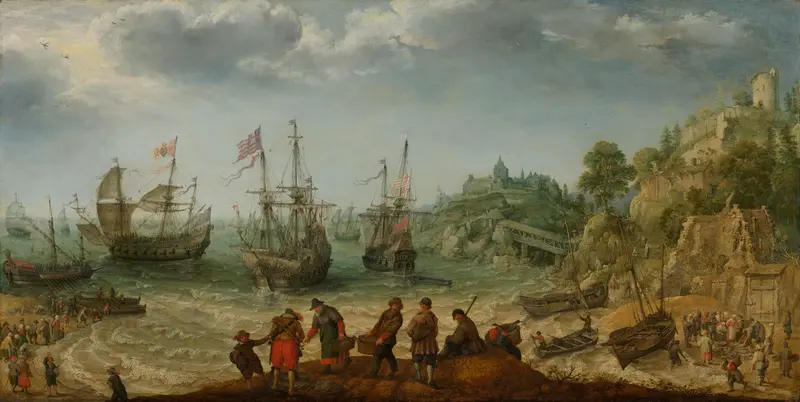
Ships off a Rocky Coast
Adam Willaerts
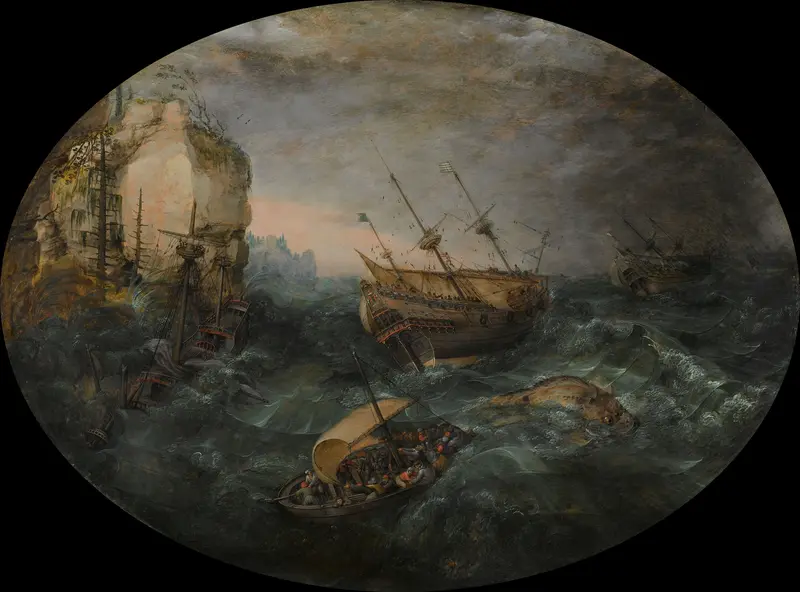
Shipwreck off a Rocky Coast
Adam Willaerts
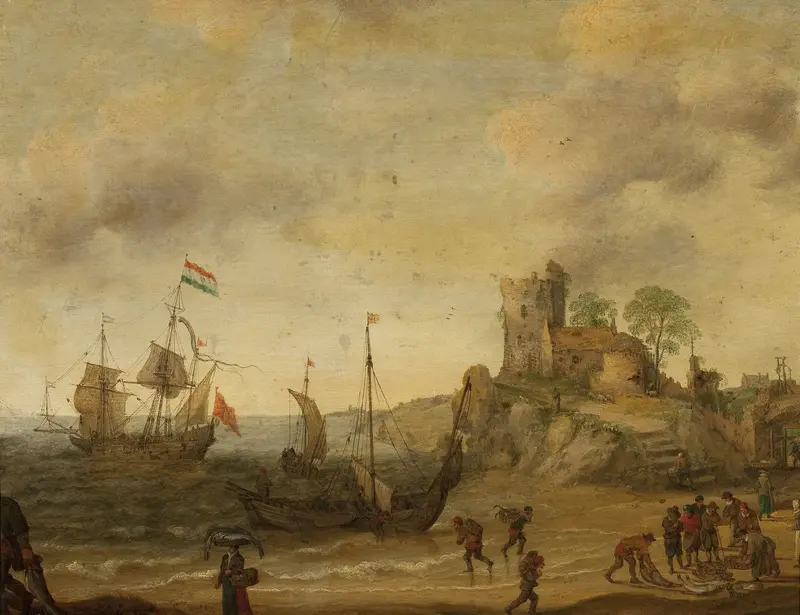
Fishermen at the seaside
Adam Willaerts
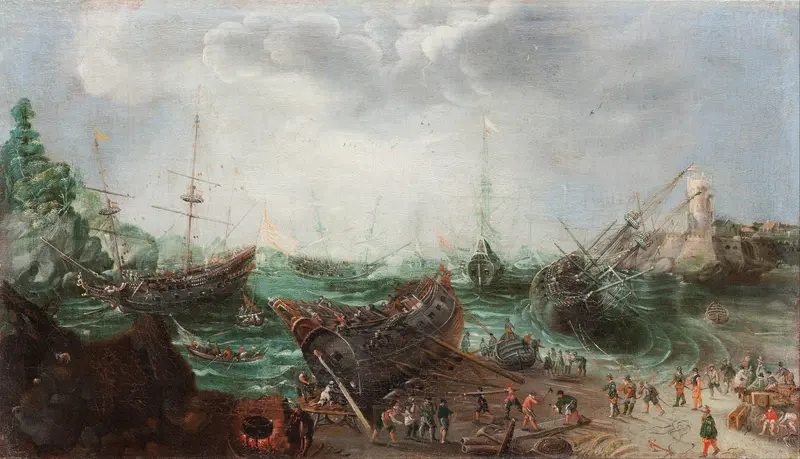
Harbour scene
Adam Willaerts
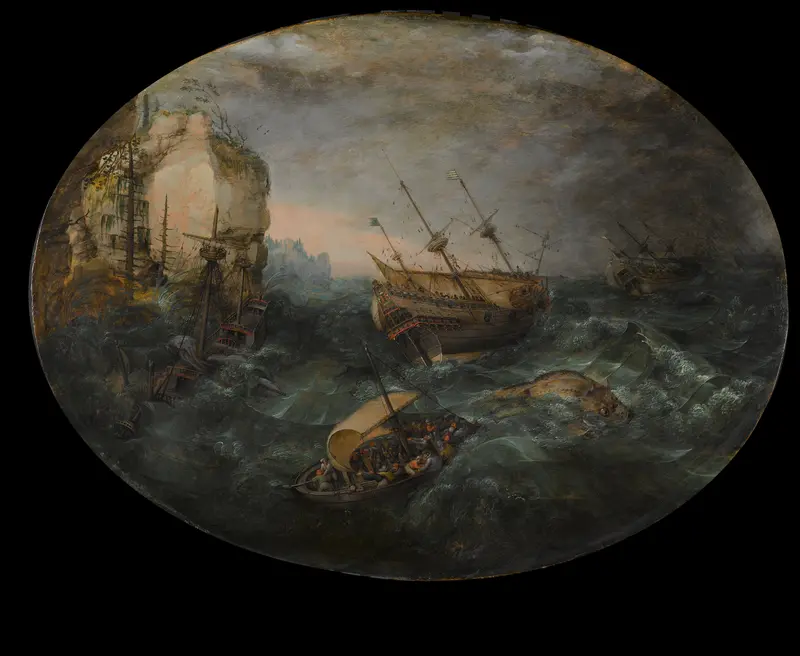
Shipwreck off a Rocky Coast
Adam Willaerts
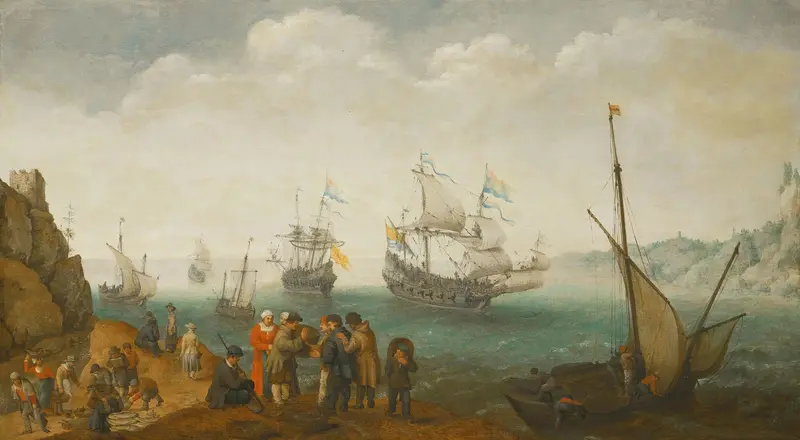
A Marine With Five Vessels Out To Sea And Another In Port, And With Groups Of Largely Male Figures Engaged In Buying Or Selling Fish Or Other Wares
Adam Willaerts





