
Rognebærtre, Vang — History & Facts
In the stillness of an untouched landscape, a profound emptiness lingers, inviting contemplation and reflection. This is where nature speaks softly, yet its silence shouts the unspoken truths of existence. Look to the foreground, where the verdant foliage of wild rowan trees introduces a crisp vibrancy against the muted backdrop of rolling hills. The light dances gently across the leaves, creating a cascade of shadow and illumination that draws the viewer deeper into the scene.
Notice the delicate brushwork that captures the essence of each leaf, revealing Gude's adeptness at engaging with texture and form. The palette of earthy greens and browns is punctuated by the bright clusters of berries, suggesting life, abundance, and yet, an underlying solitude. Here lies the emotional tension: the juxtaposition of life and emptiness, as the vibrant berries stand in contrast to the vast openness surrounding them. Each cluster encapsulates a fleeting moment of beauty, while the expansive landscape reflects a world devoid of human presence.
The horizon stretches infinitely, evoking a sense of longing—an invitation to ponder one’s place in the natural world, amidst beauty that thrives yet feels so solitary. In 1853, Gude painted this work during a period marked by a burgeoning interest in Romanticism and a growing appreciation for the Norwegian landscape. He had recently returned from study in Düsseldorf, where he embraced the blending of realism and idealism. As the art world shifted, Gude found his voice, capturing the majesty of his homeland with an eye for detail that conveyed both awe and melancholy, ultimately establishing him as a key figure in Scandinavian landscape painting.
More Artworks by Hans Gude
Browse all →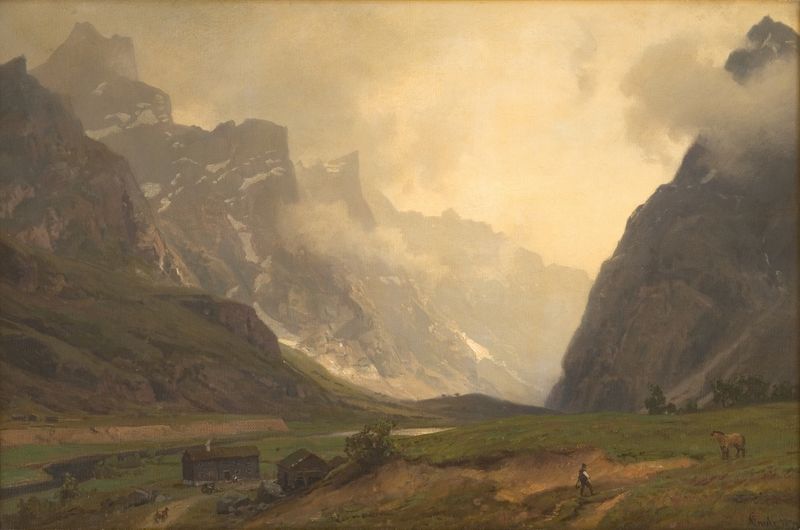
The Troll Peaks in Romsdalen, The Foot of Romsdalshorn to the Right
Hans Gude
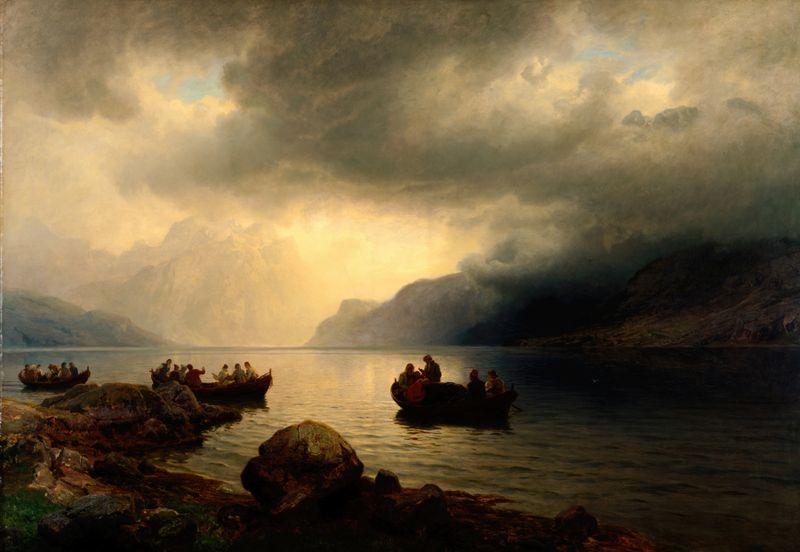
Funeral Procession on the Sogne Fjord
Hans Gude
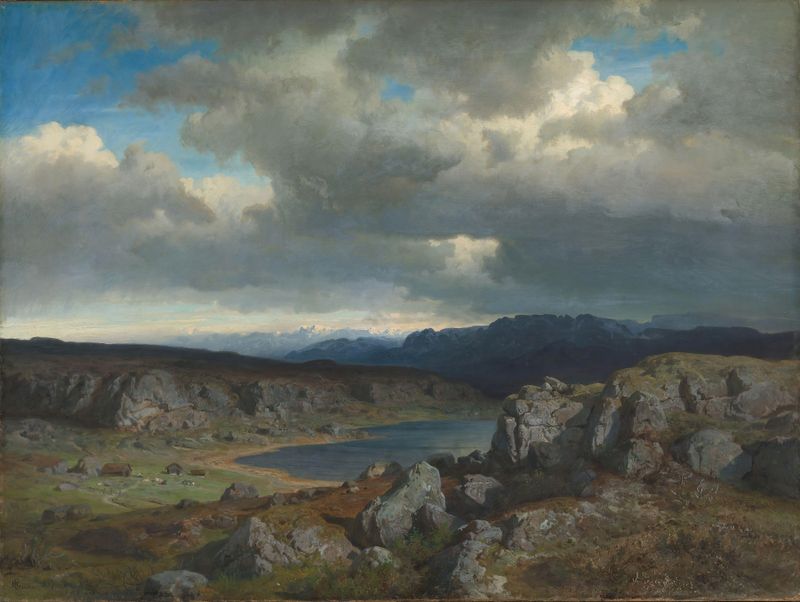
Norwegian Highlands
Hans Gude
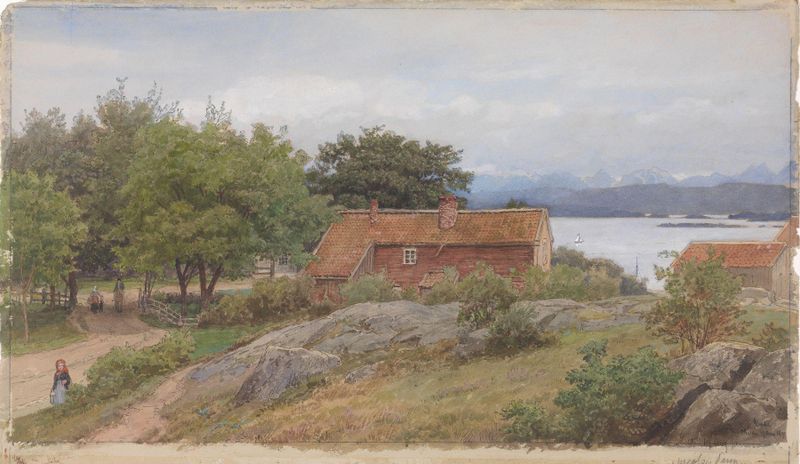
Landskap med bondegård ved Molde
Hans Gude
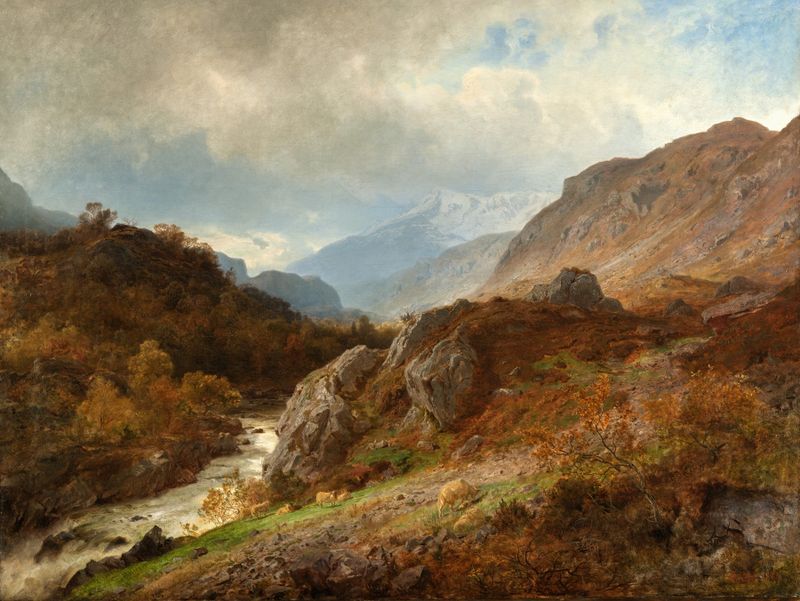
Mountain Landscape
Hans Gude
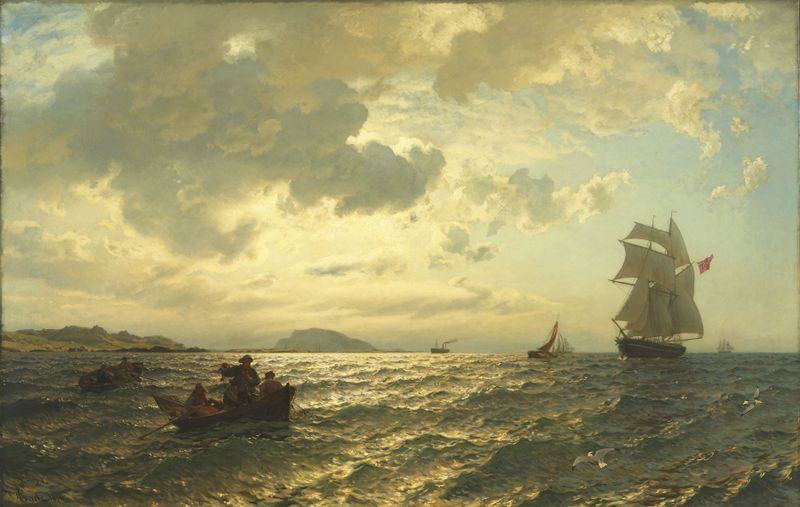
Fresh Breeze on the Norwegian Coast
Hans Gude
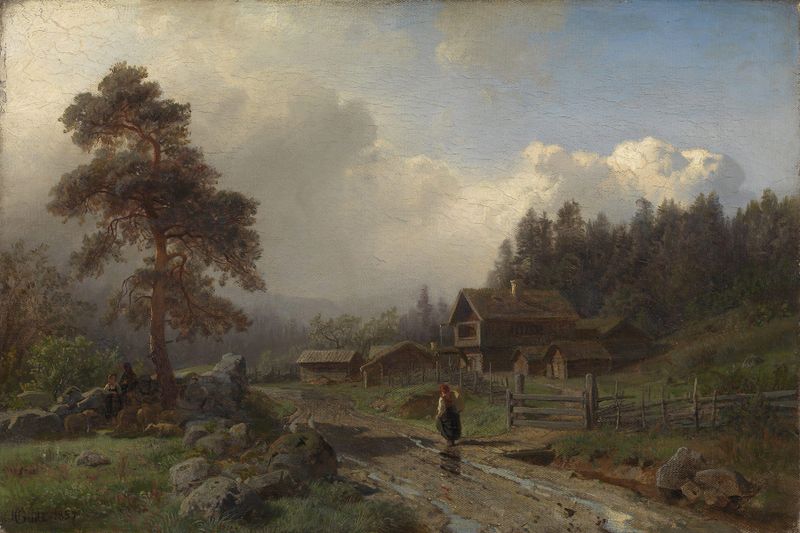
Norwegian Landscape in Rain
Hans Gude
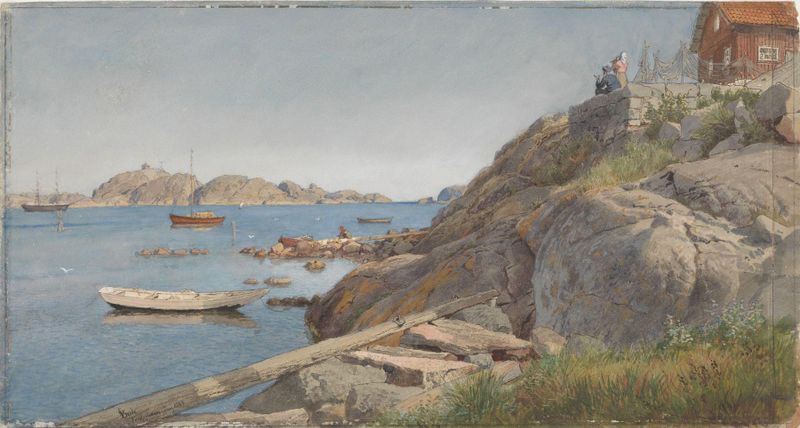
Landscape by Stavern
Hans Gude
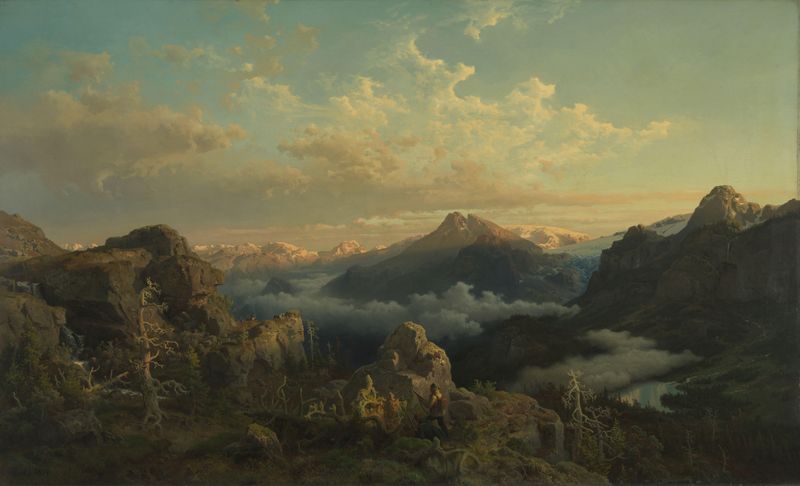
Norwegian Highlands in Sunrise
Hans Gude
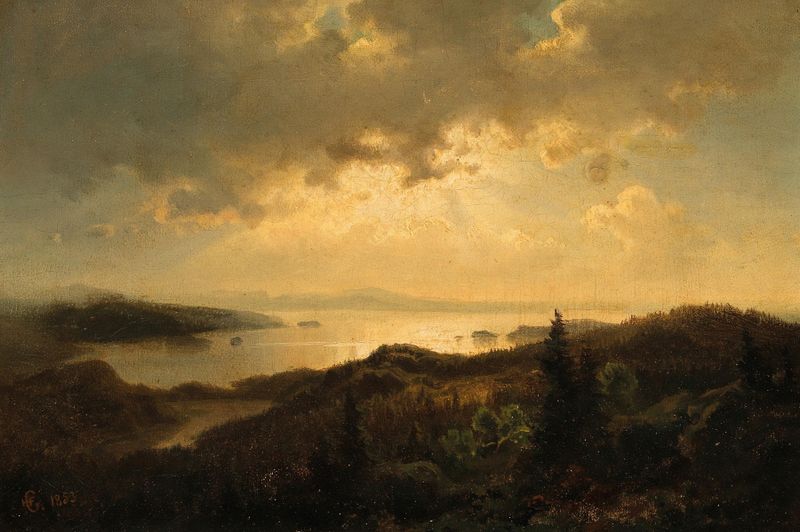
A Scene at Dusk in Norway
Hans Gude





