
Rokoko — History & Facts
A single glance at Rokoko invites the viewer into a world where color is the true protagonist. The eye is drawn first to the bold, almost dreamlike palette: lush greens, radiant yellows, and flashes of red and blue create a sense of perpetual movement, as if the scene might shift the moment you look away. At the heart of the composition, a pair of figures stands on a bridge, their forms simplified to the point of near-abstraction, yet their posture and dress hint at an 18th-century elegance.
The arched bridge and its reflection anchor the scene, while the curving tree in the foreground frames the action, guiding the viewer’s gaze from the shaded bank to the sunlit villa. Every brushstroke seems to pulse with energy, suggesting both the serenity and the theatricality of a garden fête. Created in 1912, this painting belongs to a moment when artists like August Macke were reshaping the language of painting in Germany, drawing on the innovations of French Fauvism and the burgeoning Expressionist movement. The title itself, Rokoko, nods to the playful, ornamental world of the 18th century, but Macke’s vision is unmistakably modern—flattened forms, vibrant contrasts, and a sense of fleeting pleasure.
Such works were rarely the product of grand commissions; instead, they were painted for a new audience eager for color, imagination, and the shock of the new. Now part of the National Museum of Art, Architecture and Design, this painting stands as a testament to a brief, dazzling moment before the world was changed by war—a reminder, perhaps, to linger a little longer in its painted garden.
More Artworks by August Macke
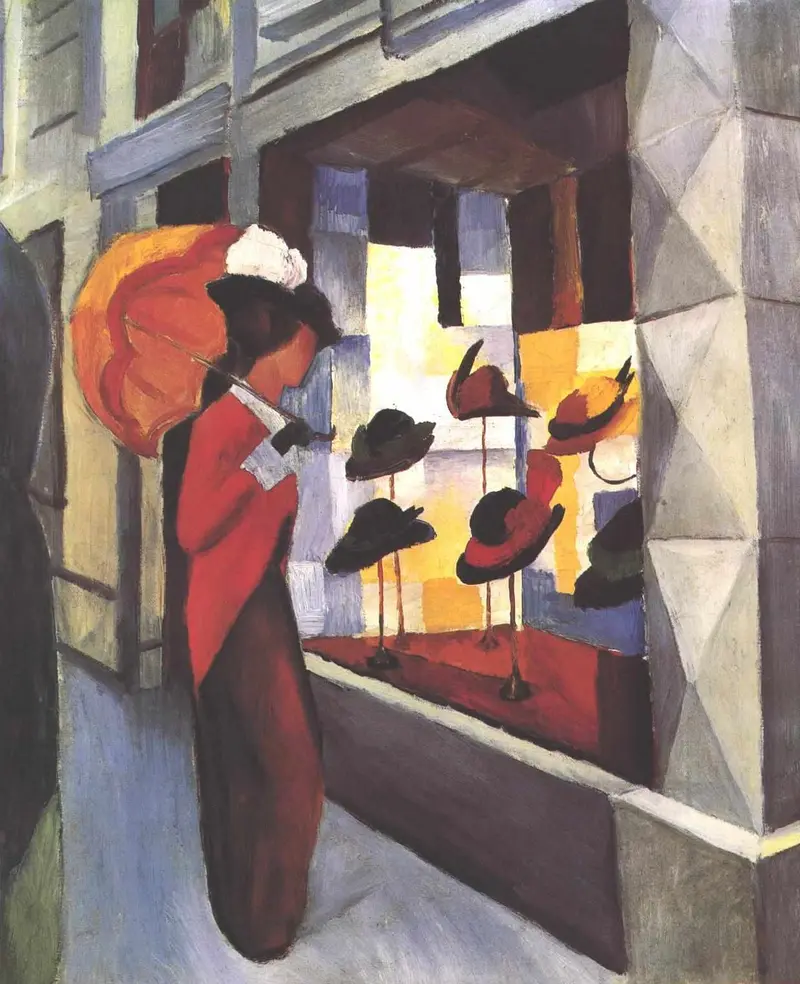
Woman with a Parasol in Front of a Hat Shop
August Macke

Street with Church in Kandern
August Macke
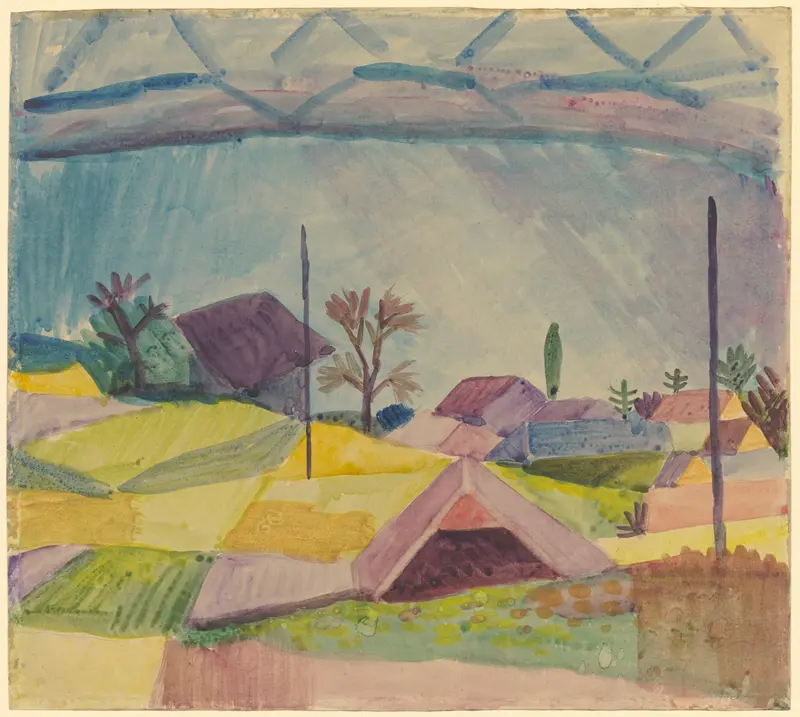
View of Hilterfingen
August Macke

Paar im Nachen
August Macke
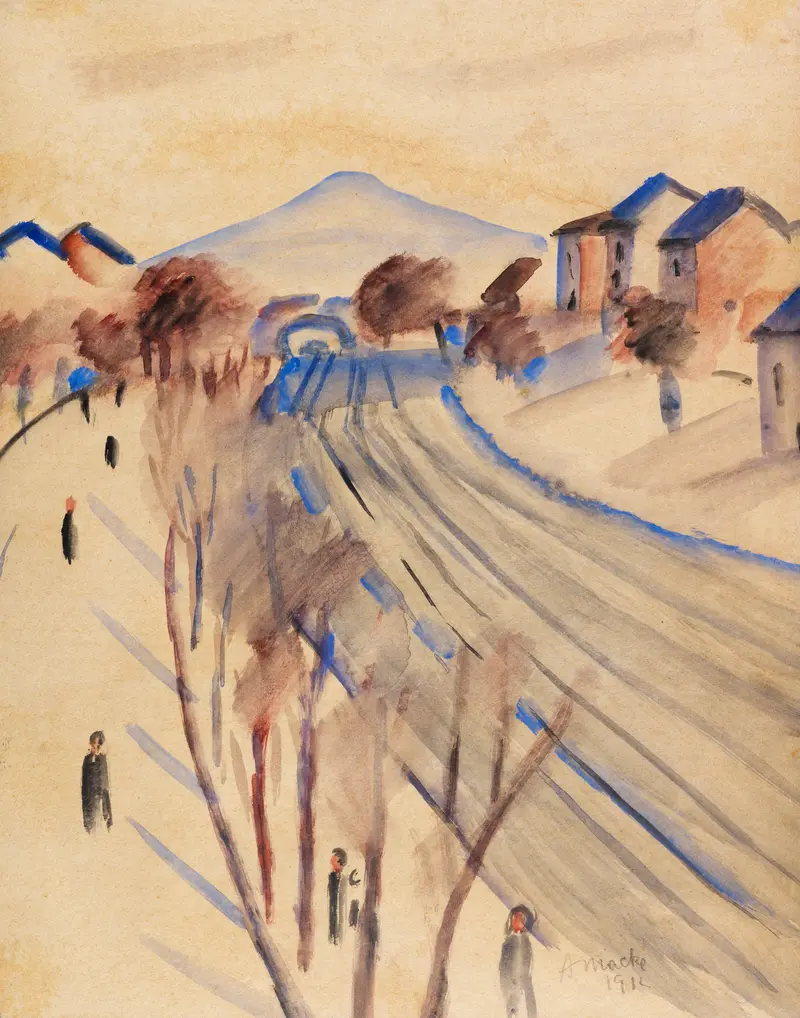
Ölberg mit Bahngleisen II
August Macke
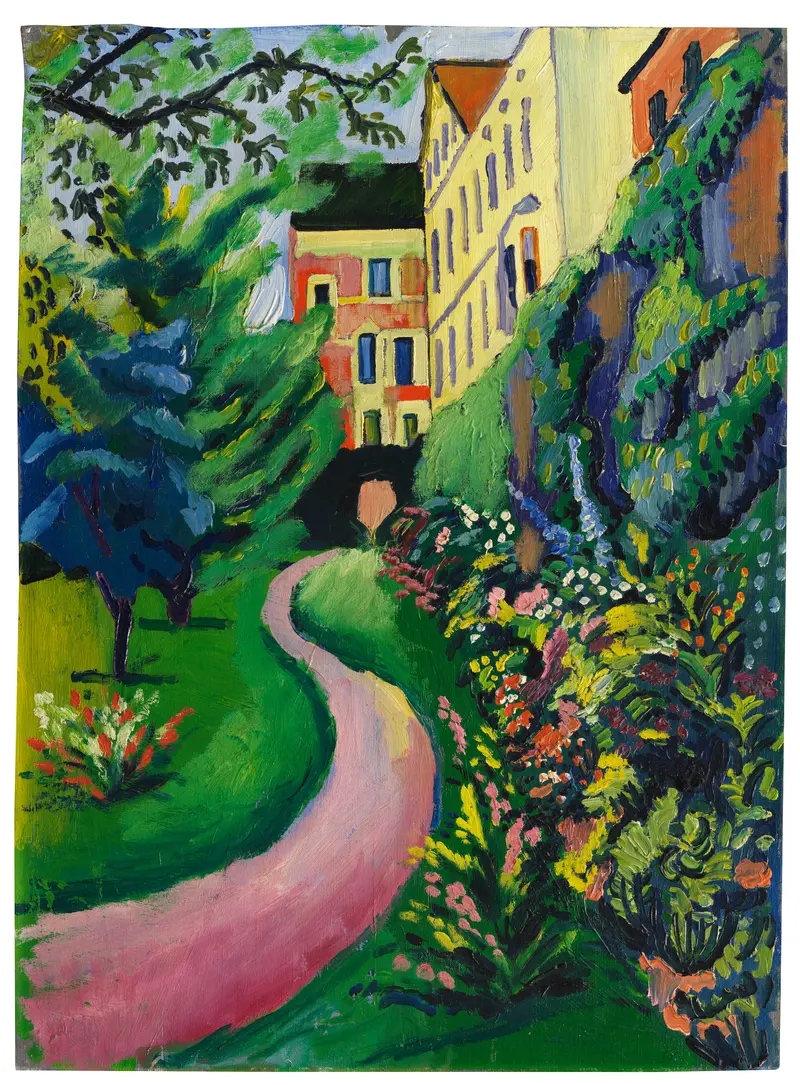
Unser Garten mit blühenden Rabatten
August Macke
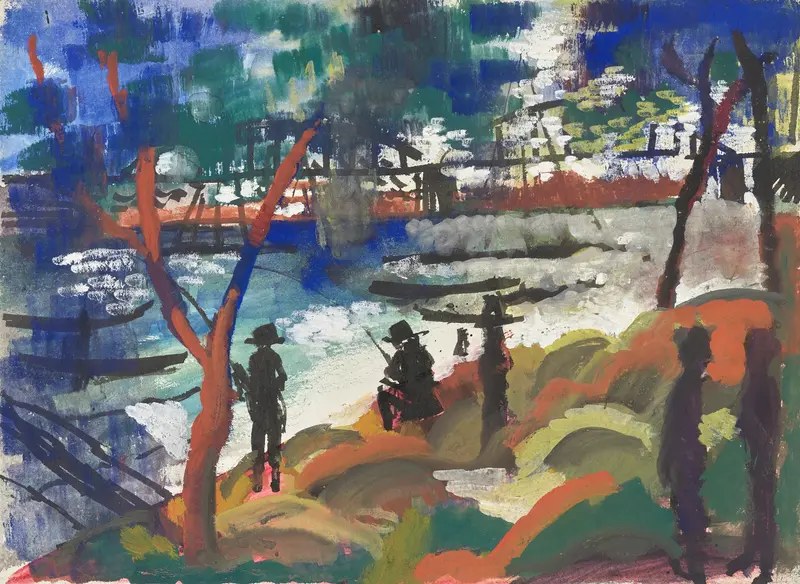
Angler am Fluss
August Macke
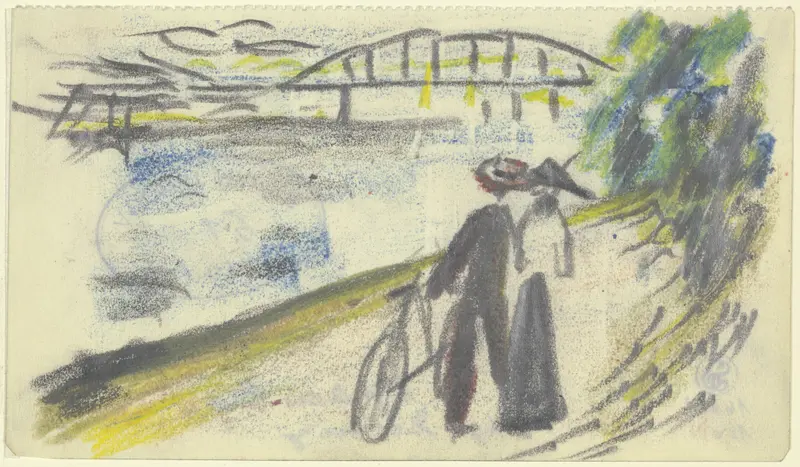
Path at the Rhine
August Macke
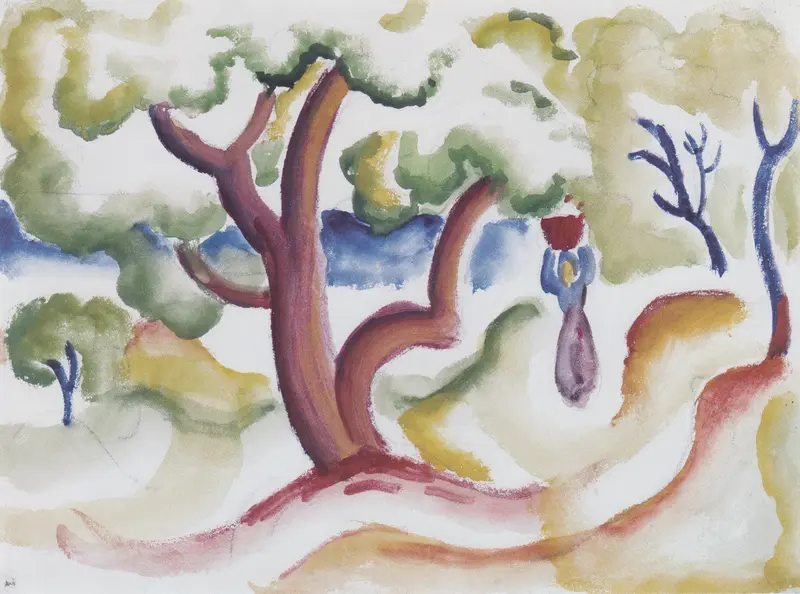
Frau mit Krug unter Bäumen
August Macke
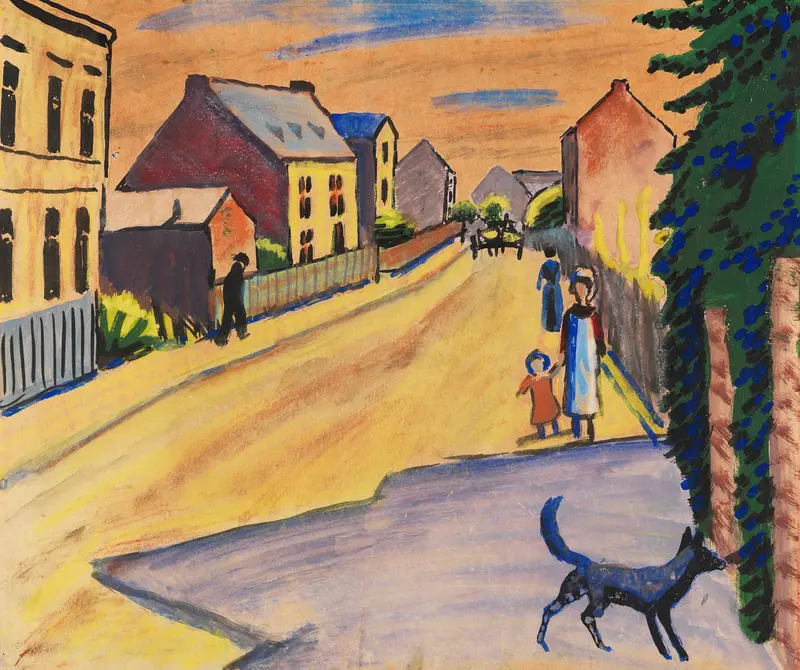
Sonnige Straße mit Hund
August Macke



