
Roman Landscape with Viaduct — History & Facts
Did the painter know this moment would outlive them? In Roman Landscape with Viaduct, a timeless beauty captures the essence of tranquility and ancient grace, inviting viewers into a world where nature and human ingenuity coexist in serene harmony. Look to the left at the towering viaduct, its bold arches gracefully bridging the scene. Notice how the soft, golden light bathes the stone structure, casting gentle shadows that dance along the verdant valley below. The lush green hills, dotted with delicate wildflowers, lead the eye into the depth of the landscape, while the vibrant azure sky overhead radiates a sense of boundless possibility.
Each brushstroke reveals a meticulous attention to detail, from the rugged texture of the rocks to the subtle gradation of color, conveying both depth and tranquility. Beneath this picturesque facade lies a tension between nature and architecture. The viaduct, a symbol of human achievement, suggests progress and innovation, yet its presence is overshadowed by the expansive wilderness that surrounds it. The delicate balance of light and shadow hints at the passage of time, inviting contemplation on the ephemeral nature of such constructs.
Meanwhile, the solitary figure, small against the grandeur of the landscape, evokes feelings of isolation and introspection, as if pondering their place within this eternal setting. Created in 1788, this piece was painted during a transformative period for Bidauld, who was deeply influenced by the burgeoning Romantic movement. Working in Italy, he embraced the picturesque qualities of the landscape, reflecting a growing fascination with nature's grandeur amidst the backdrop of Enlightenment ideals. This artwork embodies not just the aesthetic values of its time, but also a prelude to the profound impact landscapes would have in future artistic expressions.
More Artworks by Jean-Joseph-Xavier Bidauld
Browse all →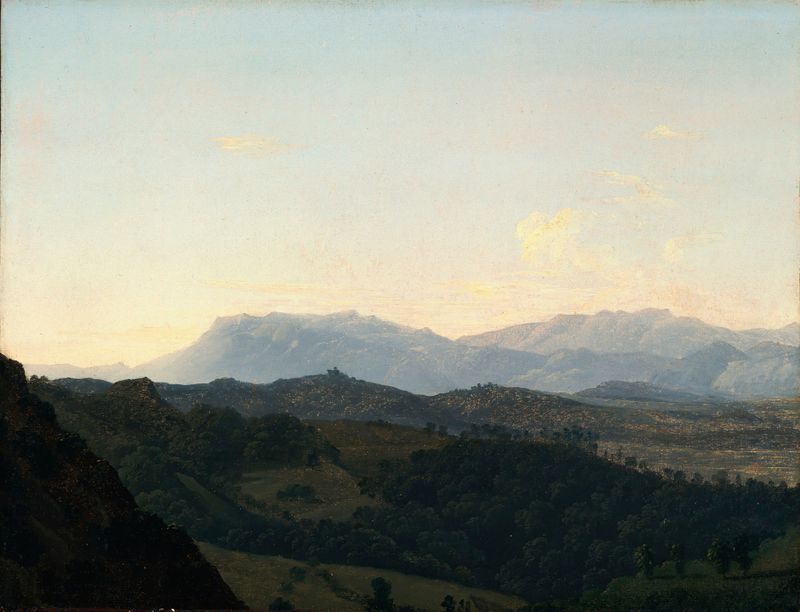
The Sabine Mountains
Jean-Joseph-Xavier Bidauld
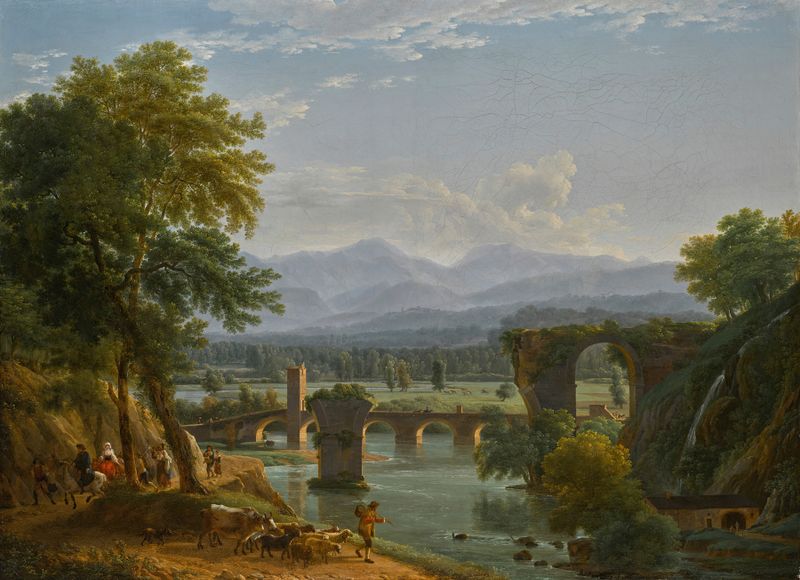
The Augustus Bridge Over The River Nera, Near The City Of Narni, Italy
Jean-Joseph-Xavier Bidauld

La baie de Naples
Jean-Joseph-Xavier Bidauld
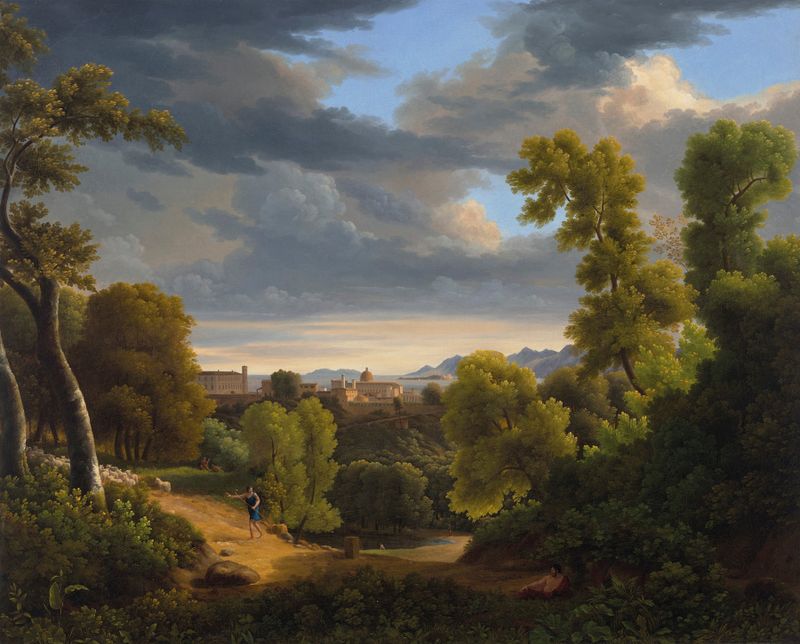
A view of Vietri near the sea in the Gulf of Salerno with Capri in the background
Jean-Joseph-Xavier Bidauld
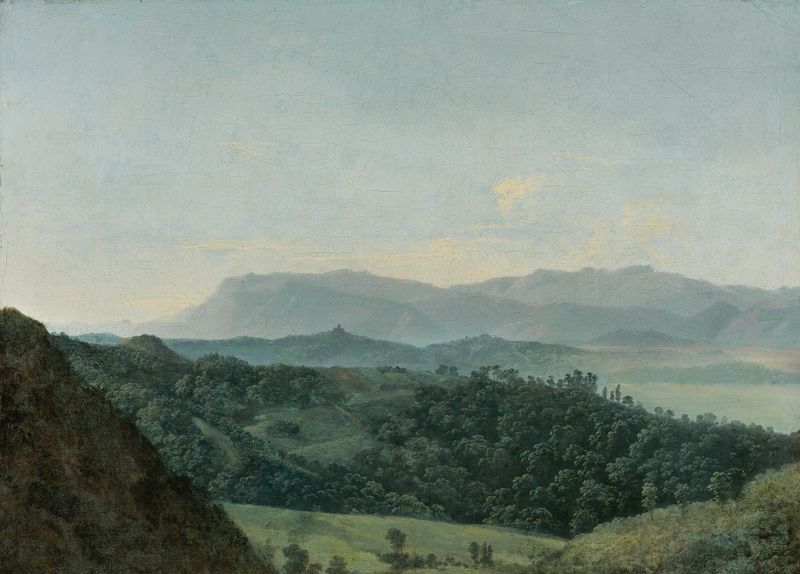
Extensive Mountainous Landscape
Jean-Joseph-Xavier Bidauld
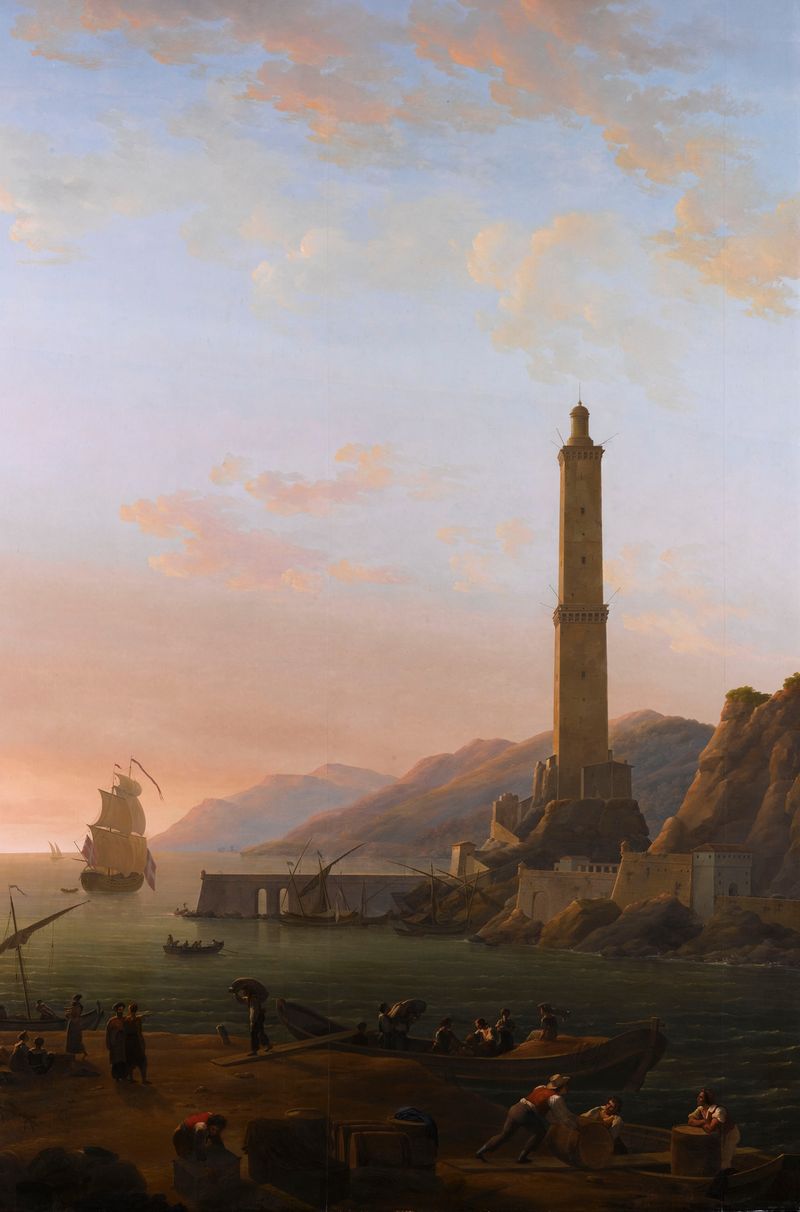
Le phare de Gênes
Jean-Joseph-Xavier Bidauld

Extensive Italian landscape with a town
Jean-Joseph-Xavier Bidauld

View of Bridge and the Town of Cava, Kingdom of Naples
Jean-Joseph-Xavier Bidauld
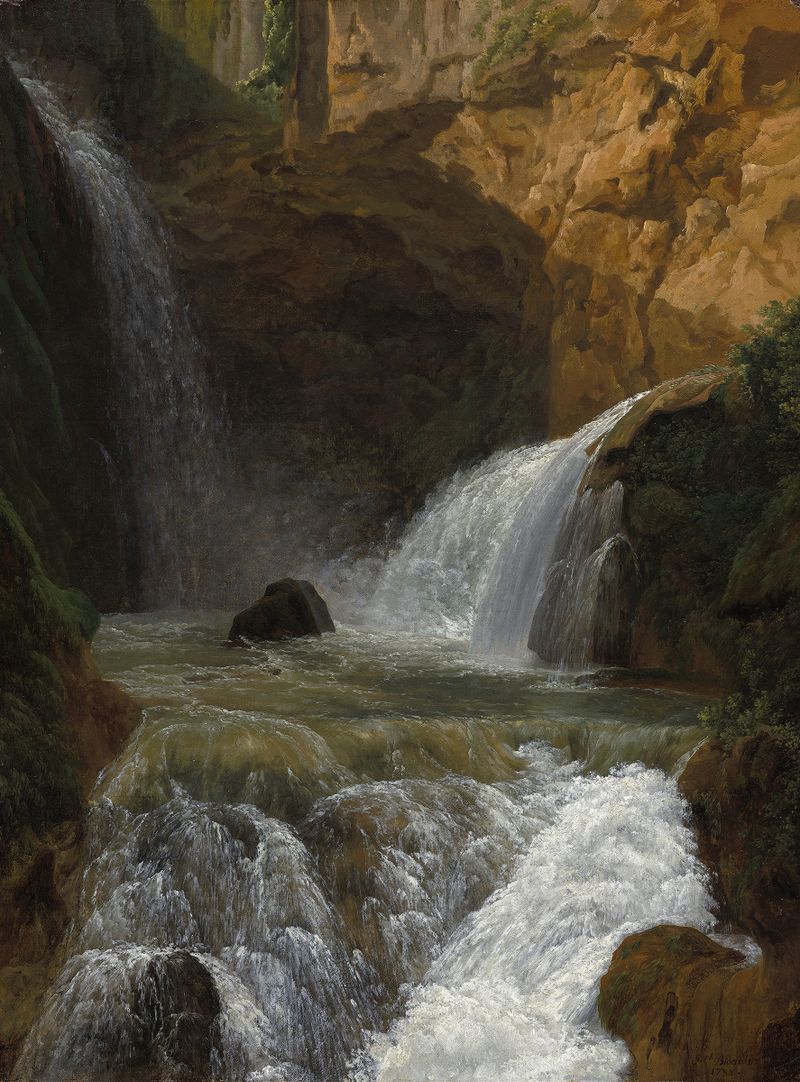
View of the Waterfalls at Tivoli
Jean-Joseph-Xavier Bidauld

Gorge at Cività Castellana
Jean-Joseph-Xavier Bidauld





